When the Waterwheel Turned Again - 適合中高級的英文短篇故事,含中譯與發音
水車再次轉動的時刻 | 英文/中文 雙語朗讀

Story Content
English Original
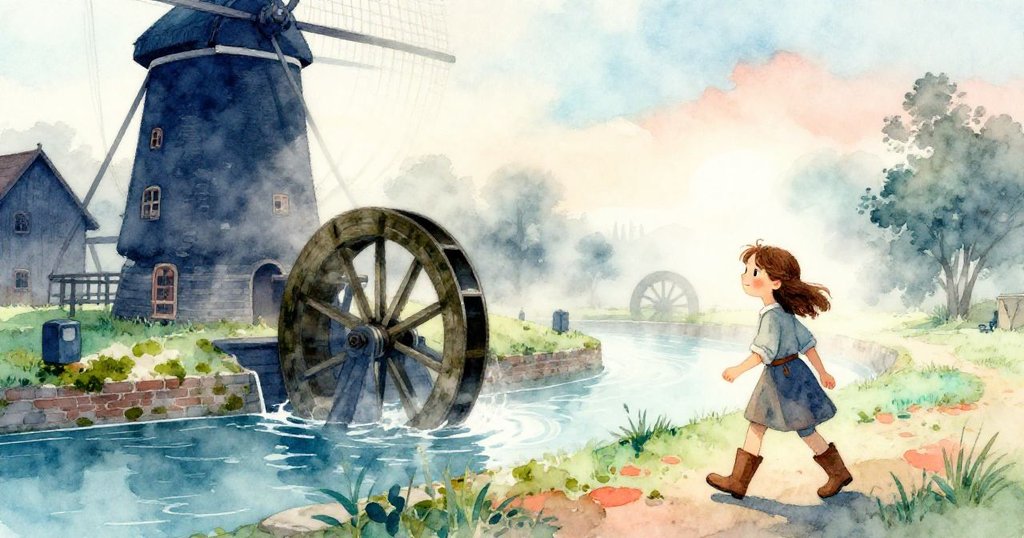
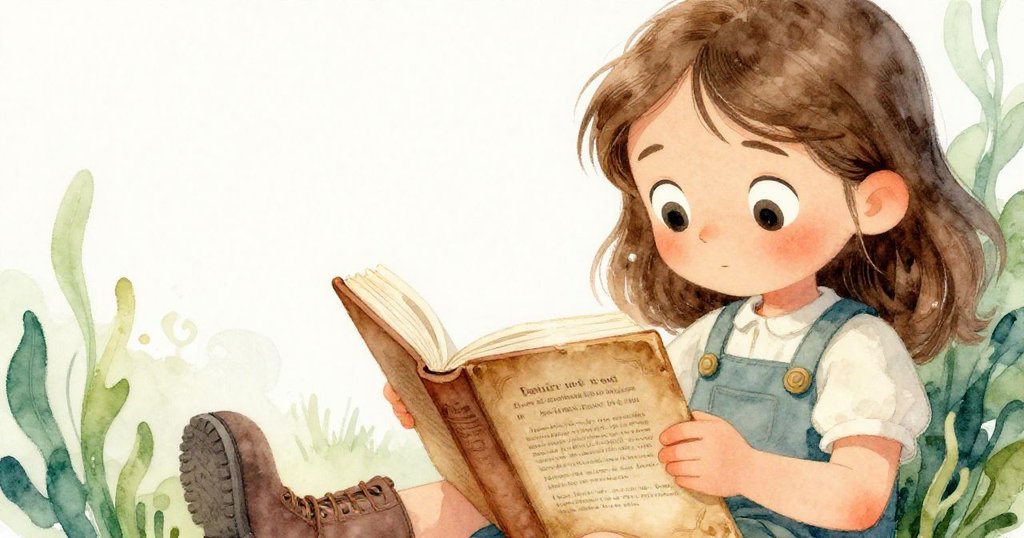
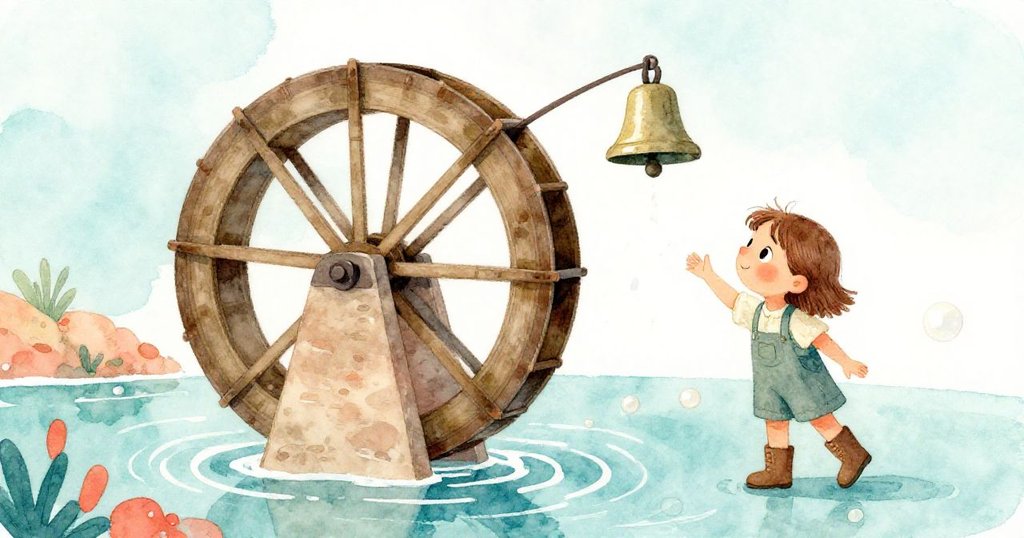
Mila crossed the disused mill yard just after sunrise, boots leaving prints on moss that had thickened over cracked bricks. The waterwheel beside the canal had once powered looms, but for ten silent years its paddles stood rigid. Her science project promised a model of sustainable power, yet the teacher had hinted that a real demonstration might impress visitors. A nineteenth-century engineering textbook, found the previous week in the library cellar, showed a sketch of a simple wheel, a wooden axle, and a manifold of narrow pipes that guided water toward the spokes. If she had known how swollen the timbers had become, she would have brought a saw instead of a rope.
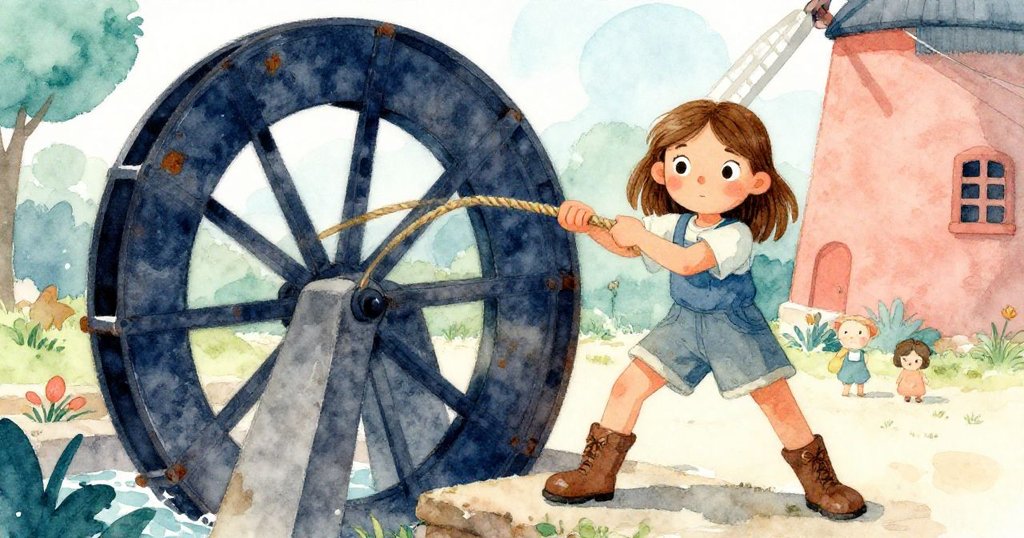
She tied the rope around the top paddle and pulled. The rope slipped, and her shoulders jerked backward; flakes of rust drifted like snow. The axle had been coated with layers of powder that trapped every movement. After a pause to catch breath, she searched the shed and returned with oil abandoned by picnickers. The bottle lacked a cap, so liquid dotted the water and spread streaks. She poured the rest over the joints. Nothing shifted. As a second attempt, she loosened one copper pipe from the manifold and directed a stronger stream toward the lowest blade. Water struck, groaned, then stilled; yet the wheel refused to budge.
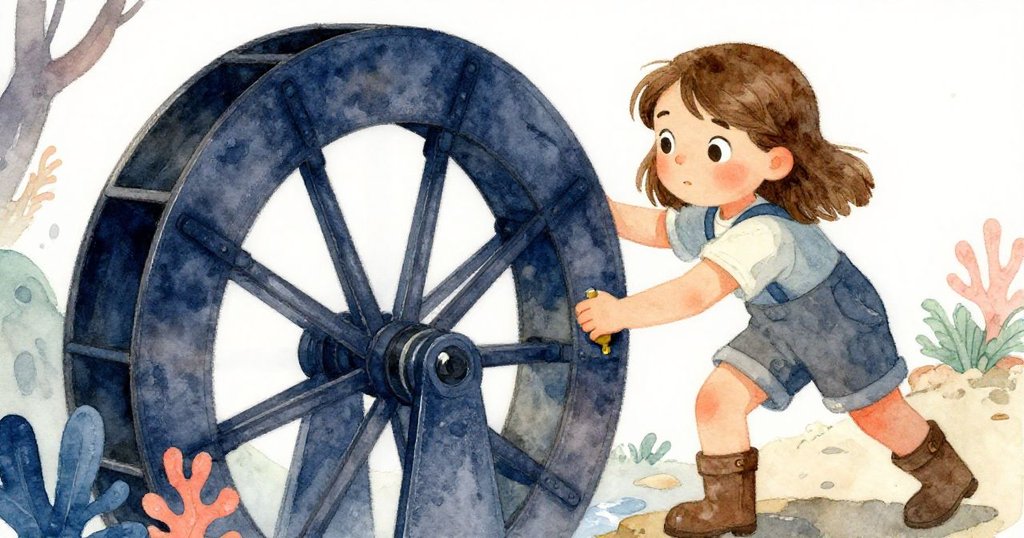
Mila crouched, pressed both palms against a paddle, and rocked it forward and back, an inch at first, then a hand’s breadth. Tiny bubbles escaped where the oil had seeped, and the wheel answered with a slow creak. The rough adaptation of the textbook sketch looked less like polished innovation; it was simply wooden force meeting water. So, the motion spread: water filled the curved paddles in quick succession. The wheel leaned, accepted the current, and began turning, each rotation smoother than the last. An old bell, once linked to factory shift hours, had been hidden in shadow; the loose cord wrapped around the hub now tightened and rang. Birds scattered as metal notes rose above the yard. The wheel, bell, and sliding water rested inside the morning light.
繁體中文 Translation
米拉在黎明後穿過廢棄的磨坊前院,靴印落在青苔覆蓋且龜裂的磚面上。運河邊的水車曾為織機提供動力,但沉默了十年之久,葉片僵直不動。她的科學專題原本只需一個永續能源模型,然而老師暗示,若能現場示範,參觀者會更有興趣。上週她在圖書館地下室找到一本十九世紀的工程教科書,裡面的草圖畫出簡易水車、木製軸心,以及引水至輪輻的狹窄多管匯流排。要是早知道木材已腫脹,她一定會帶鋸子而不是繩索。
她把繩索繫在最上方的葉片,猛地一拉。繩索滑脫,肩膀向後一震;鐵鏽片像雪般飄散。軸心已被層層粉末鎖住,寸步難行。喘口氣後,她在棚內翻找,帶回野餐客遺留的油瓶。瓶子沒有蓋子,油滴點在水面上,散成彩色波紋。她把剩餘的油全倒在關節處,仍毫無反應。第二回合,她拆下一根銅管,利用匯流排導出更強的水流衝向最低的葉片。水擊輪面,發出呻吟,隨即停息;水車依舊不動。
米拉蹲下,雙掌貼住葉片,前後搖動——先是一寸,接著是掌寬。油滲入關節處,冒出細小氣泡,水車回以緩慢的嘎吱聲。這種對教科書圖解的粗糙改編算不上精緻創新,只是木頭對水的硬碰硬。然而動作漸次擴散,水依序填滿弧形葉片。水車傾身迎流,開始轉動,每一圈都更順暢。工廠昔日報時用的舊鐘藏在暗處,纏在輪轂上的鬆繩此刻繃緊並響起。鳥群被清脆鐘聲驚飛。水車與鐘聲混著滑動的水流在晨光中靜靜停歇。
Vocabulary in Context
- textbook
教科書
“She took out her textbook to review the lesson before class.”
她拿出教科書,在上課前複習課程。
- innovation
創新
“Innovation drives progress in technology and society.”
創新推動科技和社會的進步。
- adaptation
適應
“Adaptation is key for species to survive in changing environments.”
適應對於物種在變化的環境中生存至關重要。
- manifold
多種的
“The city offers manifold opportunities for exploration.”
這座城市提供了多種探索的機會。
- sustainable
可持續的
“Mila believes in sustainable practices to protect the environment.”
米拉相信可持續的做法來保護環境。
Recommended Reading
Swirl Beneath the Boards

Board in the Duck’s Wake
Spray Between Wheel Turns
The Tilt of the Lock Water
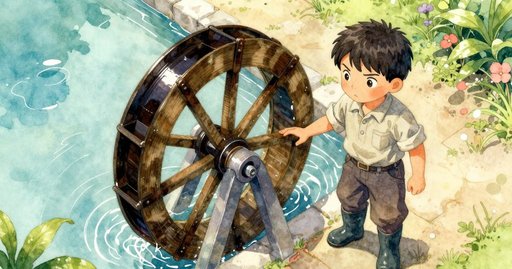
Sliding the Sluice Board Beside the Wooden Water Wheel
Circles Made by Beans
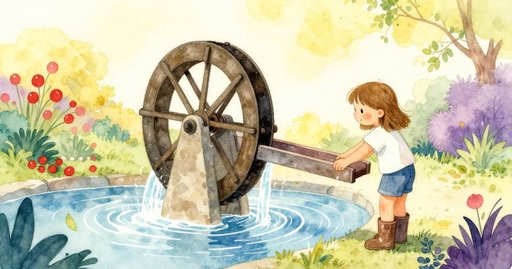
Circles Under the Water Wheel
The Lid's Quiet Click
Silver Spray on the Turning Wheel

Leaves Jam the Water Wheel at the Garden Channel
The Platform That Lifted Itself