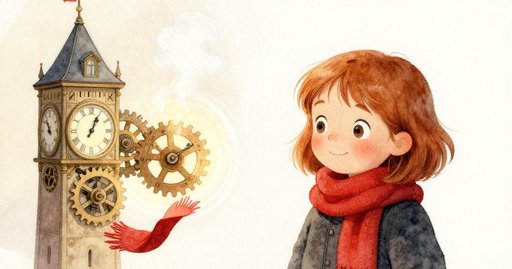
Maeve Traces Oil in the Clock Tower Works Chamber - 適合進階的英文短篇故事,含中譯與發音
Maeve 在鐘塔機械室描出一圈油痕 | 英文/中文 雙語朗讀
Story Content
English Original
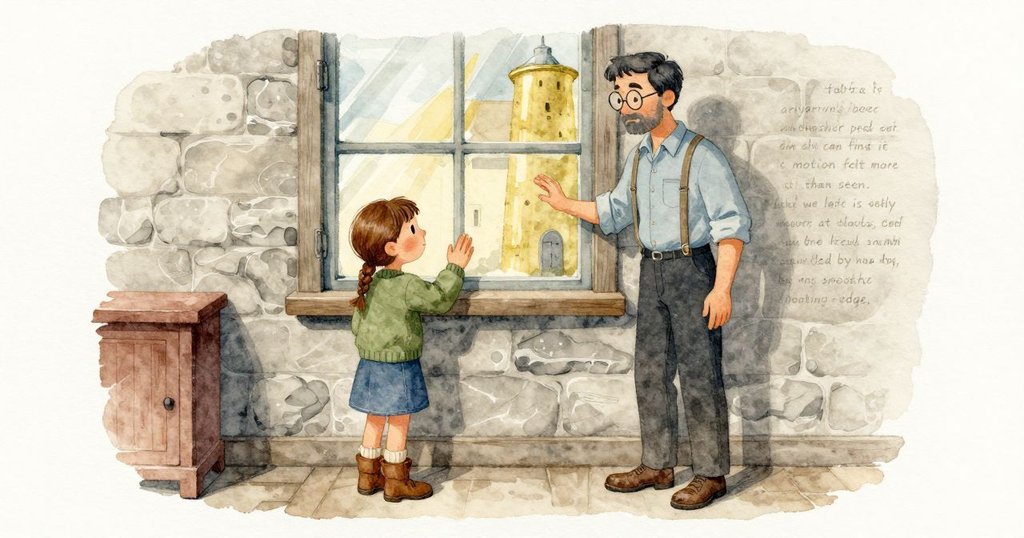
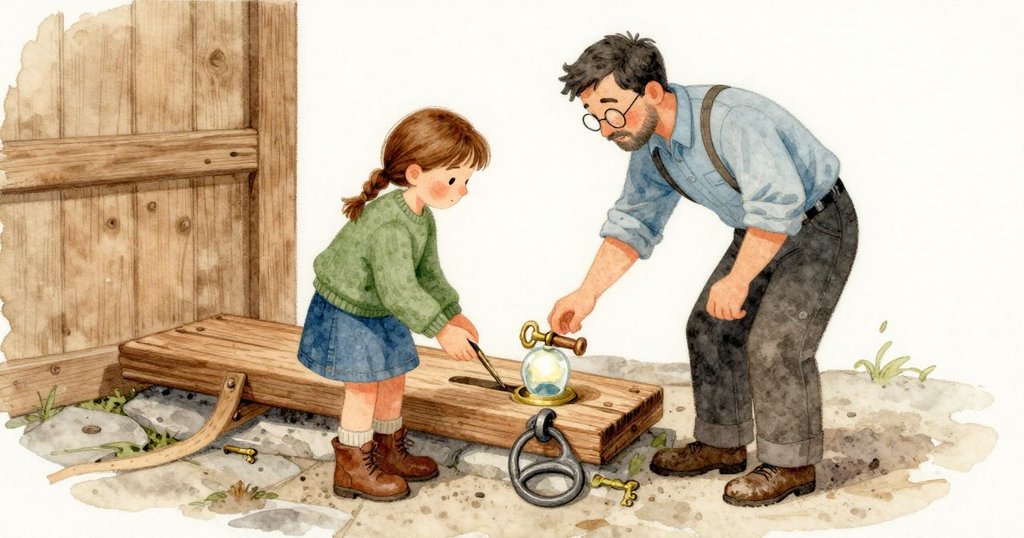
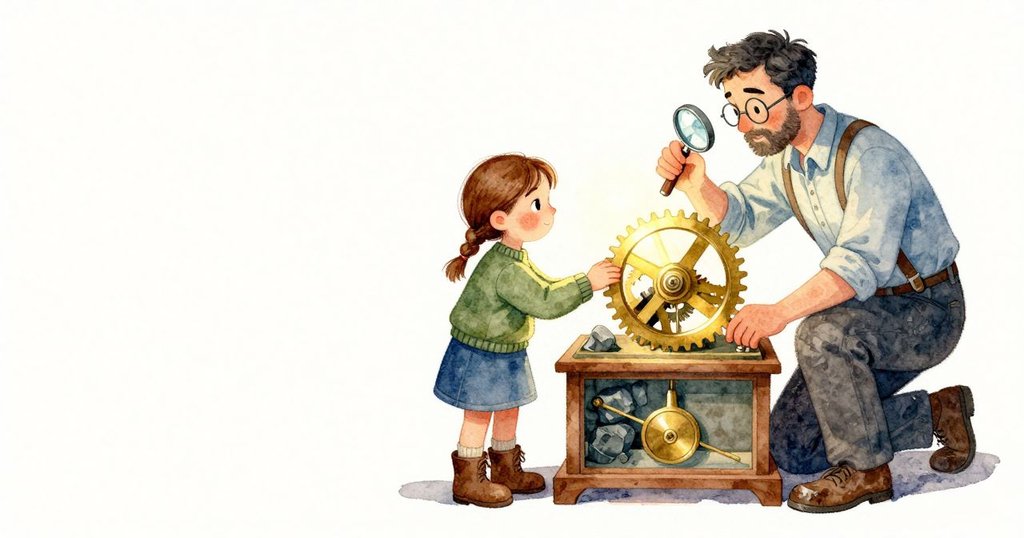
“Is the pendulum slower today, or are my fingers late to that tiny tremor in the glass?” Maeve pressed her palm to the cool panel, the tower’s tick matching the steps she counted under her breath to the door. They had stepped from a chalk-dry corridor into oil-scented stone, where sound came from everywhere and nowhere at once. A wooden hatch in the floor sat shut, its iron ring lying flat against grit-cool masonry near their shoes.
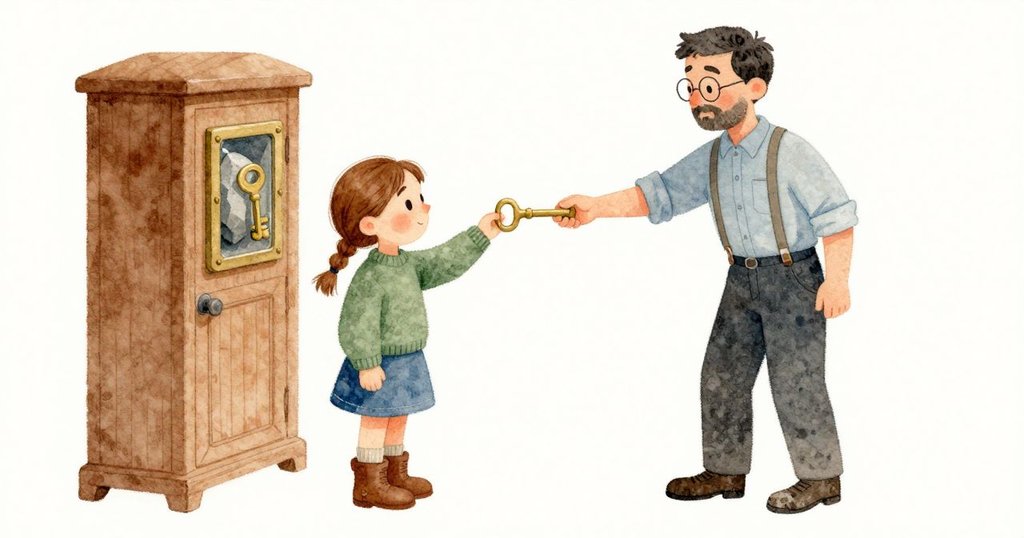
Rafferty tapped the glass with a knuckle and, with a small theatrical wave, pointed toward the winding key on its peg. Maeve plucked the brass key free and weighed its wooden handle in her hand, thumb tracing the slight hollow along its grain. Tick, sway, return; she counted thirty, and only then slid the key into the face plate’s square.
The first turn pressed into her wrist with a thicker pull, a weight that traveled cleanly through the key to bone. “It’s heavy today,” Rafferty said, rolling his wrist in the air without touching the works or the key. Sun slid through the narrow window and laid a bright stripe on the gear plate, where brass teeth caught and released with tidy clicks. In the stripe the metal read warm against her fingertip; in shadow the stone beside it stayed stubbornly cold. She paused mid-turn, breath holding itself between ticks as the pendulum drew its long arc below the glass.
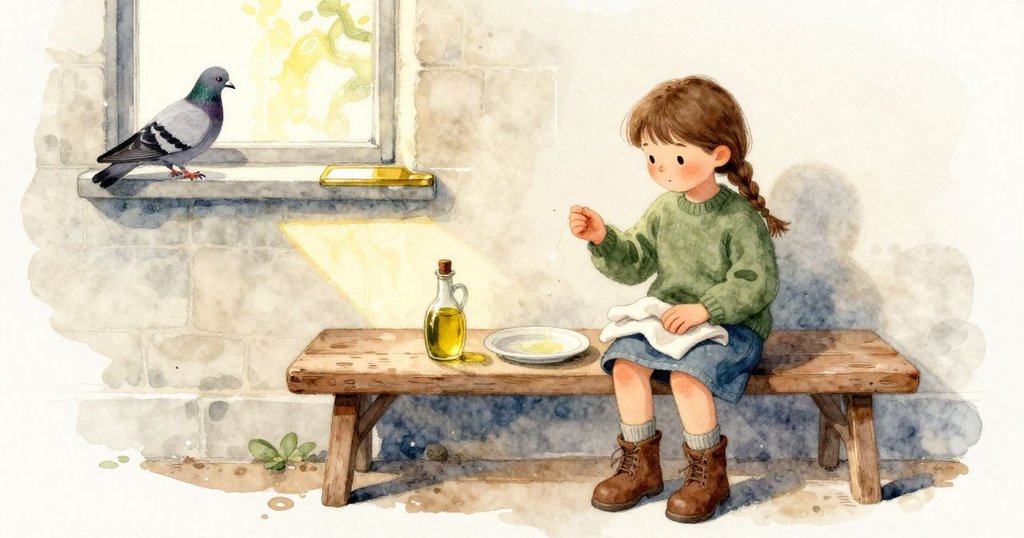
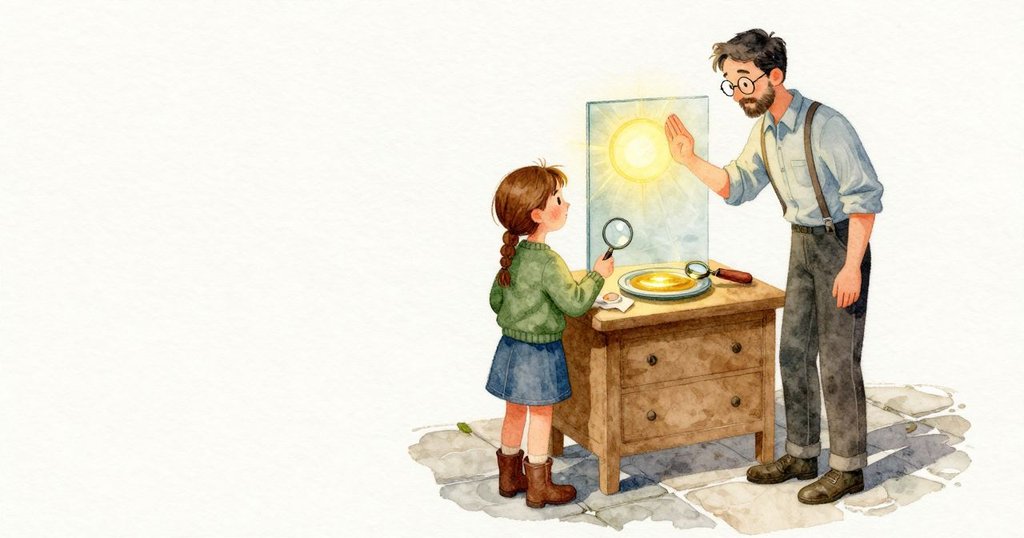
Rafferty lifted a small magnifier, its rim smudged by use, and held it so the bright stripe edged the escape wheel. Through glass and lens the teeth looked tidy, but her thumb on the key found a handle gone smoother, more seasoned than spring. The oil in the cloth on the bench carried a bright, fresh smell; the film along the plate had mellowed toward nutty. Maeve pinched the cloth’s corner and plucked a stray lint thread free, then watched it refuse the slick edge and cling to her finger. Outside, a pigeon landed on the window ledge, pecked twice, and left; the number-shaped patches on the wall crept sideways.
She pressed her palm flat to the glass again, feeling the faint vibration arrive under skin exactly on the click she counted. Her grip loosened on the key; she tipped the cloth to leave a thin, shining arc of fresh oil on the plate’s unbeating edge. She spaced it just outside the stripe of sun, as if setting a mark for the light to meet when it traveled.
Rafferty set the magnifier down, and the room’s long breath continued—tick, sway, return—while the bright stripe crept, patient as drying varnish. When the sun finally reached her small arc, the fresh oil thinned and gleamed, and a new click traveled through the stone floor.
繁體中文 Translation
「今天擺錘比較慢嗎,還是我的手指晚了一拍才碰到玻璃上那一點點顫動?」Maeve 把手掌貼在冰涼的面板上,塔裡的滴答聲對上她在門邊低聲數出的步伐。她們剛從粉白乾燥的走廊踏進這間帶著油味的石室,聲音同時從四面八方湧來。地板上的木蓋闔得緊緊的,鐵環平貼在微帶砂礫的石面,靠近她們的鞋邊。
Rafferty 用指關節輕點玻璃,又做了一個小小、帶點戲劇味的手勢,指向掛著的上鍊鑰匙。Maeve 把黃銅鑰匙輕輕取下,在掌心掂了掂那個木柄,拇指沿著紋理上一道淺凹滑過。滴答、擺回,她數到三十,這才把鑰匙送進面板上的方形孔。
第一下轉動在她手腕裡頂出較厚的牽引,重量沿著鑰匙乾脆地一路傳到骨頭。「今天它比較重,」Rafferty 說,沒有碰機件或鑰匙,只在空中轉了轉手腕。陽光穿過狹長的窗縫,在齒板上鋪下一道亮帶,黃銅齒在那裡俐落咬合又放開。亮帶裡的金屬貼在她指尖上帶著暖意;旁邊的陰影裡,石頭依舊冷得扎實。她轉到一半停住,呼吸卡在兩次滴答之間,玻璃下的擺錘拉出長長的弧線。
Rafferty 舉起一只小放大鏡,邊框上帶著使用的暈痕,把它抬到亮帶剛好擦過擒縱輪的位置。透過玻璃和鏡片,齒面看來整潔;她按在鑰匙上的拇指卻摸到木柄更滑,帶著經年熟成的圓潤。長椅上的布頭滲著明亮、偏新的油香;齒板邊緣那層薄膜則沉了些,氣味像堅果。Maeve 捏住布角,輕輕拽下一絲棉絮,又看著它不肯貼上那條滑面,反而黏在自己手指上。外頭有隻鴿子落在窗檯上啄了兩下就離開;牆上數字形的光影緩緩向旁邊滑移。
她又把手掌貼緊玻璃,細微的振動正好在她數出的那一下抵達皮膚底下。她的手在鑰匙上鬆了鬆,接著傾一傾布角,讓一弧薄亮的新油留在齒板不受力的邊緣。她把那條弧線擱在陽光帶外側,好像先放下一個等光線走到時才會碰到的記號。
Rafferty 把放大鏡放下,房間長長的一口氣繼續著——滴答、擺回——而那道亮帶慢慢挪動,像漆在乾。等陽光終於摸到她那小小的弧線,新油就變薄發亮,一記新的滴答穿過石地板傳了過去。
Vocabulary in Context
- hatch
(地板或天花板上的)小門、活板門,常有環形把手可拉起。
“The wooden hatch stayed sealed, the iron ring resting in dust as their steps counted the ticks.”
木製活板門依然緊閉,鐵環安靜地躺在灰塵裡,他們的步伐隨著滴答數著。
- theatrical
戲劇化的;誇張、像舞台表演般的動作或風格。
“With a small theatrical wave, Rafferty offered the key’s peg as if unveiling a stage cue.”
拉弗蒂做了個小小戲劇化的揮手,好像揭示舞台暗示般指向那支鑰匙掛釘。
- pluck
(迅速而用力地)拉、扯、拔起某物,使其脫離原處。
“Maeve plucked the winding key from its peg, the motion crisp as the pendulum’s returning click.”
梅芙把上鍊的鑰匙從掛釘上一掣而下,那動作像擺錘回點般俐落。
- magnifier
放大鏡;能讓小物件看起來更大的鏡片或工具。
“He raised the smudged magnifier until the sun’s stripe sharpened the escape wheel’s tidy teeth.”
他抬起那只帶汙痕的放大鏡,讓日光條紋把擒縱輪的細齒照得更銳利。
- corridor
走廊;建築內長而狹窄的通道,兩側常有房門。
“From the chalk-dry corridor they entered stone and oil, where every sound hid and echoed.”
他們從乾得像粉筆的走廊進入石與油的空間,所有聲音藏身又回響。
Teacher's Spark
AI-generated teaching prompts to help teachers extend a story
Story Discussion - The Clock Room
從文本的感官描寫(觸覺、嗅覺、聽覺)來看,Maeve 的身體如何與機械建立連結?請具體列出至少三種感官經驗並說明它們如何共同形成這種連結。
開放式參考答案
Maeve 用手掌貼在玻璃上感受微弱振動(觸覺),拇指沿著鑰匙的木柄滑過感到紋理與磨損(觸覺);她數著滴答聲並讓自己的動作與擺錘節奏對齊(聽覺/節奏感);她聞到油布的明亮新油味與齒板沉穩的堅果氣息(嗅覺)。這些感官合在一起:觸覺提供直接的身體回饋,聽覺給出時間節奏,嗅覺提示物件的狀況與歷史,使她既是操作者也是時間的感知者。
Rafferty 指向鑰匙而沒有直接接觸機件,他的行為是否主要在引導而非實際操作?(是/否)請簡短說明你的判斷依據。
是非題參考答案
是。Rafferty 用帶戲劇性的手勢指向鑰匙、在空中轉手腕而不碰機件,顯示他在引導或觀察而把實際的操作權交給 Maeve,這暗示兩人分工與角色差異。
從 Maeve 拿起鑰匙到最後一記新的滴答聲傳遍石地板,請用條列式描述這段多步驟的因果鏈(至少六個主要步驟)。
開放式參考答案
1) Maeve 從掛鉤上取下黃銅鑰匙;2) 她權衡木柄並用拇指感受紋理;3) 她數到三十後把鑰匙插入面板;4) 轉動鑰匙,重量感沿手腕傳到骨頭,使機件開始受力;5) 她用布在齒板邊緣留下薄薄一弧新油並把它放在陽光帶外;6) 隨著陽光條慢慢移動,光終於照到那道新油弧線,油變薄發亮;7) 這一變化讓機件在那一刻發出新的滴答聲,通過石地板傳開。
Maeve 在操作時多次停頓、數數並把手貼在玻璃上。這些細節最可能暗示她當下的心理狀態為何?請以一至兩句話總結。
開放式參考答案
這些細節顯示她既專注又謹慎,帶有一種儀式化的耐心——她用節奏控制焦慮,用身體貼近機械以確保同步與精確。
故事如何透過『滴答聲』與『陽光帶的緩慢移動』來探討等待與時間的主題?請說明兩個文本細節如何支持這個主題。
開放式參考答案
滴答聲提供了機械且可數的節拍,讓人物以數數來與時間對齊;陽光帶的緩慢移動則帶出自然時間的耐心與不可速成。當 Maeve 把新油弧線放在陽光帶外,整個等待變成一種有意識的安排,展示人為節奏與自然節律之間的互動與張力。
填空:文中她把一弧薄亮的新油擱在陽光帶外側,好像先放下一個______,等光線走到時才會碰到它。請填入一個中文單詞完成句子。
填空題參考答案
記號
作者描述陽光在齒板上形成的『亮帶』時,刻意以暖與冷、亮與暗來對照。請指出兩組具體的對比細節,並說明這些對比如何強化文本的氛圍或焦點。
開放式參考答案
對比一:亮帶裡的黃銅在指尖感到溫暖,旁邊的石頭則『冷得扎實』——這強調了金屬與石材在觸感與時間感上的差異,突顯了人與機器接觸的親密。對比二:新油的『明亮、偏新』與齒板薄膜的『沉了些、像堅果』——這反差讓新舉動(她的油弧)在歷史與當下之間顯得突出的同時,也暗示維護和時間的累積感。
你是否能將這個場景聯想到任何探討『機械、時間與人類感知』的文學或文化傳統?(是/否,並簡要說明一個可比的例子。)
是非題參考答案
是。這個場景讓人聯想到那類以時鐘或機械為中心的敘事傳統,例如維多利亞時代或工業化文本中常見的『機械象徵時間與秩序』的手法——場景同樣透過精細的機械細節來探討人如何在節奏與儀式中找到掌控感或自我感知。
Story Discussion - Clockwork Light
作者多次讓 Maeve 用手掌貼在玻璃上去「感受」振動,並同時描述她以口中數數來配合滴答聲。請分析這兩種身體行為在文本中分別傳達了哪些時間經驗?它們如何共同建構出敘述的節奏與不確定感?
開放式參考答案
手掌貼在玻璃上屬於直接的觸覺經驗,強調當下的、瞬間抵達皮膚並回應機械的物理性;口中數數則是主觀的節拍化行為,把機械節奏內化成可控的序列,帶有意圖與儀式感。兩者合在一起:觸覺確證瞬時的真實(機械是否如預期運作),而數數則試圖把那瞬時嵌入人的時間感中,產生一種既依賴外部節拍又企圖掌握它的張力,從而營造出既緊張又帶有耐心的不確定節奏。
故事中 Maeve 把一弧新油擱在陽光帶外側,等待光線來到後發生新的滴答。請具體說明這個行為在因果鏈上的位置:它是如何從一個看似微小的動作連結到最後那一記新的滴答?(用三到五步說明)
填空題參考答案
1) Maeve 傾斜布角,讓新油在齒板不受力的一側形成一弧薄亮的層;2) 她把這弧油放在陽光帶之外,等同於把一個可視的標記留給移動中的光;3) 隨著陽光緩慢滑移,亮帶接觸到那弧新油,使油膜變薄並反光;4) 反光與油膜變化改變了齒板表面的摩擦或狀態,使得齒輪在那一刻發出新的聲響;5) 這個聲響通過石地板傳出,成為最後的一記新的滴答。
許多非語言細節出現在段落間(棉絮不肯貼上滑面、鴿子啄兩下、放大鏡邊框的暈痕),作者為何把這些看似瑣碎的動作放在關鍵時刻?這類細節如何影響讀者對場景重要性的判斷?
開放式參考答案
這些瑣碎的動作提供了場景的質地與可信度,使緊張的瞬間帶有生活化的重量:棉絮顯示物件表面的現實性與摩擦,鴿子的出現突顯時間的流動與空間的延續,放大鏡的暈痕暗示長期的習慣與修護史。它們把抽象的等待具體化,讓讀者在微小、可觸的事件中感受到重要性的累積,而非單純由劇情直接告知;因此這些細節同時降低了突發性的戲劇化,增強了儀式感與現場感。
Rafferty 在場但並不直接碰觸機件,而是用手勢、放大鏡與評論來參與。從心理與社會互動的角度推敲,他的角色對 Maeve 的行動有何影響?他可能代表了哪兩種不同的關係立場(例如導師、觀眾、同伴等),並說明理由。
開放式參考答案
Rafferty 的行為既像一位旁觀的導師,也像一個戲劇性的觀眾:作為導師,他的評論(『今天它比較重』)與放大鏡的使用提供技術性或判斷性的參考,但他避免直接接手,讓 Maeve 保持操作權;作為觀眾,他的戲劇手勢與不碰觸的距離又把場景變成一場被觀看的表演,增添儀式化的張力。這種雙重立場既支持也凸顯了 Maeve 的中心性。
把那弧新油讀作一個象徵:它既是物理的潤滑,也是作者巧妙安排的時間標記。請以象徵分析說明這條油弧如何同時代表『暫時的掌控』與『對未來的不確定投擲』。
開放式參考答案
作為潤滑劑,油弧象徵了技術性的掌控——小小的介入能讓齒輪運作更順,顯示人在物理現場能施加改變;但把油弧擱在陽光帶之外、等待自然到來接觸,這個動作也像是一種投擲:結果不是立即可見,而是被交付給時間與光的到達。於是油弧既是主動的修補,也是把控制權部分交給未來的賭注,象徵人與時間之間既合作又懸置的關係。
作者重複使用簡短的節奏詞組(例如文中多次出現的『滴答、擺回』與她數到三十的行為)。從文體與節奏層面分析,這些重複如何鏡像叙事結構並影響讀者的閱讀節奏?
開放式參考答案
簡短反覆的詞組像節拍器一樣在語言層面建立節奏,讓句子本身的呼吸與文本中描寫的機械節拍同步。這種重複使敘事節奏變得可預測但同時增強緊張感:讀者會在重複的循環中期待變化(例如新的滴答),而每一次重複又延長了期待的時間。數數的行為把內在節奏與外在聲響交疊,使語言節奏成為敘事張力的一部分,促使讀者以近乎身體化的節拍來閱讀文本。
從互文性的角度思考:這個場景把「機械的規律」與「陽光的緩慢移動」並置。你會將這種並置視為更接近『機械化時間』還是『自然時間』的勝利?請選一方並簡短說明你的判斷。
是非題參考答案
否(更接近自然時間的勝利)。雖然文本呈現了機械節拍的精確與人為的儀式,但最終觸發改變的是陽光的緩慢移動:油弧必須等待光線來到那一刻,顯示自然節律在關鍵時刻壓倒了機械的可控性,凸顯出人類努力與自然流逝之間的依賴關係。
Role Play - When the Sun Meets the Oil
情境
場景:在鐘塔的石室內,陽光從狹長窗縫灑下,形成一道亮帶緩緩滑過齒板。Maeve 把手掌貼在玻璃上,拇指仍放在黃銅上鍊鑰匙的木柄上,另一隻手傾著布角,把一小弧新油留在齒板的邊緣,剛好在亮帶之外。當光線走到那道油弧上時,油面變薄發亮,接著房間裡傳來一記新的滴答,振動透過石地板傳到她的手心。Rafferty 放下放大鏡,注視著齒輪與光帶,兩人必須立即描述所見、衡量下一步(要不要再上油、要不要再轉一圈),並對彼此的觀察提出推論與回應。這個角色扮演練習讓學生扮演 Maeve 或 Rafferty,重現當下的感官細節、物件操作與即時溝通。
角色
開場白建議
- •“I placed the oil just outside the sun stripe—did you see how the click came as the light met it?”
- •“The key felt heavier on the first turn; should we wind it more slowly or try another notch?”
- •“Did you notice the lint stuck to my finger instead of the plate? Maybe the surface is too slick—what do you think?”
- •“Look through the magnifier at the escape wheel—do the teeth look perfectly tidy, or is there a tiny chip we should clean?”
Role Play - The Count Before the Wind
情境
場景:在鐘塔的石室內,光線狹長,滴答聲在石壁與玻璃間迴盪。這一回合聚焦於 Maeve 正在決定上鍊前的那一刻:她把手掌貼在冰冷的玻璃上,聽著擺錘的弧線與她在門口小聲數出的步伐是否對上。Rafferty 用指關節輕點玻璃,帶著半開玩笑的手勢指向掛在木釘上的黃銅上鍊鑰匙;Maeve 把鑰匙取下,在掌心衡量木柄的重量,拇指沿著紋理上的淺凹滑過,思考要不要改變握法或放慢轉數。兩人必須在插鑰匙前互相溝通:報告他們的感官觀察(冷和暖、振動的時間、手腕的壓力)、推論擺錘是否慢了、並共同決定上鍊的節奏(慢一圈還是多轉幾下)。學生扮演 Maeve 或 Rafferty,練習用精確的英文描述感官細節、做出推論並給出明確、安全的操作建議。
角色
開場白建議
- •“I feel the pendulum lagging—I'm going to count to thirty before I insert the key. Do you hear it differently?”
- •“When I tapped the glass, the vibration seemed to reach my palm a beat later near the floor—did you notice that too?”
- •“The wooden handle has a hollow where my thumb sits; if the first turn pulls hard, should I change my grip or wind more slowly?”
- •“Before I turn, tell me what you see through the magnifier and whether the escape wheel looks ready for another notch.”
Creative Writing - Side Moment (pigeon's view)
寫作提示
角度:側寫 — 從一個敘述者沒看到的小片刻出發。任務說明:以英文寫一段約150–200字的續寫,視角限定為故事中已存在的元素(例如那隻短暫落在窗檯的鴿子、窗檯上的鐵環,或是那片被新油劃過的亮帶),描寫它在 Maeve 與 Rafferty 聯手上鍊時所見所感,並把一個小動作或感官印象和房間裡傳來的那一記新滴答建立因果或並列的連結。至少使用下方字彙表中的五個單字。保持語氣細膩、注重感官與因果鏈接,避免引入與原故事無關的新人物或危險行為。 示例(教師提示的發展片段,供學生參考 — 以繁體中文呈現): 鴿子落在窗檯,啄了兩下玻璃,陽光在黃銅齒板上劃出一條亮帶。它看見那條亮帶像一條會動的絲,微微閃爍;牆邊的陰影把數字拉長,像是在向旁邊滑去。當它順手啄了靠近腳邊的鐵環,細小的震動沿著石縫擴散到爪下,接著一記清脆的滴答從地板下穿過來,像有人在遠處輕敲。鴿子感到一股淡淡的油香在羽毛邊上縈繞,這氣味讓它想起巢裡的舊布。它拍開翅膀離去,帶走了光裡一點被擾動的羽絨,沒想到這微小的動作成了那晚房間裡新滴答後的一個不經意注腳。
詞彙庫
寫作輔助
- • From the pigeon’s point of view, describe the first thing it notices on the window ledge.
- • Focus on sensory details: mention the smell of oil, the warmth of the sunstripe, or the feel of the glass under its beak.
- • Show a small physical action (a peck, a scratch, a flutter) and link it to the clockroom’s sound — use words like 'tick' or 'pendulum'.
- • Include at least five words from the word bank, and end with a clear causal or coincidental connection to the new click that travels through the floor.
Creative Writing - Retrospection (Maeve's Memory)
寫作提示
角度:回顧 — 以 Maeve 年老或稍後的第一人稱回憶為視角,寫一段約150字的英文短文,重回那間有油味的石室。任務要求:聚焦她當時把一弧新油擱在齒板邊緣、聽見那記新的滴答穿過地板的瞬間,從回憶的時間距離去評估這一刻對她的意義(情緒、記憶的重量、或後來發生的連鎖)。必須保持場景元素與原故事一致(例如 pendulum, key, brass, magnifier, stripe, hatch, pigeon 等),不可引入新人物或危險行為;請至少在短文中自然使用下方字彙表中的五個單字。語氣可以是懷舊、反思或微微悔悟,但要保持溫和、安全並適合兒童閱讀。
詞彙庫
寫作輔助
- • Years later, I still touch the place on my wrist where the key pulled, and I remember how the brass felt warm under the stripe of sun.
- • I can hear the pendulum as if it were a memory, each tick folding a different small choice back into place.
- • That day I set the thin arc of oil just outside the sunstripe because I wanted to see what would happen when light met something new.
- • Write about one image that keeps returning to you from the room (the magnifier, the hatch, the pigeon) and explain why it matters now.
Vocabulary & Grammar Focus
重點單字
pendulum
一種被懸掛、來回擺動以標示或調節時間的擺錘裝置。
The pendulum drew a long arc beneath the glass, timing each patient return.
tremor
極輕微的顫動或震動,常以觸覺在表面上被感知。
Her fingers felt the tremor in the glass just before the click reached her.
panel
機械或牆面上可觸碰的平面面板,此處指玻璃或金屬表面。
Maeve pressed her palm to the cool panel and listened to the tower's tick.
winding key
用來上鍊或轉動機械的鑰匙,通常有木柄與金屬軸心。
Maeve plucked the winding key free and weighed its wooden handle in her hand.
brass
一種黃銅金屬,常見於齒輪與機械零件,導熱且具光澤。
The brass teeth caught light in the stripe and clicked against the escape wheel.
grain
木材表面的紋理;在握柄處常可觸摸到的細微凹凸與走向。
She traced the slight hollow along the key's grain with her thumb before turning it.
tick
機械擺動或齒輪互咬時發出的短促聲響,標示時間的單位感。
The room continued its steady tick, sway, return while they worked near the plate.
escape wheel
擒縱機構中的齒輪,控制能量釋放以維持擺錘節律。
She aligned the bright stripe so the escape wheel's teeth would receive fresh oil.
magnifier
放大鏡,用來檢視微小機件或細節,其邊緣常因頻繁使用而帶痕跡。
Rafferty held a small magnifier so the bright stripe edged the escape wheel.
oil
潤滑用的油脂,能使齒面更滑、聲音變柔並保護金屬表面。
The thin arc of fresh oil gleamed when the sun finally met it on the plate.
文法重點
過去完成式(past perfect)用來表示在敘述過去某一時間點之前已完成的動作或狀態。故事中以過去完成式(例如 "They had stepped")把先發生的位移放在敘事過去時態之前,建立時間層次:先發生的背景事件用過去完成,後發生的主敘事事件用過去式。這種做法能讓讀者清楚分辨敘事時間順序,並強化回溯或前置背景的語氣。比較時,把過去完成式改為單純過去式會讓兩個事件在時間上更接近、減弱「先行背景」的感覺。
練習題
Rafferty raised a small ___, its rim smudged, to frame the bright stripe at the escape wheel.
參考答案
magnifier
配對以下單字與意思:
顯示答案
A-8B-4C-1D-9E-6F-2G-7H-5I-10J-3
They had stepped from a chalk-dry corridor into oil-scented stone, where sound came from everywhere and nowhere at once.
參考答案
They stepped from a chalk-dry corridor into oil-scented stone, where sound came from everywhere and nowhere at once.
Vocabulary & Grammar Focus
重點單字
palm
手掌;身體接觸面之一,能敏銳感受溫度、振動或壓力。在故事中強調觸覺的細微感知。
Maeve pressed her palm against cool glass, feeling the tower's tick align with the steps she counted.
corridor
長而狹的通道;故事中以「粉白乾燥的走廊」描述過渡空間的質感與聲響差別。
They moved from the chalk-dry corridor into an oil-scented stone room where sound crowded the air.
hatch
(地板或牆上的)小門或掀蓋,用來進出下方或隔間,常以木製或鐵製合頁收合。
A wooden hatch in the floor lay closed, its iron ring resting flat against grit-cool masonry.
knuckle
指關節;用指關節敲擊時會傳遞短促的敲擊聲或振動,常用於試探性接觸(如敲玻璃)。
Rafferty tapped the glass with his knuckle before theatrically pointing to the peg that held the key.
peg
小木釘或掛鉤,用來掛放或固定器物;故事中指掛著上鍊鑰匙的那一根小釘。
He indicated the small peg where the winding key hung, its shadow a neat little line.
stripe
細長的光帶或色帶;故事裡指陽光在齒板上投下的明亮一線,成為觀察和操作的參照。
Sun poured a bright stripe across the gear plate, where teeth caught and released with tidy clicks.
lint
布屑或纖維絨毛;常見於布料邊緣或口袋裡的微小棉絮,故事中被從布角拽出來的那一絲。
Maeve pinched the cloth's corner and pulled a stray lint free, watching it cling to her finger.
pigeon
鴿子,一種常見城市鳥類;在文中作為短暫的外界動態,帶來微弱的日常聲響與節奏對比。
Outside a pigeon landed on the window ledge, pecked twice, and flew away without fuss.
文法重點
絕對構造(absolute construction / noun + participle)說明: 絕對構造是在主句之外附加的一個名詞片語加分詞或形容詞短語,用來描述與主句同時發生的狀態或背景情況,但不以從屬子句的形式輸出時間或原因。它常用逗號隔開,以精簡方式提供並行或陪襯資訊,增加敘述的節奏和氛圍。故事中的例句 "She pressed her palm to the cool panel, the tower's tick matching the steps she counted under her breath to the door." 就是典型的絕對構造:主句是動作(She pressed...),逗號後的片語(the tower's tick matching...)說明同時發生的背景節奏。 功能與效果: - 表示兩個事件或狀態的同時性而不必用完整連接詞(如 while, as)。 - 能快速堆疊感官細節或氛圍,維持敘事的流動性。 - 在改寫練習中,可把絕對構造改為帶連接詞的副詞子句(例如 while/as the tick matched...),比較兩者在節奏與語氣上的差異。 教學提示:注意逗號與分詞的關係;確保絕對構造中的名詞與分詞能自然對應(主句主體與絕對構造表達的背景或伴隨狀態有語義連結),否則會造成語意模糊或結構不良。
練習題
Sun slid through the narrow window and laid a bright ___ on the gear plate.
參考答案
stripe
配對以下單字與意思:
顯示答案
A-5B-2C-3D-7E-6F-1G-4H-8
She pressed her palm to the cool panel, the tower’s tick matching the steps she counted under her breath to the door.
參考答案
She pressed her palm to the cool panel while the tower's tick matched the steps she counted under her breath to the door.
Cultural Connection - The Winding Key
主題
上鍊鑰匙與機件保養的儀式感
討論要點
- •閱讀故事中 Maeve 如何把手掌貼在玻璃上,感受擺錘的微振動,並用拇指沿著木柄的紋理數著轉動次數。想一想你或你家裡是否有需要用手工上鍊或定期上油的物品?描述那個物品、你觸摸它時的感覺,以及你通常如何安排保養的時間。
- •故事裡 Maeve 把一弧新油擱在陽光帶外,像是在等光線經過來驗證。你在自己文化或家庭中,有沒有用自然的跡象(例如日光、聲音、季節)來決定做某件家務或儀式的時刻?舉一個具體例子並說明那個跡象如何影響你。
- •在故事中,Rafferty 以觀察者的姿態出現,Maeve 則執行細緻的手作保養。討論在你的文化裡,對這類手工維護(鐘表、樂器、廚具等)通常是個人私事,還是會成為家人或社群共同參與的活動?這樣的安排對物品的保存與人際關係帶來什麼影響?
文化比較
故事所呈現的文化線索指向一種重視機械物件細緻手作、以觸覺與日光等自然跡象為節律的保養習慣:上鍊鑰匙的木柄被反覆觸摸、放大鏡檢視齒面、新油等待陽光驗證,整個過程像小型儀式,強調個人對物件工藝與時間流動的敏感。在繁體中文文化中,這類手作保養既有相似的出現場域,也有不同的分布:現代家庭多以電子鐘表與數位裝置為主,日常維護變得更少觸感性的例行;但在保存古董座鐘、傳家樂器或廟宇器物時,仍會有週期性的上油、擦拭與集體參與,且常伴隨口述傳承與家族規範。因此兩邊都存在對物件的尊重與照護,但表現方式受物件普及性與社會習慣影響——英語語境下的工作坊式、個人化的細緻儀式與繁體中文社群中有時更為集體化或被傳統規範化的維護習俗,呈現出不同的時間感與社會連結。
Cultural Connection - The Sunlight Stripe
主題
陽光帶作為時間標記與等待的節奏
討論要點
- •故事中 Maeve 把一弧新油擱在陽光帶外,像是在等光線經過來驗證這一刻。想一想你曾否用陽光的位置或強度來判斷某件事(例如晾衣、曬被、檢查食物或工藝的乾燥程度)?請描述一次具體經驗,以及你如何觀察陽光來決定動作的時刻。
- •作者描寫亮帶慢慢在齒板上移動,成為一種緩慢而確定的節律。當你看見陽光在房間或物件上移動時,你的注意力和心情會有什麼變化?在你家或社區,陽光的出現會如何影響日常安排或小型儀式(例如有人固定在某個時間晾衣或擺放物品到陽光下)?舉一個具體例子。
- •在故事裡,陽光被當作一個「見證者」或時間的指示器,成為個人化的等待與驗證工具。請討論在你的文化裡,陽光比較常被用作私人的、細緻的節拍(像故事中的 Maeve),還是作為集體或務實的資源(例如市場、日常家務、食物保存)?說明這種使用差異可能如何反映人與自然節律之間的關係。
文化比較
故事呈現的是一種私密而細緻的光線觀察:陽光那一道亮帶慢慢滑過齒板,成為 Maeve 與機件間的時間標記與驗證工具——她把油放在陽光帶外,耐心等光線走到時才確認效果。在英語語境下,這類以光為節律的做法常出現在個人的工藝或修護情境,強調手作節奏、等待與對物件微小變化的敏感。相較之下,在繁體中文語境中,陽光更多被用於務實的家庭或社區活動:例如把床單和被褥拿到陽台曝曬、用日光幫食物或香料除濕與殺菌、或根據日照安排市場與晾曬作業。兩者都顯示人們如何以自然光為時間參照,但英語語境的用法在故事中顯得更為私密、帶有儀式性;繁體中文社群的用法則更常見於日常生活的集體性與功能性安排。
Comprehension Quiz
1. When Maeve pressed her palm to the cool panel, what did she feel?
2. From what kind of place did they step into the oil-scented stone room?
3. How many counts did Maeve wait before she slid the key into the face plate?
4. How did Rafferty direct Maeve's attention to the winding key?
5. Where did Maeve place the thin arc of fresh oil on the gear plate?
6. What was the immediate result when the sunlight moved and touched Maeve's oil arc?
7. What did Maeve notice about the feel of the key's wooden handle?
8. What happened when Maeve plucked a lint thread from the cloth?
Comprehension Quiz
1. What did Maeve wonder at the very beginning of the story?
2. What scent filled the stone room they stepped into?
3. How was the iron ring on the wooden hatch described?
4. How did the first turn of the key feel to Maeve?
5. What did the sun create when it passed through the narrow window?
6. What detail is given about the magnifier Rafferty used?
7. What small event happened outside while they worked?
8. What did Maeve do with the oil cloth before the stripe of sun reached it?
Recommended Reading
The Warm Winding Key of the Clock Tower
Under the Lamp: Setting the Regulator to an Even Tick
The Weight That Changed the Clock
The Unsteady Puddle beneath the Pendulum
Repairing the Silent Clock on the Green Felt Desk
The Pigeon at the Clock Tower Window
The Sparrow Inside the Clock
An Extra Click Inside the Clock Tower
New Scratches on the Brass Tooth
Niall Sets Down the Winding Key
Sparrow Nest Behind the Clock Dial