River Stone on Its Edge by the Work Table - 適合進階的英文短篇故事,含中譯與發音
工作桌邊側立的河石與花頁 | 英文/中文 雙語朗讀
Story Content
English Original
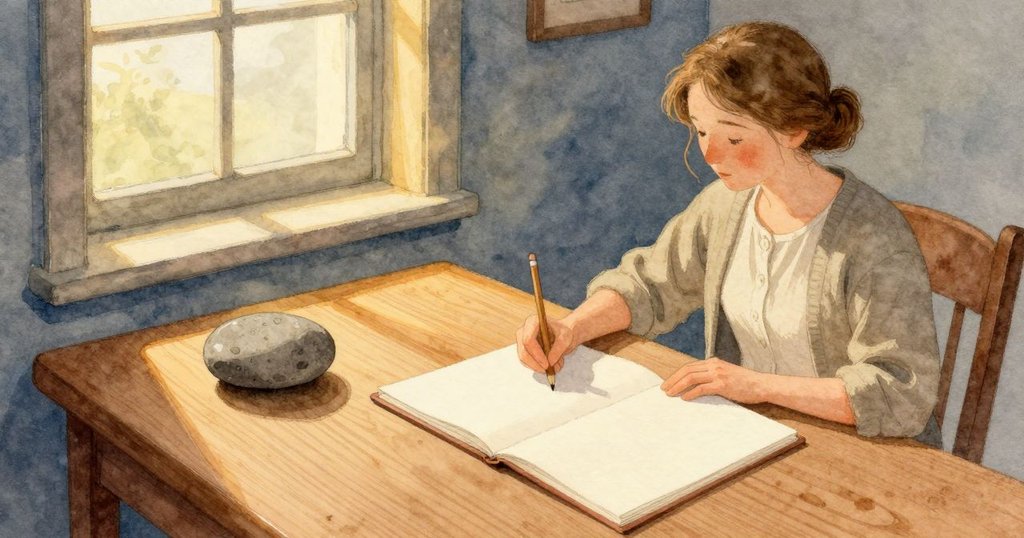
The river stone balanced on its thin edge beside Darla’s blank page, narrow shadow cutting across the pressing papers.
It usually lay flat and round, a quiet weight after she smoothed fresh petals and closed the volume.
The window’s low light slanted amber over the work table and pooled along the spine of her new book.
Helena rested a palm on the table’s edge, the other hand near the pencil, watching the light drift across the grain.
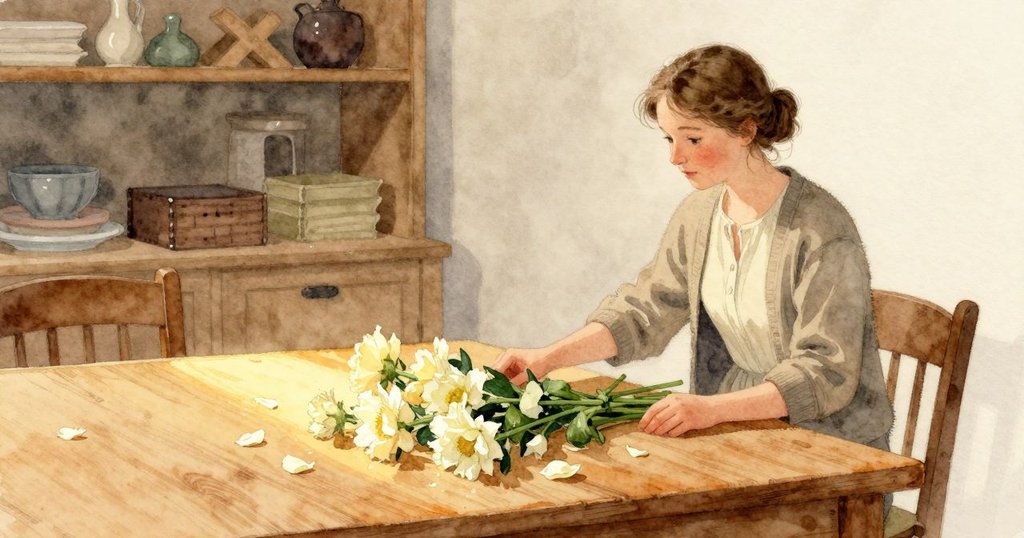
Today’s small gathering waited in a neat pile, stems damp and petals softening at their rims.
“Warm where the light falls along the table, and cooler by the shelves,” Helena said.
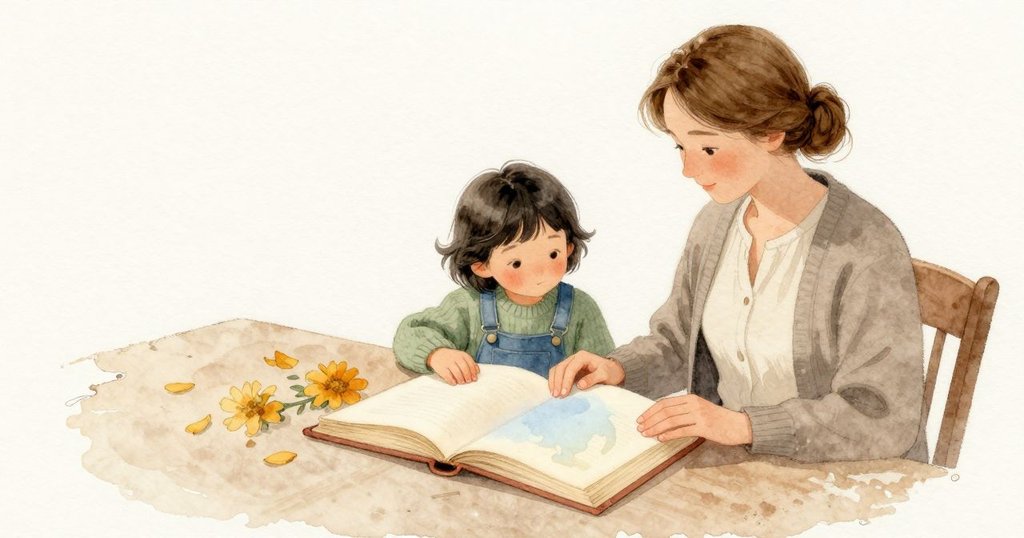
At the far edge, the grandmother’s volume lay open on an old bluet, its color drained into the page’s fibers.
The petal’s body had thinned to near-transparency, an outline living in paper, a pale silhouette ringed by a faint halo.
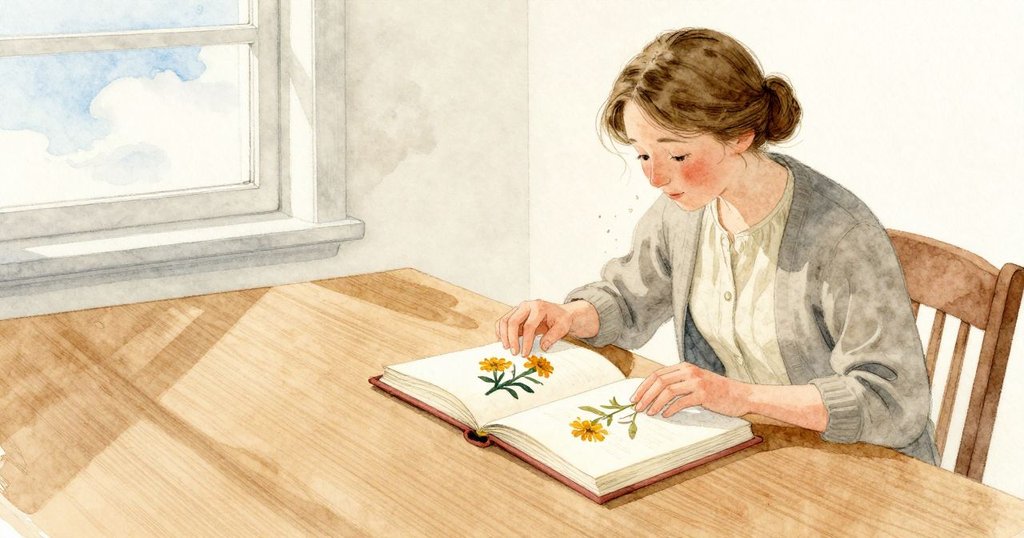
Beside it, the mother’s page held marigolds still discernible, pigment lingering on petals while a ghost glow whispered beneath.
Along the cracked cloth corner, entropy showed itself as loosened threads, the fray catching light like tiny antennae.
A narrow strip along the inner hinge glinted with a dry adhesive sheen, a careful mend older than Darla’s hands.
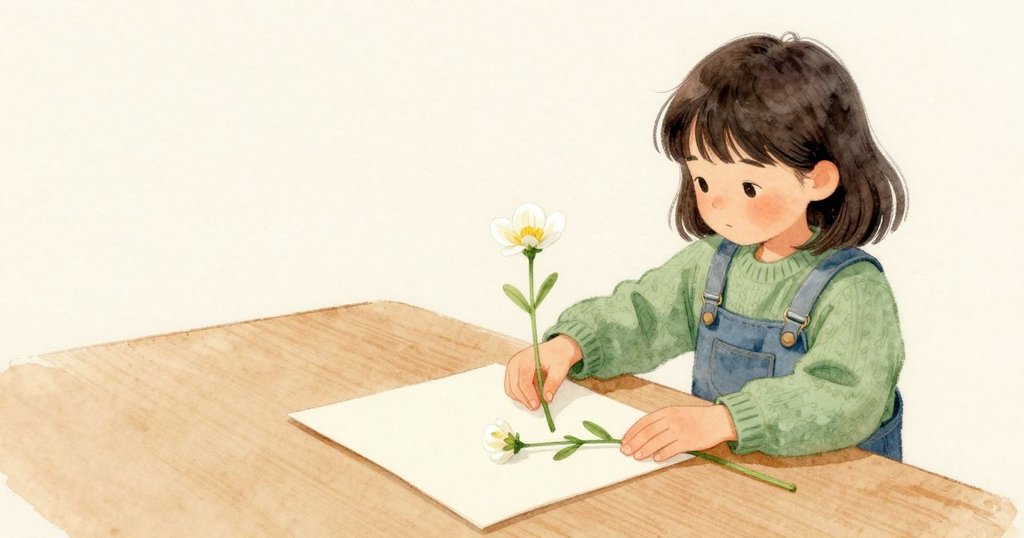
Darla slid one pressing paper aside and nudged the first flower into place, index finger tracing a curve around the stem.
Two stems crossed at her palm, and her hands paused at an impasse, balance refusing the neatness she had imagined.
She rearranged the taller stalk toward the margin to integrate both blossoms on one spread, leaving space to note the date.
Under her fingertip, a curled rim began to subside as the tissue lay flat, moisture smudging a dark oval on paper.
Helena craned closer without touching the page and said, “That arc sits well there, and the light keeps its brightness.”
She looked across again; the grandmother’s bluet, almost only paper now, held a twin mark on the facing leaf, barely visible.
Lifting the edge with two fingers, Helena let air slide under, and a dry, powdery sweetness rose then settled back.
The mother’s marigolds showed mid-change, each petal a bridge between body and sheet, color threading outward yet anchored to its ribs.
Light shifted as a cloud moved past the window, and shadows from the shelves reached halfway across the wide table.
Darla’s eyes followed the pale halo and the glinting hinge, details long present, now bright as if freshly set there.
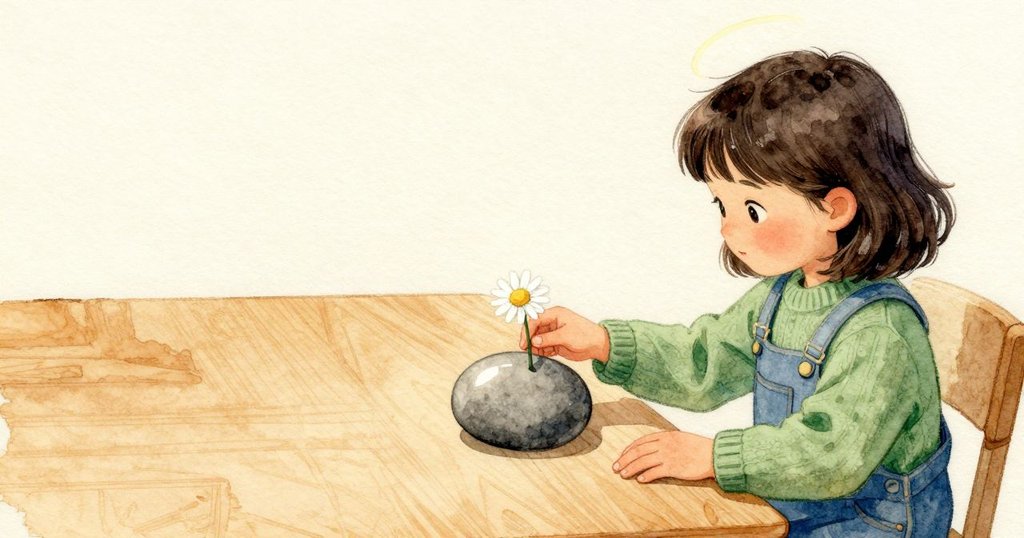
She aligned her own small daisy with the blank’s pale field so its circle echoed the bluet’s faint circumference across the room.
The stone no longer read as a stopper alone; on its edge, it caught and threw a thin strip of glare.
She steadied it with one hand while the other moved the pencil to the margin, graphite ready to mark place and day.
A low hum from outside faded, the room’s quiet integrating pages and afternoon into one plane of amber and paper grain.
Her fingertip rested on the stone’s cool curve at the book’s corner, the weight not yet tipped down to close.
繁體中文 Translation
那顆河石靠在達拉的空白頁旁邊,用薄薄的一條邊緣立著,窄長的影子斜切過壓花用的白紙。
它平常攤平、渾圓,成為她撫順新鮮花瓣、闔上書頁之後的一份安靜重量。
窗邊低斜的光帶著琥珀色,落在工作桌上,沿著她那本新冊子的書脊聚成一條亮帶。
海蓮娜把一掌貼在桌緣,另一隻手靠在鉛筆旁,看著光線在木紋上緩緩移動。
今天帶回來的小小一疊花材整齊地等著,花梗微濕,花瓣的邊緣已開始變得柔軟。
「光照在桌面這邊很暖,靠書架那邊就明顯涼一些,」海蓮娜說。
桌面的另一頭,祖母的冊子翻在一朵舊的矢車菊上,顏色已經滲進紙的纖維裡。
那片花瓣的身體變薄到近乎透明,像住進紙裡的輪廓,淡淡的剪影周圍圍著一圈微弱的暈光。
旁邊母親的頁面還留著可辨的金盞花,顏色仍停在花瓣上,同時在下面隱隱泛著一層微光。
在裂開的布面角上,熵以鬆散的線頭露出形跡,細毛一樣的纖維在光裡亮著。
內側書背的一條窄帶閃著乾乾的黏性光澤,那是早於達拉年紀多年的細緻修補。
達拉把一張壓紙推到一旁,輕輕把第一朵花挪到定位,食指沿著花梗的弧線描過一圈。
兩條花梗在她掌心交叉,她的雙手在這個僵局裡停住,平衡不肯給她想像中的整齊。
她把較高的花莖移向頁邊,好把兩朵花整合在同一跨頁,還留出寫日期的位置。
在她指尖下,一道向上捲起的邊緣隨著薄紙貼合而慢慢消退,微濕在紙上暈出一枚深色橢圓。
海蓮娜俯身靠近,沒有碰到頁面,說:「那道弧線擺在那裡很合適,光也維持了它的亮度。」
她又看向那一頭;幾乎只剩紙的祖母那朵矢車菊,在對頁上留著一個幾不可見的對映痕跡。
海蓮娜用兩指托起頁角,讓空氣滑進去,一股乾爽、帶粉的甜香升起,又慢慢沉回去。
母親的金盞花正處在變化之中,每片花瓣都是身體與紙之間的一座橋,顏色向外穿出,同時仍扣住自己的筋脈。
一片雲從窗外移過時,光線變了,書架投下的影子延伸到寬桌子的中段。
達拉的目光追著那圈淡暈與閃亮的書背,這些一直在那裡的細節,此刻像剛被放上去一樣清新。
她把自己那朵小雛菊對齊空白頁上的淡色場,使它的圓正好呼應房間那頭矢車菊的微弱圓周。
那塊石頭不再只像一個止擋;用邊緣立著時,它接住又反射出一條細細的亮紋。
她用一隻手穩住石頭,另一隻手把鉛筆移到頁邊,石墨準備好要寫下地點與日期。
窗外的低鳴聲漸弱,房間的靜,把頁面與午後揉合成同一片琥珀色的紙與木紋平面。
她的指尖貼在書角那一抹清涼的石面上,重量還沒有向下傾去闔上。
Vocabulary in Context
- subside
逐漸平息、下降、沉降;力度或高度減弱。
“Under her fingertip, the curled petal rim began to subside, settling as the tissue guided it into the page.”
在她指尖下,捲起的花瓣邊開始沉緩下來,隨著吸水紙的引導貼進紙頁。
- impasse
僵局;無路可走、暫時無法繼續的情勢。
“Two stems crossed in her palm, and her careful hands stalled at an impasse, the balance refusing her tidy plan.”
兩根花梗在她掌心交叉,她小心的手停在僵局裡,平衡拒絕了她的整齊安排。
- adhesive
黏性的;與膠黏有關、能使物體彼此黏合的。
“Along the inner hinge, a narrow mend shone with a dry adhesive gleam, the careful repair older than Darla’s hands.”
在內側書脊,一道狹長修補帶著乾透的黏性微光,這份細修比達拉年長。
- integrate
使整合、結合;把不同部分匯聚成為一個完整的整體。
“The room’s quiet seemed to integrate pages and afternoon, laying them into one calm plane of amber and grain.”
屋內的寧靜像把書頁與午後整合,鋪成一片琥珀色與木紋的平和平面。
- entropy
熵;衡量系統混亂程度的概念;比喻物品或秩序逐漸走向鬆散與衰敗。
“At the cracked cloth hinge, entropy read as fraying threads that lifted like little antennae and sparkled in slanting light.”
在破裂的布質書脊處,熵像鬆散的線頭般顯現,豎起如小觸角,在斜光裡閃爍。
Teacher's Spark
AI-generated teaching prompts to help teachers extend a story
Story Discussion - Pressing Flowers
請描述文中光線與色彩的細節;這些感官描寫如何共同塑造房間的氛圍與閱讀體驗?
開放式參考答案
The amber slanting light pools along the book spine and creates warm zones on the table contrasted with cooler areas by the shelves. Thin strips of glare catch the stone's edge and the dry adhesive sheen, while the pale halo around the bluet and the lingering pigment of the marigolds add soft, muted colors. Together these details make the room feel quiet, intimate, and suspended in time—a tactile, warm workspace where small textures and subtle shifts become meaningful.
達拉把較高的花莖移向頁邊,是為了把兩朵花整合在同一跨頁並留出寫日期的位置。她的這個動作是否主要出於實用考量(例如留日期位置)?
是非題參考答案
Yes — the move serves a practical purpose (leaving space to note the date) while also achieving a visual integration of the two blossoms on one spread.
呈現一個由窗外雲影移過到達拉將雛菊對齊那一刻的多步因果鏈:列出至少四個連續步驟並說明每步如何促成下一步。
開放式參考答案
Cloud moves past the window → the slanting light shifts → shadows from the shelves extend and highlights change → small details like the pale halo and the glint on the hinge become more noticeable → Darla's attention follows those brightened details → she aligns her daisy so its circle echoes the bluet across the room.
從他們的手勢、語句與觀看方式,推論達拉與海蓮娜在處理壓花時的內心態度或情感有何不同?請具體舉例文本細節支持你的推論。
開放式參考答案
Darla appears intimate and tactile—her finger traces the stem, she pauses at the impasse, and she steadies the stone—suggesting careful concentration and a desire for balance. Helena is more observational and gently advisory—she rests a palm on the table, leans close without touching, and comments on the arc and light—suggesting experience, calm guidance, and a restrained attention.
在文本裡,石頭、花瓣與書頁各自可以象徵什麼?選一至兩項象徵意義並以文中具體細節說明你的解讀如何被支持。
開放式參考答案
The stone can symbolize an anchor or moment of decision—the way it balances on its thin edge and throws a thin strip of glare suggests a poised, deliberate presence. The flower petals symbolize transience and memory—the bluet has thinned into paper and left a pale silhouette, and the marigold's pigment lingers like a ghost glow, showing how bodies fade into traces preserved on the page. The book/pages function as a repository of time and repair—the dry adhesive sheen and old mend imply deliberate preservation of past moments.
作者對花瓣變薄、顏色滲入紙纖維,和那股“乾爽、帶粉的甜香”的描寫,是否主要在強調時間的流逝而不只是物質變化?
是非題參考答案
Yes — the descriptions of thinning petals, pigment settling into fibers, and the powdery scent all imply aging and the passage of time, turning living flowers into preserved traces within the book.
把文中「光線」和「內側書背的乾黏性光澤」分別比擬成兩種記憶類型:'光線'像 ________,而 '乾黏性光澤'像 ________(用英文填空)。
填空題參考答案
fleeting memory; preserved memory
Role Play - Steadying the Stone Before Closing the Book
情境
場景設定在達拉的工作桌:窗外低斜的光把桌面染成琥珀色,達拉已把她的小雛菊對齊空白頁,右手穩住那顆立著的河石,左手握著鉛筆準備在頁邊紀錄日期。海蓮娜站在桌邊,靠近但不觸碰頁面,輕輕托起一角祖母那本翻開的冊子,讓一股乾爽、帶粉的甜香微微上升。此刻是「達拉決定是否合上書本、以及如何安置最後一朵花」的停頓瞬間。教學指引:請兩位學生分別扮演Darla與Helena,重新演繹這段片刻的對話與動作。鼓勵學生用細緻的感官形容(光線、觸感、氣味、重量),練習表達猶豫與建議的委婉語氣(e.g. modal verbs, hedging),並同時模擬物件操作(穩住石頭、托頁角)。每組演練二至三輪,交換角色,並在每輪後簡短回饋如何改進描述的精確度與語氣的禮貌程度。
角色
開場白建議
- •“Hold the stone with your left hand so it doesn't roll — the thin glare on its edge lines up with the bluet's faint circle. I'll write the date while you keep it steady.”
- •“If I lift this corner a little, you can smell a dry, powdery sweetness rising — it shows how much the bluet has already faded into the page. Do you want to leave the book open a bit longer?”
Creative Writing - Counterfactual: The Tipped Stone
寫作提示
任務說明:採用「反事實(counterfactual)」的平行分支——想像那顆河石微微傾斜,讓書頁合上,或只蓋住某一角,從而改變當下的瞬間。請以 Darla 或 Helena 的視角,用英文寫一段 150–200 字的續寫,保留原故事的角色、場景與感官細節(光線、石頭、花瓣、書背、鉛筆、日期等),並至少使用下列 word bank 內的八個詞。寫作時注意因果延續:石頭的傾斜如何改變平衡、陰影如何被封存、花瓣的痕跡是否被鎖進頁面,人物的動作與內心如何回應這一微小變動。 示例分支(中文示範,約 150 字): 達拉的指尖貼在石面上,感到一陣更輕的震動;石頭忽然向內傾了一絲,書頁發出輕微的紙擦聲,像是屏息。那條細細的亮紋被切斷,半圓的暈光在書脊邊緣被封住。祖母的矢車菊在對頁上沉入更深的輪廓,像是被輕輕按印;母親的金盞花則在新蓋上的壓力下,顏色更貼近紙纖。海蓮娜的手離開了桌緣,眼神在光與紙的接縫間流轉。達拉本想記下日期,卻又覺得此刻需要讓時間停在這個被合上的瞬間。房間的琥珀光沉了下去,帶走了一層未曾說出口的溫柔。 任務補充:寫作時可選第一人稱或第三人稱、內心獨白或細節敘述;完成後用鉛筆符號(*)標出你用了哪些 word bank 詞彙。
詞彙庫
寫作輔助
- • When the stone tipped, I felt a small shift in the light and...
- • Helena watched the page close slowly, noticing how the petals...
- • A thin strip of glare fell across the spread, and for a moment...
- • I moved the pencil to the margin but paused because...
- • The bluet's faint circumference pressed into the opposing leaf, creating...
- • It was as if the room inhaled; the amber light...
Vocabulary & Grammar Focus
重點單字
stone
小塊岩石;在故事中指放在書角、用來穩住頁面的河石,既有重量也帶視覺焦點。
A river stone stood on its thin edge beside Darla’s blank page, its weight steady but poised.
petal
花瓣;故事中描述其從厚實到近乎透明,與紙纖維互相留下痕跡的細節。
A petal had thinned to near-transparency, leaving an outline pressed into the page's fibers.
halo
光暈;圍繞物件邊緣的淡淡亮圈或暈影,在故事裡強調顏色與透光的細微痕跡。
A pale halo ringed the bluet's outline on the grandmother’s open leaf, barely visible.
hinge
書本內側的鉸接或摺痕處;故事中指靠近書背內側那條閃著乾黏光澤的窄帶。
Along the book’s inner hinge a narrow strip caught the light with a dry adhesive sheen.
marigold
金盞花;母親的花材之一,其花瓣仍留有色素,處於身體與紙張之間的變化中。
The mother’s marigolds kept pigment on their petals while a ghost glow whispered beneath.
glare
刺眼的亮紋或反光;故事裡石頭邊緣反射出的一條細細亮線,成為視覺焦點之一。
The stone’s edge caught and threw a thin strip of glare across the page.
graphite
石墨;指鉛筆芯的物質,象徵準備在頁邊記錄日期或地點的行動。
She held the pencil at the margin, graphite ready to mark place and day.
smudge
汙染或暈染;書頁上因微濕而形成的深色橢圓或斑痕,是紙與濕氣互動的痕跡。
Under her fingertip, moisture smudged a dark oval deep into the paper.
grain
紋理;此處指桌面或紙張、木材表層顯現的細微紋路,被光線強調出來。
Amber light pooled along the spine, emphasizing the table’s wood grain and paper's texture.
edge
邊緣;物體的細長一側。在故事中既是石頭能立住的位置,也是光線與影子的界線。
On its thin edge the stone cast a narrow shadow over the pressing papers.
文法重點
重點說明:分詞片語(participial clause)作為修飾或背景說明的資訊壓縮手法。在故事中句首的現在分詞片語如 "Lifting the edge with two fingers",用來在一句話開頭同時交代動作背景與責任主體,營造流動的敘事節奏。教師提示:說明主詞一致性(分詞片語的行為者通常要與主句主語相同),並示範如何把分詞片語改寫為完整的從屬子句(例如以 When / After 引導),以便學生理解兩者在語義與強調上的差別,以及避免產生 dangling participle(與主句主語不一致的懸垂分詞)。
練習題
A pale ___ ringed the bluet’s outline on the grandmother’s open leaf.
參考答案
halo
配對以下單字與意思:
顯示答案
A-8B-2C-1D-10E-3F-7G-6H-5I-4J-9
Lifting the edge with two fingers, Helena let air slide under, and a dry, powdery sweetness rose then settled back.
參考答案
When Helena lifted the edge with two fingers, she let air slide under, and a dry, powdery sweetness rose and then settled back.
文化連結 - 壓花與桌邊記憶儀式
主題
壓花與桌邊記憶儀式
討論要點
- •故事裡達拉把小雛菊對齊空白頁、用河石穩住書角,並在頁邊準備寫下地點與日期。你是否也有用小物件(例如石頭、書、標籤)來標記或保存回憶的習慣?請描述一次你擺放或保存某個小物的經驗。
- •故事強調光線與位置對花瓣與紙張的影響(例如「光照在桌面這邊很暖,靠書架那邊就明顯涼一些」)。想一想光、溫度或濕度在保存物品時的角色:在你自己的保存方法裡,你會如何考慮放置位置和光線?你會做哪些調整來保護脆弱的材料?
文化比較
在這個故事(呈現為英語語境中的家庭工作桌場景)中,壓花是一種細緻且私人的桌邊儀式:使用河石當作止檔、在空白頁上排列花瓣、在邊緣記下日期,還有祖母與母親的冊子作為代際的記憶載體。相較之下,繁體中文社會裡雖然同樣存在保存花卉或物件以留存記憶的做法,但常見的工具與呈現方式可能不同──有人會以厚重的書冊、布包、相簿來夾藏,有時把花材做成工藝品或以樹脂封存,也可能把這類物件帶入家庭聚會或節慶的集體回憶中。換言之,兩邊都重視保存情感與記憶,但英語語境的描寫更著重於個人桌邊的光影、手感與細微安排,而繁體中文語境則常見不同的材料選擇與更明顯的家庭或公共呈現方式。
Comprehension Quiz
1. Where was the river stone balanced?
2. How did the window light appear in the room?
3. Where did Helena rest one of her hands?
4. What was true about the grandmother’s bluet?
5. Why did Darla move the taller stalk toward the margin?
6. What caused the shadows from the shelves to reach farther across the table?
7. What rose when Helena let air slide under the page edge?
8. How did Darla position her small daisy in relation to the bluet across the room?
Recommended Reading
River Stone and the Clock's Missed Tick at the Table
When the Inkstone Finally Spoke
Glass, Fern, and a Blue Ridge on the Print
The Dampened Crane at the Origami Desk
Quartz Pebble Steadies the Paper Cranes
Brayer Clicks and a Breeze at the Printing Bench
Garland Above an Empty Chair
Condensation on the Glass at the Sun-Print Bench
Old Paper Crane Re-Seen Under the Desk Lamp
Petal Shift on the Printing Block
From Lemon-Green to Blue: A Silhouette Under Glass