The Brass Plate and the Missing Sand Line - 適合進階的英文短篇故事,含中譯與發音
黃銅板與消失的沙線 | 英文/中文 雙語朗讀
Story Content
English Original
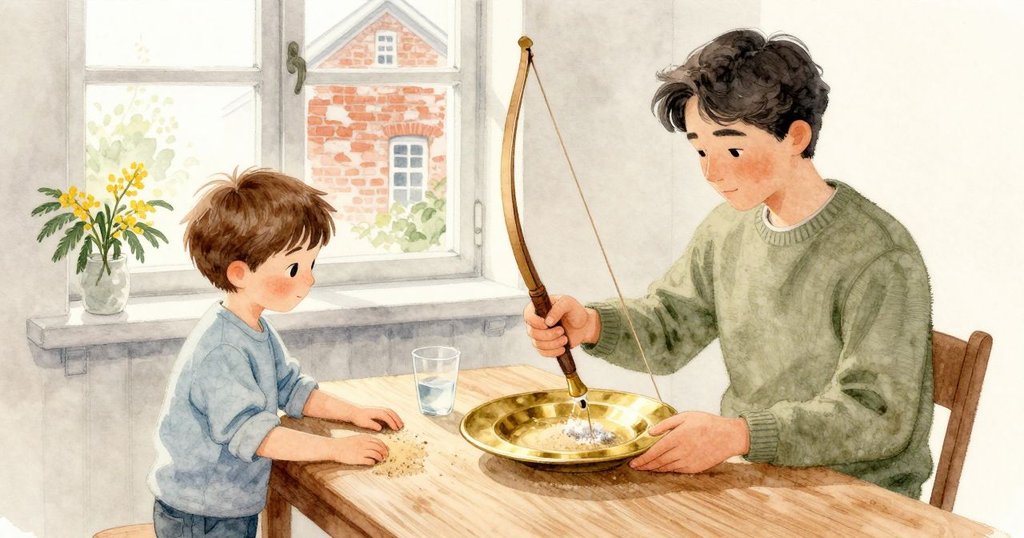
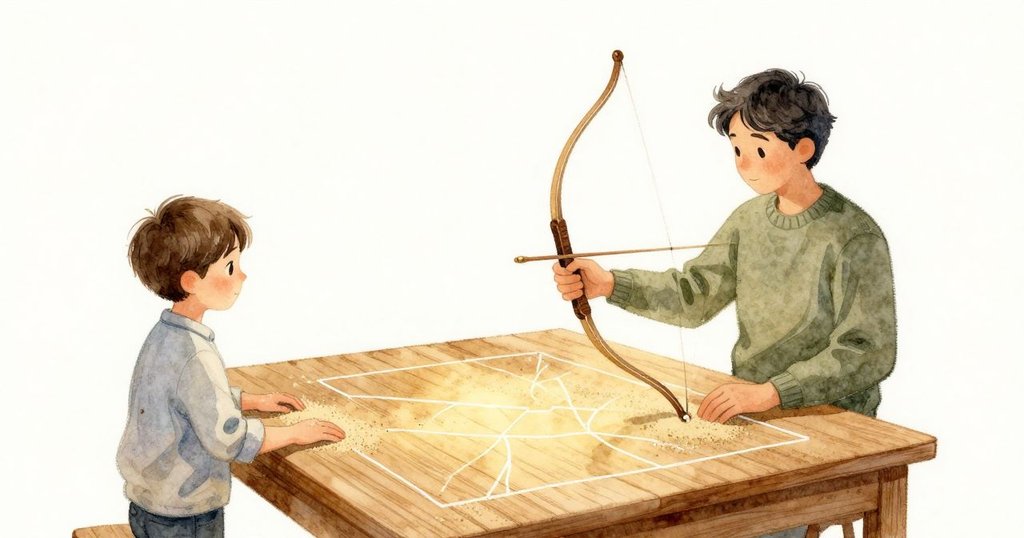
A thin metallic note climbed as the bow drew, and the brass under the sand began to quiver.
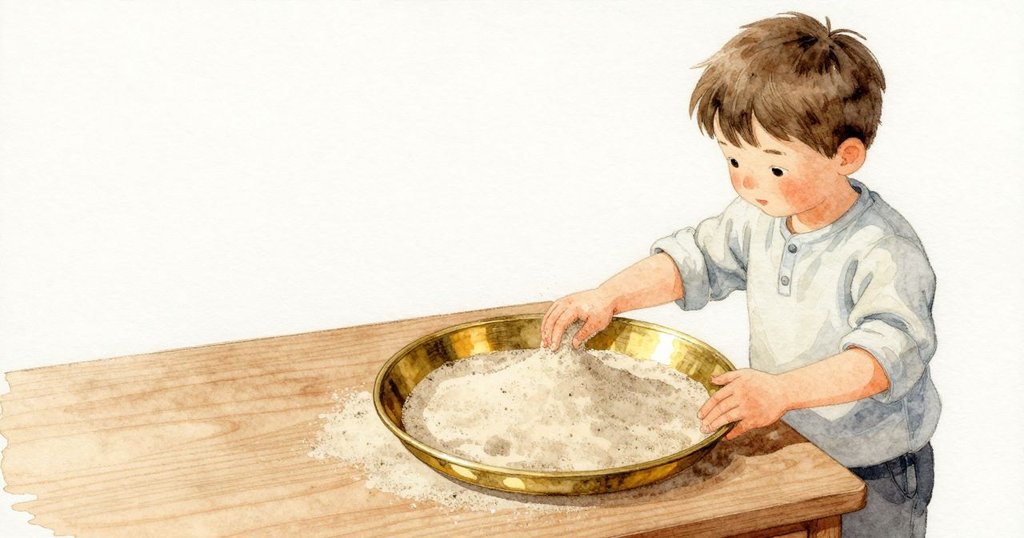
Marnie held the opaque ceramic dish, pinched a measured cloud between fingers, and let it hiss across the plate.
Seth steadied the bow at one corner, its hair faintly warm from rosin, the note bright enough to make water shiver.
Her wrists found a height that kept the grains from clumping, and a fine sift walked out from her fingers.
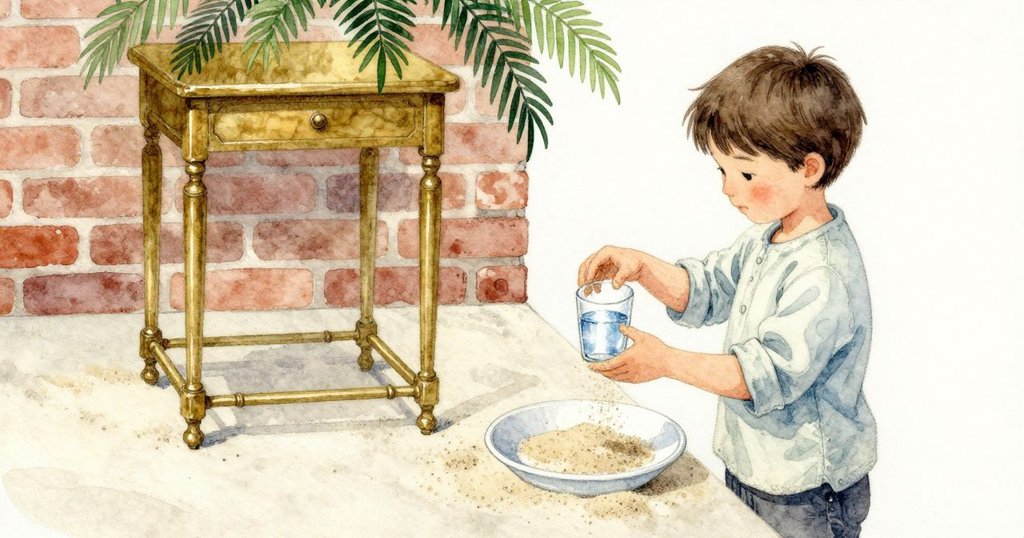
On the sill, a small mimosa in a chipped pot leaned into the draught; outside, a brick parsonage showed flaking paint.
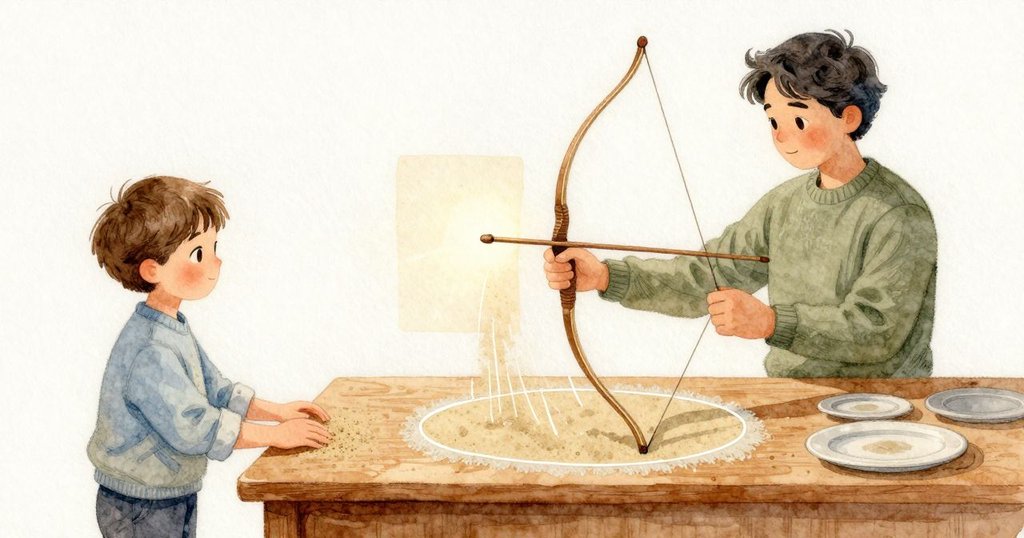
The brass threw a clean square of light upward, and the random dusting began to migrate, abandoning glare for chalk-white lines.
Along the rim, a thin ghost border formed where runaway grains slipped off and lay unaccounted on the wooden table.
On the shelf below, spare plates showed finger smudges and faint rings where older patterns had been brushed away.
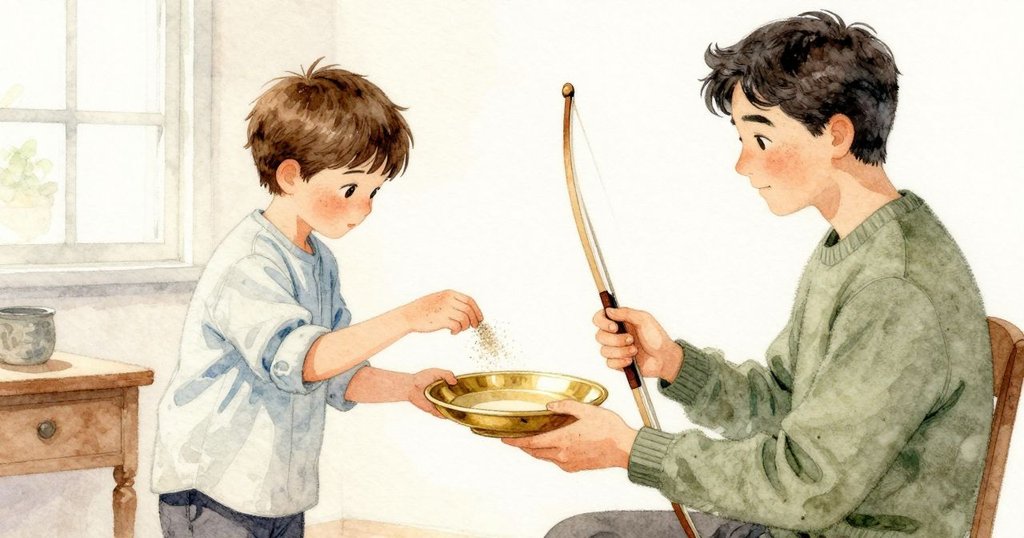
Seth tipped the dish a little toward her grip and said, "Here," leaving it between Marnie’s hands and the steady bow.
Her thumb and forefinger hovered; a small dilemma balanced there—add more sand now, or wait for the note to settle.
She moved, then stopped mid-drop, the grains hanging from her skin as the nearest line on the plate stayed bare.
Her free hand reached the rim and rested, light as a moth on glass, and the pattern dissolved, then drew itself new.
The dish’s high lip made the sand heap slightly against her grip, so she tapped once to loosen the ridge.
The bare stripe widened where her finger deadened the edge, and pale roads of stillness linked across the square like a net.
Marnie’s shoulders leveled, and she lowered the extra pinch back into the dish without spilling a grain.
"It's steady," Marnie said, her voice low enough to sit under the tone while her fingertip stayed on the rim.
The water in the glass trembled a millimeter, then held, as the square on the brass looked suddenly deeper from her angle.
From the side, the lines looked thicker on the near edge and thinner where the sheen ran away from her.
Sand skittered only at the borders near her touch; at the clamp, the square center stayed cool beneath its scarred screw head.
Beyond the window, the parsonage bricks showed old mortar like chalk seams, while the mimosa's fronds lifted and settled under the mild draft.
When the bow lifted, the tone left the air, yet the pattern held—quiet roads mapped in sand, their crossings sharp as pencil.
A thin white outline of fallen sand traced the square, a border that held the day's small spills in place.
A fine rosin smell lingered along the table’s edge, thin and piney, resting just above the brass and her hands.
繁體中文 Translation
弓毛拉過去時,一縷清瘦的金屬音往上攀升,沙下的黃銅開始微微顫動。
Marnie 捧著不透光的陶碟,兩指捏出剛好的小雲,讓沙子細細嘶過板面。
Seth 在一角穩住弓,松香讓弓毛帶著微暖,音色明亮到隔桌那杯水面都起了細紋。
她的手腕找準一個高度,讓砂粒不會結團,一縷細篩便從指間走了出來。
窗檯上,一盆邊緣缺口的小含羞草隨著微風側傾;窗外,一棟磚砌的牧師館露出剝落的漆面。
黃銅把一方潔亮的反光推向上方,無秩序的砂點開始遷移,離開光澤,聚成粉白的線條。
邊緣旁出現一道細薄的「幽邊」,跑脫的砂粒滑落,散在木桌上,像幾顆無從歸類的小點。
下層的層板上擺著備用的板片,指痕與淡淡的環形痕跡還在,像是舊圖樣被刷走後留下的邊影。
Seth 把碟子微微傾向她的手心,說道:「給你。」碟子就停在 Marnie 的手與穩定的弓之間。
她的拇指與食指停在半空;一個小小的兩難就那樣懸著——此刻再添一些,還是等音符穩住。
她一動,又在半落時停住,砂粒貼在指尖不下,因為板面最近的那一道位置依然空白。
她空著的那隻手碰到邊緣,輕得像一隻停在玻璃上的蛾,圖樣隨即鬆散,又重新自我收合成形。
碟子的高邊讓沙子在她的握處微微堆起,所以她輕敲一下,把小脊線鬆開。
她指腹讓邊緣發悶的地方拓開成一道空帶,淡白的靜止之路在方形板面彼此相連,像一張網。
Marnie 的肩線也跟著放平,她把多出的那撮沙子送回碟裡,一顆也沒撒出。
「它很穩。」Marnie 說話壓得很低,聲音貼在音色之下,指尖仍停在邊緣。
玻璃杯裡的水面顫了不到一公釐,隨後定住,而她這個角度看去,黃銅方形像是忽然更有了深度。
從側邊看,那些線在近處顯得更厚,遠處隨著亮澤退去而變薄。
只有她碰觸附近的邊界還在細細竄動;中央的夾座下方方正的一點維持清涼,磨痕纏著螺帽。
窗外的牧師館磚牆露出像粉筆縫般的舊灰漿;含羞草的羽狀小葉在溫和的氣流下抬起又放下。
弓一抬起,聲音就離開了空氣,可圖樣還在——靜默的路用沙子畫成,交會處像鉛筆線一樣俐落。
一圈細白的落沙描著方形外沿,把今天微小的灑落收在邊界之內。
一縷細緻的松香味沿著桌緣停留,薄而帶松木氣,就懸在黃銅與她的雙手上方。
Vocabulary in Context
- parsonage
牧師住宅;教會提供給神職人員的傳統磚房或住宅。
“Beyond the window, the brick parsonage showed chalky seams and paint giving way.”
窗外那棟磚造牧師宅露出粉白的灰縫,漆面也在退讓。
- mimosa
含羞草;敏感的觀葉小盆栽植物,輕風吹拂時會微微移動或收合葉片。
“The small mimosa on the sill leaned toward the draft, its fronds lifting and settling in tiny waves.”
窗台上的小含羞草向氣流傾著身,羽狀葉一陣一陣抬起又落下。
- dilemma
兩難抉擇;在兩個(或多個)選項間難以決定的處境。
“A quiet dilemma hovered between her fingers: feed the plate now or let the tone decide.”
一個安靜的兩難在她指間盤旋:此刻添砂,還是讓音調自行決定。
- opaque
不透明的;無法透光或看穿的(也可引申為難懂的)。
“She steadied the opaque dish, its rim high enough to bank the sand into ridges.”
她穩住那個不透明的盤子,高高的邊沿讓砂子堆成細脊。
- unaccounted
未被計入的;成因未明或去向不明的(常見於片語 unaccounted for)。
“A pale fringe of sand lay unaccounted on the table's edge beneath the climbing square of light.”
桌緣上留著一圈淺色砂痕,未被計入,躺在爬升的方形光影之下。
Teacher's Spark
AI-generated teaching prompts to help teachers extend a story
Story Discussion - The Brass Square
請描述故事開頭弓拉起時的聲音與周遭物理反應。哪些具體細節讓讀者能同時「聽見」與「看見」這個瞬間?
開放式參考答案
A thin metallic note climbs as the bow draws; the brass under the sand begins to quiver. The note is described as bright enough to make the water in a glass shiver, which gives a visual ripple tied to the sound. Rosin warms the bow hair and leaves a faint piney smell on the table edge. Sand hisses across the plate and a fine sift trickles from Marnie’s fingers. Light from the brass throws a clean square upward and the dust migrates into chalk-white lines. Together these details — metallic pitch, vibrating brass, trembling water, hissing sand, drifting dust, and the piney scent — create a multisensory moment that the reader can both hear and see.
Marnie 把拇指與食指停在碟邊,使得靠近她觸碰處的砂粒停止移動,這是否表示她在以身體控制聲音對沙子的影響?
是非題參考答案
Yes. Her touch deadens the vibration at the rim, widening a bare stripe and creating areas of stillness while other borders still skitter; the text links her physical contact directly to local changes in the sand pattern.
從弓發出音色到沙粒形成「靜止之路」,列出至少三個連貫的中間因果步驟,並說明每一步如何促成下一步。
開放式參考答案
1) The bow draws a thin metallic note, producing vibration. 2) Those vibrations travel into the brass plate beneath the sand, causing the brass to quiver and to throw a clean square of light; vibration and light alter the micro-environment on the plate. 3) The altered vibration/light environment makes the loose sand migrate and settle into lines and borders. 4) Marnie’s touch modifies the transmission of vibration at the rim, creating zones of dampened motion that let pale roads of stillness appear and hold the pattern. Each step changes a physical condition (sound → vibration → dust movement → local damping) that enables the next.
當 Marnie 在半落時停住並將手指輕放在碟邊,文本如何暗示她的心理狀態?請用故事中的線索支持你的推論。
開放式參考答案
Marnie appears deliberate, cautious, and attentive. Clues: the ‘small dilemma’ about adding more sand or waiting, the fingertip hovering, her voice kept low under the tone, the careful tap to loosen a ridge, and returning extra sand without spilling a grain. These actions show patience, precise control, and an aesthetic concern for the emerging pattern rather than hurried or careless behavior.
故事裡的「方形」與「像網的淡白靜止之路」是否可以被解讀為秩序對抗混亂的象徵?你同意或不同意,並說明理由。
是非題參考答案
Yes. The square and the pale roads function as a fragile order imposed on random spills: unstructured dust 'begins to migrate' and then 'abandons glare for chalk-white lines' which assemble into a geometric boundary. The border that 'held the day's small spills in place' further suggests containment and human effort to make order out of accidental scattering. The contrast between random sand and deliberate lines supports a symbolic reading of order vs. chaos.
作者用哪一個英文字描述松香的氣味?請填入故事中的原詞。
填空題參考答案
piney
將這個場景與一幅靜物畫(still life painting)比較:列出兩個相似處和兩個不同處,並討論作者如何以語言讓場景呈現出繪畫般的質感。
開放式參考答案
Similarities: (1) Both focus on composed arrangements of objects (dish, brass, glass, plant) and on surface details like smudges and rings; (2) Both emphasize light, texture, and stillness — the brass throwing a square of light and the fine sand lines resemble painted highlights and brushwork. Differences: (1) The scene includes temporal sound and movement (the bow, the note, sand shifting) whereas a still life is typically frozen in time; (2) The human tactile intervention (Marnie’s hovering fingers, adjustments) introduces intentional, momentary action not usually present in a purely static painting. The author uses visual metaphors, precise tactile verbs, and cross-sensory language (sound making water shiver, sand hissing, piney smell) to create painterly texture: tight, image-rich noun phrases and verbs that fix light and grain as if composed on a canvas.
Recommended Reading

Sparrow and Ocean Breeze at the Vibrating Brass Plate
Changing the Voice of a Singing Bowl with Water

Sand Patterns on a Silent Brass Plate
Cricket and the Vibration Pattern on the Brass Plate
Planting a Stick and Shadow Marks on a Moving Dune
The Bowl Beneath the Mud

Water Droplet Rising in the Singing Bowl
A Damp Sheet Changes the Origami Desk

Selwyn Touches the Vibrating Plate
Setting the Enamel Basin on the Damp Ring

The Quiet Disclosure of the Dripping Tray