Counting at the Tide Pool with One Coin and a Notebook - 適合進階的英文短篇故事,含中譯與發音
在潮池邊,用筆記本和一枚硬幣記數 | 英文/中文 雙語朗讀
Story Content
English Original
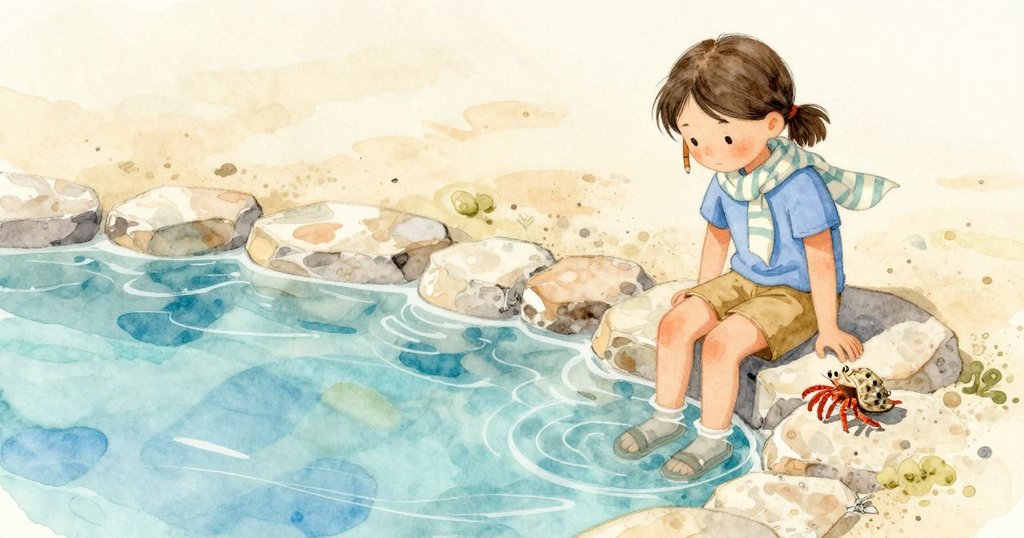
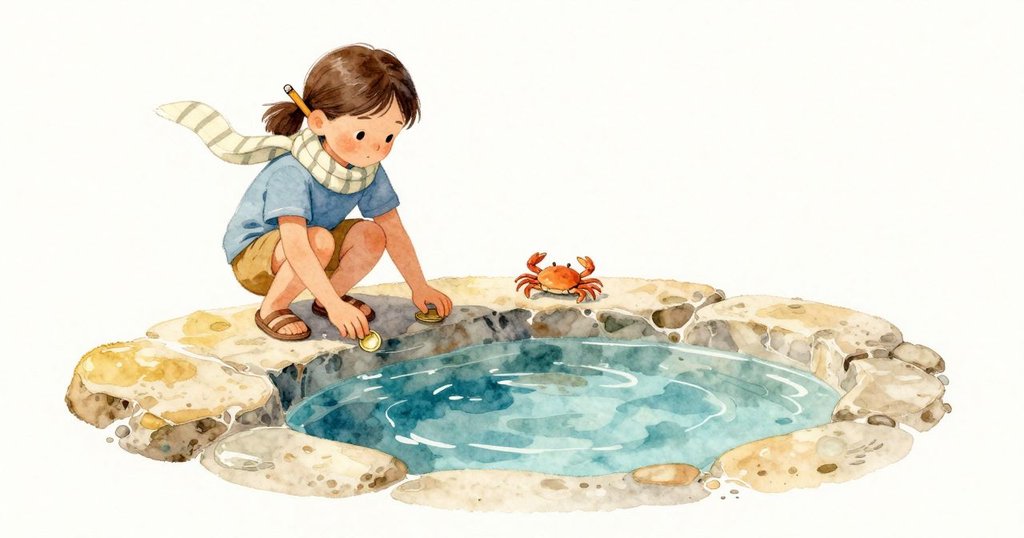
From a still perch above the basin, Tamsin watched a hermit crab pick its careful way across a rib of rock.
Its borrowed shell grazed the pool’s meniscus, and each step made a small, irregular click against the ledge.
Light came in at an angle, bending the depth so the floor seemed nearer than her eyes measured.
In the clear pocket, anemones clung to the walls, tiny fish hung like commas, and algae pooled in silky ribbons.
Warm rock pressed dry against her shins while the water below kept a cooler blue she could read in shade.
Along the rim, a pale ring of salt marked where the pool had reached before the sun drew more water away.
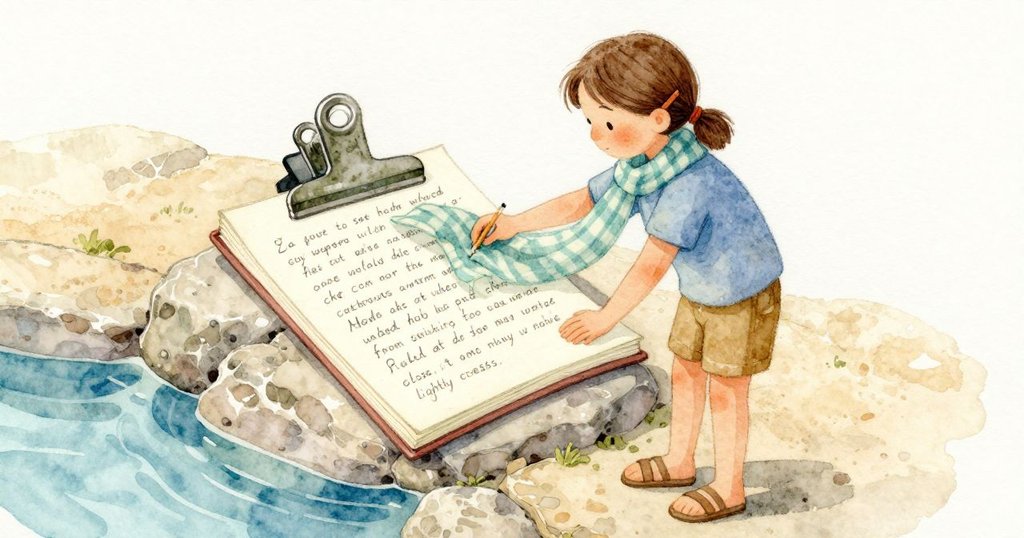
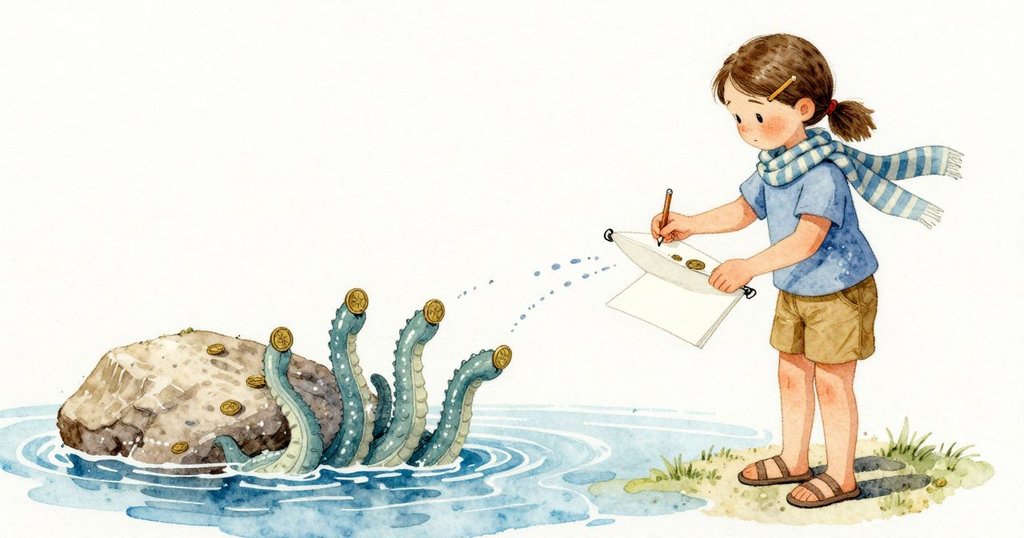
She lowered herself beside the basin and spread a notebook on the stone, the clip’s little metal bracket clouded with greenish tarnish.
A scarf lent a band of shade when she draped it from the clip, and her forearm met the rock’s stored warmth.
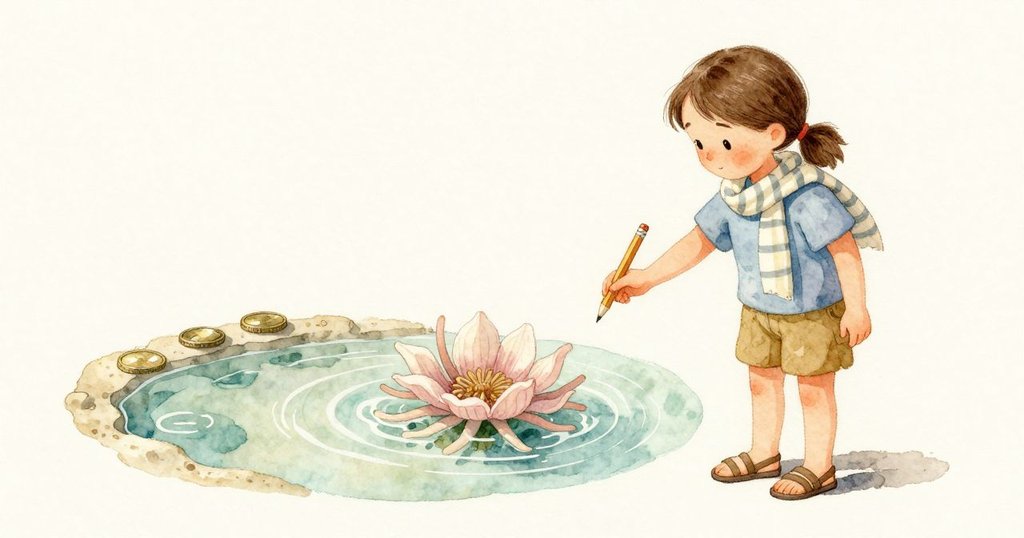
She set three coins on the dry rim as counters, the way school arithmetic trained her fingers to sort by twos.
An anemone opened wide in the shallow light, its tentacles arranging a clean symmetry; her pencil hovered to follow it.
She dipped only a fingertip and watched a thin ripple stroke the tentacles without stirring silt or grazing the small dwellings.
“There you are,” she said toward the crab, her voice barely louder than the soft slap beyond the shelf.
When she started pairing coin to tentacle, a darting fish crossed the view and the water’s bend scrambled every count mid-line.
Her hands paused above the page, then fell into an old motion, thumbs and forefingers nudging the coins in fives before she noticed.
The tide outside struck hard enough to spray a lace of mist that dotted the paper, and the wet spots cooled under the breeze.
She lifted the damp page away from the bracket and unclipped the scarf, letting the glare come back to the surface.
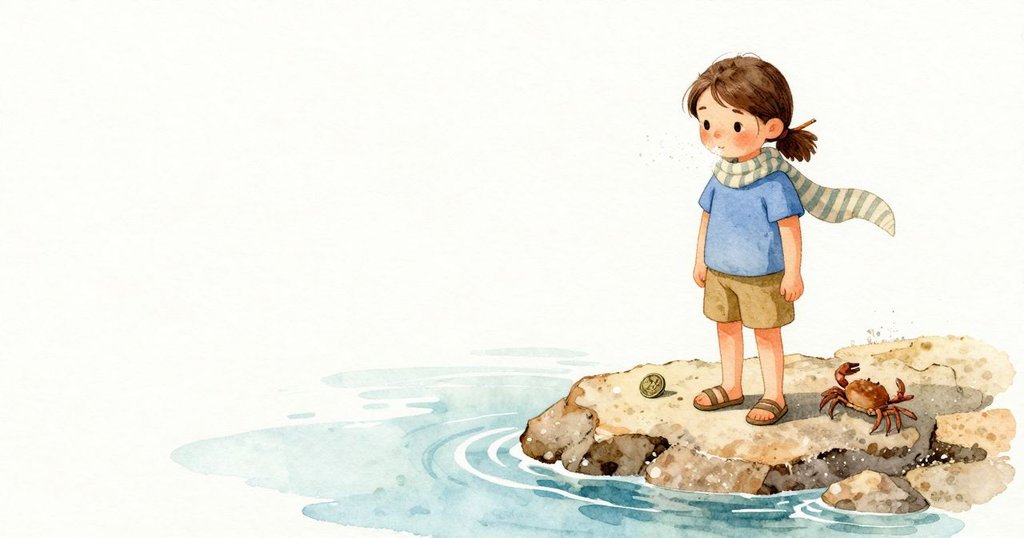
“Okay,” she breathed, and she slid two coins aside, keeping one bright circle as a marker near the crab’s nearest ledge.
With the scarf gone, the basin looked simpler, and the single coin answered each small advance with a quiet glint on the warm rim.
She counted only the ledges now, not the tentacles, and her wrist learned the pool’s rhythm where cool met heat at the edge.
The shaded corner conserved a darker chill, while the sunlit center brightened, and a slow swirl showed two waters exchanging without a ripple.
Salt along the lip powdered a little as air moved, and the crab’s shell tapped once, then disappeared into a crease in the rock.
She left the coin where it was and watched the light shift, wondering which would come first: the return of flood or the salt ring’s collapse.
The sun kept working on the shallow film as she waited, and the answer stayed inside the bright water, not yet decided.
繁體中文 Translation
Tamsin 在凹盆上方停住身子,望著一隻寄居蟹沿著一道岩脊小心挪動。
它借來的殼輕觸水面薄膜,每一步在臺階般的邊緣敲出細碎不勻的喀聲。
斜斜射入的光折起了深度,讓池底看起來比她眼睛量到的還近。
清澈的小口袋裡,海葵貼著壁面,小魚像逗點一樣懸著,海藻成束如絲帶攢在一處。
溫熱的岩面乾乾貼在她的小腿,下面的水維持較冷的藍色,她在陰影裡一眼讀得出來。
邊緣沿著一圈淡淡的鹽痕,標出潮池先前的高度,日光又把更多水分帶走了。
她在凹盆旁放低身子,把筆記本攤在石上,夾子的小金屬支架罩著一層發青的銅鏽。
她把圍巾掛在夾子上,添出一道陰影,她的前臂同時貼上岩石存留的暖度。
她在乾燥的池緣放了三枚硬幣當作計數物,像學校的算術訓練過的那樣,手指自然而然成雙地分排。
一朵海葵在淺淺的光裡大大展開,觸手擺出乾淨的對稱;她的鉛筆懸在空中要跟著走。
她只沾了一點指尖,看細薄的漣漪拂過觸手,既不翻動細泥,也不擦到那些小小住處。
「你在這裡。」她朝那隻螃蟹說,聲音只比外側岩棚那一記輕拍稍高一點。
她正要把硬幣和觸手配成一對一對時,一尾竄動的小魚掠過視線,水面的折光把中途的每一次計數全打亂。
她的手停在紙上方,接著滑入一個舊動作,拇指和食指把硬幣推成五個一組,等她意識到時動作已經完成。
外頭的浪拍得夠響,濺起一層細網般的水霧,在紙上點出星星點點;微風拂過,濕點迅速變涼。
她把濕紙從支架上提開,又鬆開圍巾,讓明晃晃的反光回到水面。
「好。」她吐了口氣,把兩枚硬幣滑到一旁,只留下那一枚亮圓,當作靠近螃蟹最近台階的記號。
圍巾不在後,這個小盆看起來單純許多,單獨的一枚硬幣在溫熱的池緣上,每一次微小的前進都回以一點靜靜的閃光。
她現在只數岩階,不再數觸手,她的手腕在邊緣處學會那裡冷熱相接的節律。
陰影處留住較深的涼意,日照的中央則更明亮,緩慢的旋紋顯出兩種水在無波的交換。
池唇上的鹽隨著空氣的流動輕輕化成粉末,螃蟹的殼敲了一下,接著鑽進岩石的一道縫裡。
她讓硬幣留在原處,盯著光線移動,心裡盤算究竟哪個會先到:回升的潮水,還是那圈鹽痕的鬆散。
她等著時,陽光持續在那層淺薄水膜上做工,答案仍待在明亮的水裡,還沒有定案。
Vocabulary in Context
- tarnish
(金屬)因氧化、潮氣或鹽分而生的黯淡層或污漬;如銅綠般的失去光澤。
“The clip’s bracket wore a greenish tarnish in the salt air beside the basin.”
夾子的支架在盆邊的鹽味空氣裡披著一層綠色的黯斑。
- arithmetic
算術;最基本的加減乘除運算與計數方法。
“Even as fish blurred the view, school arithmetic sorted her coins into gentle pairs.”
就算小魚把視線攪亂,學校教的算術仍讓她把硬幣成雙排好。
- conserve
保存、維持(某種狀態或能量),以免流失或浪費。
“The shaded corner conserved its chill while the sunlit center thinned into a wavering glare.”
陰影的一角守住了涼意,而日照的中心漸漸稀薄成晃動的亮光。
- symmetry
對稱;元素在形狀、位置或排列上均衡而和諧的關係。
“The anemone’s tentacles gathered a calm symmetry her pencil traced without touching water.”
海葵的觸手收攏成安靜的對稱,她的筆不沾水地沿線描過。
- bracket
支架;固定物品用的小金屬托片或夾具。
“She fixed the scarf under the bracket, and the little metal arm kept the shade.”
她把圍巾夾在支架下,小小的金屬臂就穩穩撐住了陰影。
Teacher's Spark
AI-generated teaching prompts to help teachers extend a story
Story Discussion - Tide Pool
故事中有哪些具體的感官描寫(視覺、觸覺、聽覺)用來強調池邊冷與熱的對比?請列出至少三項並說明它們如何傳達冷或熱。
開放式參考答案
Visual: "Light came in at an angle, bending the depth so the floor seemed nearer" conveys brightness and warmed perception in the center. Tactile: "Warm rock pressed dry against her shins" signals physical warmth from the stone. Visual/Color: "the water below kept a cooler blue" uses color to mark coolness. Auditory: "each step made a small, irregular click" and "the soft slap beyond the shelf" provide quiet, cool-edge sounds that contrast with the sunlit stillness.
當那尾小魚掠過視線並打亂光的折射時,Tamsin 停止計數的直接原因是數量被打亂而非情緒分心嗎?
是非題參考答案
Yes. The fish's sudden movement and the resulting change in the water's refraction physically scrambled her visual counts mid-line, so her pause responds to disrupted perception rather than an explicitly stated emotional reaction.
描述從她把圍巾掛上夾子到最後只留下單枚硬幣的多步因果過程。請列出至少三個連貫的因果步驟。
開放式參考答案
1) She drapes the scarf on the clip, creating shade and reducing glare so she can see fine details. 2) In that shaded condition she sets three coins and begins a careful counting routine tied to visual markers (tentacles, ledges). 3) External disturbances (the fish, spray from the tide) interrupt counting and add damp spots; she lifts the page and unclips the scarf, letting glare return. 4) The changed light simplifies the visual field, prompting her to reduce the counting objects from three to one coin as a single, clearer marker.
Tamsin 用硬幣當計數物並在池緣留下標記,這些行為透露她對時間、秩序或控制感的什麼內在態度?
開放式參考答案
Her use of coins shows a preference for tactile, externalized systems to make sense of flux—she seeks small, controllable units in the face of shifting elements. It suggests patience, an appetite for ritualized measurement, and a quiet desire to anchor change (tide, light) by doing something tangible.
作者寫道陽光持續「在那層淺薄水膜上做工」,這句話最可能傳達的意象是:__________。
填空題參考答案
a patient, gradual transformation
分析作者如何透過「一圈淡淡的鹽痕」與「硬幣的閃光」的並置來建立文本中的不確定性或等待感。兩者各自具備什麼象徵功能?
開放式參考答案
The salt ring symbolizes a natural, slowly accumulated record of past tides—an impersonal, ecological marker that predicts change. The coin's flash is a human-made, immediate marker used to measure and respond in the present. Placing them together sets up a tension between natural cadence and human counting, creating suspense about which will change first: the environment's slow shift or her deliberate act. The uncertainty comes from both being plausible indicators but governed by different timescales.
這段細緻觀察自然、謹慎計數並靜候變化的描寫,是否可以被理解為屬於自然觀察者(naturalist)寫作傳統的一種變體?
是非題參考答案
Yes. The passage's emphasis on careful, sensory observation, attention to small processes, and contemplative waiting aligns it with naturalist modes of writing that prioritize close empirical detail and the temporal unfolding of nature.
Role Play - Waiting by the Basin After the Crab Retreats
情境
場景:Tamsin 坐在那個凹盆邊,圍巾已從夾子上取下,三枚硬幣中只留下那枚靠近寄居蟹最近台階的標記。寄居蟹敲了一下殼後鑽進岩縫,池緣留著一圈淡淡的鹽痕,淺薄的水膜在日光下閃著亮光,海葵的觸手還在輕輕擺動。教學目標:讓學生分別扮演 Tamsin 與寄居蟹,練習用英文描述觀察到的感官細節(光、溫度、聲響、動作)、用推測語句表達不確定性(which will happen first?)、以及應對突發小事件(小魚掠過、浪花噴濺紙面)。教學提示:鼓勵學生使用具體動詞和名詞,練習短句和提問句;在對話中加入短暫停頓,讓扮演的另一方用身體語言或簡短英文回應。伸展練習:讓學生描述如果潮水回升或鹽圈鬆散,Tamsin 會如何記錄變化並改變硬幣排列。
角色
開場白建議
- •“I left this coin here to mark the closest ledge. If you move one ledge, how will I know?”
- •“The sun makes the water sparkle—do you prefer the shaded corner or the bright center?”
- •“A wave just sprayed my notebook and made tiny wet spots. Did that scare you into your shell?”
- •“I wonder which will happen first, the tide coming back or the salt ring crumbling—what do you think?”
Creative Writing - Crab's Side Moment
寫作提示
任務說明:從一個側寫的角度,寫一段短文(約120–180字),描述原故事中沒有被直接記錄的一個瞬間。本提示要求你採用寄居蟹的視角或把視角賦予那隻小動物,描寫它在鑽入岩縫前後的感知、動作與選擇。作品必須保留原故事的要素:the basin、the coin、the anemone、the salt ring、Tamsin(她在場但不必是敘述主體),並保持與原故事的感官語彙一致。下面示範一段延伸的側寫,作為寫作參考: 示範延伸片段:寄居蟹把殼邊輕輕蹭過那枚亮圓,反光像一小片白雲在它的視界裡閃動。它感到岩唇上鹽粉的粗糙,觸腳碰到海葵柔軟的臂弧,沒有被刺痛——只是被那節律般的擺動迷惑了一瞬。風把圍巾的影子掃過水面,像一塊移動的遮蔽物,讓池中光線颤了一下。遠處,海浪的號聲提醒它潮汐尚未完成決定;它在縫隙邊停步,殼輕敲石面,聽見自身的小聲回響。最後,它選擇先鑽進更深的裂縫,留下一點潮濕的足跡與那枚亮圓在陽光下慢慢收回光芒,等待下一個被潮水或人的手重新排列的瞬間。
詞彙庫
寫作輔助
- • From the crab's point of view, I could feel...
- • The coin's bright glint made me...
- • Beneath the scarf's shadow, the water looked...
- • A soft ripple touched my shell and then...
- • The salt on the ledge smelled like...
- • I paused at the edge because...
Vocabulary & Grammar Focus
重點單字
hermit crab
寄居蟹:一種常用空貝殼當外殼、在岩池或海灘上爬行的小型甲殼類動物。
From her perch, Tamsin watched a hermit crab pick its careful way along the rock.
basin
凹盆:能蓄水的天然或人造凹陷處,在此指岩石形成的小水池。
She lowered herself beside the basin and spread her notebook on the warm stone.
meniscus
液面弧:液體表面與固體接觸時形成的弧形薄膜,由表面張力造成。
Its borrowed shell grazed the pool's meniscus as each step neared the rim.
ledge
岩臺/台階:岩石表面突出而平坦的邊緣,可作為踏點或觀察位置。
Each step made an irregular click against the pool's nearest ledge.
anemone
海葵:附著在岩壁或潮池中的刺胞動物,外形似花,具有捕食觸手。
An anemone opened wide in the shallow light, tentacles arranging a clean symmetry.
tentacle
觸手:海葵或其他海洋生物伸出的細長肢體,用於感覺或捕捉獵物。
She watched its tentacles arrange a clean symmetry as her pencil hovered.
ripple
漣漪:在水面形成的細小波紋,通常由輕觸、滴落或微風引起。
She dipped a fingertip and watched a thin ripple stroke the anemone's tentacles.
coin
硬幣:小圓形金屬貨幣;在故事中也被用作計數或標記物。
She set three coins on the dry rim to use as small counters.
scarf
圍巾:長條布料,可用來遮陽、保暖或在此作為臨時的遮蔽之物。
She draped a scarf from the clip, and it lent a band of shade.
salt ring
鹽痕(圈):潮退後沿池緣留下的白色鹽層或痕跡,標示曾到達的水位。
A pale salt ring along the rim marked the pool's former high point.
文法重點
本段落常以現在分詞(-ing)片語作為副詞性修飾,為主句提供同時發生的背景或結果。例如句子 "Light came in at an angle, bending the depth…" 中的 "bending the depth" 並非獨立子句,而是用現在分詞來說明光線進入時對景物造成的即時變化。這類用法能讓敘述更緊湊、流動。學習重點:辨識現在分詞片語的主句關係(時間、原因或結果),並能把它改寫成具有完整主詞與謂語的從屬句(例如用 because / as / which 等連接詞)以強化句子的因果或時序關係。
練習題
She dipped only a fingertip and watched a thin ___ stroke the tentacles without stirring silt.
參考答案
ripple
配對以下單字與意思:
顯示答案
A-4B-7C-3D-1E-5F-6G-2H-8I-9J-10
Light came in at an angle, bending the depth so the floor seemed nearer than her eyes measured.
參考答案
Because light came in at an angle, it bent the depth, so the floor seemed nearer than her eyes measured.
文化連結 - 硬幣作為臨時計數物與標記
主題
硬幣作為臨時計數物與標記
討論要點
- •故事裡 Tamsin 把三枚硬幣放在池緣當作計數器,先按雙數排、後來又推成五個一組,最後只留下單枚作為靠近寄居蟹的標記。你曾經在觀察自然或做手工時,用過哪些隨手可得的小物當作臨時計數器或定位標記?描述一次具體經驗。
- •硬幣在故事中同時提供聲音(敲擊)、光澤(反光)和觸感,成為注意力的焦點。想一想:物件的哪些感官特質會影響你選擇它作為標記或計數器?在你的生活中,有沒有物件因為這些特質而被反覆使用?
- •Tamsin 把硬幣留在潮池邊觀察水位與鹽痕,你覺得把個人物品放在自然環境中作為標記或工具,在環境倫理上有哪些考量?在你的社群裡,對這種行為有什麼普遍做法或規範?
文化比較
在故事所呈現的英文語境中,硬幣是隨手可得且多用途的個人物件:Tamsin 用它們做臨時計數器、分組工具,甚至留一枚作為靠近寄居蟹的記號。硬幣的可得性、金屬聲與陽光反光讓它既實用又能吸引注意,且故事暗示這種做法與學校的算術習慣相連。相較之下,在繁體中文的語境中,類似的計數與標記功能常由其他物件或方法承擔──例如小石子、貝殼、乾豆、教學籌碼或算珠,還有紙本記錄或數位工具在教學與觀察上越來越普遍;在沿海社群,天然的貝殼或石子也更常被用作野外標記。此外,繁體中文語境裡對於把物品留在自然環境的態度較常強調不改變生態或造成污染,因此人們在使用臨時標記時會更注意是否會留下持久影響。
Comprehension Quiz
1. What was Tamsin watching from her perch above the basin?
2. What sound did each step of the crab make against the ledge?
3. Why did Tamsin place three coins on the dry rim?
4. What interrupted her pairing of coins to tentacles and scrambled the count?
5. What did she do after the tide sprayed a lace of mist that dotted the paper?
6. After saying “Okay,” what did she leave as a marker near the crab?
7. Which two possibilities did she wonder which would happen first as she watched the light shift?
Recommended Reading
Water Bottle Ripples and a Shadow Over the Tide Pool
Hermit Crab and Shade Along the Tide Pool Runnel

When the Tide Pool Could Hold No More Salt
Fluorescent Tube Settles in the Tide Pool
When Two Ripples Met in the Tidal Pool
Hand Shade at the Tide Pool
The Fork Where the Crab Turned

The Tilting Glass Pane in the Tide Pool
Filling the Bucket beside the Weathered Post
Shell Mosaic After Sunlight
Salt Crystals on the Glass-Bottom Viewer