A Fresh Print and the Breeze at the Street Door - 適合進階的英文短篇故事,含中譯與發音
新鮮印張與街門口的微風 | 英文/中文 雙語朗讀
Story Content
English Original
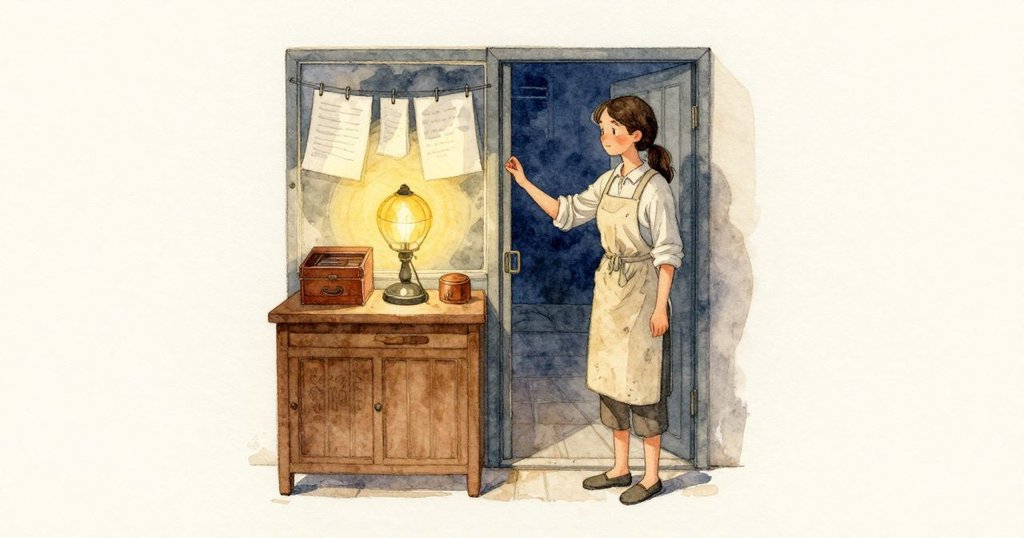
Nessa stepped through the propped street door, and warm, inky air pressed close as her shoulder grazed the drying lines.
Her palm found the worn leather on the press handle, a place her hand knew by shape more than sight.
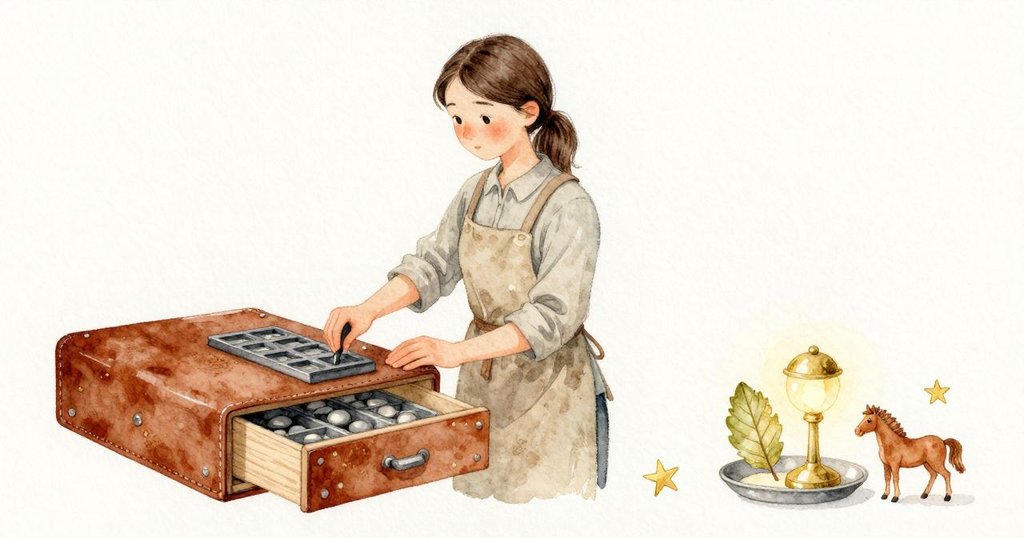
Iron frames filled the low room, cases of reversed letters nested like shallow drawers under the lamp’s focused circle.
Henrik looked up from the paper stack and tipped his chin, and sheets overhead swayed a little in the door’s draught.
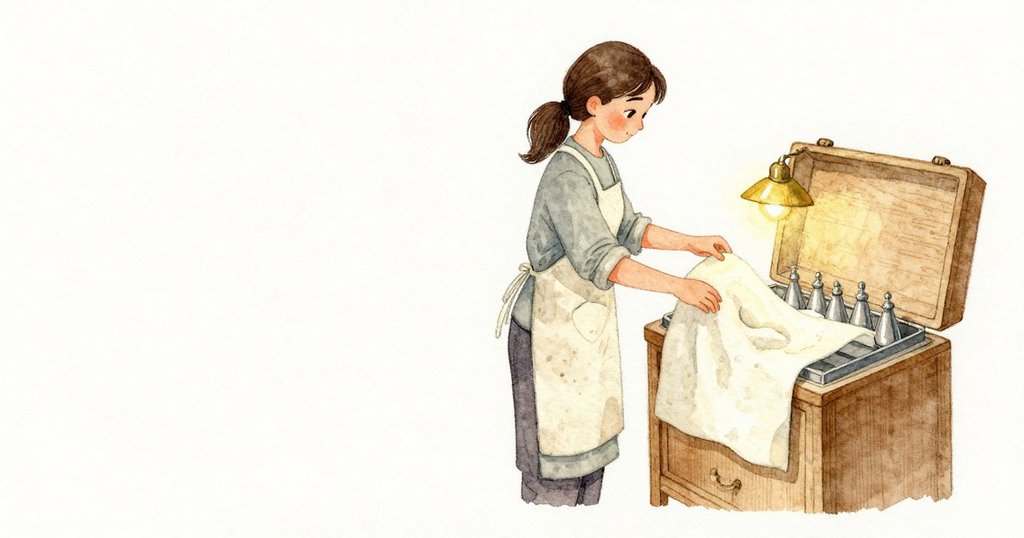
She drew the composing stick to her chest and clicked in letters, mirror before meaning, thumb guiding each sort flush against the row.
A small menagerie of ornaments waited in a tray—leaf, star, a trotting horse—bright edges catching dots of light.
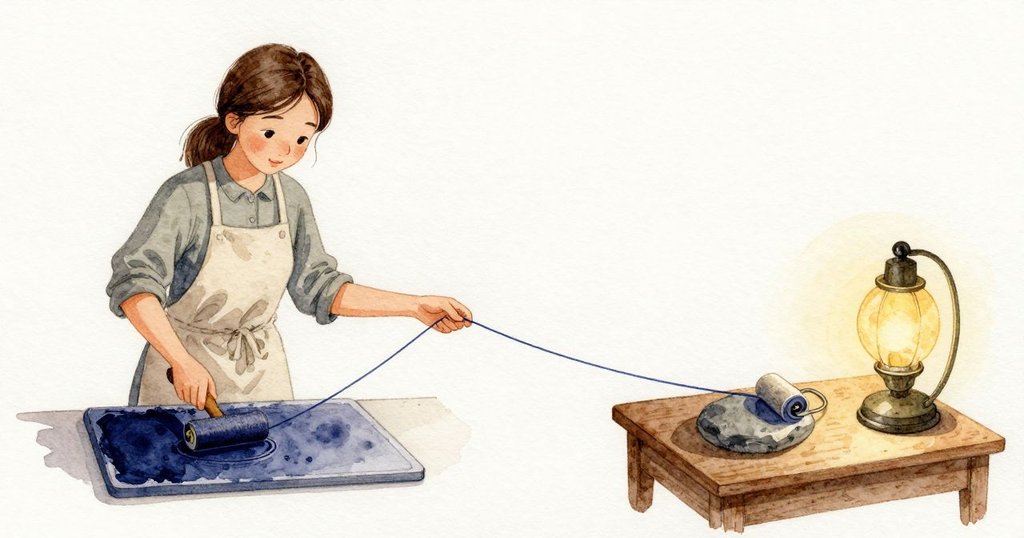
She rolled the brayer over the ink slab and paused when the sound went thin, the tack whisper turning skippy at the ends.
Her fingertips took a quiet diagnostic from the roller—thumb lifting, a fine thread of ink stretching, then thinning sooner than usual.
She made a small adjustment at the ink, one extra pass for coverage, and set the sticked line into the chase.
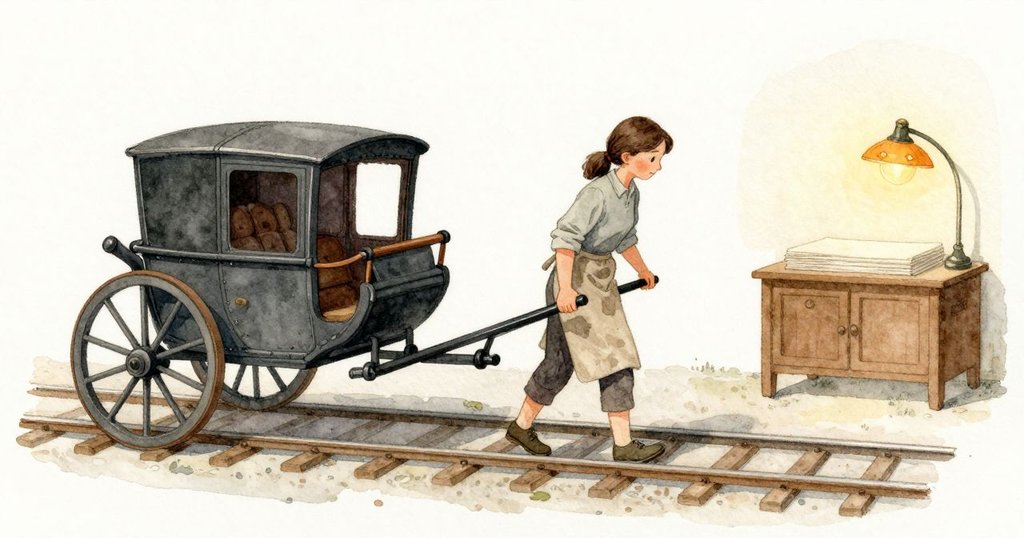
The press carriage slid along its rails when she drew it near, roller meeting type in a steady, slow glide.
She pulled the handle through its arc, free travel giving way to weight, shoulder catching the platen’s press, then the deep, contented thunk.
From the paper stack, Henrik kept his voice low and asked, "How does it look?"
Nessa slid the proof free and turned it over, fingertip tracing the valleys on the back like shallow streams crossing cotton.
The e’s showed hollows a shade softer than the rest, and an a carried a nick, a tiny fragment stamped as a notch in white.
Her gaze went back to the case, to a row of e sorts rounded minutely at their shoulders, the metal bright where fingers had gripped.
She lifted one, compared the serif to its neighbors, then set it aside and fished another that stood a hair taller in the tray.
"Lines sit close," she said, not hurrying, and the new sort clicked into the stick with a modest, square sound.
She inked the form again, slower, the roller’s whisper evening out, and the carriage returned along its track with no wobble.
This pull set the platen firm and even, and the second proof came up with sturdier e’s and an a without its speck.
She held both sheets side by side, and the wear mapped itself across them in faint changes, a story told by pressure and time.
Henrik smiled with only his eyes and slid the stack nearer, and the room’s hum settled as the lamp glared steadily onto the bed.
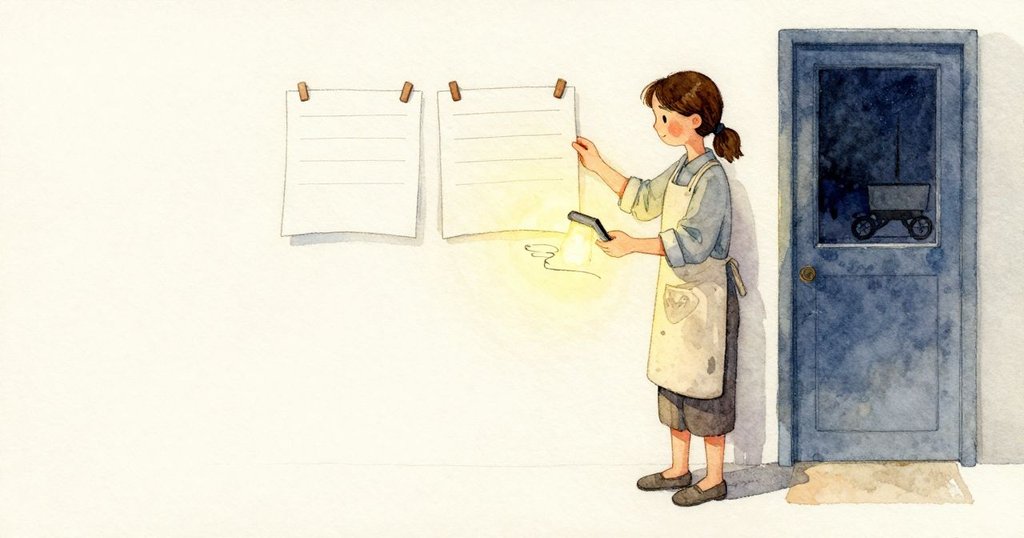
She pinned the damp sheet to an empty line, two wooden pegs balancing its weight, and a rattling cart outside tapped the cobbles in passing.
A new breeze lifted under the paper’s edge and made a slow ripple, and wet gloss caught the lamp for a last bright blink.
繁體中文 Translation
Nessa跨過支在街門的門扇,溫熱的油墨氣味湧近,她的肩頭擦過掛著的晾紙繩。
她的手掌摸上印刷機把手上那圈磨亮的皮革,比起視線,她的手更認得那個形狀。
矮天花下堆滿鐵製框架,反向的鉛字在活字盤裡層層相扣,像淺抽屜疊在檯燈的光圈下。
Henrik從紙疊那頭抬眼輕點下巴,頭上的紙張隨著門口的風縫輕輕晃一下。
她把排字尺抱到胸前,把字一顆顆卡進去,先是鏡像再是語句,大拇指把每枚字體推齊。
一個小小的雜飾群組在托盤裡等候——葉、星、奔馬——明亮的邊緣接住幾點光斑。
她推著滾墨輥在墨板上來回,當聲音變薄時她停住,黏性的耳語在邊緣出現跳針般的小斷續。
她用指尖做了一次安靜的檢測——大拇指微提,細細一絲墨線拉起,又比平常更早變細。
她把墨面稍作調整,多滾一次讓覆蓋更勻,然後把已排好的字行嵌回版框。
她把印刷機的車台拉近,車台沿著軌道滑行,滾筒與活字相遇,節奏穩穩地滑過。
她把把手拉過整個弧度,空程讓位給重量,肩頭承住壓力,接著傳來一聲厚實而滿的沉響。
Henrik在紙疊旁壓低聲音問:「看起來怎樣?」
Nessa把試印紙抽出來翻到背面,指尖沿著壓痕走,像在棉紙上摸過淺淺的溪流。
那些e留下的凹谷比其他字更柔一點,而那個a帶著一道刻痕,一小片碎片在白地上壓出微微的缺口。
她的視線回到字盤,落在一排e的字身上,肩部被磨得圓潤極細,金屬在手指常握之處發亮。
她捏起其中一顆,和旁邊的襯線比一比,放到一側,再從托盤裡摸出另一顆,高出一絲絲。
「行距很貼,」她不急不慢地說,那顆新字回到排字尺裡,發出一聲方正而清楚的卡嗒。
她再上一次墨,動作更慢,滾筒的耳語變得勻淨,車台沿著軌道回程,沒有半點晃動。
這一拉讓壓床貼合而均勻,第二張試印提起時,e更結實,a也不見那粒小點。
她把兩張紙並排舉著,淡淡的變化在上頭鋪開,磨耗的路徑用壓力與時間畫出來。
Henrik僅用眼角帶出一絲笑意,把紙疊推近些,而室內的嗡鳴也跟著安靜下來,檯燈的光穩穩照在版面上。
她把還潮濕的印張夾上空繩,兩個木夾子撐住它的重量,外頭有輛響著的車子輾過石板路。
一股新風鑽進紙邊,掀起緩慢的波紋,而濕亮的墨面在燈下閃了一下最後的亮光。
Vocabulary in Context
- carriage
(機械)滑座;承載並沿導軌滑動的部件,使工作面平穩移動。
“The press carriage returned on its rails, steady as the roller settled onto the inked type.”
印刷機的滑座沿導軌回程,穩穩讓滾筒貼上已上墨的字模。
- diagnostic
診斷(名詞用法);用來判斷狀態的檢測或線索。
“Her fingertips took a quiet diagnostic from the brayer, the ink thread thinning earlier than expected.”
她用指尖做了無聲的診斷,滾筒拉出的墨絲比預期更早變細。
- menagerie
雜陳;(原意為動物展覽),引申為各式各樣、風格各異的集合。
“In the tray waited a small menagerie of ornaments—leaf, star, and a jaunty horse.”
托盤裡等著一小桌雜陳的飾字——葉子、星星,還有一匹神氣的小馬。
- fragment
碎片;從整體斷落下的極小一塊,常指不該出現或意外留下的細小部分。
“She spotted a faint notch where a tiny fragment had printed as an unintended bite of white.”
她看見一個淡淡的小凹口,是一小塊碎片印出了不該有的白色缺口。
- adjustment
微調;為了更準確或更合適而做的小幅度改變。
“She made a small adjustment to the ink, one extra pass smoothing the roller’s whisper.”
她對油墨做了小小調整,多滾一次,讓滾輪的呢喃變得平順。
Teacher's Spark
AI-generated teaching prompts to help teachers extend a story
Story Discussion - The Printshop
作者如何用感官細節(氣味、聲音、觸感)來營造活字印刷室的氛圍?請舉三處具體描述並說明它們帶出的情緒或氛圍。
開放式參考答案
The story uses: (1) "warm, inky air" — creates an intimate, slightly enveloping atmosphere that places the reader inside the shop; (2) the brayer's sound going "thin" and the "tack whisper" — introduces a delicate, attentive tension about the work’s technical state; (3) fingertip tracing the valleys on the back of the proof — emphasizes tactility and quiet care. Together these details make the space feel lived-in, precise, and quietly intense.
當滾筒的聲音「變薄」時,Nessa 停下來檢查。這表示印刷問題與墨的覆蓋度有關嗎?
是非題參考答案
Yes. The thin sound signals a change in the roller's tack/coverage, prompting her fingertip check and an extra pass of ink to restore even coverage.
詳細描述從她用指尖檢測滾筒到第二張試印出現改善之間的因果步驟。每一步如何導致下一步?
開放式參考答案
She notices the brayer's sound thinning → she performs a tactile diagnostic with her thumb and detects the ink thread thinning sooner than usual → she makes an adjustment and rolls one extra pass to increase coverage → she sets the composed line and pulls the carriage again → the second proof shows firmer e’s and a cleaner a. Each step is a direct response to the previous sensory cue, converting perception into corrective action that yields improved print results.
根據她在比對字模(e 和 a)的動作與言語節奏,你可以推斷出 Nessa 的性格或職業態度有哪三個特質?請以文本細節支持你的推斷。
開放式參考答案
Three traits: (1) meticulous — she compares individual sorts and swaps a slightly taller one to correct form; (2) tactile expertise — she relies on touch (thumb lifting, fingertip tracing) more than sight; (3) patient and unhurried — her speech is "not hurrying" and she works deliberately (slower inking, steady carriage) to achieve quality.
在象徵層面,磨亮的字與磨損的 e、托盤裡的小雜飾(葉、星、奔馬)可能代表什麼?選一至兩個象徵性解讀並加以論證。
開放式參考答案
One reading: the worn e’s symbolize accumulated labor and time — the metal is bright where fingers have gripped, showing history of use. The small ornaments (leaf, star, trotting horse) can symbolize the craftsman's habit of preserving beauty and individuality amid routine work, tiny marks of personalization that contrast with the mechanical exactness of type. Together they suggest the coexistence of function, history, and personal care in craft.
作者在動作描寫中使用短句與具體動詞(例如 'rolled', 'pulled', 'clicked'),這種句法選擇如何影響敘述的節奏與張力?請分析其效果。
開放式參考答案
The terse clauses and concrete verbs produce a steady, mechanical rhythm that mirrors the press’s motions. Short, deliberate sentences slow the reader, emphasizing each physical gesture and creating a sense of measured labor. Occasional sensory adjectives or onomatopoeic words like "thunk" puncture the rhythm, creating moments of emphasis or relief. Overall, syntax enacts the press’s cadence and the worker’s focused attention.
填空:當她把試印紙翻到背面,用指尖沿著壓痕走,作者寫道這像在棉紙上摸過 ________。
填空題參考答案
shallow streams
Role Play - Choosing a new sort after the first proof
情境
場景設定在那間矮天花、檯燈光圈下的印刷小房間。Nessa剛從印機抽出第一張試印,背面有淡淡的壓痕,她發現e的凹谷偏柔、a上有一道小缺口。她的手回到活字盤,摸出幾顆字體,比較襯線與高度;Henrik從紙疊那邊抬眼,看著已排好的字行和滾筒上略顯稀薄的墨層。兩人需要在下一拉之前決定:換入那顆微高一點的e、再滾一次墨,或是調整行距與壓力。教學目標是讓學生在角色對話中練習描述物理細節(e的凹陷、a的刻痕、滾筒的聲音)、提出建議並協商下一步操作,維持溫和、專業且專注的工作氛圍。
角色
開場白建議
- •“The e's hollows are softer than the others; should I swap that sort for the slightly taller one I found in the tray?”
- •“I heard the roller go thin at the ends—do you want me to make one extra pass of ink before we pull again?”
Creative Writing - Henrik's Retrospection
寫作提示
請從 Henrik 的視角回溯(retrospection),用第一人稱在英文中寫一段大約150字的短文,描述他多年後回想那晚在印刷房的一個片刻。文本要紮根於故事的具體元素──Nessa、press、handle、brayer、ink、carriage、proof、lamp、damp sheet、pegs、cobbles、breeze 等;重點描寫感官細節(墨的味道、滾筒的耳語、字母上的磨損與刻痕、燈下的光線與濕亮),並至少在文中使用三個下列單字。語氣應溫暖、細緻、懷舊,避免描寫任何可能被兒童模仿的危險行為。用英文完成,約150字。
詞彙庫
寫作輔助
- • Years later, I still remember the warm, inky air when...
- • My thumb found the worn leather on the handle and I could feel...
- • The tiny nick in the 'a' kept appearing like a small, stubborn memory of...
- • I watched the carriage glide and listened to the brayer's whisper as it...
- • Under the lamp, the damp sheet shone and a breeze lifted its edge, revealing...
- • Holding the proof in my hand, I traced the serif and thought about how...
Vocabulary & Grammar Focus
重點單字
propped
被支撐著保持開啟的狀態;像用物件撐住門使其半開或固定。
Nessa stepped through the propped street door as warm ink pressed close against her shoulder.
palm
手掌;手的內側部分,用來觸覺辨識或握持物件。
Her palm found the worn leather on the press handle, remembering its shape more than sight.
composing stick
排字尺;排版時用來臨時固定字行的工具,方便組排活字。
She drew the composing stick to her chest and clicked each letter into place.
brayer
滾墨輥;在印刷前用來將墨平均滾布到鉛字或版面的工具。
She rolled the brayer over the ink slab and listened as the sound thinned.
roller
滾筒;印刷機上滾動以塗墨或轉移墨面的圓柱狀部件。
Her fingertips took a quiet diagnostic from the roller, a thin thread of ink stretching free.
platen
壓床(或壓板);印刷機中把紙張壓向活字以形成壓印的平板或面。
Her shoulder caught the platen’s press, then the press gave a deep, contented thunk.
proof
試印紙;印刷過程中用來檢查墨色、字型和對齊的樣張。
Nessa slid the proof free and traced its back, feeling shallow valleys across the cotton.
serif
襯線;字體筆劃末端的小延伸或裝飾,會影響字形的清晰與風格。
She lifted one sort and compared its serif to neighboring letters before setting it aside.
carriage
車台;印刷機上承載滾筒或版面的可滑動結構,沿軌道移動以完成印刷行程。
The carriage slid along its rails as the roller met the type in a steady glide.
ink
墨;用於印刷以在紙上留下字跡或圖像的液體顏料或油墨。
She made a small adjustment to the ink, rolling once more for fuller coverage.
文法重點
說明現在分詞(V-ing)片語作為附加說明或背景描寫的用法(在文學敘述中常見)。故事中有像 "the tack whisper turning skippy at the ends" 的用法:這類現在分詞片語可以放在句尾或與主句並列,提供同時發生的狀態、結果或附帶資訊,而不必另起一個完整子句。教學要點:1) 現在分詞片語常用來表達與主句同時發生的動作或描述一個持續的狀態;2) 可用逗號與主句分隔,語氣上較為凝練、文學性;3) 若要把它改寫成正式的從句,可用 "as/while" 或完整的主謂結構(例如:"as the tack whisper turned skippy at the ends")。練習時注意保持時間和因果關係一致,並體會此結構在刻畫場景細節與氣氛上的作用。
練習題
She pulled the handle through its arc, shoulder catching the ___’s press, then the deep, contented thunk.
參考答案
platen
配對以下單字與意思:
顯示答案
A-5B-6C-8D-9E-2F-4G-3H-7I-1J-10
She rolled the brayer over the ink slab and paused when the sound went thin, the tack whisper turning skippy at the ends.
參考答案
She rolled the brayer over the ink slab and paused when the sound went thin, as the tack whisper turned skippy at the ends.
Cultural Connection - 晾紙繩與木夾
主題
晾紙繩與木夾
討論要點
- •故事中,Nessa 把還潮濕的印張夾上空繩,兩個木夾子撐住它的重量,濕亮的墨面在燈下閃了一下。想一想你自己的經驗:你或你周圍的人會如何晾乾紙張、畫作或衣物?請描述使用的工具(例如夾子、繩子、晾架)、晾的位置,還有當時你記得的氣味與聲音。
- •工作坊的門是支著的,外頭有輛車在石板路上碾過,街道的聲音與室內的燈光一起成為晾紙這個動作的背景。你所在的環境是否也有類似半開放或與街坊互動的晾晒場景?誰會看見或聽見你晾晒的東西?這樣的可見性對作品或物品有何影響?
- •Nessa 用木夾固定濕紙,並靠檯燈觀察墨面如何反光與乾燥。從職人的角度,這個簡單的晾紙步驟如何反映出對時間、技藝與材料的尊重?把它和你文化中保存或晾乾手作物件的習慣做比較:哪些地方顯示出儀式性、耐心或對細節的重視?
文化比較
在故事裡的小型鉛字活版印刷作坊,晾紙是一個在工作流程中自然發生的步驟:試印紙被夾在室內的晾紙繩上,靠近檯燈以便觀察濕墨的光澤與乾燥狀態,門支著讓街道的聲響和微風參與這個過程。這種做法強調現場觀察、手工處理以及與街區日常生活的直接連結。相較之下,在繁體中文語區的都市居家場景,晾乾常見於陽台或頂樓,使用塑膠或金屬曬衣夾、伸縮曬衣架,或者透過洗衣店與烘乾機處理,空間與設備傾向於分隔家務與街道的喧囂;而在保存藝術或手作品時,則更常依賴室內通風、架子或氣候控管來避免潮濕和變形。兩者的差異不只是工具與空間,還反映了對時間節奏(慢工細活與效率化處理)、公共可見性(半開放的街坊互動與私密的家庭空間)以及對材料感知的不同文化取向。
Comprehension Quiz
1. What did Nessa's shoulder brush as she stepped through the propped street door?
2. What did Nessa's palm find on the press handle?
3. What filled the low room beneath the lamp's focused circle?
4. When the roller's sound went thin, what diagnostic did Nessa notice with her thumb?
5. Which adjustment did Nessa make to address the problem she found in the type case?
6. What was the result on the second proof after Nessa re-inked and pulled again?
Recommended Reading
The Warm Patch on the Printing Bench Paper Stack
The Missing Spacer in the Press Room
The Misplaced Line of Type
The Sheet That Spoke Again
Damp Footprints Beside the Press Alter the Print Run
The Missing Brass Peg
Scratch into Horizon Print
The Hidden Pawl of the Letterpress
The Press Lever's Arc and the Empty Hook on the Line
The Nick Beneath the Cherry Block
Brayer Clicks and a Breeze at the Printing Bench