Mending a Net at an Opposite-Knot Seam - 適合進階的英文短篇故事,含中譯與發音
修補網具:在反向結的接縫處 | 英文/中文 雙語朗讀
ストーリー内容
English 原文
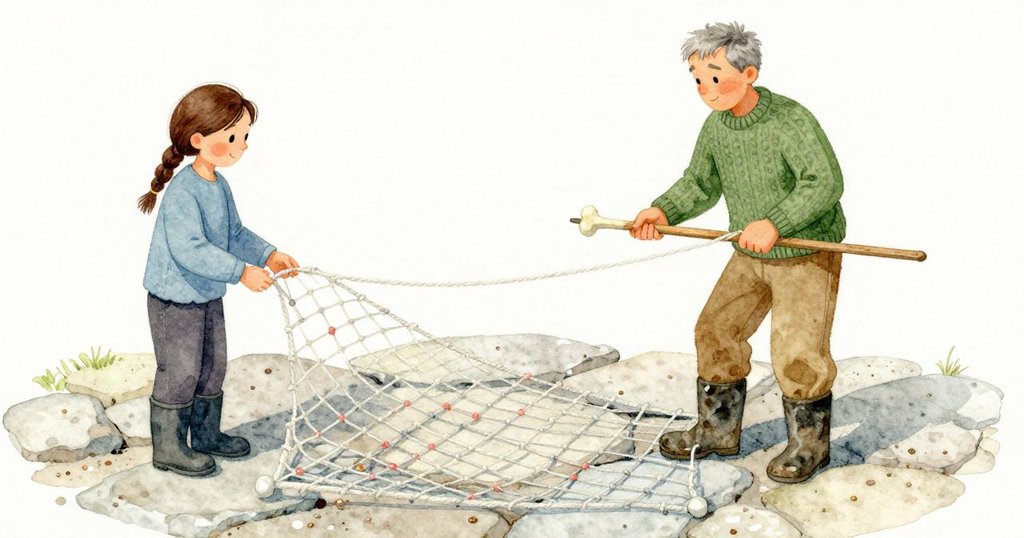
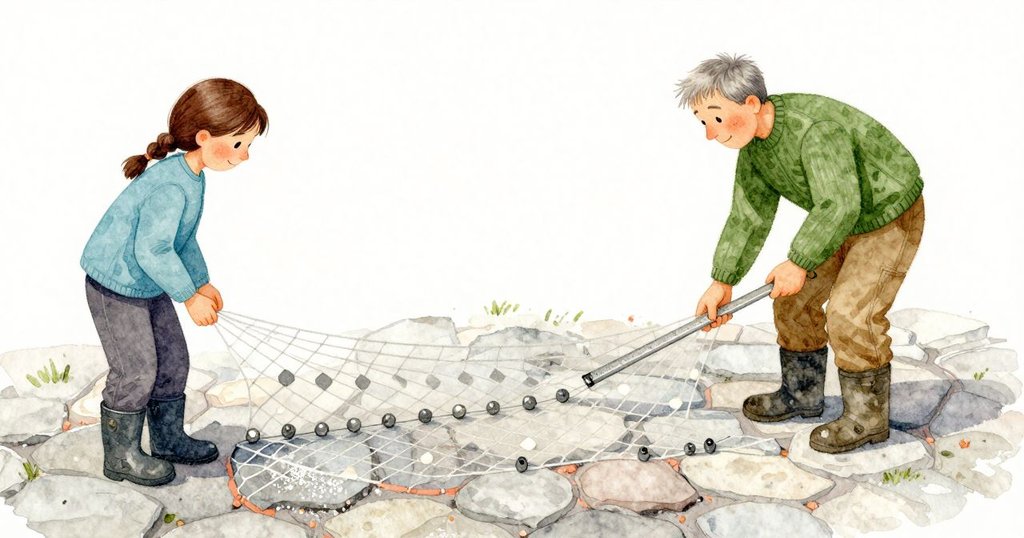
Celina gripped the grey mesh for a stiff tug, and the net answered with a springier give that bent her elbows.
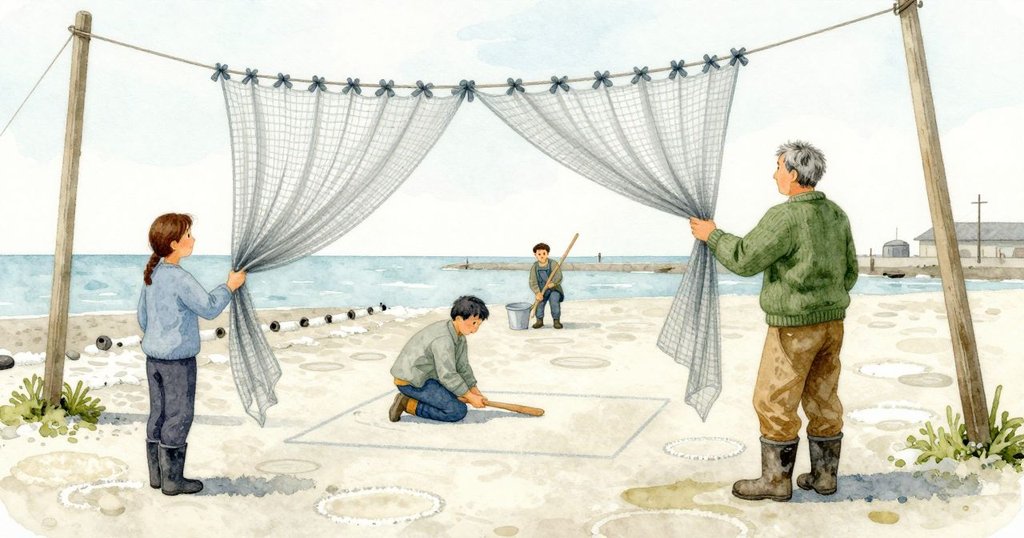
Her knees settled into their stance inside the chalked rectangle, and her hand found the bone shuttle without any search.
Wind pressed the hung sheet of mesh a finger's breadth, the posts creaked, and lead sinkers, each a dull cylinder, clicked on flagstone.
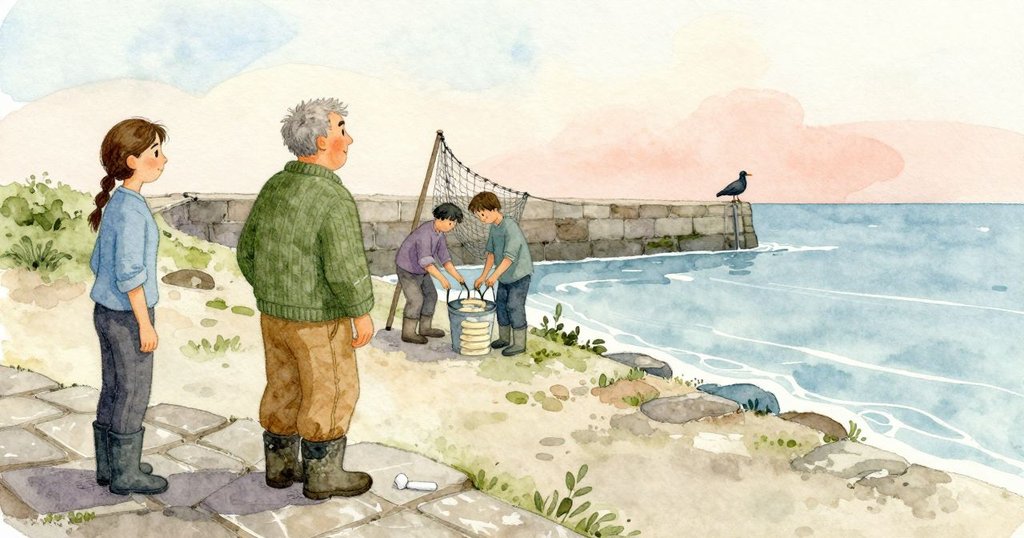
Hector sat two strides landward with the bucket and gauge stick, his boot heel resting on dried salt that traced old puddle rims.
Cold grit pressed through her trousers at the knee, each grain scratching a tiny arc against the stone.
She slid the pale twine through the mesh, looped, and cinched against the gauge; the new strand showed a soft gradient from salt-white pinch to midtone grey.
Her fist pressed outward to test the give, but the diamond bunched on one edge and the opposite thread rasped her knuckles.
She conceded the gauge needed a wider notch, eased the knot back, and let the shuttle's nose trace the right width before tightening.
"Good spread?" Hector asked, not rising, eyes on the posts as the wind shifted the net a handspan and then slackened.
She nodded once, set the gauge aside, and rubbed salt grit from her thumb before threading the shuttle again.
The gauge stick's flat face, rubbed smooth by twine, slid along her loop while the shuttle's bone edges rocked lightly against her fingers.
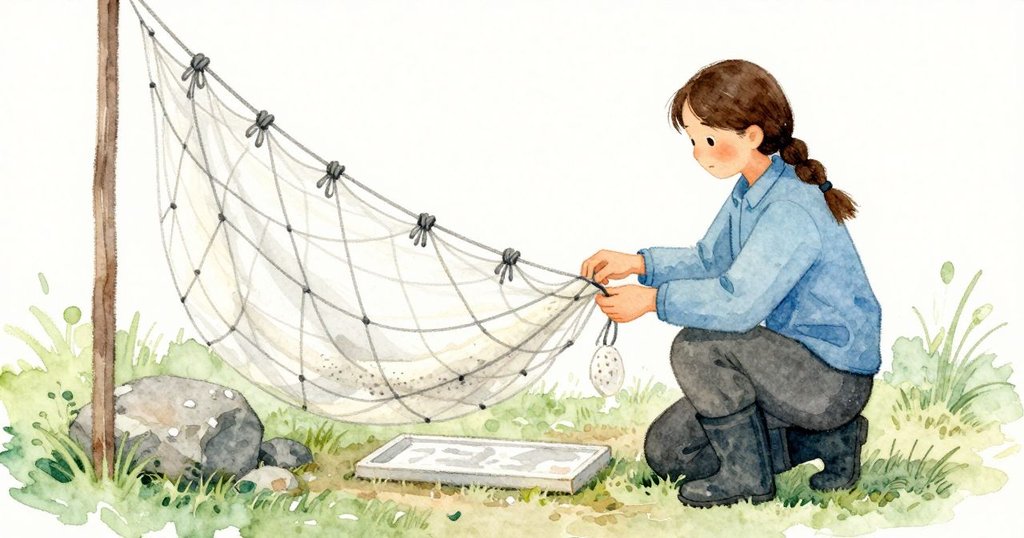
At the old-to-new seam, her fingertips found a different habit in the twine: the next row's knots leaned left where hers usually leaned right.
The turn lay tighter at the throat, and the section carried a faint tar scent that did not live anywhere else on the hanging net.
She paused with the shuttle mid-thread, then matched that lean for three knots, letting her hands keep pace with the remnant that lingered there.
Grey met pale in a speckled band; her skin traced that border faster than her eyes could follow.
Her deduction stayed under her palm; she pressed outward again, and the mesh spread evenly across old and new without a ripple or a hitch.
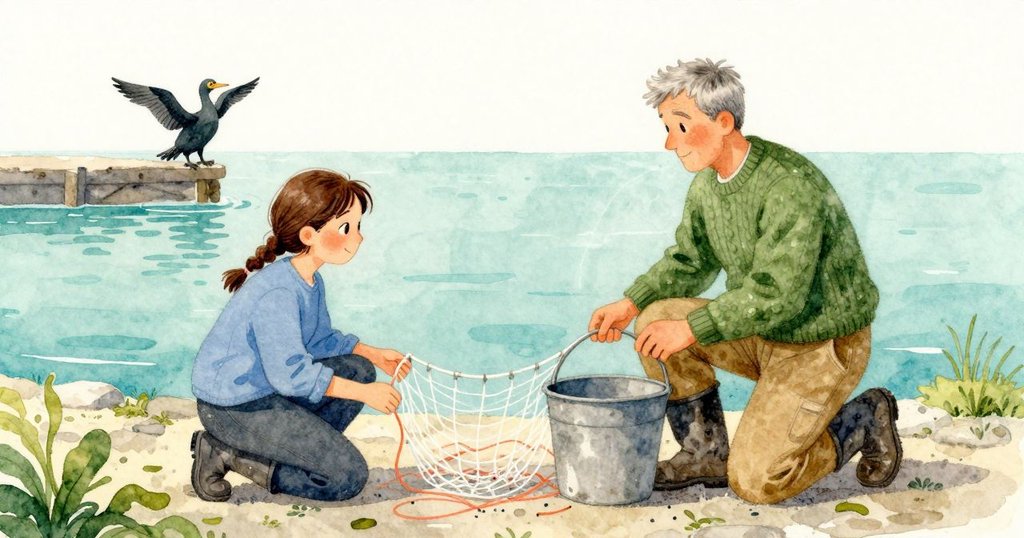
Beyond the chalk line, the cormorant rode the far bollard with wings half-open, and water lapped once against the quay and then again, unhurried.
Hector set the waste bucket closer to her knee, and clipped ends and frays hopped into it instead of skittering toward the stones.
She tested one more splice with her fist and skimmed the gauge along the seam, then let her hand rest as her eyes tracked the diamonds.
From the far water, a boat rolled past the harbor mouth, and a thicker wave thudded the wall without touching their quiet working zone.
The chalk nub had thinned to a sliver on the stone, and the pale twine in the bucket's coil showed one fewer loop around itself.
Salt dust coated her thumbs in a midtone smear she could rub but not erase, and the dock kept the hush while the sinkers clicked once.
繁體中文 翻訳
Celina 抓住灰灰的網目準備來一記硬拉,網子卻回彈得更軟,把她的手肘推成了弧度。
她的膝蓋在粉筆畫的長方形裡找到站位,手一伸就摸到骨製的梭子,不用尋找。
風把懸起的網面推開一指寬,木柱輕輕作響,一顆顆鉛墜像鈍色的小圓柱,在石板上發出細碎的碰擊聲。
Hector 帶著木桶和量規坐在內側兩步處,靴跟壓著一層風乾的鹽痕,沿著舊水漬畫出邊緣。
冰涼的砂粒從膝部的布料下頂上來,一粒一粒在石面上劃出細小的弧線。
她把淺色的線穿過網目、繞圈,靠著量規收緊;新線上浮現一條柔和的梯度,從鹽霜般的白過渡到中灰。
她用拳頭向外頂去試彈性,菱格卻在一側起皺,對面的線在指節上磨出沙沙聲。
她只得承認量規要用更寬的一格,把結往回鬆一點,讓梭尖先劃出正確的寬度再收緊。
「寬度可以嗎?」Hector 沒起身,眼神停在木柱,那陣風把網面推開一掌又慢慢回去。
她點了一下頭,把量規放旁邊,先把拇指上的鹽砂搓落,再把梭子穿回去。
量規的平面被線來回磨得光滑,沿著圈邊滑走,而梭子的骨邊在她指間輕輕晃動。
到了舊線接新線的邊上,她的指尖摸出另一種手法:旁邊那一列的結向左歪,而她這邊向右。
那個轉折在結喉處更緊,這一段還帶著一絲焦油味,掛網的其他地方都沒有。
她把梭子停在半道,隨後連著三個結都跟著那個斜向去做,讓手的節奏貼著那裡留下的痕跡。
灰色與淺色在斑點帶上相接,她的皮膚比眼睛更快沿著那條邊界滑過。
她的推論留在掌心裡,拳頭再一次往外頂去,網面在新舊之間平均展開,沒有一處起波或卡住。
粉筆線外,鸕鶿站在遠處的繫船柱上半張著翅,水面拍了一下碼頭牆,過一會兒又拍了一下,節拍很慢。
Hector 把廢料桶挪到她膝旁,剪下的線頭和鬚邊跳進桶裡,不再在石板上亂竄。
她再用拳頭試一處接頭,又用量規沿著接縫掠過,手先停住,眼睛沿著一格格菱形走。
遠水口有船滑過,較厚的一道波撞了牆,力道在這一帶消散,工作區保持平穩。
石上那截粉筆只剩下一道薄片,木桶裡那圈淺色線也少了一圈纏繞。
鹽粉在她的兩個拇指上抹成一抹中灰,怎麼搓也不全退去,而鉛墜在地上輕輕一響。
文脈の中の語彙
- midtone
中間色調;介於高光與暗部之間的色值,常見於繪畫與攝影。
“The twine settled toward a midtone gray where the new loop tightened against the gauge.”
在新環扣緊量尺之處,細繩漸趨一種中間灰。
- concede
承認(某事屬實或合理),常帶有先前不情願或抗拒之意;讓步。
“She conceded the notch was too narrow, then eased the knot and measured the width again.”
她承認槽口太窄,於是放鬆結頭,再次量了寬度。
- gradient
漸層;某項性質(如顏色、亮度)由一端逐步過渡到另一端的變化。
“Along the fresh row, the twine showed a gentle gradient from salt-white to midtone gray.”
在那條新編的行上,細繩呈現由鹽白到中間灰的柔和漸層。
- cylinder
圓柱體;兩端為圓形、側面為曲面的三維形狀;也可指呈此形狀的物件。
“Each lead sinker, a blunt cylinder, clicked softly on the flagstone when the net breathed.”
每顆鉛墜都是鈍圓柱,當網面起伏時便輕輕敲著石板。
- deduction
推論;根據線索或證據得出的結論;演繹推理的結果。
“Her deduction, traced from the knots’ lean and tar scent, kept the mesh even across the seam.”
她依據結頭的傾向與焦油味所做的推論,讓接縫兩側的網面同樣平順。
おすすめの読み物

The Silent Sinkers at the Net Post

The Silent Sinker and the Mended Net

The Vane That Measures the Net

Wax Flecks in the Dockside Net

Lantern Above the Mended Net on the Stone Dock
The Warped Yardstick on the Dock

The Bobber’s Signature and the Salt on the Flagstone

A Click on the Reel, a Sideways Float

Sandpiper on the Net’s Cool Edge

Shadow Line Across the Woven Cloth in Changing Light

The Guide Rope and the Glowworm Skyline in the River