The Skewed Tea Ring in Lamplight - 適合進階的英文短篇故事,含中譯與發音
燈下的歪茶圈 | 英文/中文 雙語朗讀
ストーリー内容
English 原文
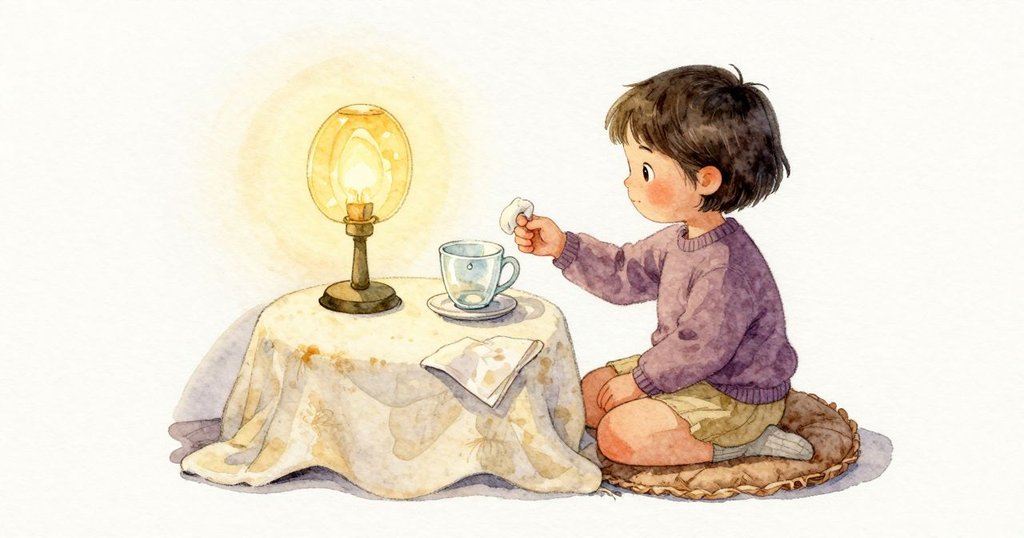
“Did I make that ring?” Noemi pointed at the skewed tea-mark inside her small glass cup.
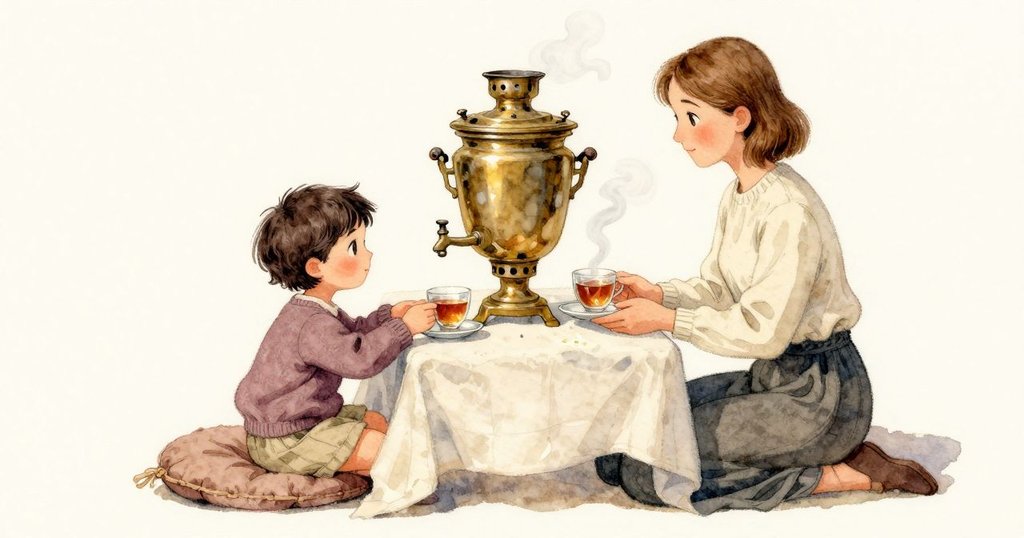
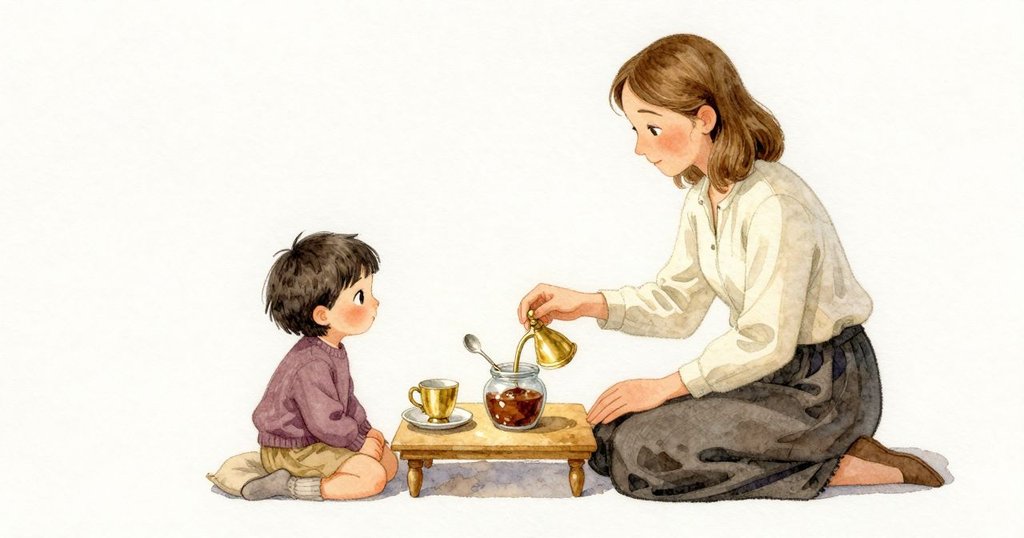
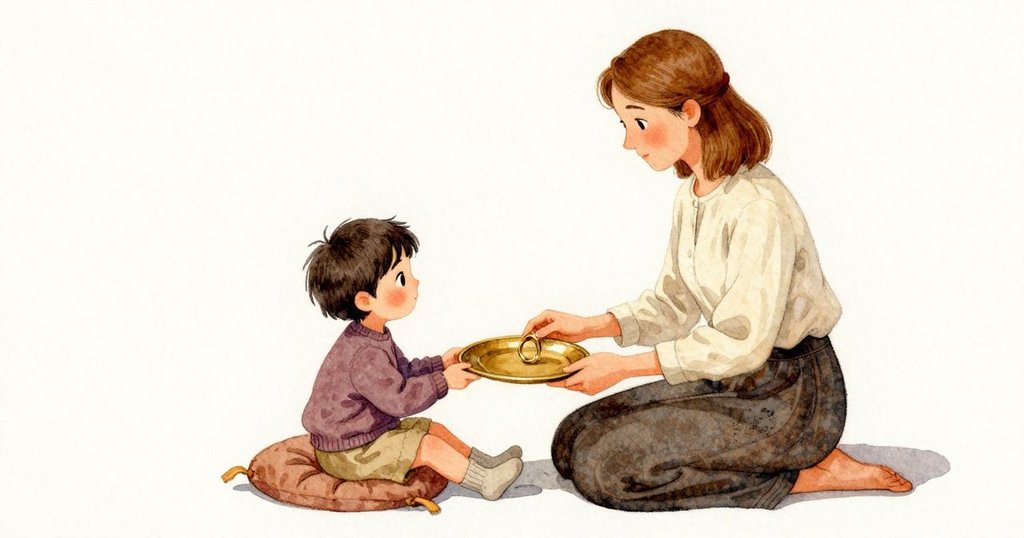
Margot steadied the saucer with two fingers, and the cup’s thin weight settled against the plate’s inner ridge. The samovar’s tall body stood steady at the table’s center, its mass anchoring the cloth while their cushions held them close.
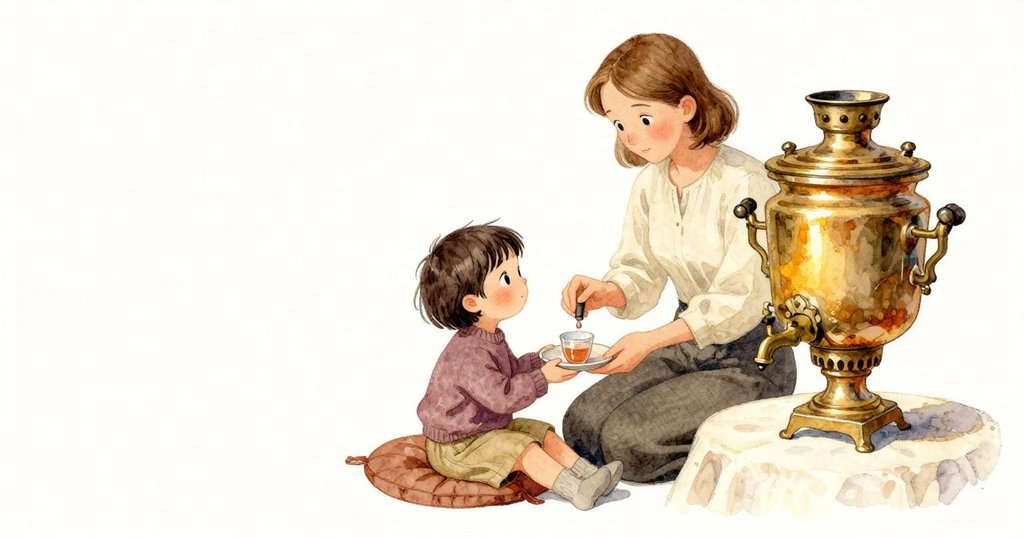
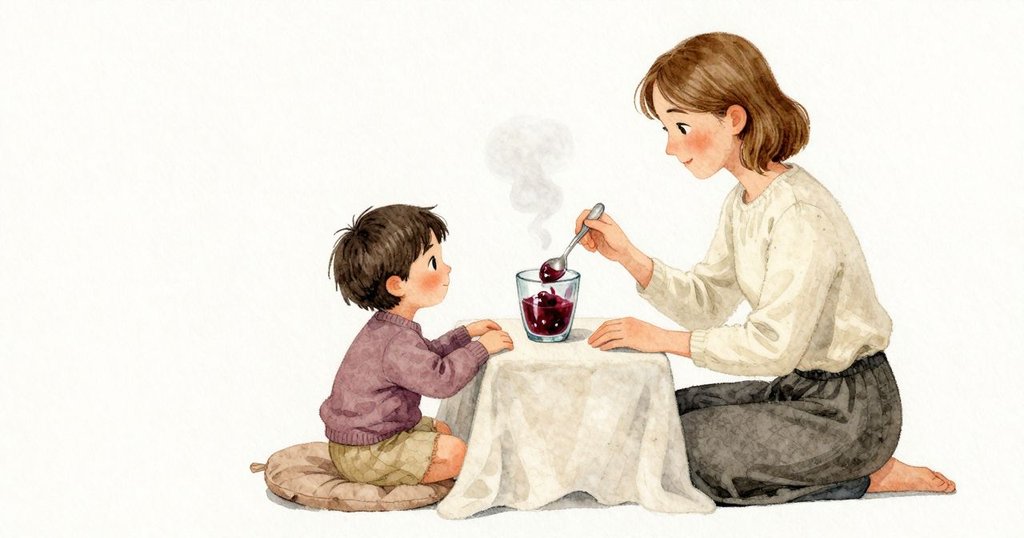
Steam unfurled from the samovar’s small lid in loose ribbons that curved past their hands and softened near the lamp. A stubborn drip gathered on the brass spigot’s lip, hovered, then let go, landing with a quiet tap in the saucer. Around the wide belly, a gamut of ambers ran across the polished band where many cloth-circles had once moved. Earlier, Margot had cooled the tea in her hands, then settled the small cup into Noemi’s two cupped palms. Rumination lay on the table like a thick napkin; even the spoon rested, its bowl heavy with preserves. On the cool outer lip, a small pale fingerprint lingered, more trace than touch, lighter than the warmth inside.
Noemi edged her cup a finger’s width, checking the circle against the glass, and her breath puffed a faint cloud. When she rotated the saucer, the mark resisted logic, staying skewed, as if the plate’s shallow slope held its own opinion. The spoon’s handle tipped slowly toward the jar, its load a quiet counterweight that pulled the bowl back to the glass. “It tilts,” she said, fingers paused above the rim, not yet touching the cool outer lip of the brass body. “It does,” Margot answered, and her palm hovered near the cup as if weighing the glass without lifting it.
Noemi set her thumb to the inner wall, ready to wipe the ring, then drew back when the drip tapped again. She tilted the emptied cup toward the lamp instead, and an oval shadow slid along the glass, obedient to light rather than residue. She slid a folded napkin under one edge, and the weave caught, bunching, then releasing with a sigh that left the tilt unchanged. The tablecloth’s weave sagged slightly under the saucer’s weight, and that small give let the oval lean, then straighten, then lean again. Margot lowered a knuckle to the plate’s edge, stopping it just a breath, and the shadow settled as firmly as any poured ring. When she lifted her hand, the plate resumed its small drift, as if the cloth remembered the saucer’s bearing more than her touch.
Her earlier certainty about the ring thinned, like breath on glass, and she watched the brass carry both shine and smudge at once. “Maybe it’s many things,” Margot said, not moving the saucer, and the kettle’s low murmur from the kitchen went on unbothered. From the grate, a soft coal-glow showed no hurry, and the room’s warmth held steady, a broad support under everything. Noemi breathed on the rim, then let her hands find their shape again, two steady halves holding the same cup under deeper lamplight.
繁體中文 翻訳
「這個圓圈是我弄的嗎?」Noemi 指著她的小玻璃杯裡那道歪斜的茶痕。
Margot 用兩根手指輕輕穩住茶托,薄薄的杯身把重量靠在碟內側的圈檻上。家中的茶炊高高立在桌心,它的份量把桌布壓得安穩,坐墊把兩人安穩地托住。
蒸氣從茶炊小蓋口舒展成一縷縷,掠過她們的手,到了燈邊便緩下來。黃銅龍頭的唇邊聚起一滴固執的水,停住、再放手,輕輕一點,落進托碟。寬腹外圍的拋光帶上跑著一整列琥珀色層次,像許多圈布在上頭走過的痕跡。先前,Margot 先在掌心把茶溫下來,才把小杯安穩地放進 Noemi 合起的雙掌。沈思像一條厚餐巾平放在桌面上;連湯匙也歇著,碗部因果醬的重量而沉著。黃銅那圈涼涼的外唇上,有一枚淡淡的小指紋停著,像痕不算觸,輕得比裡面的暖還要輕。
Noemi 把杯子挪動一指寬,拿杯壁去對那個圓圈,她的呼氣在玻璃上吐出一小團白霧。當她旋轉茶托,記號不按理出,仍舊歪著,彷彿茶碟那一點淺斜有自己的主意。湯匙柄頭慢慢朝罐邊傾去,它的載重形成一個安靜的配重,把匙碗又拉回玻璃。她說:「它在傾斜。」手指停在杯口上方,還沒碰到黃銅本體那圈涼涼的外唇。Margot 說:「嗯,的確。」她的手心懸在杯邊,像在量這只玻璃的份量,卻沒有把它提起。
Noemi 把拇指貼向內壁,正要把圓圈抹掉,滴水又輕點一下,她便收了回來。她改把空杯朝燈邊一傾,一個橢圓的影子沿著玻璃滑行,受燈光支配,不由殘痕擺布。她把一張摺好的餐巾塞到一側下緣,布紋先是卡起,接著放開,發出一聲細息,傾斜仍然不變。桌布的織紋在茶托的重量下微微下垂,那一點鬆動讓橢圓一會兒傾、一會兒正、又再傾。Margot 用指節在碟邊輕輕一擱,只停住一口氣的時間,影子就像倒進去的茶圈一樣安安穩穩地定住。她抬手後,碟子又回到小小的飄移,像桌布記得茶托的承重勝過她的觸碰。
她先前對那圓圈的把握薄了,像玻璃上的霧氣變淡,她看著黃銅同時帶著亮與微痕。Margot 說:「也許是好幾樣一起。」她沒有再動茶托,而廚房裡水壺低低的嗡聲照常持續。爐格裡透出一抹不趕時間的紅亮,室內的暖像寬闊的托舉一樣穩穩撐著一切。Noemi 對著杯口哈一口氣,然後讓雙手再度就位,兩半穩穩托住同一只杯子,在更深的燈光底下。
文脈の中の語彙
- gamut
(某事物的)全範圍、全部光譜;可指顏色、情緒或變化的完整梯度。
“Along the brass belly, a gamut of ambers traveled the polished band where cloth once circled.”
在黃銅圓腹上,琥珀色的全光譜沿拋光帶流動,正是布巾曾繞行之處。
- stubborn
固執的;(事物)難以改變、去除或移動的、很『黏』或很『頑固』的。
“A stubborn bead clung to the spigot’s lip, then yielded and tapped the saucer with patient grace.”
一滴頑固的水珠黏在龍頭邊緣,終於鬆手,帶著耐心般的優雅落在茶托上。
- skewed
歪斜的、偏離正中或對齊的;非筆直或不對稱的狀態。(本故事為幾何/位置的歪斜)
“The tea-ring stayed skewed, refusing alignment no matter how gently she revolved the saucer.”
那道茶圈始終歪著,不論她多輕轉動茶托都不肯對正。
- rumination
沉思、反芻式思考;長時間而安靜地反覆思量。
“Rumination settled between them like a thick napkin, and even the spoon deferred to the hush.”
沉思像厚實的餐巾落在她們之間,連湯匙也向這份靜默讓步。
- unfurl
展開、舒展;從捲曲或緊縮狀態打開並伸展(也可比喻像蒸氣或雲霧緩緩擴散)。
“Steam unfurled from the small lid, loosening into ribbons that softened as they drifted past the lamp.”
蒸氣自小蓋口舒展而出,化作絲帶般的紋理,掠過燈旁時慢慢柔和。
ティーチャーズスパーク
AIが教えるヒントを生成し、物語を教材として広げる手助けをします
Story Discussion - The Tilted Ring
請列出文中最突出的五種感官細節(視覺、聽覺、觸覺、溫度、嗅覺或其暗示),並說明每一項如何在文本中共同建構出那種安靜而微妙的氛圍。
開放式參考答案
Visual: steam unfurling in loose ribbons creates a soft, diffused light and intimacy; the amber sheen on the samovar suggests history and repeated use; the oval shadow sliding along the glass gestures to shifting perception. Auditory: the stubborn drip and its quiet tap punctuate silence and slow time. Tactile/temperature: the thin glass settling on the saucer, the cool outer lip and the warmth inside the cup contrast closeness and distance. Olfactory (implied): the preserves in the spoon and the warmed tea imply domestic scents that anchor the scene. Together these sensory details slow the pacing and make small motions feel significant, producing a contemplative, attentive mood.
文本中茶炊的分量與桌布的鬆動,是否直接造成茶托持續微微傾斜?(是 / 否)請回答並簡要說明理由。
是非題參考答案
Yes. The samovar's mass anchors and tensions the cloth; the saucer rests on that cloth so the cloth's slight sagging alters the saucer's bearing. Combined with the spoon's counterweight and periodic drips, these material pressures keep the saucer in a small, persistent tilt.
把注意力放在因果脈絡上:從 Margot 把杯子放入 Noemi 手中開始,到最後碟子再次回到『小小的飄移』,請寫出至少四個互相連鎖的事件或作用,說明每一步如何導致下一步。
開放式參考答案
1) Margot cools the tea in her hands and sets the cup into Noemi's palms (introduces shared custody and careful handling). 2) A drip gathers and falls from the samovar's spigot (a small, periodic perturbation). 3) The saucer rests on a slightly sloped cloth; the cloth sags under weight (the fabric's memory shifts the saucer's angle). 4) The spoon's handle tips as a counterweight toward the jar, subtly altering balance. 5) Margot's brief touch steadies the saucer, but when she lifts her hand the previous fabric-driven drift resumes. Each step is a small physical input that the next material condition amplifies or modulates.
根據 Noemi 對那道歪斜茶痕的觀察、她準備擦拭又縮回手的動作,以及最後她把呼氣化成白霧的細節,你會如何推斷 Noemi 那一刻的內心狀態?請以故事細節支持你的推論。
開放式參考答案
Noemi appears tentative and reflective. Her initial certainty—'Did I make that ring?'—gives way to uncertainty as she tests the mark. The readiness to wipe, then the halting back when the drip sounds, shows hesitation and attentiveness to external cues. Her breath fogging the glass reads as a small, intimate gesture of trying to clarify or own the mark, but ultimately she accepts ambiguity and steadies the cup, suggesting a move from possessive certainty toward shared stillness and acceptance.
請提出一個英文的主題詞(one-word theme)來總結這段文字想討論的核心概念,並說明作者如何透過日常物件(如茶圈、湯匙、桌布)具體呈現這個主題。
開放式參考答案
Theme word: 'atten tion' (or 'memory'). The author uses small domestic objects as loci of ambiguous meaning: the tea ring resists erasure and invites scrutiny (memory/trace), the spoon's counterweight and the cloth's sag are material reminders of past interactions, and the samovar's amber sheen suggests accumulated use. Together they make private history visible through ordinary objects, emphasizing how attention and memory settle into the texture of a room.
填空:Choose the single word that best completes the sentence in tone and meaning: "The spoon's handle tipped slowly toward the jar, its load a quiet ______ that pulled the bowl back to the glass."
填空題參考答案
counterweight
從修辭和句式角度分析:作者如何把無生命的物件(碟、布、湯匙)書寫成像有意志、有記憶的存在?請指出至少兩種具體手法,並說明這些手法如何影響讀者對場景動力(誰在移動、誰在記得)的理解。
開放式參考答案
The author uses personification and agentive verbs (the mark 'resisted logic', the cloth 'remembered' the saucer's bearing) to attribute will and memory to objects. Second, selective focalization and short, tactile clauses ('the spoon's handle tipped slowly', 'a stubborn drip gathered') slow perception and make material shifts feel deliberate. These techniques transfer agency from characters to things, so the reader experiences the scene as a negotiation among objects with histories, which complicates simple human intentionality.
這段場景是否可以被解讀為隱喻一段關係中微妙的權力或信任變化?(是 / 否)請回答並用故事內的動作或物件來支持你的解釋。
是非題參考答案
Yes. The shared holding of the cup, Margot's steadying knuckle, and Noemi's hesitation around erasing the ring can be read as small negotiations of care and authority. The cloth's memory and the saucer's independent drift suggest that past actions continue to shape the present, implying that trust and influence in the relationship are distributed across repeated, material interactions rather than settled by a single gesture.
Role Play - The Skewed Tea Mark
情境
場景設定在同一張桌子旁,茶炊立在桌心,燈光低柔。Noemi 發現她小玻璃杯內的一道歪斜茶痕,Margot 用兩指穩住茶托,湯匙朝果醬罐微微傾去,黃銅龍頭還有一滴在唇邊停著,屋內有微弱的煤炭紅光與蒸氣緩緩上升。此角色情境聚焦於那一刻:Noemi 正要用拇指抹去圓圈,卻因為滴水再次輕點而收手;Margot 手掌懸在杯邊,輕輕按住碟邊讓影子定住。請兩位學生分別扮演 Noemi 和 Margot,重現當下的對話與細微動作。目標是練習用英文描述感官細節(light, shadow, drip, tilt),表達推理與猶豫(hedging, inference),以及以非衝突的方式協商下一步(offer, suggest, defer)。鼓勵加入短暫的沉默、手勢描寫和觀察句,並嘗試用不同語氣(curious, tentative, reassuring)多演幾輪,然後交換角色重演。
角色
開場白建議
- •“Did I make that ring? It looks skewed—should I wipe it?”
- •“Hold on, don’t touch it yet. Do you feel the saucer leaning?”
- •“Hear that drip? Maybe it’s better to wait and watch for a moment.”
- •“If I slide a napkin under one edge, will the shadow stop moving?”
Creative Writing - Side Moment
寫作提示
以「側面時刻(敘述者未直接看到的瞬間)」為角度,從故事根部延伸一段新的短篇:挑選桌面或屋內的一個元素——例如那滴在黃銅唇邊的水滴、放著果醬的罐子、摺好的餐巾、湯匙的傾斜、或爐格裡的紅亮——寫一段約150字的英文描寫。你可以採用 Noemi、Margot 以外的第三者視角,或以一件物品(the samovar, the saucer, the spoon 等)的「側面觀察者」身份書寫,但不得改變原始場景的時間、地點或人物名稱。作品應維持原故事的感官質地(光線、暖意、聲響、觸感)與詞彙風格,並至少使用詞庫中五個單字。避免新增危險或不適當的情節;保持溫暖、細膩與兒童友善的語氣。
詞彙庫
寫作輔助
- • Begin with a small quiet detail you notice on the table, for example: "The drip hovered on the brass lip, then..."
- • Describe one sense at a time: "I could see the shadow, I heard the soft tap, I smelled the preserves..."
- • Give the object a small intention or memory: "The saucer remembered how it had been moved earlier when..."
- • Use a short moment of action to show change: "A finger paused, the napkin caught, and then..."
- • End by returning to the lamp or coal-glow to tie the scene back to the original setting: "Under the lamplight, the cup stayed..."
Vocabulary & Grammar Focus
重點單字
ring
在杯子或碟子表面留下的圓形痕跡;在故事中指玻璃杯邊或光影形成的環狀記號。
She wondered aloud whether she had made that faint ring on the glass.
saucer
放小杯的淺碟或托盤,有邊緣以承接杯子並防止液體溢出。
Margot steadied the saucer with two fingers, keeping the cup's weight against its ridge.
samovar
高身的黃銅茶炊或保溫器;在故事中作為桌心的沉重物件,提供視覺與重量感。
The samovar’s tall body stood at the table’s center, anchoring the cloth and cushions.
drip
緩慢形成並落下的一小滴液體;在故事裡指黃銅龍頭唇邊那滴水。
A stubborn drip gathered at the brass spigot's lip, hovered, then dropped into the saucer.
ambers
琥珀色的色調與層次;此處用來描述拋光金屬帶上的暖色光澤變化。
Across the polished band, a gamut of ambers ran like layered light around the samovar.
fingerprint
像手指留下的淡淡印記,較像痕跡而非明顯接觸的觸感。
On the cool outer lip, a small pale fingerprint lingered, more trace than touch.
tilt
輕微傾斜的狀態或動作;小說中指碟子或影子向一側傾斜的微小運動。
She noticed the saucer's slight tilt, fingers pausing just above the glass rim.
weave
織物的織法或紋理;故事中指桌布的織紋及其受力後的鬆緊變化。
The tablecloth's coarse weave sagged beneath the saucer, allowing the oval to lean and straighten.
文法重點
本段落常用「as if / as though」片語來建立比較或假設的語氣,表達一種觀察者的主觀解讀或似真非真的情況。當跟隨簡單過去式(例如 "held")時,句子通常呈現一種直接的擬人或比喻;若使用過去完成式(例如 "had held"),則語氣會更偏向反事實或與過去時間相隔的假設。教學上可引導學生注意:1) 子句常以逗號與主句分開以標示補充說明的語氣;2) 使用不同時態(simple past / past perfect)會改變說話者對事實真實性的評價;3) 可用 "as if" 或 "as though" 互換,但時態選擇要配合要表達的現實或非現實意味。例如原句 "as if the plate’s shallow slope held its own opinion" 與變體 "as if the plate’s shallow slope had held its own opinion" 在語氣上就有細微差別。
練習題
A stubborn ___ gathered on the brass spigot’s lip, hovered, then let go.
參考答案
drip
配對以下單字與意思:
顯示答案
A-6B-1C-4D-5E-2F-7G-3H-8
When she rotated the saucer, the mark resisted logic, staying skewed, as if the plate’s shallow slope held its own opinion.
參考答案
When she rotated the saucer, the mark resisted logic, staying skewed, as if the plate’s shallow slope had held its own opinion.
Cultural Connection - 茶炊與小玻璃杯的共享儀式
主題
茶炊與小玻璃杯的共享儀式
討論要點
- •故事裡茶炊高高立在桌心,蒸氣從小蓋口舒展,黃銅龍頭還會滴下一點水,成為場景的節奏。你是否在生活中見過把一個共同的茶器放在桌中央,大家圍坐從同一處取茶的情形?那個器物長什麼樣子,聲音或動作帶給你的印象是什麼?
- •Noemi 把小玻璃杯放在雙掌中降溫,Margot 則把杯托穩住,兩人用手的互動來調整溫度和位置。你或你的家人在飲茶或喝熱飲時,會用哪些手勢或小儀式來試探溫度、交換杯子或顧慮他人?請描述一個具體的動作。
- •文中有茶托上的歪斜茶圈、黃銅外唇上的淡淡指紋、以及桌布在承重下的微微下垂,這些細節像是在讀取物件留下的記憶。在你的文化圈裡,日常餐桌或茶桌上有哪些小痕跡或物件(例如茶漬、杯圈、餐巾的折痕)會被人注意、解讀或賦予意義?
文化比較
在故事中,飲茶由一個放在桌心且能持續供熱的茶炊(samovar)來支撐,使用的是小玻璃杯和茶托,蒸氣、滴水與黃銅的光澤都是共同飲茶時的細節;手勢(把杯放進別人掌心、用指節穩住茶托)與物件的微小移動共同構成一套安靜的共享儀式。相較之下,在繁體中文生活圈中,日常飲茶常見的器物可能是電熱水壺、茶壺、蓋碗或紫砂壺,杯具多為瓷器或陶器,桌面佈置也常用茶盤、茶巾與公用杯碟。兩邊都會用器物與手勢來調節溫度、表達關心、以及保存「使用痕跡」的記憶,但具體的物件、材質與儀式細節──例如是否把茶放在桌心、是否用小玻璃杯、以及對杯圈或指紋的注意程度──會因家中習慣與器物選擇而呈現不同的日常風景。
Comprehension Quiz
1. Who pointed at the skewed tea-mark inside the small glass cup?
2. How did Margot steady the saucer when the cup was placed?
3. What did the steam from the samovar do near the lamp?
4. What happened with the stubborn drip on the brass spigot?
5. Why did Noemi draw back when she was about to wipe the ring?
6. When Noemi tilted the empty cup toward the lamp, what did she notice?
7. What detail explains why the saucer leaned, straightened, and leaned again?
8. How did Margot temporarily stop the saucer's movement?
おすすめの読み物
The Tray Corner Stream and the Saucer Wedge
The Window Pulley and the Sliding Tea Cup on a Tray
The Damp Ring on the Tea Tray at Velvet Dusk
The White Window at the Samovar Table
Balancing a Clay Cup on the Tea Tray's Edge
Sliding Cup and the Napkin on the Tea Tray
A Joystick Thumb Slides the Tea Tray Drawer Mid-Pour
Kintsugi Bowl Rejoined Inside a Pale Elliptical Ring

Tin Cup, Small Fire: When the Tea Turned Sweet
An Amber Ring Forms on the Tea Tray
The Uneven Stitch Beneath the Teapot