Bright Ring on the Fossil Bed - 適合進階的英文短篇故事,含中譯與發音
化石床上的清脆敲聲 | 英文/中文 雙語朗讀
스토리 내용
English 원문
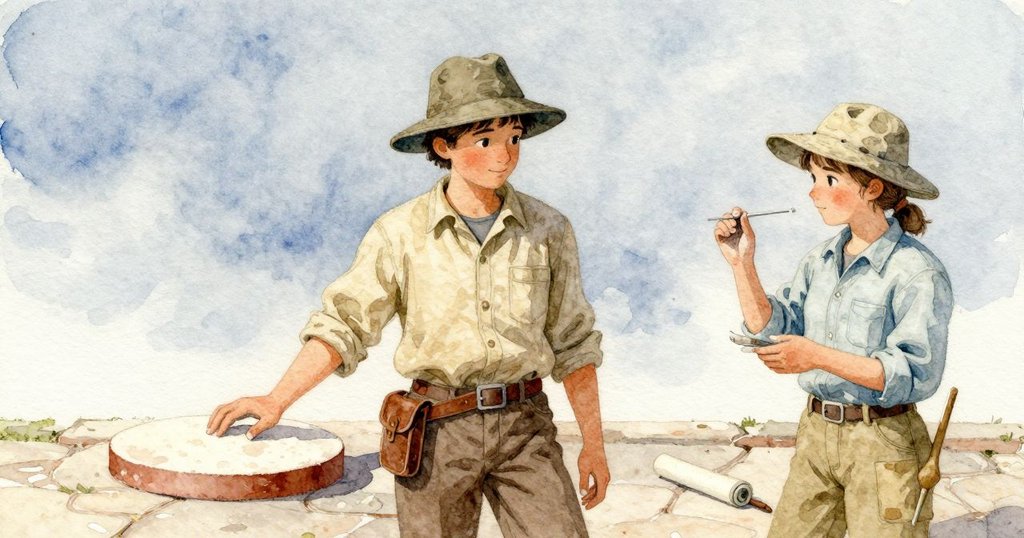
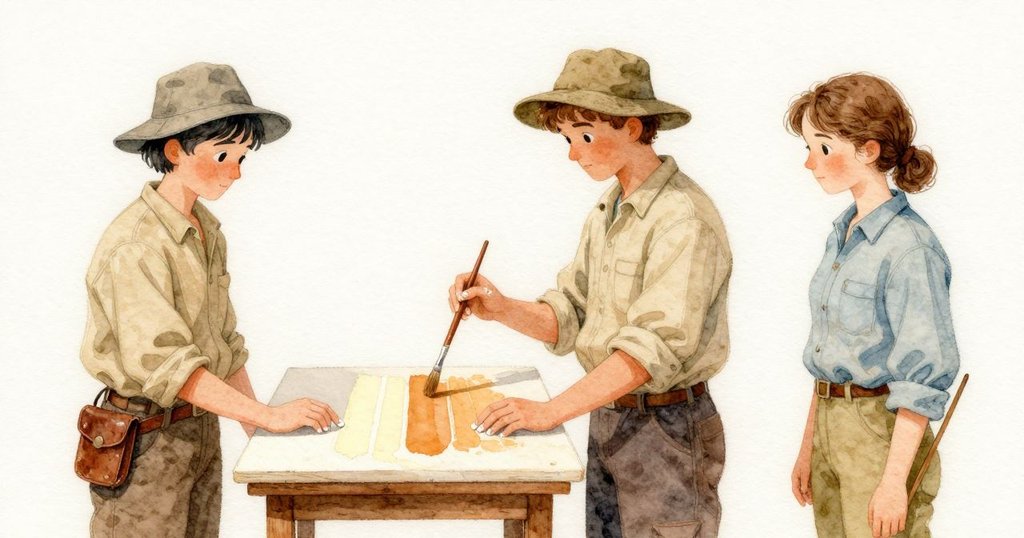
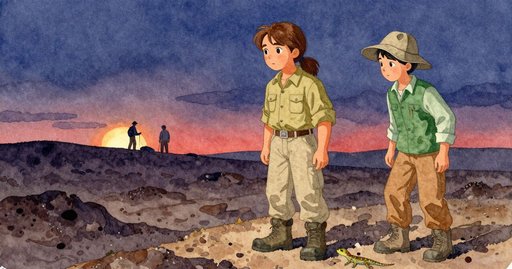
“Do you hear that higher note?” Cal held the dental pick above the ochre band, his wrist hovering while the wind paused between gusts.
Nora angled the brush beside him, the scritch on limestone steady along the same rim they had traced since morning until grit turned to slide.
Above their hats the sky hung leaden, but the slab held bands of warmth and cool that a flat palm could map without looking.
Dark ochre warmed first, cream stayed mild, and the brush carried limestone crumbs that lifted the smell released by the day’s slight moisture.
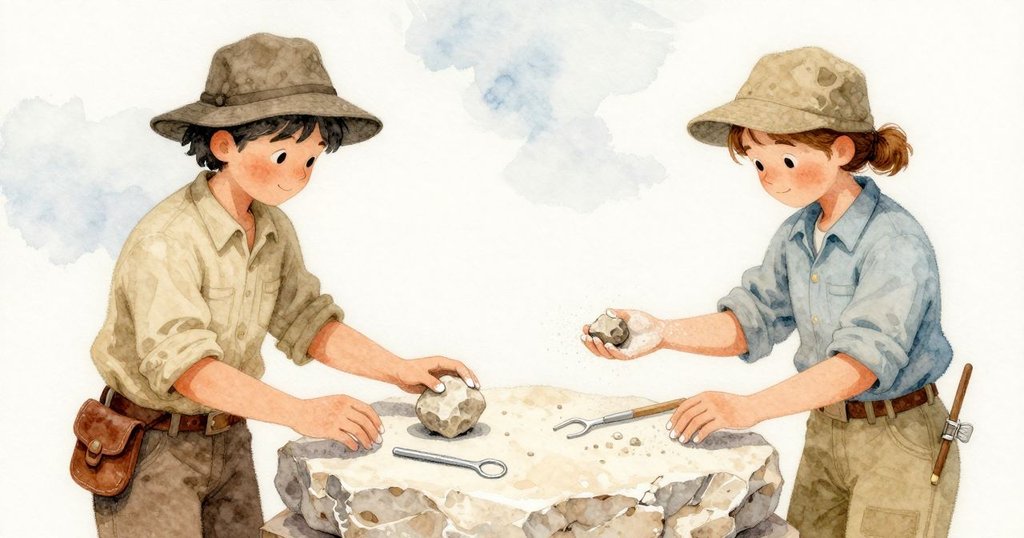
Each light tap tested the stone for a hollow pocket or solid matrix, the reply traveling as bright or dull along the slender shaft.
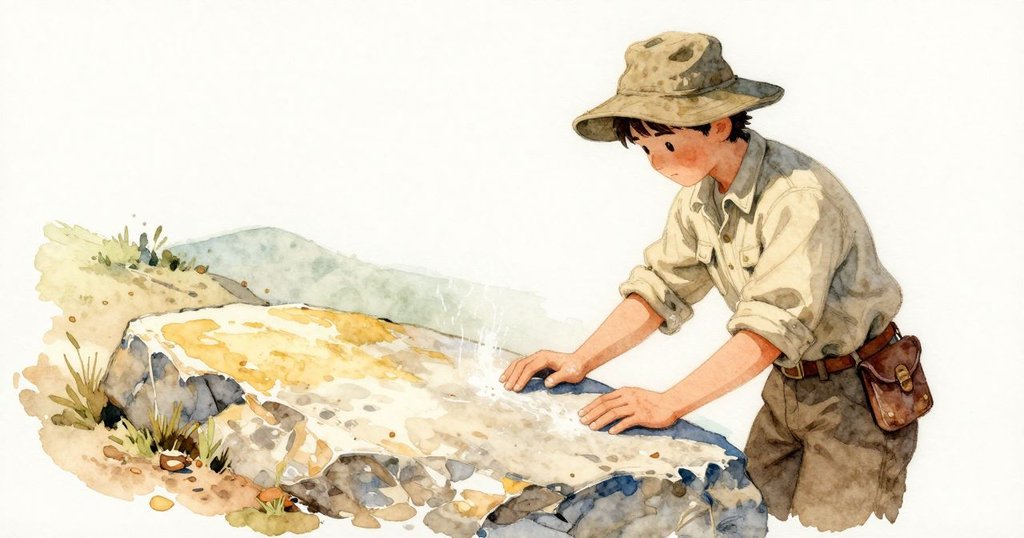
Nora eased a freed chip onto her palm; the fossil piece sat heavier than the chalky matrix crumbling into dust along her fingers.
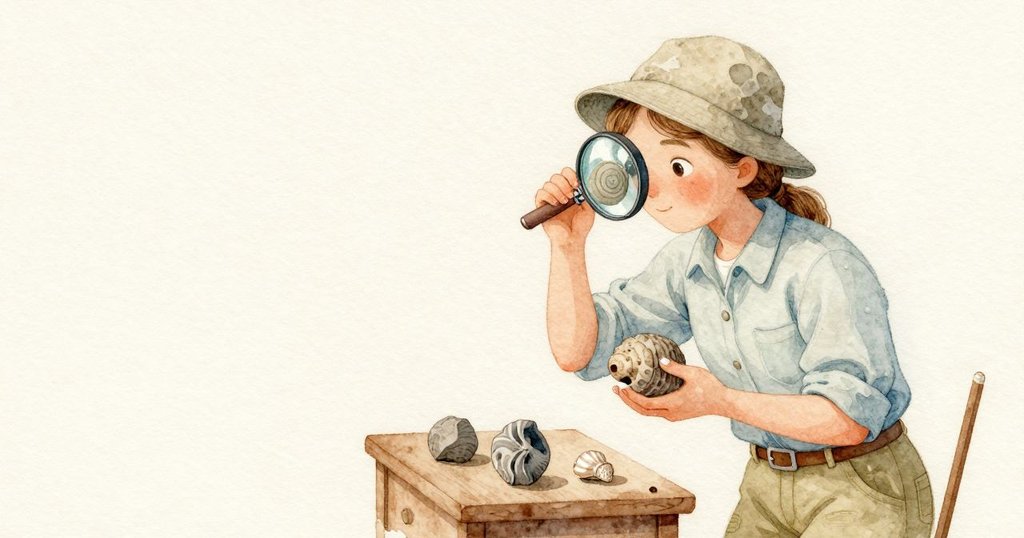
She folded open her loupe, its tiny hinge a snug mechanism, and brought glass close until the spiral ridges crowded her whole view.
The matrix felt dry and seasoned, while the shell kept a cooler, settled density her skin weighed by the slow drag across her palm.
The curls turned inside one another like a diagram of DNA, not lines on paper but growth pressed long ago into mud and then mineral.
Cal tapped again, lighter this time, and stopped mid-tap when the bright ring slipped into a softer thud at the boundary.
Cal glanced at Nora and tried once more; “Same stone,” he said, narrowing his eyes, “yet it talks two ways.”
Nora lifted her brush and paused, bristles held just above mineral, then dabbed them on the canvas roll where damp grit clung in a pale smear.
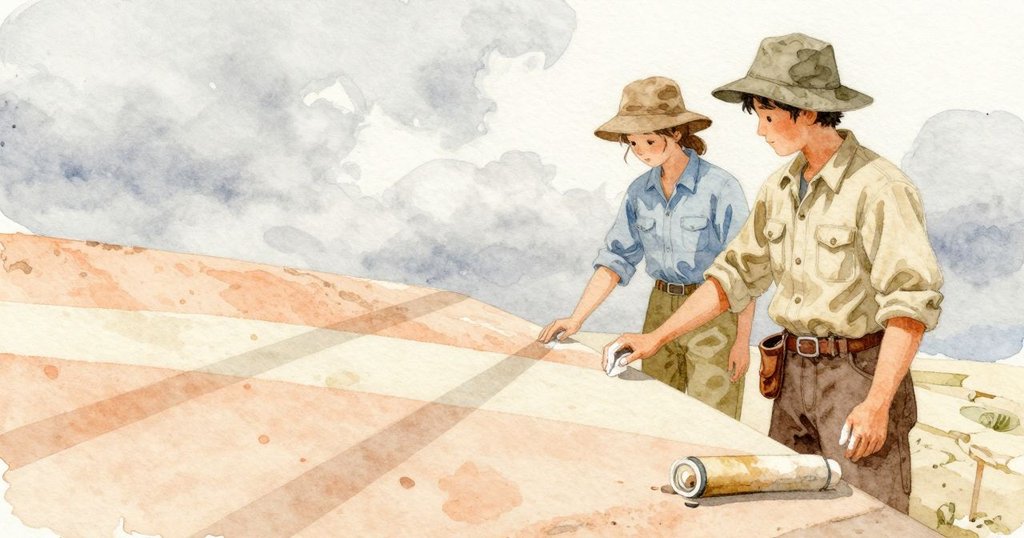
She flattened her palm across two bands, dark and light, and the dark ran warm while the light stayed cool, a map the hand could read.
Cal waited, then set the pick on the cooler stripe; the note came dull, and on the warmer stripe it jumped bright, the rim unchanged.
“Hear it bounce?” Nora whispered, not moving the brush, and then she flicked one crumb away where the bristles slid over glass-smooth shell without scraping the rim.
They had worked this square since sunrise, yet the sound now measured temperature as clearly as the loupe measured ridges, both ordinary tools.
They shifted places without speaking, elbows clearing room by habit, and their shadows striped the slab in parallel bands that lengthened as clouds drifted.
Cal set the pick down and let his hand rest on the surface, feeling the slight lift of scent where moisture met chalk under moving air.
The wind scritched along the bristles, scattered a few crumbs back into the shallow crevice, and went on across the terrace toward the low ridge.
Sunlight kept crossing the bands, warming and cooling the stone by small degrees that the day would carry forward long after their tools were closed.
繁體中文 번역
「你有聽到那個更高的聲音嗎?」Cal 把牙科小鑿停在赭色帶上方,手腕懸著,風在一陣與一陣之間短短停住。
Nora 在他身旁調整刷子,石灰岩上的刷刷聲穩定地沿著他們從早上就一直描過的同一條邊緣前進,直到砂礫感變成滑過的觸感。
他們的帽沿上方,天空沉沉壓著,但岩板裡的溫度分成一條條冷與暖,平攤的手掌不看也能摸出分布。
深赭先熱,乳白仍溫和,刷子帶起的石灰岩細屑送出一股氣味,是這天微微水氣釋放出來的礦味。
每一下輕敲都在測試岩石是空腔還是實心,回應沿著細細的金屬桿傳來,亮是空、悶是實。
Nora 把一片剛取下的小碎片輕放在掌心;化石的那一片在手上比較沉,而粉化的基質沿著指縫碎成粉。
她把放大鏡折開,細小轉軸是一個合手的機構,把鏡面湊近,直到螺旋的肋紋塞滿整個視野。
基質摸起來乾而老成,貝殼則保著較涼、沈穩的密度,皮膚藉著在掌心慢慢拖過的阻力就能量出分別。
那些彎曲一層套一層,像課本裡 DNA 的圖,不是紙上的線條,而是很久以前在泥裡長成又被礦物換位的生長痕跡。
Cal 又輕敲了一下,這次更輕,敲到一半停住,因為明亮的聲音到邊界忽然變成比較悶的聲音。
Cal 看了 Nora 一眼又試一次;「同一塊石頭。」他眯起眼說,「卻講出兩種聲音。」
Nora 把刷子提起停住,刷毛懸在礦化面上方,接著在帆布捲上輕輕點一下,潮濕的砂粒在上面留下淡淡的一抹。
她把手掌壓在一深一淺兩條帶上,深的那條發熱,淺的那條保持涼,這是一張手能讀的地圖。
Cal 等了一下,然後把小鑿放在較涼的紋帶上;聲音變悶,而放在較熱的紋帶上就跳成明亮,邊緣沒有改變。
「有聽到它跳嗎?」Nora 壓低聲音說,刷子沒有移動,然後她把一點碎屑撥開,刷毛在玻璃般光滑的貝殼上滑過,沒有刮到邊。
他們從日出就做著同一格,但此刻這個聲音量出了溫差,就像放大鏡量出肋紋一樣清楚,兩樣都只是日常的工具。
他們默默換了位置,手肘照著慣性讓出空間,兩人的影子把岩板分成一條條平行的陰影,雲過時這些條紋拉長。
Cal 放下小鑿,把手放在岩面上,手心在移動的空氣裡聞到微微一抹味道,是水氣遇到石灰時升起的那點氣息。
風沿著刷毛發出細細的刷聲,把幾粒碎屑又送回淺淺的縫裡,然後越過整片平台往低緣吹去。
陽光不斷跨過這些帶狀的層面,讓石頭一點一點地熱又一點一點地涼,這整天都會慢慢延續下去,遠遠超過他們收好的工具。
문맥 속 어휘
- loupe
小型放大鏡(常用於珠寶、化石或精細檢視)。
“She clicked the loupe open and let the small glass flood the spiral with calm magnification.”
她喀地打開放大鏡,讓小小鏡面以沉著的放大淹滿那道螺旋。
- leaden
鉛灰色、沉重壓抑的;形容天空或氣氛顏色暗沉、感覺沉甸甸。
“Above our hats the sky hung leaden, a dull lid pressing the terrace flatter.”
在我們的帽沿上方,天空鉛灰而低垂,像鈍蓋把露臺壓得更平。
- DNA
去氧核醣核酸;攜帶生物遺傳資訊的分子,常以雙股螺旋圖像呈現。
“Through the lens, the spiral ridges coiled like a DNA diagram, growth fossilized into mineral memory.”
透過鏡片,螺旋脊紋像 DNA 圖樣盤繞,生長被鎖進礦物的記憶。
- moisture
水分、濕氣;空氣或物體表面上的少量水。
“A faint moisture lifted chalk’s scent, rising whenever wind combed the newly exposed rim.”
一絲濕氣托起粉筆味,風一梳過新露出的邊緣就升起。
- mechanism
機構、機械結構;由各部件配合運作的系統或裝置(此處指放大鏡的細小鉸鏈)。
“Its hinge, a neat mechanism, kept the lens steady while her breath stayed measured.”
那枚鉸鏈——精巧的機構——讓鏡片穩住,而她的呼吸維持勻稱。
선생님 스파크
AI가 수업 힌트를 생성해 교사가 이야기를 확장해 활용하도록 돕습니다
Story Discussion - Stone Bands
描述文本中用來區分岩板不同位置的三種感官線索(聲音、觸感、氣味)。它們各自呈現什麼差異?
開放式參考答案
聲音:用敲擊產生的回聲有明亮(空腔、清脆)與悶響(實心、沉悶)之分。觸感:貝殼部分感覺較涼且密實,基質則乾燥、粉化且較輕。氣味:刷起的石灰岩細屑帶出微微的礦石氣味,尤其在濕度處更明顯。
當聲音從明亮變成悶響時,岩石本身有物理位置上的改變嗎?
是非題參考答案
沒有。文本多次強調是「同一塊石頭」,聲音差異來自於表面不同帶的材質與溫度,而非位置改變。
請解釋作者如何透過一連串觀察建立「聲音能測溫差」的論證?列出至少三個觀察步驟並說明它們之間的因果關係。
開放式參考答案
步驟一:用小鑿輕敲不同條帶,記錄回音的明暗;步驟二:用手掌觸摸相同條帶,辨別溫度差(深赭暖、乳白涼);步驟三:在同一位置重複敲擊(或把鑿放在較涼處),確認聲音隨溫度帶改變(較涼處聲音悶、較暖處聲音亮)。因果關係是:溫度與材質影響石面回應聲波的方式,觀察(觸覺)驗證了聲音差異的來源。
從 Cal 與 Nora 的動作與互動中,你可以推斷出他們在野外工作的哪三種態度或習慣?
開放式參考答案
細緻且有耐心:他們以輕敲、刷毛和放大鏡做精細觀察;默契與非語言協作:換位、讓出手肘空間、靠動作交流;感官敏銳並重視證據:他們同時用聽、摸、視覺(loupe)和嗅覺來收集資訊。
請填空:文中比喻貝殼紋理像課本裡的 _______。
填空題參考答案
DNA
故事中反覆出現的「帶狀層面」(bands)在象徵層次上可能代表什麼?請提出兩種不同的象徵解讀並用文本證據支持各自的看法。
開放式參考答案
一,時間與地質史的層疊:帶狀像生長痕跡與被礦物替換的痕跡(「很久以前在泥裡長成又被礦物換位的生長痕跡」),象徵過去被保留於岩中的時間。二,知識與感官閱讀的地圖:深淺帶對應溫度與聲音,手能讀出分布(「這是一張手能讀的地圖」),象徵科學家用感官解讀世界的方式。
作者寫「Same stone, yet it talks two ways」時,是否主要在使用擬人化來增強主題?
是非題參考答案
是。作者把石頭擬人化成能「說話」的對象,強調透過仔細觀察與工具,人類可以讓無聲的物質呈現不同的訊息與意義。
Story Discussion - Stone Bands
作者如何把那些日常工具(the pick, the brush, the loupe, and the hand)描寫成感官的延伸?請分別說明每件工具放大或改變哪一種感官經驗,並引用文本細節。
開放式參考答案
The pick is rendered as an auditory probe: its light taps test for hollow pockets or solid matrix, and the reply travels as a bright or dull note along the shaft, so the pick amplifies hearing and tactile feedback through vibration. The brush gathers and teases out texture and scent: it lifts limestone crumbs that release a mineral smell and its scritch traces the rim, so it extends touch and smell. The loupe magnifies vision: Nora brings the glass close until the spiral ridges crowd her whole view, turning tiny growth lines into legible structure. The flat palm maps temperature directly: the hand reads warm and cool bands without looking, making the body itself an instrument for thermal mapping.
請描述從日出到午後,陽光、風與微濕如何共同作用,依序改變岩板上可被感知到的聲音、溫度與氣味。至少列出三個連續的因果步驟並說明每步如何導致下一步。
開放式參考答案
1) Sunlight crosses the bands and warms some stripes more than others → this creates subtle temperature contrasts (dark ochre warms first, cream stays mild). 2) Temperature contrasts alter how the stone responds to tapping → taps on warmer stripes ring brighter, taps on cooler stripes sound duller, so sound becomes a proxy for temperature. 3) Slight moisture in the day interacts with limestone crumbs brushed free → the brush lifts these crumbs and the moisture releases a mineral scent that the hand can detect. 4) Wind moves crumbs and scent across the terrace → it scritches the bristles, repositions particles into crevices, and carries the faint mineral aroma away, so perceptual cues (sound, smell, feel) shift as weather and sunlight change.
Cal 說「Same stone, yet it talks two ways」是不是在暗示:對物體的知識取決於觀察方法,而不是物體本身的固定性?(請回答是或不是,並簡短說明理由)
是非題參考答案
Yes. The line emphasizes that the stone's 'voice' changes with the method of inquiry: tapping, touching, looking through a loupe, and brushing all reveal different properties. Knowledge thus emerges from the interaction between observer and object rather than from a single, immutable surface.
填空:在英文原文中,句子 'She folded open her loupe, its tiny hinge a snug ______, and brought glass close until the spiral ridges crowded her whole view.' 空格應填哪個字?
填空題參考答案
mechanism
根據文本中 Cal 的動作、語氣與注視,他在這個場景中的主要心態與科學態度是什麼?請用兩到三句英文簡潔總結他的情緒、目的與方法。
開放式參考答案
Cal is methodical and quietly curious: he conducts repeated, careful taps and watches Nora and the stone for confirmation. His narrowed eyes and attempts to reproduce the sound show a scientist's patience and insistence on testing hypotheses through sensory experiments. He values small, precise observations over sudden conclusions.
作者用『The curls turned inside one another like a diagram of DNA』這個比喻有什麼效果?它如何把微小的紋理和更大的時間概念連結起來?
開放式參考答案
The DNA simile collapses scale and meaning: microscopic spirals become a visual shorthand for deep history and pattern. By likening shell curls to a diagram of DNA, the text suggests continuity between biological growth and geological preservation, implying that the stone encodes an ancient record much like DNA encodes life. The comparison also lends scientific precision and intimacy, making the reader feel that tiny ridges carry significance across time.
作者反覆強調這些是『ordinary tools』(brush, loupe, pick, hand)。這種處理是否在文本中把科學觀察描寫成一種可及的、非精英化的活動?請回答是或不是,並簡短說明。
是非題參考答案
Yes. By presenting brushes, a loupe, a dental pick, and the unaided hand as the means to extract rich information, the passage frames careful attention and simple tools as sufficient for discovery. This democratizes observation: skilled perception, not exotic instruments, produces meaningful knowledge.
Role Play - When the Stone Talks Two Ways
情境
場景設定在露台的那塊岩板上:Cal 正用小鑿輕敲靠近赭色帶的邊緣,聲音忽明忽暗;Nora 預備著刷子和放大鏡,手掌壓在深淺兩條紋帶上,感覺到溫度差。此刻的關鍵瞬間是 Cal 停在邊界,發現同一塊石頭在不同帶上發出截然不同的聲響,兩人需要用英文交換觀察、比對感覺,並決定下一步處理(例如記錄位置、取樣還是更仔細檢查放大鏡下的肋紋)。 教學指引(給教師):讓兩位學習者分別扮演 Cal 與 Nora,重現敲擊—感溫—放大檢視的連串動作。鼓勵學生用具體的感官形容詞與科學推論語句(描述聲音的 bright/dull、材質的 cool/warm、是否 hollow/solid),並用疑問句與短句協調下一個動作(Who taps next? Should we take a sample? Where exactly is the boundary?)。輪換角色以練習不同目標語言功能:一人專注於聲音描述與假設,另一人專注於觸覺與顯微觀察。提醒學生在對話中留出短暫停頓以模擬故事中的細聽與注意力轉移。
角色
開場白建議
- •“Listen — when I tap the ochre band it rings bright, but along this rim it goes dull. Do you feel the temperature change under your palm?”
- •“Hold the loupe here and describe the spiral ridges. Does the shell feel cooler and denser than the chalky matrix when you press the chip in your hand?”
Role Play - After the Loupe: Smell, Smear, and Mapping
情境
場景設定在露台上同一塊岩板,但這一次重心放在 Nora 剛取下的小碎片與她打開放大鏡的那一刻:Nora 把化石片放在掌心,彎下身用放大鏡觀察,同時注意到刷子帶起的石灰岩細屑散發出潮濕的礦物氣味,並在帆布捲上留下淡淡的抹痕。Cal 站在旁邊,手裡還放著小鑿,從側面看見兩人的影子在板面上拉長並跨過不同的紋帶。教師指引:讓一位學生扮演 Nora,專注用語言描述觀察到的視覺、觸覺與嗅覺細節(例如碎屑的氣味、放大鏡轉軸的貼合感、帆布上的抹痕),另一位扮演 Cal,負責記錄位置、在現場地圖上標記要取樣或拍照的帶狀,並提出下一步的假設或實驗步驟(例如拍照、採樣、等待陽光移動再測聲)。鼓勵學生用完整的推論句與具體描述語彙,把感官證據連結到地質或環境的可能原因。
角色
開場白建議
- •“Do you smell the damp mineral when the brush lifts the crumbs? It smells like the tide—what might that tell us about how this layer formed?”
- •“See this pale smear on the canvas and how the bristles just slid over the shell without scraping—should we mark this warmer band on the field map before the light shifts?”
Creative Writing - Nora's Retrospection
寫作提示
任務說明(給教師與學生):以 Nora 的第一人稱回顧視角,從她多年後回想那一格工作的瞬間出發,用英文寫一段約 150 字的延續。作品必須留在原來的場景與人物中(Cal、the slab、the dental pick、the brush、the loupe 等),並保留故事的感官細節:溫度帶(warmth / cool)、敲擊聲的明亮與悶響(bright / dull)、石灰岩的細屑與貝殼的密度。目標是把外在的聲響與觸感,轉化為內心的記憶與意義反思:她如何理解那塊石頭「講出兩種聲音」?那一刻對她後來的工作或感知帶來了什麼長遠影響? 示例(給老師提示用,為保持教學統一性以繁體中文示範):多年以後,我還能把手放回那塊岩面上,記得深赭一帶在日照下微微發燙,淺色紋帶始終冰涼。Cal 站在我右側,我們交換位置的動作已成習慣。最清楚的不是圖像,而是聲音——那一下從明亮跳到悶沉,像兩個聲道同時在耳邊說話。當時我以為那只是地層的偶然,但回想起來,那個瞬間教會我一件與時間有關的事:表面與內裡可以同時存在兩種節奏,工具不過是讓我們聽見它們的媒介。把這種知道帶回實驗室,我開始用更細的敲擊去讀石頭,學會讓聲音引導手的節奏與耐心。
詞彙庫
寫作輔助
- • When I placed my palm on the slab, I remembered...
- • The sound changed from bright to dull when I...
- • I realized, later that day, that the two voices meant...
- • Cal's quiet movement made me notice...
- • The loupe showed the ridges, but it was the sound that...
- • Looking back, the bands of warmth and cool reminded me of...
Creative Writing - Side Moment from Cal's View
寫作提示
任務說明(給教師與學生):請學生以 Cal 的當下視角書寫一段約 150 字的英文短文,聚焦一個原敘述中未被主敘者直接描寫的「側面瞬間」。作品必須留在同一塊岩板與同一工作格內,並出現故事中的具名物件或元素(例如 Cal、Nora、the slab、the dental pick、the brush、the loupe、limestone、ochre band、fossil、shell 等)。寫作重點在放大感官細節:聲音的轉換(bright / dull)、溫度的差異(warmth / cool)、觸感與氣味,以及平常工具如何成為感知的延伸。限制與要求: 1) 字數約 150 字(允許小幅上下浮動)。 2) 作品至少包含八個 word_bank 裡的英文單詞(大小寫不限)。 3) 保持情境安全、正向,勿加入與原場景不相容的危險行為或新人物。 示例寫作方向(給學生作為啟發):Cal 在那一下敲擊從 bright 變為 dull 的剎那,注意到放大鏡中反射的一點光,或留意到一粒微小碎屑滑進縫隙的路徑。把這個被忽略的小動作放大成整個瞬間的情感和意義;用感官細節讓讀者「看到」與「聽到」那個側面瞬間。
詞彙庫
寫作輔助
- • When the bright note went dull, Cal reached for the loupe because...
- • A single crumb slid into the crevice and I realized...
- • I set the dental pick down and felt the warmth under my palm like...
- • The brush left a pale smear on the canvas roll, which showed me...
- • Through the loupe the shell's spiral looked like..., and I thought...
- • The slab held a cool band and a warm band; in that pause I...
- • Sound carried along the pick and I noticed an extra detail:...
Vocabulary & Grammar Focus
重點單字
dental pick
牙科用的小鑿;故事中被當作細緻敲擊和探查岩面、化石縫隙的工具。
Cal balanced the dental pick above the ochre band while the wind paused between gusts.
ochre
赭色;指岩層或表面呈土黃色或紅褐色的一條帶,在故事中作為可觸察的色帶。
He set the pick just above the ochre band, feeling the stone's warmth under his palm.
scritch
擬聲詞,表示刷毛或工具在石面上發出的細微摩擦聲,帶出觸覺與聽覺的細節。
Nora heard the steady scritch of her brush along limestone as grit turned to slide.
limestone
石灰岩,一種常見的沉積岩;在故事裡是保存化石的基質表面。
The brush made a soft line on limestone, tracing the rim they had followed since sunrise.
matrix
基質;包裹或支撐化石的岩石或沉積物,與化石的硬殼形成對比。
Each light tap tested for a hollow pocket or the solid matrix beneath the shell.
loupe
放大鏡;細小手持放大設備,用以觀察化石細節,例如肋紋與表面質地。
Nora folded open her loupe and brought the glass so close the ridges filled her view.
spiral
螺旋狀的,描述貝殼表面的環形肋紋或捲曲結構;在故事中是可由放大鏡觀察的細節。
The spiral ridges of the shell crowded Nora's loupe, filling her whole view with tight curves.
chip
碎片;從岩面或化石上脫落的微小片段,能顯示材質的密度與質感差異。
Nora eased the freed chip onto her palm, surprised by the fossil's unexpected weight.
thud
悶重的聲響;與明亮回音相對,用以描寫敲擊時聲音由清亮變為沉悶的質感。
Cal paused when the bright ring suddenly slipped into a softer thud at the boundary.
grit
砂礫或細小礦物顆粒;刷毛與帆布上常見的磨損物質,影響觸感與聲音。
They worked until grit turned to slide, brush bristles carrying pale dust across the canvas.
文法重點
本文中多次使用名詞獨立構造(nominative absolute/名詞片語+現在分詞,如“his wrist hovering”)來提供背景情境,同時以 while 引導的從屬子句表明時間上的同時性(例如“while the wind paused between gusts”)。名詞獨立構造能壓縮資訊、保持節奏感,常見於敘述中作為附加說明;而 while 類的從屬連接詞明確標示兩個動作同時發生。兩者可以互相替換或互補:把名詞獨立構造展開為一個完整的從屬子句(或把從屬子句重置位置)能改變語氣和信息重心。例句:"Cal held the dental pick above the ochre band, his wrist hovering while the wind paused between gusts."(原句)可改寫為把時間子句置前或把獨立構造展開以凸顯時間或動作的主從關係。
練習題
Cal stopped mid-tap when the bright ring slipped into a softer ___ at the boundary.
參考答案
thud
配對以下單字與意思:
顯示答案
A-10B-3C-4D-7E-6F-5G-9H-1I-2J-8
Cal held the dental pick above the ochre band, his wrist hovering while the wind paused between gusts.
參考答案
While the wind paused between gusts, Cal held the dental pick above the ochre band as his wrist hovered.
Vocabulary & Grammar Focus
重點單字
note
聲音中的單一音高或音色;在故事中指由敲擊或工具產生、可被辨識的音調。
Cal paused, asking Nora if she heard that higher note from the pick.
wrist
手腕;連接手與前臂的關節,在故事中用來描寫手的懸停與細緻操作。
Cal balanced the pick above the band, his wrist hovering as the wind paused.
gusts
一陣強風;短暫且突發的風吹動,故事用來描寫風的間歇性節奏。
The wind paused between gusts, and Cal waited before tapping again.
slab
岩板;一大片平整的石面,承載化石、色帶與他們工作的區域。
The slab held bands of warmth and cool that a flat palm could map.
palm
手掌;用來直接接觸並感知溫度與紋理的身體部位,是故事中读取石面帶狀差異的工具之一。
She flattened her palm across the two bands, feeling the dark run warm while the light stayed cool.
hollow
空腔;岩石內可能存在的空洞,敲擊時若回聲明亮通常暗示空心。
Each light tap tested for a hollow pocket beneath the rim.
shaft
桿身;細長的柄或桿子,在故事中指傳遞敲擊聲的金屬細桿部分。
The reply traveled bright or dull along the slender shaft of the pick.
fossil
化石;古生物遺留的硬質部分,故事裡是他們從基質中小心取下的片段。
Nora eased the fossil piece onto her palm, surprised by its weight.
hinge
鉸鏈;使物件能開合的機構,放大鏡的小鉸鏈讓鏡面能摺疊並固定視角。
She folded open her loupe, the tiny hinge proving a snug mechanism.
stripe
條帶;岩面上可見的深淺或溫差帶,能以觸感或聲音辨識不同的紋理區域。
Cal set the pick on the cooler stripe and the note turned dull.
文法重點
本文使用了過去分詞作為名詞片語的修飾(reduced relative clause),例如 "growth pressed long ago into mud"。這類結構實際上壓縮了完整的關係子句(如 "growth that had been pressed long ago into mud"),把較早發生的動作以被動過去分詞形式掛在名詞上,從而在敘述中建立時間層次與背景資訊。這種寫法可以讓句子更精練、節奏更連貫;要辨認它,找尋靠近名詞的過去分詞(pressed, broken, shaped 等),並嘗試把它展開成完整的關係子句以檢視時間順序(常用過去完成被動來表達更早的過去)。
練習題
She flattened her ___ across the two bands, feeling the dark run warm while the light stayed cool.
參考答案
palm
配對以下單字與意思:
顯示答案
A-6B-5C-9D-8E-1F-10G-7H-3I-2J-4
The curls turned inside one another like a diagram of DNA, not lines on paper but growth pressed long ago into mud and then mineral.
參考答案
The curls turned inside one another like a diagram of DNA, not lines on paper but growth that had been pressed long ago into mud and then into mineral.
文化連結 - 發掘現場的工具與觸覺儀式
主題
發掘現場的工具與觸覺儀式
討論要點
- •在故事裡,Cal 用牙科小鑿敲出明亮或悶沉的聲音,Nora 用刷子和手掌去分辨石頭的溫度與質地。回想你曾經親手觸摸或聽覺辨識物件的時刻:你用了哪些小工具或單純用手感知?那次經驗讓你怎麼改變對材料的理解?
- •故事中的兩位研究者默默互換位置、共用同一格子、用帆布捲和放大鏡作為日常工具。想一想你文化裡從事田野工作、手作或修復時常見的儀式或工具擺放方式(例如休息、分工、工具放置或記錄方法);這些習慣怎麼影響合作與溝通?
- •Nora 在掌心感受深淺帶的溫差,並以觸覺和聲音讀取石頭的訊息。這種以身體為感知媒介的做法在你熟悉的學習或工作場景中常見嗎?試舉一個具體場景並描述其中的感官重點(視覺、觸覺、聽覺或嗅覺)如何被優先或被忽略。
文化比較
故事呈現的文化細節落在一種以輕巧手工具與感官敏銳為核心的田野習慣:牙科小鑿、刷子、放大鏡、帆布捲和露台上的分格工作,這些都是經驗豐厚的雙手與耳朵可以讀懂的日常儀式。相較之下,使用繁體中文的文化脈絡裡,從事類似的田野或工藝工作也會有兩種常見走向:一是同樣強調手感與口傳技藝、小組默契(例如師徒制、圍桌作業或市場內的即時協調);二是傾向更快採用影像、感測器或數位記錄來補助或替代純粹感官的判讀(例如用攝影、筆記或手機記錄取代僅靠耳朵辨音)。兩邊的不同,不在於哪種更好,而是在工具和儀式上如何分配注意力——故事裡的安靜與身體讀法提醒我們:有些知識只能在與材料貼近、透過手與耳朵的反覆操作中獲得;而在你的文化裡,這樣的身體慣習可能會被社群交流、休息儀式(例如一杯茶的暫歇)或科技記錄方式所補強或改變。
文化連結 - 露台的日光與風之節律
主題
露台的日光與風之節律
討論要點
- •故事中陽光不斷跨過帶狀的岩面,讓石頭一段一段地變暖與變涼,風也沿著刷毛把細屑吹回縫裡。回想你曾在戶外工作或學習的經驗:自然的光線與風如何改變你觀察物件或判斷材料的方式?能否描述一次因為光或風的改變而改變你結論的具體例子?
- •Cal 和 Nora 在露台上默默換位、影子被雲影拉長,他們還用氣味與聲音讀取場地資訊。想一想你熟悉的文化場域(例如市場、田間、工地或學校戶外教室)中,有哪些固定的儀式或安排(如休息、遮蔽、用餐時間或工具收放)是直接回應當地的光線與風勢?這些習慣如何幫助團隊維持工作節奏與安全?
- •故事把露台、低緣與遠方的山脊串成一個可感受的場景:天氣、地形與工具共同決定他們的工作方式。你能描述一個具體地點,在那裏環境(地勢、日照、風向)塑造了人們的溝通方式或注意力分配嗎?那個場地有哪些可觀察到的細節?
文化比較
故事裡的場域是一塊暴露在天候下的露台:陽光、雲影與風直接成為量度與判讀的媒介,研究者藉由手感、聲音與氣味去讀取石頭的狀態,並以默契在露天空間裡無聲協作。相較之下,在使用繁體中文的日常場景中,戶外工作的回應方式常融合更多對「緩衝」與「共同節奏」的安排:例如搭設遮陽棚或帆布以穩定光線、以一杯茶或固定的午休時間作為群組暫歇來調整步調、或者在重要操作時把物件移回有遮蔽的空間處理。此外,天候資訊(氣象預報)與簡單的機械輔助(遮陽設備、風扇、收納箱)也常被用來減少環境變異對觀察的影響。兩種做法並無優劣之分;故事提醒我們,直接與環境對話能提高感官敏銳度,而在你的文化慣例中,透過共同行為和環境管理來穩定工作節律,也能促進團隊安全與效率。
Comprehension Quiz
1. Who held the dental pick above the ochre band?
2. Which tool did Nora angle beside Cal to sweep the limestone?
3. How could the researchers map the warm and cool bands without looking?
4. Which band warmed first as described in the story?
5. In the story, what did a bright ring from a light tap indicate?
6. When Nora placed the freed chip on her palm, which felt heavier?
7. What detail filled Nora's view when she used the loupe?
8. What change in sound occurred when Cal set the pick on the warmer stripe?
Comprehension Quiz
1. Why did Cal stop mid-tap while tapping the stone?
2. What did Nora do with the brush when she paused above the mineral?
3. What scent did Cal notice when he rested his hand on the surface?
4. How did the wind affect the crumbs on the slab?
5. What did the curls in the shell resemble when Nora looked through the loupe?
6. How did the two workers change positions around the slab?
7. What did sunlight do to the stone bands over the day?
추천 읽기
White Powder on the Folding Bench
Pulley Shade and a Shell Rim Reconsidered
Corinne Notices a Curve Beneath the Fossil Dust
The Sound Beneath the Brush
Shared Sunlit Rhythm Above the Layered Fossil Spiral
Fossil Shell Beneath the Clicking Slab
When Water Touched the Stone Rim
Measuring the Spiral Fossil with a Worn Brush Handle
When a Droplet Stopped Vanishing in the Fossil Bed
Hat, Shell Rim, and an Afternoon at the Fossil Bed
Tilted Cup on Warm Sandstone