Shadow at the Sundial and a Dripping Watering Can - 適合進階的英文短篇故事,含中譯與發音
日晷的影子與滴水的銅壺 | 英文/中文 雙語朗讀
스토리 내용
English 원문
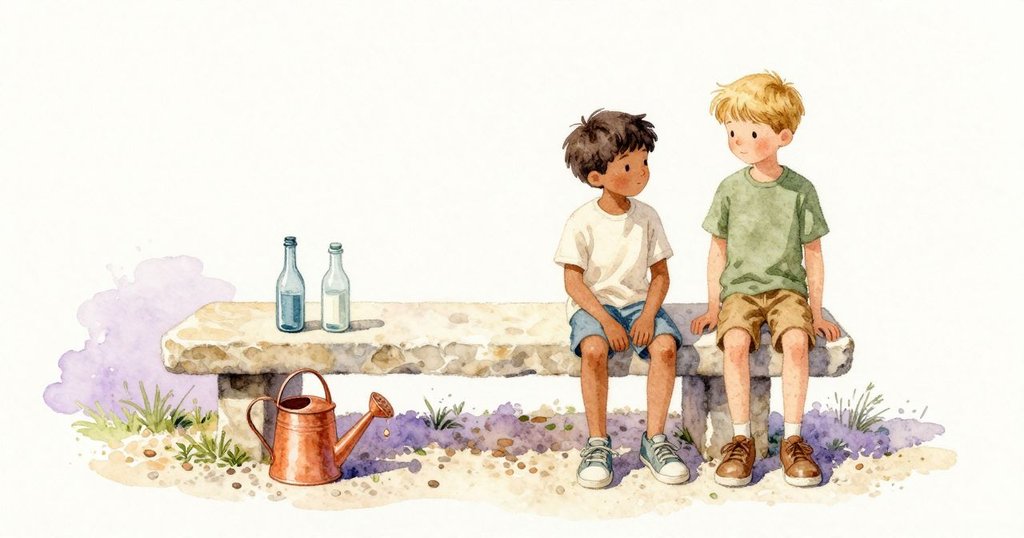
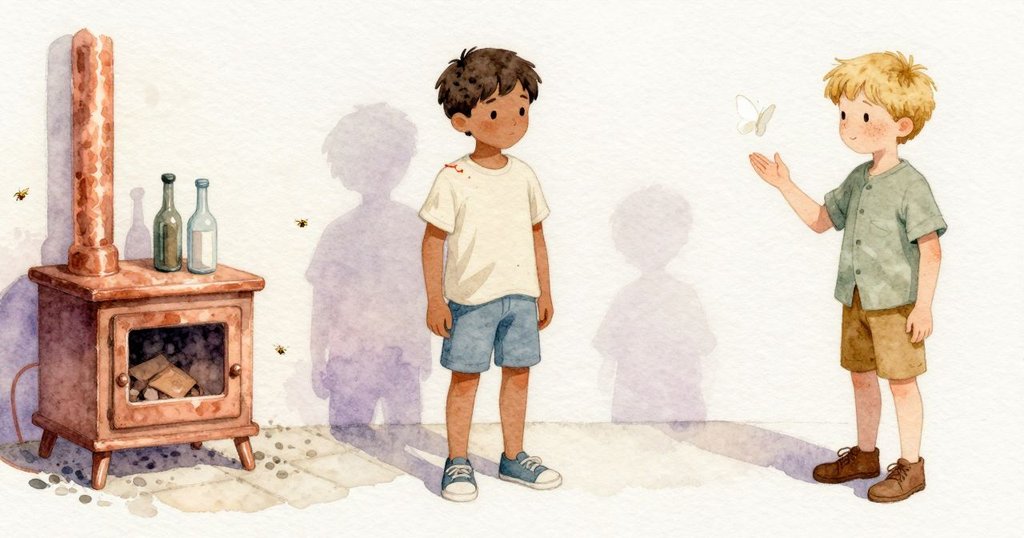
Every Saturday, Xavier and Heath take the same path to the sundial, but a pale rectangle on the bench stays clean. They set two bottles on the stone, then stop short, leaving a neat gap between them that no sleeve or bag fills. Gravel clicks under their soles as they cross toward the dial’s warm circle by the lavender beds.
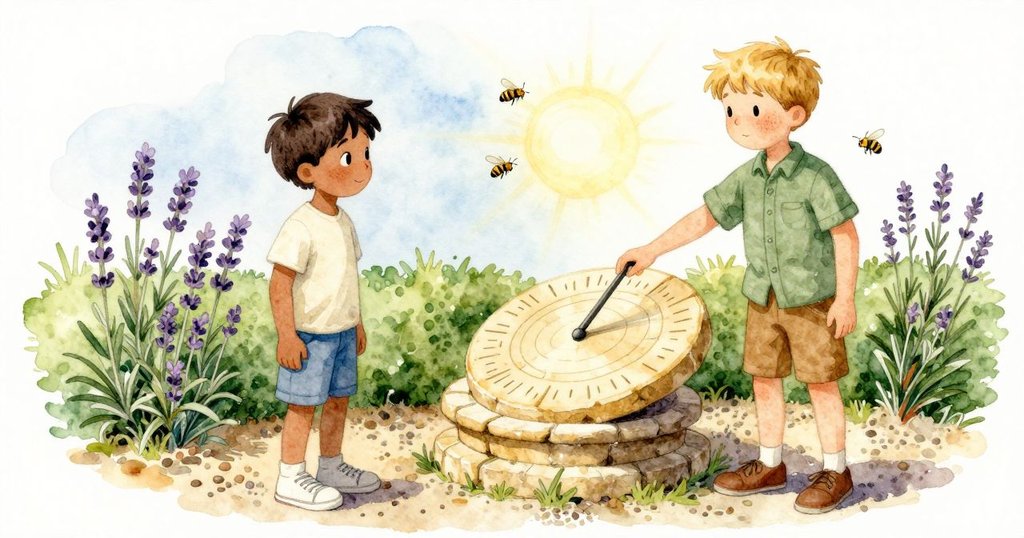
Lavender leans in the southern bed, its stems glossy with sun, while rosemary holds the hedge in a tight, resinous line. Bees work the purple heads in a low drone, and a thrush ticks from the shade as a dry counterpoint. A copper watering can rests on the bench’s end, its spout shedding a slow drip that pits the pale gravel. Thyme threads the path joints; a light step crushes a sprig, and a peppery puff rises into the warm draft.
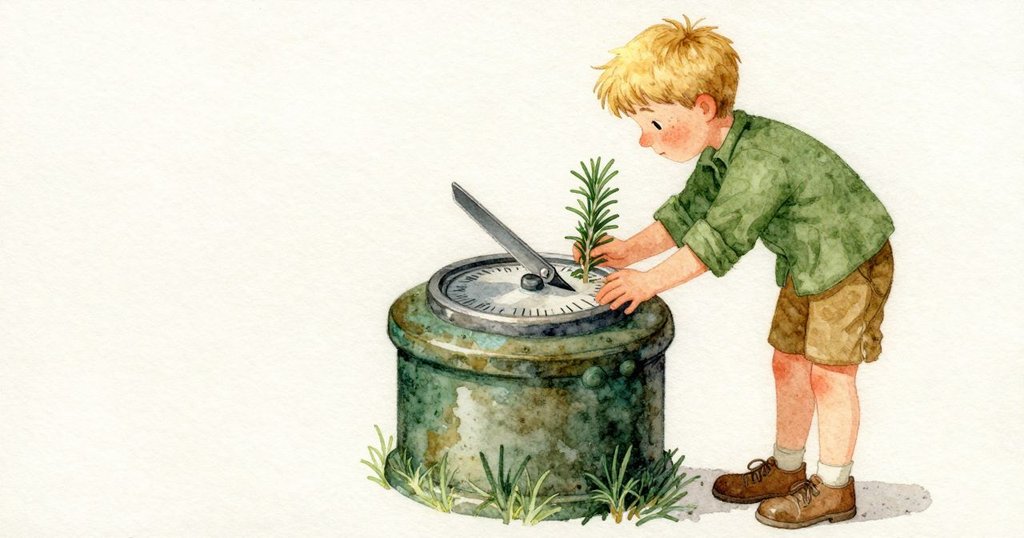
The bronze gnomon shows green at the base and a bright upper edge where rain has polished it lean. Xavier lays his palm flat on the limestone; heat lies in a thin blanket, and a wedge of cooler stone cuts through. The gnomon’s blade seems to translate bright warmth into that precise slice of shade, too steady to catch while you stare. Heath presses a yielding rosemary sprig under his thumb and sniffs, then leans nearer to the dial without crossing its shadow. Heath’s sleeve brushes the patina at the base, and he withdraws fast, fingers hovering, the bronze’s warmth still printed across his knuckles.
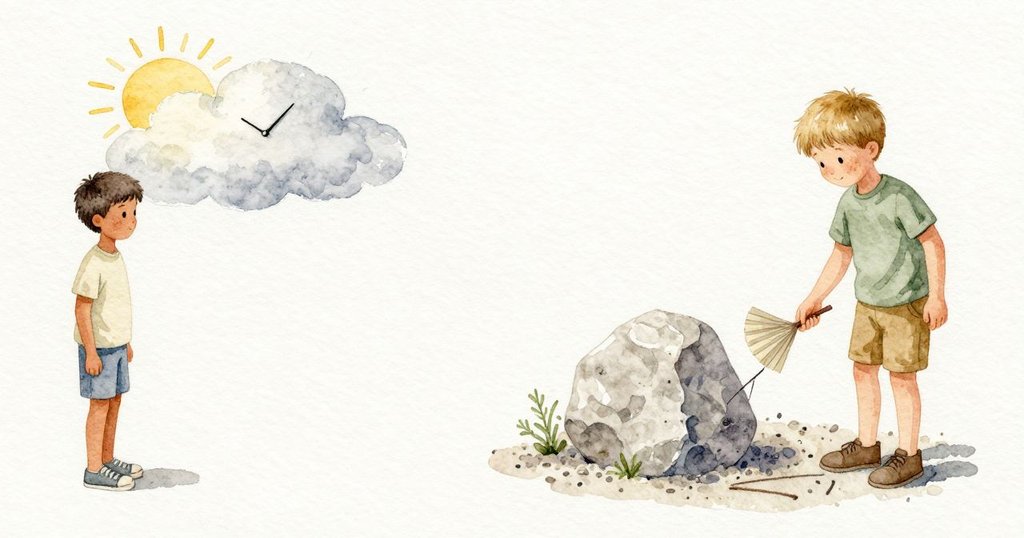
A cloud folds over the sun, and the dial goes blank so cleanly that both boys lift their hands at once. Xavier half-raises a twig to plant a second line in the gravel, then lowers it and smooths a fan where he had scraped. He lifts the twig again, then changes angle, letting its thin shadow sit beside the gnomon’s before he trusts the bend. When the light returns, everything looks the same yet not the same, and Heath’s shoulder settles an inch farther from the empty space.
Heath traces an hour line with one finger, and Xavier maps the cool wedge with his palm, reading the trail laid by shadow. The stone where the shadow just rested holds a faint chill, while the sun-bright sector tingles against skin like a stove turned low. "Is it noon?" Heath asks, keeping his fingertip still at the next engraved mark. "Not yet," Xavier says, eyes on the gap where the wedge stops short of the line. They slide their bottles a hand-width apart, and the untouched middle of stone holds its lighter dust against their darker rings. During their pause, the shadow has slipped a finger-width, not by motion their eyes can catch, but by the trace their palms hold.
Bees meander on the lavender, the gnomon throws its triangle again, and a cabbage-white tests the bright metal before lifting off. From the copper spout, a new drop gathers and slides free, crossing warm air toward the gravel in a thin, slow fall.
繁體中文 번역
每個星期六,Xavier 和 Heath 都沿著同一條小徑走向日晷,但長椅上有一塊淡色長方形依舊乾淨。兩人把水壺放在石面上,隨即停住,彼此之間留下一段整齊的空隙,沒有袖口或袋子去佔據。當他們走向薰衣草旁那一圈溫熱的石面時,腳下的碎石發出細碎的喀喀聲。
南側的薰衣草向外傾著,枝條在日光下帶著油亮;迷迭香把綠籬收束成緊密而帶樹脂氣味的一線。蜜蜂在紫色花穗間穿梭,發出低沉的嗡嗡聲;陰影裡,一隻畫眉發出短促的喀答聲,為那嗡鳴添上一道乾脆的對位。石椅一端放著一把銅製澆灌壺,壺嘴滴下慢慢的水珠,在淡色碎石上點出一個個淺痕。百里香鑽進步道縫裡;輕輕一踩,折斷的小枝釋出辛辣氣息,沿著暖流竄起。
青銅指針的底部泛著綠意,上緣則被雨水拋亮成細瘦的一道。Xavier 把手掌平貼在石灰岩上;熱度像薄毯般鋪著,一塊較冷的三角形切面從中穿過。那片指針彷彿把明亮的暖度轉化為精確的陰影切片,眼睛盯著時幾乎抓不住它的移動。Heath 用拇指壓著一截柔軟的迷迭香,嗅了嗅,身子又靠近日晷,卻沒有跨過影線。Heath 的衣袖擦到指針底部的氧化層,他立刻收回,手指懸在半空,銅的餘溫還像印子一樣留在指節上。
雲層掩住太陽,日晷一下子乾淨地空白了,兩人同時把手抬起。Xavier 半舉著一根細枝,想在碎石上立出第二條影線,隨後又放下,把剛劃過的扇形輕輕抹平。他又把細枝舉起,改了角度,讓那道纖細的影子貼在指針的影邊後,才信任那一點彎度。光線回來時,一切看上去一樣又不太一樣,Heath 的肩膀往空著的那一塊又讓出一點距離。
Heath 用一根手指沿著刻出的刻線移動,Xavier 用手掌描著那塊冷影,讀著影子留下的路徑。剛被遮住的石面還留著淡淡的涼意,而被陽光照著的扇面貼在皮膚上,像開得很低的爐火在微微發熱。「現在是正午嗎?」Heath 問,指尖穩穩停在下一道刻線旁。「還沒,」Xavier 說,目光落在冷影停在刻線前那一小截空隙。兩人把水壺又各自挪開一個掌寬,中央那塊沒被碰過的石面依舊淡一點,和兩個深色水環形成對比。他們暫停的這一會兒,影子已悄悄移開了一個指寬,不是眼睛能抓到的動作,而是皮膚留住的痕跡。
蜜蜂在薰衣草間慢慢穿梭,指針再次投下那片三角影,一隻白粉蝶試了試明亮的金屬,才輕輕離開。銅壺的壺嘴又聚起一顆新水珠,脫離邊緣後滑下,穿過暖空氣朝碎石飛落,細而緩地墜著。
문맥 속 어휘
- thrush
鶇(鶇科鳥);常有清脆的叫聲。此處指躲在陰影中發出「滴答」聲的小鳥。
“Hidden in leaves, the thrush ticks softly, answering the garden’s heat without breaking the hush.”
躲在葉叢裡的鶇鳥輕輕作響,回應庭園的暖意,卻不打破寧靜。
- lavender
薰衣草;一種帶芳香、紫色花序的草本植物,常吸引蜜蜂,也可指其顏色或香味。
“Bees wander the lavender by the dial, stitching purple heads into one humming seam.”
蜜蜂在日晷旁的薰衣草間遊走,把一顆顆紫花縫成一條嗡嗡作響的縫線。
- counterpoint
對位;互相襯托的對比元素。比喻用法:一種聲音或動作,與主要聲響形成乾淨、清晰的對照而相互呼應。
“From the shrub’s shade, the thrush ticks a dry counterpoint to the bees’ low, steady drone.”
從灌木的陰影裡,鶇鳥發出乾脆的節拍,為蜜蜂低穩的嗡鳴添上對位。
- translate
1) 把文字或語言翻成另一種語言;2) 把某種形式、狀態或能量「轉換」成另一種。在故事裡是比喻用法:把陽光的熱轉成精準的陰影線。
“The gnomon seems to translate sun-warmth into a keen ribbon of shade across the limestone.”
那根指針彷彿把日光的暖意「轉譯」成一道銳利的陰影帶,滑過石灰石面。
- yielding
柔軟、可被壓彎或按下而讓步的;不僵硬的。常形容能被手指輕壓而改變形狀的東西。
“Heath pinches a yielding rosemary tip; the sprig gives, and peppery scent lifts into the warm air.”
希斯捏住一撮柔軟的迷迭香新梢;枝梢一讓,辛香便躍入暖空氣。
선생님 스파크
AI가 수업 힌트를 생성해 교사가 이야기를 확장해 활용하도록 돕습니다
Story Discussion - The Sundial Bench
列出文中至少五個具體的感官細節(視覺、聽覺、觸覺、嗅覺),並說明這些細節如何合力營造出日晷旁的氛圍。
開放式參考答案
Visual: the pale rectangle on the bench, the gnomon’s bright upper edge and green base, the wedge of cooler stone, lavender leaning, rosemary forming a tight hedge. Auditory: gravel clicking under their soles, bees’ low drone, the thrush’s ticking. Tactile: the warm limestone like a thin blanket, the cool wedge under the palm, the copper’s residual warmth on Heath’s knuckles. Olfactory: rosemary’s resinous scent, the peppery puff from crushed thyme. Together these create a quiet, warm, intimate scene—sensory details that slow time, emphasize small motions, and make the boys’ ritual feel tactile and immediate.
長椅上那塊淡色長方形之所以保持乾淨,是單純因為 Xavier 和 Heath 每次在石面上留下一個空隙嗎?(是/否)並簡要說明理由。
是非題參考答案
No. The boys’ habit of leaving a gap likely contributes to the rectangle remaining clean, but the text implies the rectangle’s cleanliness is a stable feature—other factors (maintenance, weather, or a preexisting absence of objects) may also play a role; the scene treats the rectangle as a persistent detail, not solely the product of the boys’ recent actions.
把從雲遮住太陽到兩人感覺影子『滑動了一個指寬』的變化,拆解成至少四個連續步驟,說明每一步如何導致下一步。
開放式參考答案
1) A cloud folds over the sun → ambient light quickly diminishes. 2) The gnomon’s shadow disappears or becomes indistinct → the boys instinctively lift their hands and pause. 3) Xavier experiments with a twig and smooths the gravel, then repositions the twig so its shadow aligns with the gnomon → they wait for the light to return. 4) When the sun reappears the gnomon’s shadow returns but has shifted imperceptibly → the boys perceive that tiny displacement through the temperature and residue on the stone (the trace their palms hold) rather than by direct visual motion.
Heath 在衣袖擦到銅的氧化層後立刻收回手指,並感到銅留下的餘溫。這個動作透露了關於 Heath 的哪些性格特質或他與日晷之間的關係?
開放式參考答案
Heath’s quick withdrawal suggests a tactile sensitivity and a cautious, attentive temperament. The gesture indicates respect or nervousness around the sundial’s surface—as if it is both familiar and delicate. It hints at a ritualized interaction: Heath knows where to stop, is aware of boundaries, and registers small physical traces (the bronze’s warmth) emotionally; this suggests a careful mindfulness and possibly an affectionate reverence for the site.
試釋讀文中三個重複出現的形式意象:『空著的中間/兩瓶間的間隔/日晷的影子』。這些元素各自可能象徵什麼?合在一起又如何暗示故事的主題?
開放式參考答案
The untouched middle suggests a deliberate or tacit boundary—space reserved, preserved, possibly sacred to a ritual. The gap between the bottles indicates respect, restraint, or an unspoken agreement about distance. The sundial’s shadow symbolizes measurable time and its imperceptible passage. Together they form a constellation of restraint and attentiveness: interpersonal boundaries (the middle and the gap) are mapped onto temporal awareness (the shadow), implying themes of ritualized friendship, careful choreography of presence, and the subtle, almost invisible movement of time.
在文中,作者寫到:『During their pause, the shadow has slipped a finger-width, not by motion their eyes can catch, but by the trace their ___ hold.』請填入最適當的英文單字(單數或複數皆可)。
填空題參考答案
palms
作者如何透過一系列微小的自然細節(例如銅壺的滴水、蜜蜂的嗡嗡、百里香被踩斷的辛辣氣味)來呈現「時間的可觸感」?請從語言(動詞與形容詞選擇)、節奏與對比三個面向分析作者的寫作技巧。
開放式參考答案
Language: the author chooses sensory verbs and tactile adjectives—‘drip,’ ‘clicks,’ ‘leans,’ ‘zigzags’—that foreground physical action and materiality, making time feel embodied rather than abstract. Rhythm: short, precise clauses and quick sensory snippets create a measured pacing that mirrors the slow, incremental movement of the sundial’s shadow. Contrast: steady elements (the gnomon’s fixed triangle, the persistent pale rectangle) are set against tiny changes (a drop forming, a sprig crushed, a shadow slipping), which emphasizes how small, almost negligible physical events register the passage of time. Together these techniques turn time into a sequence of touchable, audible, and visible traces rather than an invisible continuum.
Story Discussion - The Sundial Pause
作者採用現在式並大量描寫具體感官細節(熱的薄毯、涼的切面、銅的餘溫等)。請分析這種時態與細節如何共同塑造讀者對「時間流動」的經驗?
開放式參考答案
The present tense creates immediacy, making the scene feel lived and ongoing rather than reported from a distance. Concrete sensory details anchor that immediacy in the body: warmth and chill are felt, not merely observed, so time becomes something experienced through touch rather than abstracted. Together, tense and sensory language compress the reader into the boys’ moment-by-moment attention, so the slow, incremental movement of the shadow is perceived as a sequence of small, bodily shifts rather than a distant chronological fact.
文本反覆呈現熱與涼的對比(sun-bright sector vs cool wedge;bronze warmth on knuckles)。這些溫度意象在象徵或情感層面上可能有何作用?
開放式參考答案
Temperature contrasts work both concretely and metaphorically: the warm sunlit surface signals presence, visibility, and immediate sensation, while the cool wedge marks absence, shadow, and the subtle passage of time. The bronze’s residual warmth pressed into knuckles registers human contact and memory—touch leaves a trace where sight cannot. Emotionally, warmth suggests intimacy and attention; coolness implies pause and distance. Together they map temporal and relational nuances onto the boys’ bodies and the stone's surface.
故事中,當影子移動了一個指寬時,作者更強調的是『觸覺證據』而非視覺證據。這是否表示文本把觸覺視為比視覺更可靠的感知方式?(是/否),並簡要說明理由。
是非題參考答案
Yes. The narrative emphasizes traces left on skin and stone—the faint chill, the bronze's warmth, the marks their palms hold—because the sundial’s motion is too slow for the eye to register directly. Touch records duration and contact in ways vision cannot here, so tactile evidence functions as the more trustworthy determinant of the shadow’s passage.
把兩人圍繞日晷的動作(放置水壺、挪開一掌寬、沿刻線描指、半舉細枝試影)與一種你知道的文化或日常儀式相比較。這兩者在節奏、物件配置和意義生產上有哪些共同點與差異?(舉一個具體例子,如茶道、學術觀察、或園藝習慣)
開放式參考答案
Compared to a tea ceremony, the boys’ ritual shares deliberate pacing, careful placement of objects, and a shared, embodied attention to small gestures. Both use choreography—where an object is set, how hands move—to produce meaning and silence the ordinary. Differences: a formal tea ceremony has codified rules and public aesthetic aims, while the boys’ actions are informal, private, and aimed at measuring or sensing time rather than aesthetic perfection. The sundial ritual emphasizes tactile proof and subtle measurement, whereas the tea ceremony foregrounds symbolic formality and social performance.
請用英文完成句子:"They slide their bottles a _____ apart, and the untouched middle of stone holds its lighter dust against their darker rings."
填空題參考答案
hand-width
從銅壺壺嘴上的一滴水到那滴水落到碎石的瞬間,拆解成至少四個連續步驟,說明每一步如何在節奏或情感上為場景做收束或銜接。
開放式參考答案
1) A new drop gathers on the copper spout—this slow accumulation extends the scene’s temporal texture, inviting attention. 2) The drop detaches and begins its thin, slow fall—this movement punctuates the stillness like a tiny temporal marker. 3) The drop strikes the gravel and pits the pale stones—this audible/visible consequence registers the moment physically, providing sensory closure. 4) The scene resumes its quieter motions (bees, the gnomon’s triangle)—the drop’s fall functions as a soft full stop that both concludes a small interval and signals the continuity of ordinary time.
Role Play - Reading the Shade
情境
場景:光線在一陣雲後回來,Xavier 和 Heath 仍然佇立在薰衣草旁的日晷邊。Heath 用一根指尖沿著刻線慢慢移動,Xavier 則把手掌平貼在剛從陰影中現出的石面,感受那一片稍冷的切面。兩個水壺在石面上各佔一側,中間留著一塊乾淨的長方形空地;銅壺的壺嘴偶爾滴下一顆小水珠,蜜蜂在附近低聲嗡嗡。此角色扮演練習重現這一刻:一人描述皮膚感受(溫熱或微涼)、一人觀察影子位置並判斷時間,雙方協調把水壺或細枝移動一小段距離來測試影線。教學重點:引導學生用英語精確描述感官印象、表達不確定性與觀察推論(例如判斷是否為正午)、並練習用短指令協調彼此的微動作(移動物件或保持位置)。
角色
開場白建議
- •“Keep your palm where the cool wedge is—what does it feel like?”
- •“Move your bottle a hand-width to the left; leave the middle stone clear.”
- •“Is it noon? My finger is on the next engraved mark but I'm not sure.”
- •“Don't touch the gnomon; it's warm from the sun.”
- •“Hold your finger steady—did you feel the shadow slip just then?”
- •“I'll try the twig beside the gnomon's shadow; tell me when to stop.”
Role Play - Leaving the Pale Rectangle
情境
場景:每個星期六,Xavier 和 Heath 沿著熟悉的小徑來到日晷旁的石椅。長椅上有一塊淡色的長方形一直保持乾淨:兩人把水壺放到石面上,彼此刻意留出一段整齊的空隙,沒有袖口或袋子去佔據那一塊。空氣裡有薰衣草的香氣、迷迭香的樹脂味與地上的百里香被踩碎後竄出的辛辣氣息;近處銅製的澆灌壺壺嘴偶爾滴下一顆水珠,在淡色碎石上留下淺淺痕跡。這個角色扮演重現他們剛到達、擺放水壺並討論為何不佔據中央那塊空地的瞬間。教學重點:引導學生用英文協商物件位置(給出並回應禮貌建議)、用精細的感官語彙描述氣味與聲音、對未說明的原因做推測與謹慎假設(hedging)、以及練習用簡短命令或請求協調彼此的小動作(例如把水壺放下、慢一步、不要碰銅壺)。鼓勵學生在對話中保持觀察細節、用語氣詞示意不確定性,並練習以禮貌方式拒絕或改建議。
角色
開場白建議
- •“Let's put our bottles down here—but leave that pale strip in the middle untouched.”
- •“Do you always leave that rectangle clean? Maybe someone else likes it that way.”
- •“Can you smell the rosemary? Move a little closer so you can sniff without touching the gnomon.”
- •“Hear that drip from the watering can? Time it with me and set your bottle just after the drop.”
- •“Watch your step—there's thyme in the path; try not to crush the sprigs near your bottle.”
- •“If we leave a hand-width between them, the middle will stay clear; do you want it closer or farther?”
Creative Writing - Side Moment (Unseen Perspective)
寫作提示
任務:從一個「旁觀但未被主要敘述者注意到的瞬間」出發,寫一段英語創意續寫(約150個英文單詞)。場景必須留在原故事的根部要素:日晷、長椅、薰衣草、銅壺與那塊淡色長方形的空白。你可以選擇像蜜蜂、白粉蝶、畫眉或水滴這樣的非人視角,或選擇一個短暫的側拍鏡頭(例如:銅壺壺嘴的一滴水如何被石面接住;或一隻蜂在兩個男孩之間繞飛時看到的景象)。作品應運用原文的感官細節(銅的溫度、石面的冷楔、碎石的喀喀聲、薰衣草的香氣、影子那道精確的切片)來擴展因果脈絡:這個小瞬間如何微妙地回應或改變正在發生的事,而不需改變主要情節或加入外來角色。保持語氣溫和、安全、適合兒童閱讀。 教師示範分支(示範語氣與細節,中文示例,供教學參考): 範例分支(白粉蝶視角):一隻白粉蝶在金屬上試探地停下,翅膀的白影在日晷上投出一圈柔和的光。它被銅邊反射的微光吸引,伸出細足觸碰那顆剛從壺嘴滑落的水珠。水珠在空中頓了頓,像被時間放慢,落到淡色碎石上,濺起一小圈塵埃;那圈塵埃在陽光裡顫動,像是回應遠處兩個男孩不動的呼吸。蝶感受到了石面的熱度和影子帶來的微涼,它貼著那片陰影一瞬,然後又被薰衣草的香氣牽走。當光復歸,兩人的身影依舊,白粉蝶已飛離,只留下一條細小的足跡在銅邊的光中消散。 教學提示:請鼓勵學生在作品中保留原文的名詞(如 Xavier, Heath, sundial, gnomon 等),並用細節來展示時間、觸感與溫度的微妙變化,而非直接陳述心理評價。
詞彙庫
寫作輔助
- • Begin with a small sound or movement: "A single drop fell and..."
- • Choose your observer: "From the bee's tiny view, the world looked..."
- • Use touch and temperature: "The stone felt... against my wings/palm..."
- • Anchor to the boys without shifting focus: "Xavier and Heath stood nearby, unaware that..."
- • Show time passing subtly: "As the shadow slid, I noticed..."
- • End with a quiet consequence or image: "When the light returned, all that remained was..."
Creative Writing - Retrospection (Xavier's Memory)
寫作提示
任務:以回顧的視角,從 Xavier 的記憶出發,寫一段約 150 個英文單詞的創意續寫。作品必須留在原故事的根部要素:the sundial、the bench、the pale rectangle(那塊乾淨的淡色長方形)、the copper watering can、the lavender beds,以及 Xavier 和 Heath。寫作時請把重心放在「回憶如何重現那些感官印象與微小因果」:光與影如何在記憶裡滑動、手掌如何記住石面的冷度、滴答聲或水滴如何成為時間的標記、以及那塊空白如何在回想中取得意義(但不要改寫原始事件的外在走向)。保持語氣溫和、適合兒童閱讀;不要加入新的主要角色或危險行為。請在文中保留故事裡的固有名詞(例如 Xavier, Heath, sundial, gnomon 等)並自然運用 word bank 裡的詞彙來豐富細節。可選時態為過去式或完成式,讓敘述帶出反思與距離感。
詞彙庫
寫作輔助
- • Years later, I still remember the warm circle of the sundial and how...
- • My palm found the cool wedge of stone, and I could hear...
- • The copper watering can left a small memory: its drip sounded like...
- • When I think of Heath that day, the pale rectangle on the bench felt like...
- • The lavender smell returns to me, and with it I can see the shadow of the gnomon that...
- • I tried to trace the same hour line with my finger, but what I felt then was...
Vocabulary & Grammar Focus
重點單字
sundial
用來指示時間的石製或金屬裝置;在故事中指花園中央的日晷,閱讀光影變化。
Every Saturday they follow the same path to the sundial, where a pale rectangle stays clean.
gnomon
日晷的指針部分,用以投射影子;故事中為青銅製,底部帶有氧化層。
The gnomon’s blade translates bright warmth into a precise slice of shade across the limestone.
lavender
薰衣草;故事中南側花床裡的紫色植株,吸引蜜蜂並形成香氣背景。
Lavender leans over the southern bed while bees meander on its purple heads.
rosemary
迷迭香;故事中形成緊密綠籬、帶樹脂香氣的植物,Heath 握著其嫩枝嗅聞。
Heath presses a yielding rosemary sprig under his thumb and inhales its resinous scent.
patina
金屬表面的氧化層或光澤變化;故事中指銅製指針底部的風化表面。
His sleeve brushes the patina at the gnomon’s base, and he withdraws, fingers hovering.
drip
液體慢慢落下的一滴或滴落動作;故事中來自銅壺壺嘴的慢滴水。
A copper spout sheds a slow drip that pits the pale gravel beneath the bench.
wedge
楔形或三角形的切面;故事中指日晷影子或溫差形成的冷三角塊。
Xavier maps the cool wedge with his palm, reading the trail laid by shadow.
gravel
鋪路用的小碎石;故事中鋪於小徑與長椅附近,會因滴水或腳步留下痕跡。
Gravel clicks under their soles as they cross toward the dial’s warm circle.
文法重點
本段落大量使用現在式(simple present)作為敘事時態,這種「文學現在式」同時承擔兩個功能:一是描述習慣性動作(例如固定每週的行程),二是製造當下的臨場感,使讀者如同親見場景。例句如 “They set two bottles on the stone, then stop short” 就把行動以現在式呈現,讓描寫顯得立即而生動。 另外,故事頻繁使用現在分詞或分詞片語(如 “leaving a neat gap”)來壓縮資訊,表明兩個動作的同時發生或因果關係。將這類現在式敘述改成過去式會改變敘事距離(使敘述變為回顧、較為客觀),而保留分詞片語則仍可保持動作間的連結。教學上可以比較兩種時態如何影響氛圍與焦點:現在式拉近讀者、強調現場感;過去式則帶出回顧的敘事角度。
練習題
His sleeve brushes the ___ at the base, and he withdraws, fingers hovering.
參考答案
patina
配對以下單字與意思:
顯示答案
A-2B-5C-6D-8E-7F-1G-4H-3
They set two bottles on the stone, then stop short, leaving a neat gap between them that no sleeve or bag fills.
參考答案
They set two bottles on the stone, then stopped short, leaving a neat gap between them that no sleeve or bag filled.
Vocabulary & Grammar Focus
重點單字
bench
長椅;故事中放置水壺與銅壺並顯示淡色長方形的石凳。
A pale rectangle on the bench keeps its lighter dust while they stand beside it.
bottles
小水壺或瓶子;故事中他們把兩個放在石面上,並在中間留出一塊空白。
They place two bottles on the stone, pausing to leave an untouched space between them.
gap
空隙;指兩個瓶子之間的那道整齊未被佔據的空白。
They leave a neat gap between the bottles, an exact empty space none of their sleeves claim.
soles
腳底或鞋底;故事中碎石在他們腳底下發出輕微的喀喀聲。
Gravel clicks under their soles as they cross toward the dial's warm circle.
spout
壺嘴;故事中銅製澆灌壺的壺嘴會聚成水珠並慢慢滴下。
The copper spout forms a slow bead of water before each slender drop departs.
thyme
百里香;低矮的香草鑲嵌在步道縫裡,踩過會散出辛辣香氣。
Thyme peeks from the path joints; a crushed sprig releases a peppery puff into the warm draft.
twig
細枝;故事中孩子用細枝在碎石上試探並投出纖細的影子。
Xavier half-raises the twig, considering where its thin shadow might settle in the gravel.
shadow
影子;由日晷或細枝投射出的陰影,構成時間流動與冷暖對照的視覺軌跡。
The gnomon's shadow carves a sharp triangle that their palms map and remember.
palm
手掌;故事中用來貼在石面上感受溫度、讀取影子痕跡的身體部位。
Xavier lays his palm on the limestone, feeling the thin blanket of warmth and the cool wedge.
noon
正午;故事中作為時間參照點的概念,孩子們以此詢問與判斷日晷位置。
Heath asks if it's noon, his fingertip hovering at the next engraved mark.
文法重點
本段落使用現在完成式(present perfect),以表達在當下停頓中發生並且對現在仍有影響的細微變化。句子 "During their pause, the shadow has slipped a finger-width" 就是典型例子:用 has slipped 來強調一個近期發生、且其結果可由皮膚觸感感知的變化。教學重點在於讓學生理解現在完成式如何把事件連接到說話時刻(present relevance),與簡單過去(simple past)相比會拉近敘事距離並保留當下感。練習可以讓學生把現在完成式改為過去式,並觀察從屬子句中能/不能的時態或助動詞(例如 can→could)的連動變化,從而體會兩種時態在語感與焦點上的差別。
練習題
A copper watering can rests on the bench's end, its ___ shedding a slow drip that pits the pale gravel.
參考答案
spout
配對以下單字與意思:
顯示答案
A-8B-9C-3D-4E-1F-5G-6H-7I-2J-10
During their pause, the shadow has slipped a finger-width, not by motion their eyes can catch, but by the trace their palms hold.
參考答案
During their pause, the shadow slipped a finger-width, not by motion their eyes could catch, but by the trace their palms held.
Cultural Connection - 日晷
主題
日晷
討論要點
- •故事裡,Xavier 和 Heath 每個星期六走到日晷旁,把水壺擺在石面上並刻意留下一塊空白。你在生活中有沒有類似利用固定地點或物件來建立週期性的習慣或儀式?請描述那個地點、你擺放的物品,以及那個動作帶給你的感覺。
- •兩個男孩用手掌、指尖和一根小枝去“讀”日晷的陰影,而不是看鐘錶或手機。你有沒有用身體感官(溫度、陰影、聲音、氣味)去判斷時間或氛圍的經驗?那種感知和看數字時間的感覺有何不同?
- •日晷周圍有薰衣草、迷迭香、銅製澆灌壺的滴水聲與蜜蜂的嗡嗡聲,這些自然物和聲音成了時間流動的背景。在你的文化中,有沒有用植物、聲音或小物件來標示日常時刻(例如市場叫賣、寺廟鐘鼓、廚房的煮食聲)?它們如何影響人們對時間的感受?
文化比較
在這個故事的場景中,日晷不是單純的計時器,而是一個與身體、物件與自然共構的時間場所:孩子們把水壺放在石面、用手掌感受陰影的冷暖、借一根細枝製造影線,所有動作都把時間變成可觸、可聞、可見的經驗。相較之下,繁體中文生活圈裡,城市日常通常靠牆鐘、手錶或手機的數字時間來安排活動,但同時也保留許多以聲音或自然節律為標記的做法,例如寺廟的鐘鼓報時、菜市場開始營業的叫賣聲、或農事裡依節氣安排的播種收成。兩者的差別不只是工具,而是時間被如何感知:故事裡的時間更具身體性和場域感;而以鐘錶和手機為主的時間更抽象、可即時分享,但有時也會弱化對自然節律和現場細節的敏銳度。教學上可以用這個對比引導學生思考:不同的時間物件如何塑造日常節奏與人際互動。
Cultural Connection - 香草花圃
主題
香草花圃
討論要點
- •故事中,薰衣草、迷迭香與百里香被種在日晷周圍,並成為時間與位置的感官標記。請描述你生活中是否有類似用植物(尤其香草)來標記場所或時間的例子?你會怎麼用嗅覺或觸覺來記住一個地點?
- •Heath 用拇指壓著迷迭香聞氣味,Xavier 則用手掌感受石面的冷熱,植物與身體感官在故事裡被連結在一起。分享一次你用氣味或植物觸感來做判斷、安慰或建立關係的經驗,那個經驗帶給你或他人什麼情緒或意義?
- •故事裡蜜蜂在薰衣草間工作,香草床緊鄰步道與長椅,成為公共空間的嗅覺層面。想一想在你所在的文化裡,香草通常被安置在哪些公共或私人空間(例如庭院、陽台、廟前、市場、社區花園)?這些空間安排如何反映你文化中對香草的實用或象徵性期待?
文化比較
在這個故事所呈現的英文文化場景中,香草被安排在日晷周圍,既是景觀植栽也成為感官標記:孩子們會按、嗅、踩,利用植物的氣味和觸感來讀取時間與空間,香草在此扮演了一種即時的、經驗性的角色。相較之下,繁體中文生活圈裡,香草常同時承擔更明確的實用與社會功能——它們可能被種在家庭菜園、陽台或廟宇與市集旁,主要用途包括烹飪、草藥療養或作為祭祀材料;同時也有以香草製造休憩性嗅覺景觀的現象(例如社區花園或茶園)。兩者的差異不只是種植位置,還在於人們如何理解與使用植物:故事強調現場的感官參與與兒童的即時經驗,而繁體中文文化則往往把香草的實用性、傳統知識與社區功能放在更明顯的位置。教學時可利用這些具體差異引導學生思考:植物如何在不同文化語境中被賦予用途與象徵意義?
Comprehension Quiz
1. What do Xavier and Heath leave between their two bottles on the stone?
2. As they walk toward the dial by the lavender beds, what sound do their steps make?
3. Which plant leans in the southern bed near the sundial?
4. How is the bronze gnomon described at its base?
5. When Xavier lays his palm on the limestone, what does he feel?
6. What do the boys do when a cloud covers the sun and the dial goes blank?
Comprehension Quiz
1. How often do Xavier and Heath walk the path to the sundial?
2. Which bird provides a dry counterpoint in the shade?
3. What effect do drops from the copper watering can's spout have on the ground?
4. Which herb is described as forming a tight, resinous line along the hedge?
5. What sensation remains where the shadow had just rested on the stone?
6. How does Xavier attempt to create a second line when the light returns?
7. What subtle evidence shows the boys' pause lasted longer than their eyes could detect?
8. Which insect tests the bright metal of the gnomon before lifting off?
추천 읽기
The Offset Gnomon of the Garden Sundial
Drip–Wingbeat Echo in the Sundial Garden
The Sundial's Sudden Shadow Leap
The Terracotta Dish and the Moving Shadow
Crowded Pebbles at the Garden Sundial
When the Shadow Cut the Sundial Line
The Heart-Shaped Sprig on the Sundial
Cedar Stick and the Moving Shadow on the Sundial
Driftwood Shadow at the Garden Sundial
Echo Between Faucet and Bees
Pool Under the Sundial Bench