Flashlight Dims at the Stained-Glass Repair Table - 適合進階的英文短篇故事,含中譯與發音
彩繪玻璃工作桌上的手電筒忽然變暗 | 英文/中文 雙語朗讀
스토리 내용
English 원문
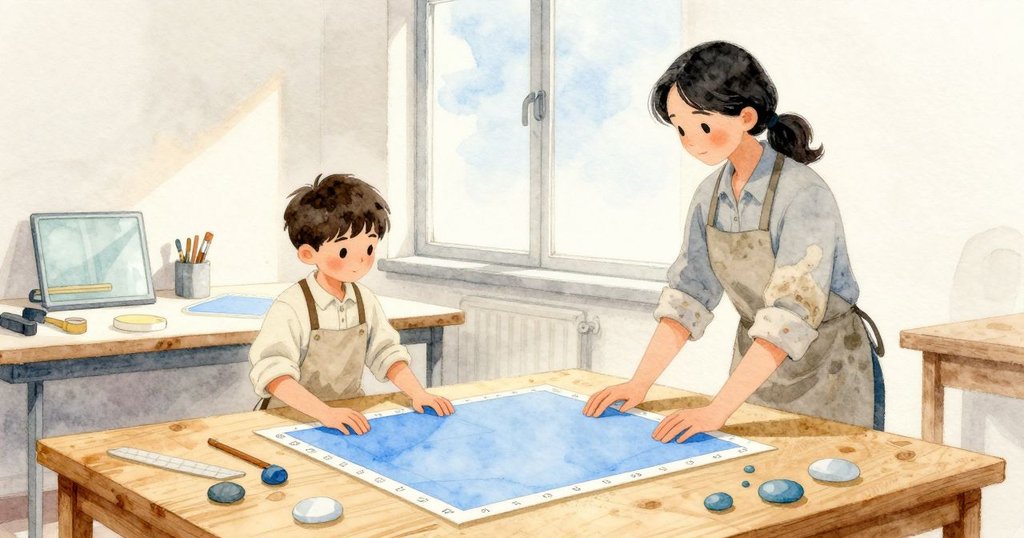
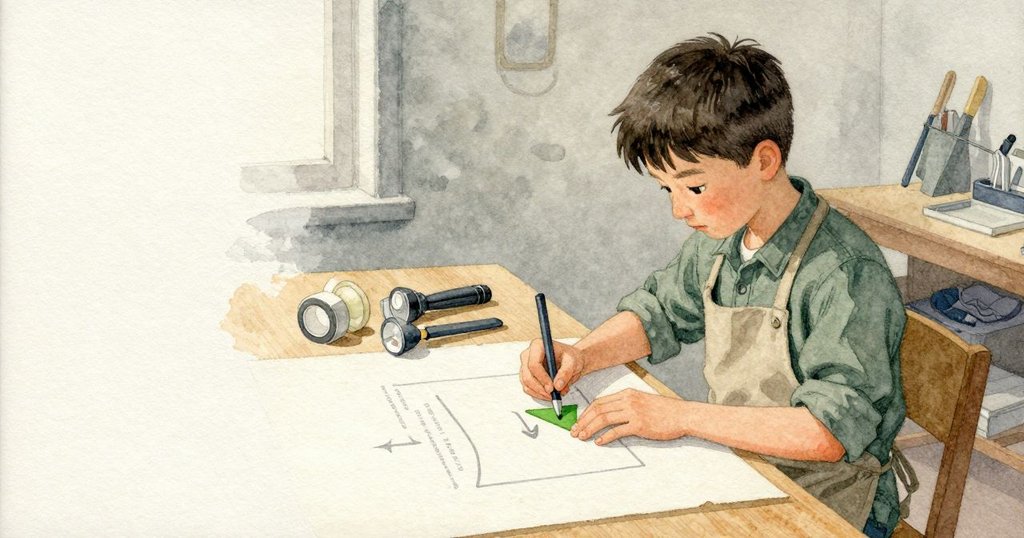
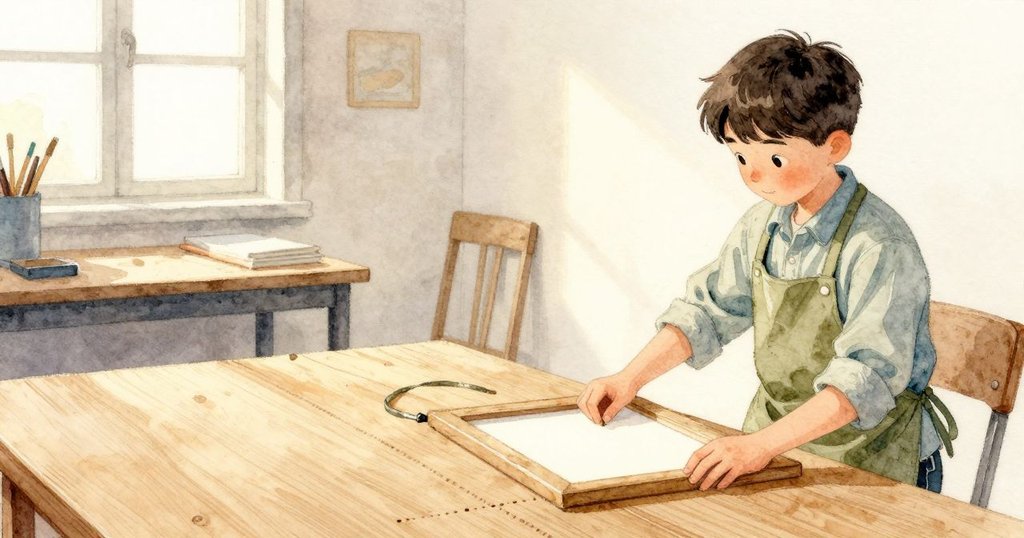
Theo set the blue rectangle into its numbered outline before his apron stopped swinging.
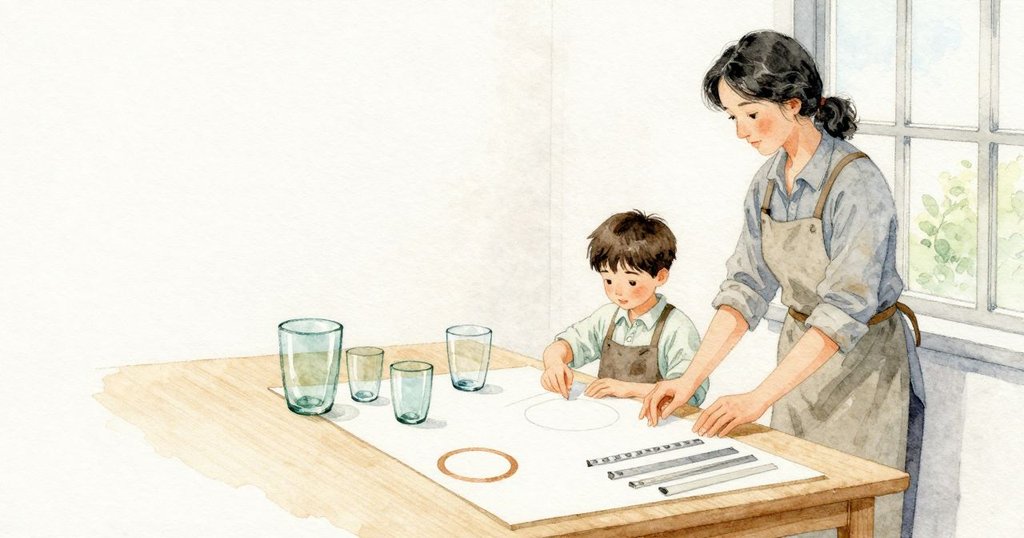
The table held smooth-ground pieces like pebbles, cool came strips, and a pattern sheet taped flat against the wood.
Light from the window passed through the glass and threw soft patches of color that overlapped into quieter third tones.
He worked with brisk alignment, matching numbers to shapes as though snapping a familiar puzzle into place.
Helena stood beside the window, her sleeve dusted pale, and turned one piece to let the hue read more clearly.
A faint ring on the pattern, brown and perfect, sat like a small remembrance of tea set down during planning.
Clouds slid across the sun, and the table changed from glowing lens to quiet surface in less than a breath.
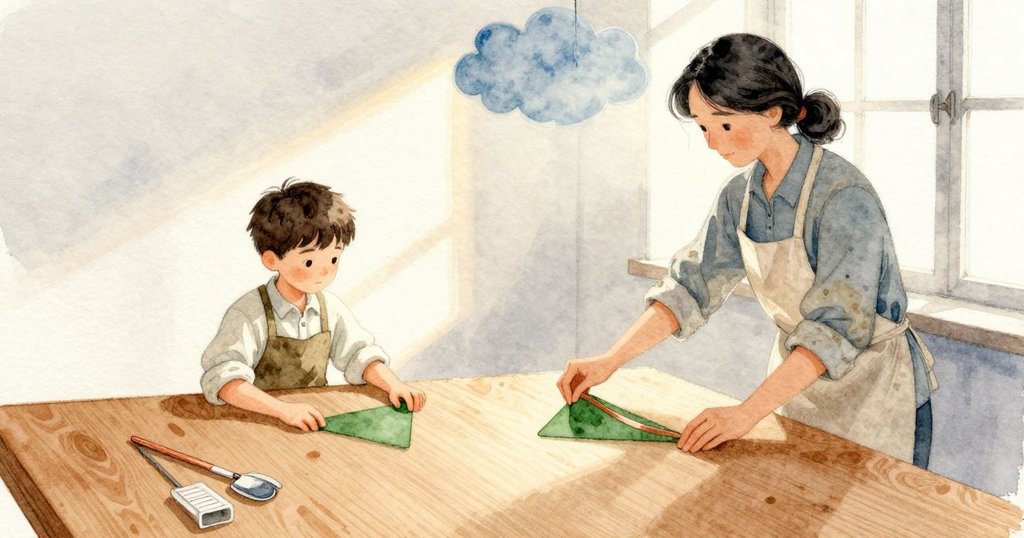
Theo raised the green triangle upright, then slowly lowered it again, his wrist steady while his eyes tracked the patch shrinking.
Helena angled a copper-foiled strip across the curve, and her mouth formed an inquisitive line that hovered without comment.
Theo touched the channel, felt its chill, and pressed the triangle toward the notch where the number twelve waited.
The glass met the came with a sound, not a bright click but a dull note that stalled in the metal.
He blinked once, then glanced at the pattern’s penciled arrow, which agreed with him until that stubbed tone disagreed.
Beside the tape dispenser lay a small flashlight, its battery casing scuffed from many gentle twists to open and close.
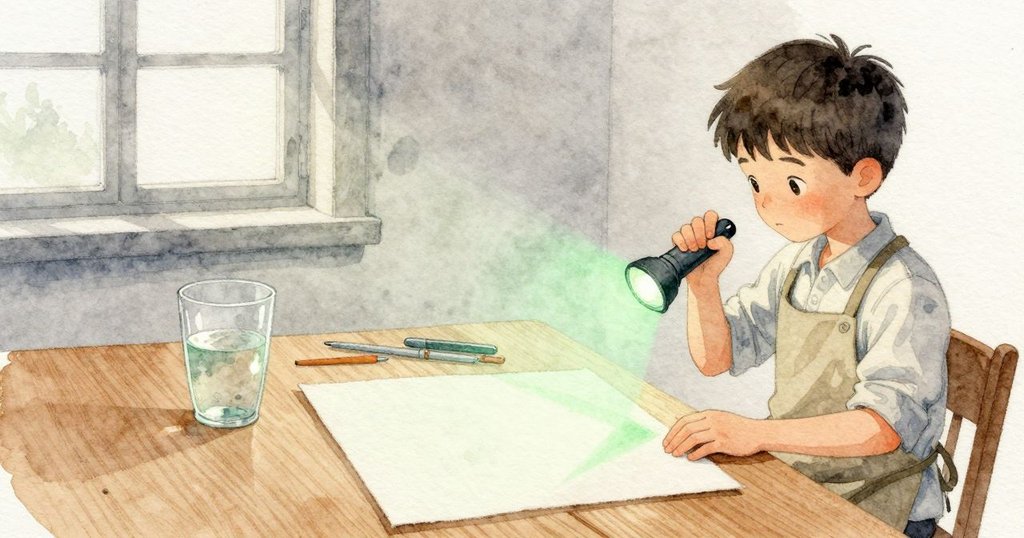
Theo took it up and sent a narrow beam through the triangle; the color sharpened, and the seam appeared clean as a pencil line.
He tried the wrist motion that sealed the flashlight, a tidy half-turn, expecting the channel to ease under the familiar coaxing.
Instead, the curve answered with a soft squeak, and the triangle lifted a hair, as if air lived there still.
Then the flashlight’s beam thinned, the battery ebbing mid-task, and the green on the paper diluted to a weaker wash.
Theo stopped between motions, thumb still on the glass, while Helena watched the window where brightness gathered at a cloud’s torn edge.
He shifted from the twist to a long press along the channel, warming the putty with both palms until the note rose brighter.
A cleaner chirp answered, thin but certain, and the triangle settled so that the penciled arrow finally looked unnecessary.
Theo tested the seam with a slow fingertip, then eased a narrow ribbon of putty across it, which yielded as his hands warmed.
He lifted the small completed corner by its frame, and his forearm read the weight like a careful scale.
Colors returned as the cloud moved, green and blue crossing to print a quiet olive on the paper where his sleeve brushed it.
He kept the corner raised another moment, listening for any shift, and then set it down to check the alignment once more.
繁體中文 번역
Theo 把藍色長方形先放進編號的外框,他的圍裙還在輕輕擺動。
桌上擺著磨得圓滑的玻璃片,像鵝卵石;冰涼的金屬槽條;還有用膠帶貼平在木面上的設計圖。
窗邊的光穿過玻璃,把柔和的色塊投在桌面上,彼此重疊時又混出更安靜的第三種色調。
他動作俐落地對齊編號與形狀,像把熟悉的拼圖一片片扣回原位。
Helena 站在窗邊,袖口沾了一層淡淡的粉,轉了轉一片玻璃,讓顏色看得更清楚。
設計圖上有一道淡棕色的圓痕,圓得剛好,像規劃時放下的茶杯留下的小小記號。
雲層掠過太陽,桌面在一口氣之間從發光的鏡片變回安靜的表面。
Theo 把綠色三角形豎起,接著慢慢放下,手腕很穩,眼睛追著那團色塊縮小。
Helena 把貼了銅箔的細條沿著弧線換了角度,她的嘴角排成一條帶著探問的細線,沒有出聲。
Theo 碰了碰金屬槽,摸到它的涼意,然後把三角形推向編號十二的缺口。
玻璃和槽條合在一起發出一聲,不是清脆的嗶答,而是停在金屬裡的悶音。
他眨了一下眼,瞥向設計圖上那支鉛筆箭頭,直到那個鈍鈍的聲音把先前的確定感打岔。
膠台旁邊放著一支小手電筒,電池外殼因為常被輕輕旋開又旋上而磨出細痕。
Theo 拿起手電,把一束細光穿過三角形;顏色變得銳利,接縫像鉛筆線那樣乾淨。
他用關手電時的手腕動作試了一下——俐落的半圈扭轉,預期金屬槽會在熟悉的帶動下順一點。
結果卻傳來一聲輕輕的吱,三角形抬起一絲,好像還有一口空氣卡在裡面。
接著手電筒的光變細了,電池在半途慢了下來,紙上的綠色也稀成了淡淡一層。
Theo 動作停在中間,拇指還貼著玻璃;Helena 望著窗邊,那裡的亮度在破裂的雲縫旁聚起來。
他把半圈扭轉換成沿槽條的長按,用兩手掌帶出的熱度讓填縫膏軟一點,直到聲音抬高。
回應變成一聲更清的啁啾,雖然細卻很肯定,三角形坐好,鉛筆箭頭看起來不再需要。
Theo 用慢慢的指腹試了試接縫,然後抹上一道細窄的填縫膏,材料在他手心的溫度下順了。
他抓著框邊把完成的一角提起來,前臂像秤一樣讀出了重量。
雲移開時,顏色回來了;綠和藍交叉,在紙上印出一小塊安靜的橄欖色,他的袖子剛好掃過。
他又把那一角再舉一會兒,聽著有沒有移動,然後放下來,再看一次對齊。
문맥 속 어휘
- battery
電池;為手電筒等裝置提供電力的元件。
“Mid-press, the flashlight faltered as the battery thinned, and color on the paper lost courage.”
按壓到一半,手電筒因電池衰弱而遲滯,紙上的顏色也怯淡了。
- alignment
對齊;使零件、形狀或線條在正確位置上排列的狀態。
“He held the corner high and studied the alignment between green edge and numbered curve.”
他把角落舉高,細看綠色邊和編號曲線之間的對齊。
- inquisitive
好奇的;愛探問、想看得更清楚的神情或態度。
“Helena’s mouth kept an inquisitive line as the copper strip tested the curve’s patience.”
海蓮娜的嘴角維持著好奇的線條,當銅包邊在試探那道弧度。
- casing
外殼;保護或包覆內部零件的硬殼。
“His thumb found the scuffed casing and gave it the practiced half-turn before the beam tightened.”
他的拇指摸到有磨痕的外殼,熟練地半轉一下,光束才收緊。
- remembrance
紀念;讓人想起某段時間或事件的痕跡、物件或行為。
“The brown ring stayed, a quiet remembrance of tea sipped while the pattern was first argued into place.”
那枚棕色圓痕留著,靜靜紀念著最初討論圖樣時喝下的茶。
선생님 스파크
AI가 수업 힌트를 생성해 교사가 이야기를 확장해 활용하도록 돕습니다
Story Discussion - Stained Glass Corner
列出文中三處具體的感官描寫(視覺、觸覺、聽覺),並說明這些描寫如何一起營造出工作臺上的整體氛圍。
開放式參考答案
Visual: "Light from the window passed through the glass and threw soft patches of color"; Tactile: "He touched the channel, felt its chill"; Auditory: "The glass met the came with a sound... a dull note". Together they create a quietly attentive atmosphere: the soft light and overlapping colors set a calm, focused scene; the cool metal gives a sense of precise, physical work; the subdued sounds punctuate moments of small uncertainty and concentration, producing a mood of delicate craftsmanship with a hint of tension.
Theo 把半圈扭轉換成長按的動作,這個動作的改變是否純粹因為手電筒的電池變弱?是或否,並簡述理由。
是非題參考答案
No. The flashlight dimming interrupted the moment and made the color less clear, but Theo changed to a long press primarily to warm and soften the putty so the seam would settle; the battery issue prompted the pause, but the long press addressed the material behavior.
從手電筒光變細弱到三角形最終安穩坐好,寫出一個多步的因果鏈,每一步都要說清楚它如何導致下一步發生。
開放式參考答案
1) The flashlight beam thinned as the battery ebbed, 2) the color on the paper diluted, making visual information less reliable, 3) Theo stopped his motion to reassess, 4) noticing the uncertain fit and the faint squeak, he switched from a quick twist to a long press to warm the putty, 5) warming the putty changed its consistency and produced a clearer chirp, 6) the triangle settled into the notch, 7) he tested the seam and applied a ribbon of putty for a final seal, 8) he lifted the corner to read the weight and alignment. Each step responds to the preceding change in either perception or material state.
從 Theo 的細微動作(穩定的手腕、慢按填縫膏、用指腹試接縫、聽聲音)可以推測出哪些性格特質或情緒狀態?請具體說明。
開放式參考答案
The actions suggest patience, precision, and careful attention to tactile feedback. He is methodical and experienced—confident enough to use small adjustments rather than abrupt fixes. He shows calm concentration and a sensitivity to subtle cues (sound, weight, visual alignment), indicating pride in craftsmanship and a cautious, deliberate temperament rather than haste or anxiety.
設計圖上那道淡棕色圓痕被描述為「像規劃時放下的茶杯留下的小小記號」。在故事裡,這個記號可能象徵什麼?
開放式參考答案
The mark can symbolize human presence and the material traces of planning—a small, domestic interruption that anchors the careful technical work in everyday life. It suggests memory, a history of decisions, or the quiet marks collaborators leave. As a symbol it contrasts the precise geometry with an accidental, humane trace, reminding us that the creative process carries personal, lived residues.
窗外雲影讓桌面在一口氣之間改變明暗。這個光影的轉換是否可被解讀為創作過程中的不確定性或時機的隱喻?是或否,並解釋你的立場。
是非題參考答案
Yes. The shifting light serves as a metaphor for changing conditions and the fragility of timing in craft: brightness revealing details, clouds obscuring them, forcing the makers to adjust. It reflects how external, transient factors affect decisions and demand responsiveness during creation.
作者在描寫突發鈍聲時用了短句與節奏變化(例如:"He blinked once, then glanced..."),試分析這種句法與節奏如何在文本中強化瞬間的中斷與再確認。
開放式參考答案
Short clauses and quick actions create staccato beats that mimic the interruption: a blink, a glance—small, discrete responses to a surprising sound. The contrast between expectant, fluid motions (the half-turn) and these clipped reactions emphasizes the break in flow. This pacing forces attention onto the moment of doubt, then onto the corrective sequence, mirroring how perception pauses and then reorients in real time.
請用文中出現的字填空:"The glass met the came with a sound, not a bright click but a dull ___ that stalled in the metal."(從故事中擷取適當的單字填入空格)
填空題參考答案
note
Role Play - Final Adjustment at the Window
情境
場景設定:在窗邊的工作台上,手電筒的細光在修補過程中忽然變得微弱,光束一度把綠色三角形照得銳利,卻又在半途稀薄成為淡色。Theo 的拇指還貼在玻璃上,動作一時停在半圈扭轉與長按之間;他改用雙掌溫熱填縫膏,直到那聲悶音轉成清晰的啁啾,接縫才安穩地落入金屬槽。Helena 站在一旁靠著窗,袖口帶著淡淡的粉,目光不時投向雲縫處聚來的光,又回到設計圖上鉛筆畫的箭頭與桌面上的銅箔細條。桌上還放著膠帶、膠台和被提起檢查的一角框架。練習目標:用英語在這個瞬間進行角色對話——描述你所見的聲音與光線、協調手部動作、決定是否重新對齊,並在最後確認接縫已穩定。
角色
開場白建議
- •“The flashlight is dying—I'll try warming the putty. Can you watch the seam while I press?”
- •“I heard a dull sound when the glass met the came. Does it feel secure to you?”
- •“The green washed out when the beam faded. Could you hold the triangle still while I check the arrow on the pattern?”
- •“Would shifting the copper-foiled strip a little make the curve read truer in the light?”
- •“I felt a tiny lift after that squeak. Tell me if you notice any wobble as I lower it again.”
- •“The penciled arrow matched before the noise. Should we trust the arrow or re-seat the piece and try again?”
Creative Writing - Helena's Side Moment
寫作提示
以 Helena 的視角寫一段約 150 字的側寫:聚焦同一時間她在窗邊的內心與小動作(例如轉動銅箔、望向那道淡棕色的圓痕、或注意到手電筒光變弱)。必須保留故事中的角色與物件(Theo、window、pattern、flashlight、putty 等),不得改換場景或發明新角色。描寫細緻的感官經驗(光如何透過 glass 並在 paper 上變化、metal channel 的冷感與聲音、手掌的溫度如何影響 putty),以及 Helena 沒有說出口的想法或回憶。請至少使用下列 word bank 中八個單詞,並讓情節回應原故事的因果細節(例如 battery 變弱、cloud 遮住陽光、triangle 微抬)。字數目標:大約 150 字。
詞彙庫
寫作輔助
- • From the window, Helena noticed how the light…
- • She turned the copper strip and remembered…
- • The flashlight’s beam thinned, making her think of…
- • Her palm warmed the putty until she could feel…
- • A faint ring on the pattern made her imagine…
- • She wanted to tell Theo about the seam but instead…
Vocabulary & Grammar Focus
重點單字
rectangle
長方形;故事中指藍色的玻璃片形狀。
Theo slipped the blue rectangle into its numbered outline, apron still swinging in the light.
apron
圍裙;佩戴在工作時會擺動的布料。
His apron kept swinging as he aligned the numbered shapes on the wooden table.
came
(窗框或鑲嵌用的)金屬槽條;用來接合玻璃片的冷金屬條。
Helena angled a copper-foiled came across the curve to change the reflection.
pattern
設計圖;用膠帶貼在木面上的圖樣或樣板。
He checked the taped pattern, its penciled arrow agreeing with his careful eye.
hue
色相;光線下可辨識的顏色調。
Helena turned one piece so the hue read more clearly in the flashlight beam.
triangle
三角形;故事中指綠色的玻璃片。
Theo raised the green triangle upright, watching the patch of color shrink under his gaze.
channel
槽(通道);固定或導向玻璃片的金屬凹槽。
He touched the channel, felt its chill, then pressed the triangle toward the notch.
seam
接縫;兩片材料相接處的線狀痕跡。
The glass met the came with a dull note, and the seam arrested their movement.
flashlight
小手電筒;帶著可調光束的光源工具。
Theo lifted the small flashlight and sent a narrow beam through the triangle.
putty
填縫膏;可用手溫軟化以填補縫隙的材料。
He eased a narrow ribbon of putty across the seam; it yielded under his warmed palms.
文法重點
本章示範了過去敘事中如何用時態與從屬連詞區分「背景進行的動作」與「突發或連續的事件」。故事同時運用了過去簡單(past simple)與過去進行(past continuous),以及以 before/after 與 when 連接的從句。通常: - 用過去簡單描述已完成的動作或事件順序(例如原句 "Theo set the blue rectangle into its numbered outline before his apron stopped swinging."),before 引導的子句表明兩者的先後關係。 - 用過去進行強調一個持續進行中的背景動作,當另一個短促事件打斷它時,常用 when 引出那個短促事件(例如可改為 "Theo was setting the blue rectangle into its numbered outline when his apron stopped swinging.")。 教學重點:辨認哪個動作是持續的背景(用過去進行),哪個動作是打斷或發生在背景之中的瞬間事件(用過去簡單),並選擇適合的連詞(when 強調同時性的打斷,before/after 強調時間順序)。
練習題
Theo touched the ___, felt its chill, and pressed the triangle toward the notch.
參考答案
channel
配對以下單字與意思:
顯示答案
A-3B-8C-5D-7E-6F-2G-10H-4I-1J-9
Theo set the blue rectangle into its numbered outline before his apron stopped swinging.
參考答案
Theo was setting the blue rectangle into its numbered outline when his apron stopped swinging.
Cultural Connection - 茶杯留下的圈痕
主題
茶杯留下的圈痕
討論要點
- •在故事裡,設計圖上有一道淡棕色的圓痕,像是規劃時放下的茶杯留下的小小記號。你在自己的學習或創作空間有留下過類似的痕跡嗎?描述那次情境,以及你當時有沒有注意到這個痕跡。
- •Theo 和 Helena 在工作時沒有立刻擦掉那道茶痕;它像一個小小的記憶。想一想:在你的文化或家庭中,休息時留下的東西(比如杯痕、筆記、食物包裝)會被當成自然痕跡、被收拾,還是會被保存或標記?為什麼?
- •故事把那道圈痕寫成一種溫柔的痕跡,帶出工作流程中的人味。討論:當工作場域出現小小的痕跡時,這些痕跡會如何影響你對那個作品或空間的感受?它會讓你覺得更親近,還是更需保持整潔?請舉例說明。
文化比較
在故事描寫的英文工作室情境中,那道「淡棕色的圓痕」被描寫成一個溫柔的、幾乎是無心的「記憶」:茶杯短暫放下的痕跡和計劃時的生活節奏同在,沒有被立即抹去,反而成為現場人際互動與習慣的證據。相比之下,繁體中文語境下的工藝或教學空間常會有更具體的物件與操作來回應飲茶與工作共存的需求,例如使用杯墊、茶盤、專門的休息區或是保護設計圖的塑膠膜;這些做法強調對作品表面與材料的保護,以及對共享空間的禮節。這兩種做法不是非此即彼:在英文的敘事裡,茶痕成為人味與暫時性的象徵;在繁體中文的實務裡,預防痕跡常是為了維持作品的完整與尊重他人使用空間的習慣。把故事裡的那一圈茶痕當作比較點,可以引導學生去注意「痕跡如何被解讀」——是被看作創作過程的一部分,還是被視為需要清理的失誤;而這種解讀又反映出不同文化中對材料、時間與公共空間的態度。
Comprehension Quiz
1. What did Theo set into its numbered outline before his apron stopped swinging?
2. Which item was taped flat against the wood on the table?
3. How did the light from the window affect the table?
4. What small mark sat on the pattern like a remembrance of a tea set down during planning?
5. What sound did the glass meet the came make when they joined?
6. What happened when Theo sent a narrow beam from the flashlight through the triangle?
7. How did Theo finally make the triangle settle after the soft squeak lifted it slightly?
8. What happened to the green on the paper when the flashlight's battery ebbed mid-task?
추천 읽기
The Click in the Zinc Came
Pressing the Pale Glass and the Lark Beyond the Window
Cloud Shadow and the Click of Colored Glass at the Window
Fitting the Amber Glass Disc in Sunlight
Pegboard Light Reveals a Gold Seam
The Amber Sliver and the Stained-Glass Click
Overlapping Colors at the Stained-Glass Worktable
Light Bands Over the Stained-Glass Table
A Seated Jewel Bearing and Sunlit Bridge Girders
A Quarter Turn and the Water Dish at the Folding Desk
The Brass Lever and the Colour Duel