Trough Overflow at the Gyotaku Bench - 適合進階的英文短篇故事,含中譯與發音
拓印工作檯上的溝槽溢流 | 英文/中文 雙語朗讀
스토리 내용
English 원문
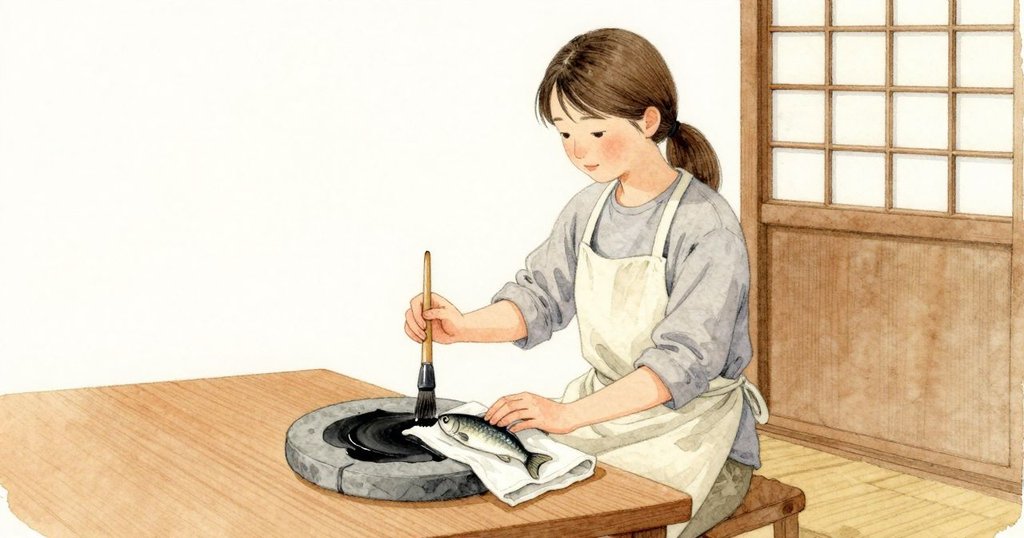
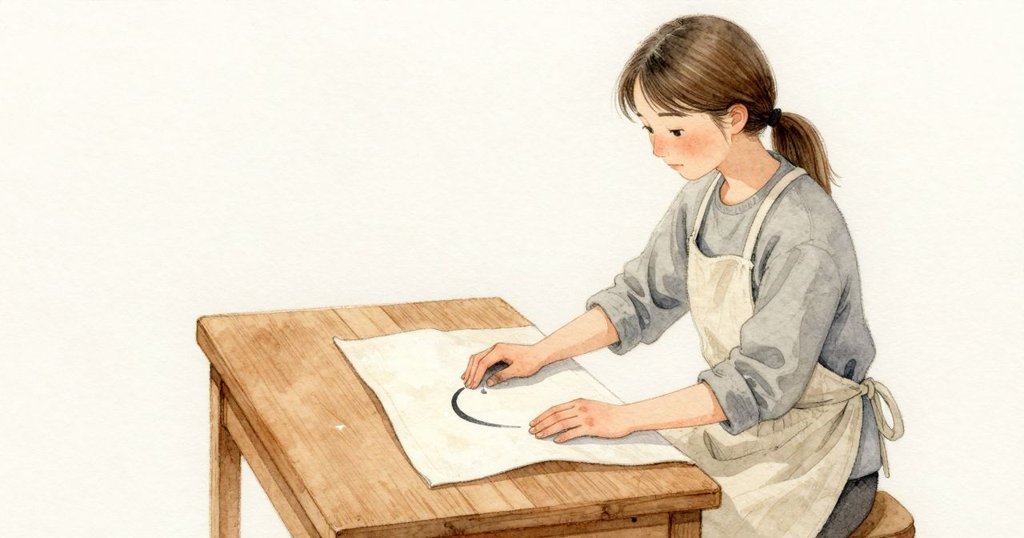
Astrid lowers a washi sheet toward the inked rubber fish, and her wrist grazes a damp crescent along the bench edge.
Coolness marks her skin; the curve looks like a mouthprint while the paper settles and the brush lifts in her other hand.
The rubber specimen rests on a damp cloth, every scale in relief, its back already gleaming under a thin wet coat.
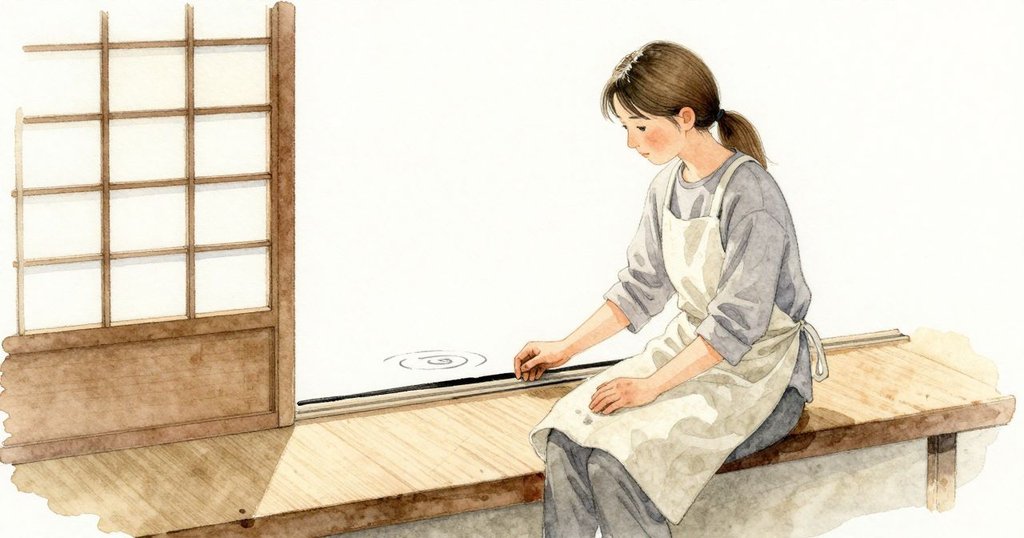
Light through the shoji moves in a slow pulse across the stone dish, thinning the top skin of sumi by a shade.
Janet watches from the far side and says, "That corner catches the sun."
Astrid turns the replica so the tail points seaward, toward the bright pane, and drags the wide brush from head to tail.
The stroke follows the grain; the scales take ink cleanly, and the surface reads as the same uniform black.
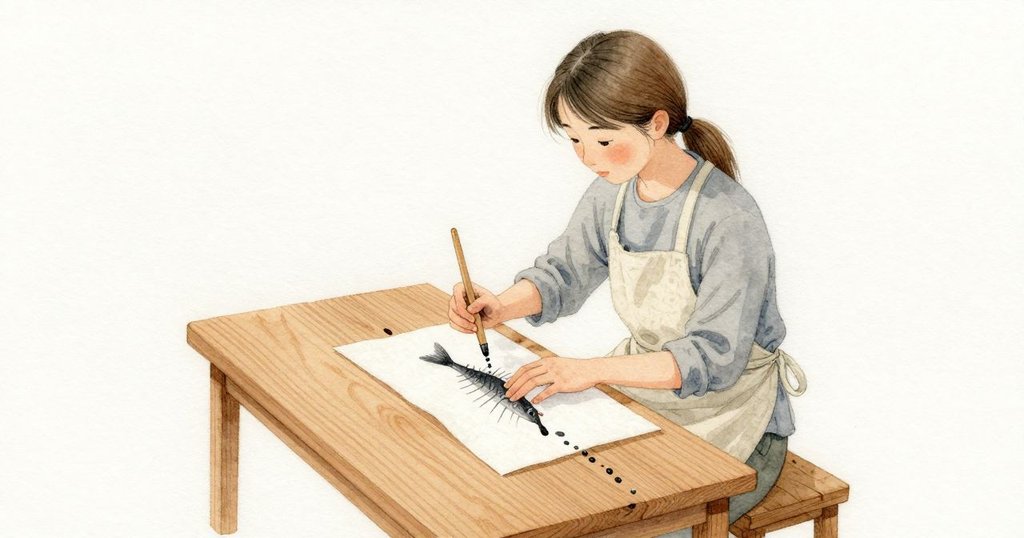
A tap at the dorsal ridge releases a bead; it slides to a narrow trough cut along the bench and vanishes without trace.
She rinses the brush; an irregular chain of droplets ticks from ferrule to wood and drops into the groove, and the bench looks unchanged.
Washi billows once as it comes down, then flattens; air leaves in a soft exhale, and her fingertips walk the paper around the gill arch.
Her thumbs ease along the fin rays with lighter pressure, and the fibres settle across each slender ridge without wrinkling.
Another rinse, another line of quiet drips; the groove swallows them, and the wood keeps its calm ochre color.
She peels the sheet in one steady sweep from tail to head, and the tacky whisper climbs in a smooth, unbroken ribbon.
The print shows every ray like spokes and a pale circle where the eye socket sat; Janet nods once and says, "It caught the edge well."
Astrid lays the wet page on the rack, weights the corners, and takes up the next sheet with both hands.
Light brightens, dims, and brightens again; the dish surface glistens, but the bench groove continues to drink without complaint.
She inks again, even and patient, then lowers the new paper, tracing the dorsal line through the back with her palm.
The next drop sits on the lip.
It swells into a bright lens, then slides over, tracing the same crescent she brushed earlier, and skates toward the paper’s edge.
Astrid’s hands pause above the corner, then hover a hair’s breadth lower; the sheet stays put while the thin wet arc cools her knuckle.
The second print lifts with a faint catch along that curve, and a soft feathering blooms where the moisture kissed the border.
She sets it beside the first, darker at the gills and paler along the tail, both pages heavier now with ink and water.
A tiny ripple travels the still-full trough like a heartbeat, then rests, and the groove’s brim holds a dark line.
Astrid turns the replica back toward the bright pane, re-inks the dorsal ridge with a shorter stroke, and steadies her grip on the washi.
She peels the next sheet from tail to head at a slower angle along the rim-wet margin.
繁體中文 번역
Astrid 把和紙往上了墨的橡膠魚身放下去,她的手腕擦到工作檯邊一個潮濕的新月痕。
涼意貼到皮膚;那弧線像一個嘴形印記,同時紙張安定下來,刷子在她另一隻手裡抬起。
橡膠標本放在濕布上,鱗片一片片隆起,背面在薄薄一層濕墨下發亮。
透過紙門的光像脈動一樣慢慢掠過墨碟,讓表層的墨水薄了一些。
Janet 在對面看著,說:「那一角正對著陽光。」
Astrid 把模型轉到尾端朝向海邊那側、朝向較亮的紙門,然後用寬刷從頭到尾帶過。
筆勢順著紋理走;鱗片乾淨吃墨,表面看起來還是同樣均勻的黑。
她在背脊處輕點一下,湧出一顆珠;它滑到工作檯上的細槽裡,無聲消失。
她清洗刷子;從金屬箍到木柄掉下不規則的一串水珠,落進溝槽,檯面看起來沒有改變。
和紙放下時鼓起一下,隨即貼平;空氣輕輕吐出,她的指尖沿著鰓弓位置在紙背上走過。
兩隻拇指在鰭條處放得更輕,長纖維貼進每一根細稜而不起皺。
又一次清洗,又一列靜靜的水滴;溝槽把它們吞下去,木頭維持溫潤的赭色。
她把紙從尾到頭一口氣掀起,黏啵聲一路平滑攀上去,不曾斷開。
印面把每根鰭條像輻條一樣列出來,眼窩所在留下一圈淡白;Janet 點頭說:「邊緣印得很好。」
Astrid 把濕紙放上晾架,壓住四角,雙手又拿起下一張紙。
光亮起、暗下、再亮起;碟面發光,可是檯面的細槽持續無聲地吸收。
她再上墨,勻而耐心,接著放下新紙,用手掌在背面描過背脊線。
下一滴停在槽邊。
它鼓成一顆亮晶,隨後越過邊緣,描出她先前擦過的那道新月,並滑向紙張的邊緣。
Astrid 的雙手在角落上方停住,然後下降一點點;薄薄的濕弧貼涼她的指節,紙張維持在原位。
第二張印被掀起時,在那條弧線上輕微一勾,邊緣出現柔軟的暈展,正是水痕輕觸過的地方。
她把它擺在第一張旁邊,鰓部較濃,尾端較淡,兩張紙此刻都因墨與水而更沉一些。
細槽裡傳過一個細小的漣漪,像心跳一樣,隨後靜止,溝邊緣掛著一道深色的線。
Astrid 把模型轉回較亮的那一側,較短的筆畫再上一次背脊,穩住握著和紙的手。
她把下一張紙從尾到頭掀起,在帶著水痕的邊緣放慢角度。
문맥 속 어휘
- pulse
脈動;節律性的起伏或一陣波動。(此處指光的緩慢起伏移動)
“A slow pulse of light crosses the dish, thinning the sumi’s surface by a breath.”
一道緩慢的光脈掠過石皿,將墨面的薄皮輕輕削淡一息。
- irregular
不規則的;在形狀、間距或節奏上不均一的。
“An irregular string of drips steps from ferrule to handle and disappears neatly into the bench groove.”
不規則的一串水滴從金屬筆套踏步到筆柄,然後俐落地消失在桌面溝槽裡。
- trough
槽;為導流而開的長而窄的凹槽。
“A faint ripple travels the full trough, then rests, leaving a clean, dark line along its brim.”
一縷細波走完整條槽,隨即安靜下來,只在槽沿留下一道深色細線。
- seaward
朝向海的一側;往海邊的方向。
“She angles the replica so the tail points seaward toward the bright pane before laying down the stroke.”
她把複製品微調到魚尾朝海那扇亮窗,然後才落下一筆。
- specimen
樣本;供觀察、研究或複製用的單一個體。(此處指橡膠魚複製品)
“The rubber specimen waits on the damp cloth while she steadies the washi and tests the edge.”
橡膠樣本安靜地躺在濕布上,她穩住和紙,順手試了紙邊。
추천 읽기

Pigeon Wings Over the Fish Print

Bluebird at the Gyotaku Bench

Salmon Ink Pull at the Cherry Block
The Dripping Spout and the Restless Page
Brayer Clicks and a Breeze at the Printing Bench

Tilted Glass and the Quiet Print

The Second Pull of Red Ink on the Woodblock Bench
The Blanket and the Brush

Scratch into Horizon Print

Salt on the Dropper Changes the Calligraphy Ink

Water Drop at the Inkstone Notch and the Brush Line