The Swallow's Arc and the Pencil at the Doorway - 適合進階的英文短篇故事,含中譯與發音
屋簷下的燕子弧線與門口的鉛筆 | 英文/中文 雙語朗讀
스토리 내용
English 원문
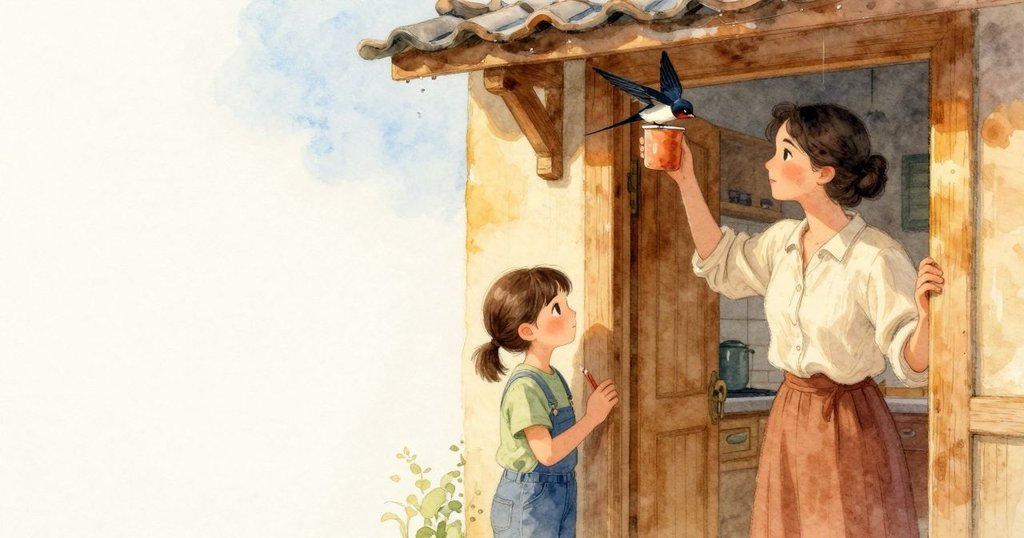
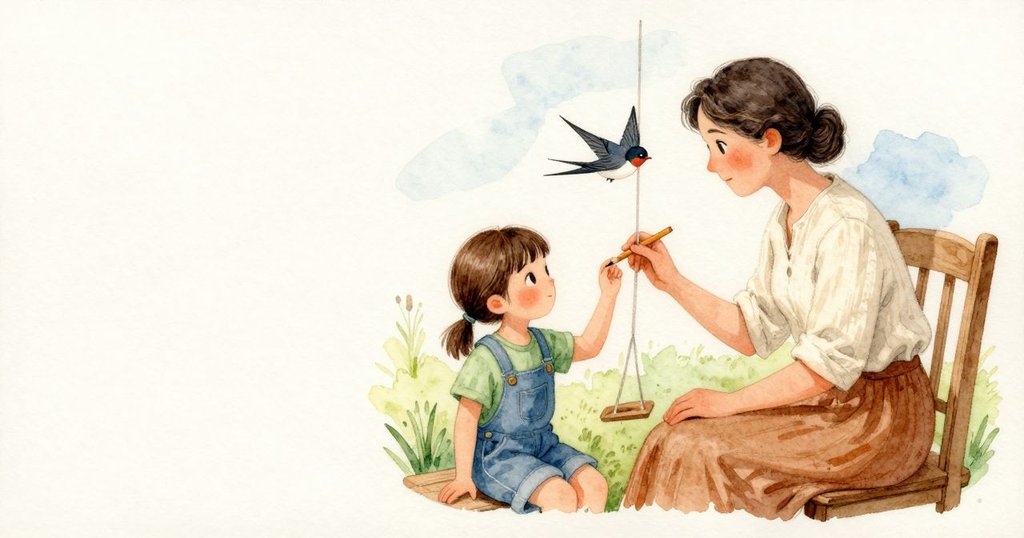
Every afternoon Juliet taps her pencil twice before sketching; today the tap stalls as a swallow glides under the eaves.
It sweeps past the highest mud cup, folds small wings, and leans into the rim with a neat, decisive landing.
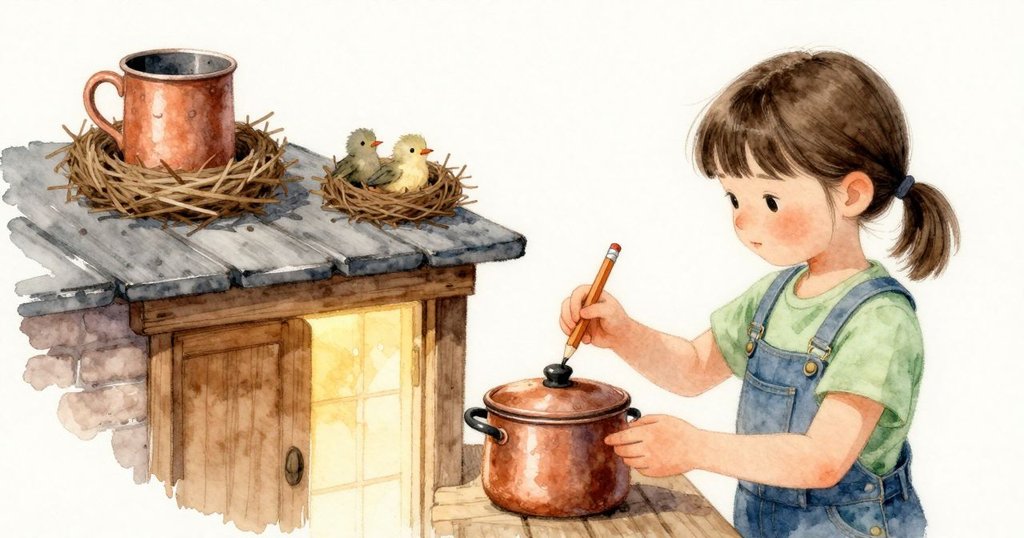
A pale ripple of beaks rises from the cup, and soft chittering travels in waves against the warm boards.
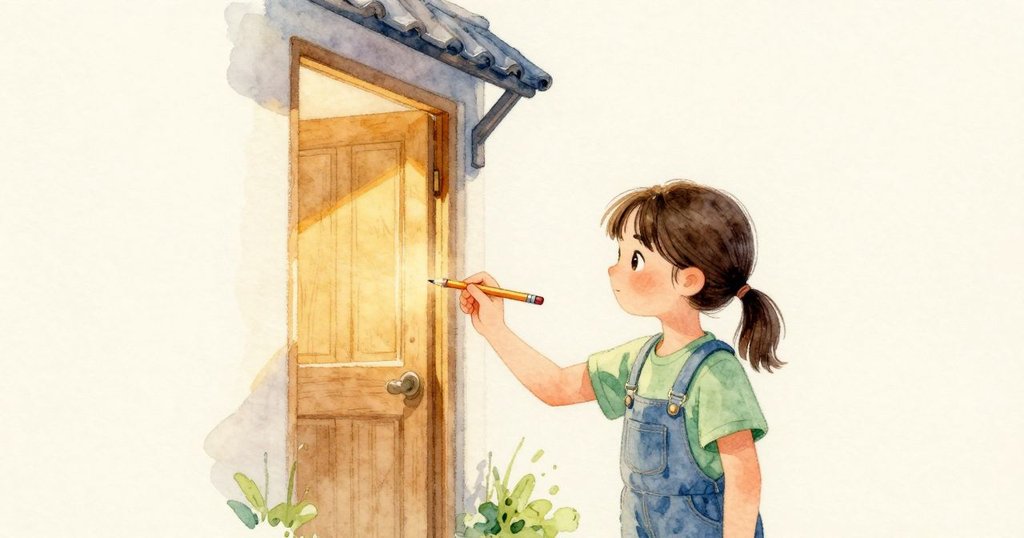
Eve stands in the doorway beside her, one hand on the frame, while kitchen sounds click and settle behind them.
Afternoon light reaches in at a low angle, and the wide boards keep a slow, even warmth along the doorway.
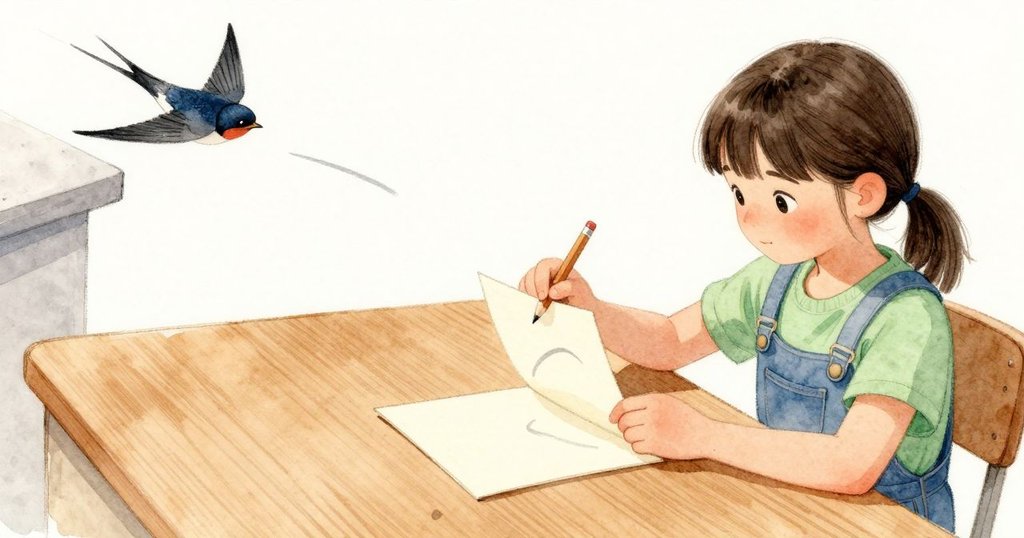
At her desk, Juliet often begins with a small chevron to wake the wrist, three brisk strokes that snap into angle.
Here she raises a pocket card with a deckle edge, its ragged fringe brushing her thumb as the paper flexes.
She sights along the pencil to check proportion, elbow tucked, but the swallow lifts again and redraws the air mid-glide.
Her first line catches only the empty lane it left, a faint arc skimming the card like a skipped stone's memory.
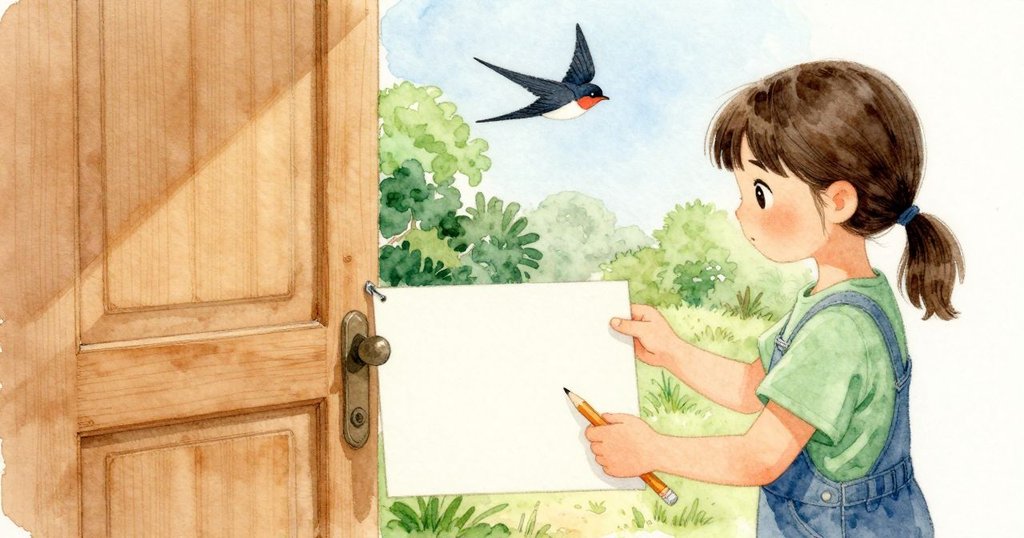
A light stir moves the card, so she slides one corner under the doorway peg and leans her palm for simple leverage.
The bird arcs out, stalls a heartbeat over the yard, then swings back, a pendulum that writes and unwrites the same curve.
The tail flashes a dark chevron, then closes, and the swing reverses with the same timing as the last pass.
Juliet shifts her grip, loosens the pressing finger, and slows the pencil until its tip can coast beside that swing.
She stops chasing the body and starts mapping motion, a line for the rise, a turn-mark at the chevron of the tail.
Eve says, "It will come around again," her voice kept small so the sound rests under the eaves.
Across the yard, another pair crosses its track, and the air fills with gentle intersections that drift yet keep their spacing.
Juliet marks only one of them, then lifts the card to the side and tests the swing again with two lighter strokes.
The kitchen pot ticks beside them, steady, and her hand moves more slowly, the pencil now gliding rather than pecking at small details.
The highest cup holds steady through the cycles, mud dark where this spring mended its rim, and the nestlings' open mouths pulse shut.
The deckle fringe brushes her wrist whenever she shifts, a small reminder of the page's soft, irregular boundary.
Juliet breathes once, keeps the arc she has found, and leaves the space between passes unmarked on the card.
She taps the pencil twice again, the old habit returning in the doorway's warmer air and the faint dry-grass scent from above.
She taps the pencil twice against the warm frame and lifts its tip toward the high nest.
繁體中文 번역
每個午後,Juliet 在動筆前都會把鉛筆輕敲兩下;今天敲擊停了一拍,一隻燕子正滑入屋簷下。
它掠過最高的泥杯巢,收起小翅,俯身靠在巢緣,落點俐落而穩定。
巢裡亮起一圈張口的細波,柔細的呢喃一陣陣貼著發熱的木板散開。
Eve 站在門口和她並肩,一手搭著門框,屋內的鍋蓋聲在身後輕輕合上又安靜。
午後的光以低角度伸進來,寬闊的木板沿著門口保著一層緩慢而均勻的溫度。
在書桌前,Juliet 常以一個小小的人字形暖腕,三筆俐落,角度瞬間扣住。
此刻她舉起一張帶毛邊的小卡,毛邊的細絨輕刷過拇指,紙面微微彈動。
她沿著鉛筆目測比例,手肘收住,可燕子又一次抬升,半途在空中重新改寫自己的路徑。
她的第一條線只勾住它留下的空道,一道淡弧掠過卡面,像跳過水面的石子留下的記憶。
一絲輕動推了紙卡一下,她把一角滑到門框的木釘下,用掌心壓住,借到一點槓桿。
那鳥向外劃弧,在院子上空停住一拍,再擺回來,像一支反覆書寫又擦去同一曲線的鐘擺。
尾端閃出一抹深色的人字形,隨即闔上,轉弓的節拍與上一趟一致。
Juliet 換了握法,放鬆按住的指頭,把筆速放慢到筆尖能貼著那一擺滑行。
她不再追著身形,開始描繪移動:一筆標出上升,轉折處在尾端的人字形標記一下。
Eve 說:「它還會繞回來。」她的聲音收得很小,音色就待在屋簷底下。
院子對面另一對飛線交會,空中浮出溫和的交叉,四散卻仍維持彼此的間距。
Juliet 只記下一條,再把紙卡往旁挪一點,用兩筆更輕的線重新試那一擺。
身旁的鍋沿穩穩滴答,她的手也慢了下來,鉛筆此刻在紙上滑行,不再在小細節上啄點。
最高的巢在循環裡穩穩端著,春天修補過的巢緣帶著較深的泥色,雛鳥張開的嘴又合了起來。
毛邊的絨線在她每次換手時擦過手腕,提醒著這張紙柔軟而不規則的邊界。
Juliet 吐一口氣,守住剛找到的弧線,把來回之間的空白留在卡面上不加痕跡。
她再把鉛筆輕敲兩下,門口空氣更暖了一點,上方傳來淡淡乾草的氣味。
她把鉛筆兩下點在溫熱的門框上,然後把筆尖抬向高處的巢。
문맥 속 어휘
- chevron
倒 V 形記號或圖案;在文中既指練手腕的小「V」形筆劃,也指燕尾呈現的 V 形。
“At the turn, the swallow flashes a tight chevron of tail, and Juliet tracks that angle.”
轉折時,燕子的尾巴閃出緊收的 V 形,她順著那個角度追畫。
- deckle
(紙張的)自然毛邊、鋸齒狀邊緣;常用於形容「deckle edge」毛邊紙。
“The card’s deckle edge whispers along her wrist as she steadies it by the doorway.”
當她在門邊把卡片固定好時,卡片的毛邊輕輕擦過她的手腕。
- leverage
槓桿作用;用小力氣取得較大效果的支點或優勢。此處指手掌施力帶來的機械優勢。
“With her palm as quiet leverage, the pencil stops chasing and begins to coast.”
以手掌作為沉靜的槓桿,鉛筆不再追趕,而是開始滑行。
- proportion
比例;各部分之間的相對大小或關係。
“She sights the pencil again, judging proportion so the arc won’t dwarf the high cup.”
她再度沿著鉛筆瞄準,評量比例,免得那道弧線壓過高處的巢杯。
- peg
木釘、掛鉤、(門框上的)小栓;可用來固定或支撐物件。
“She tucks the card’s corner under the doorway peg, asking the wood for steadiness.”
她把卡片的一角塞到門口的小木栓下,向木頭借一點穩定。
선생님 스파크
AI가 수업 힌트를 생성해 교사가 이야기를 확장해 활용하도록 돕습니다
Story Discussion - Juliet and the Swallow
描述文中如何透過感官細節(光、聲、觸覺)來建立午後的氛圍?請列出三個具體描寫並說明它們各自的效果。
開放式參考答案
1) 午後的光以低角度伸進來,寬闊的木板保著一層緩慢均勻的溫度——塑造出溫暖且靜謐的時段感。 2) 巢裡雛鳥的柔細呢喃和廚房鍋蓋的滴答聲——以小而穩的聲響交織,讓場景既有生命的動態又不擾亂寧靜。 3) 毛邊擦過拇指與手腕、紙面的微微彈動——觸覺細節把注意力拉回到手作與媒材的實在感,強調創作的親密與專注。
Juliet 在畫時先敲鉛筆兩下這個習慣只是隨意動作,沒有更深意義嗎?(是/否)請簡短回答並說明理由。
是非題參考答案
否。這個兩下敲擊是儀式化的準備動作:它幫助她回到習慣的節律與專注狀態,使手腕醒來並與門框、空間的溫度和聲響相連。
填空:文中描述 Juliet 為了『暖腕』所畫的三筆俐落線條,在原文中被稱為「________」。請以故事原句的英文片語填空。
填空題參考答案
a small chevron to wake the wrist
分析 Juliet 把紙卡塞到門框木釘下並用掌心壓住的行為:這個動作帶來了哪些連鎖改變,使她能從『追逐身形』轉為『描繪動態』?請列出兩個因果步驟。
開放式參考答案
1) 將紙卡固定降低了紙張被風或鳥擺動帶走的干擾,因此她不必頻繁調整紙的位置;結果是手可以放慢、跟隨燕子的軌跡。 2) 固定紙卡讓鉛筆可以沿著燕子的擺動平滑滑行,這使她從細碎的啄點變為連續的弧線記錄,從而把注意力從『抓住形體』改為『標記運動』。
文中寫到 Juliet “stops chasing the body and starts mapping motion”。這句話暗示她內在的什麼改變?請用一到兩句話說明她的心理或專注如何轉向。
開放式參考答案
她的注意力從外在表象轉為關注時間性與關係性──不再企圖捕捉瞬間的靜態形貌,而是接受流動、記錄過程,表現出更成熟的觀察與更平靜的控制感。
把燕子、巢與鉛筆敲擊這三個意象視為象徵:它們分別可能代表什麼主題或心理狀態?(至少對應一個象徵意義)
開放式參考答案
燕子可能象徵自由、流動的行動與自然節律;巢象徵安定、庇護和周期(修補過的巢緣暗示時間的痕跡);鉛筆的敲擊則象徵習慣、儀式化的準備與回到創作中心的穩定動作。這些象徵共同在自由與穩固、動態與靜止之間建立張力。
作者使用「鐘擺」與「跳過水面的石子」的比喻,各自帶來哪些語義層次?比較這兩個比喻如何一起強化文本的節奏感與主題?
開放式參考答案
『鐘擺』比喻強調規律、往返與時間的可預測節拍,帶出動作的反覆性與節奏感;『石子跳過水面』則帶有瞬間性、輕盈與記憶的殘留,比喻描繪出線條如記憶般掠過而留下一痕。兩者合併後,一方面顯示運動的週期性,另一方面突顯每一次掠過都帶有短暫且獨特的印記,從而深化主題:在重複中尋找獨特的瞬間。
Role Play - Mapping the Swallow's Swing
情境
場景:午後的門口,Juliet 站在書桌旁,手裡壓著一張帶毛邊的小卡,鉛筆貼近紙面,正刻意放慢速度以描繪燕子在屋簷下的弧線。燕子在最高的泥杯上方來回擺動,巢中雛鳥張口的細波、屋內鍋沿的滴答聲、以及毛邊擦過手腕的觸感都清晰可感。Eve 站在她旁邊,一手搭著門框,聲音很小,像是怕打斷這個節奏。練習重點:學生分飾 Juliet 與 Eve,用英語描述動線與觀察(rise, turn, chevron),討論繪畫決定(哪裡標記、哪裡留白),並用輕柔語氣互相提醒或鼓勵,保持門口的靜謐與專注。
角色
開場白建議
- •“I can feel the deckle edge brush my wrist — I'm going to mark the rise and the chevron, then leave the rest blank.”
- •“It will come around again; listen to the pot ticking and try two lighter strokes to follow the swing.”
Creative Writing - Side Moment at the Mud Cup
寫作提示
寫作任務(側面片刻):請從一個沒有被原敘述直接描寫的視角,續寫最高那只泥杯巢周圍的一個短暫片刻。你可以選擇燕子的視角、巢裡雛鳥的感知,或把焦點放在泥杯餘震與木板溫度間的細微互動。務必保留原文的具體元素:Juliet 與 Eve 的在場、鉛筆敲擊的節拍、毛邊小卡、巢的泥色、人字形尾巴、弧線的來回、門框的木釘、鍋沿的滴答和午後低斜的光。目標字數約 150 字;重點在於動作節奏、感官細節與微小因果(什麼動作引發了下一個瞬間),語氣溫和、具體、適合兒童閱讀。 範例續寫(示例片段,約 150 字): 燕子倏地靠近,泥杯邊緣像被指尖撫過的輪廓,雛鳥的喉囊一陣波動,亮出小小的黃口。它把身體重心前傾,尾端的那抹人字形在陽光裡一閃而過,像是把弧線釘在空中。巢裡的窩泥傳來微弱的震動,木板上的暖意透上來,與廚房裡鍋沿的滴答聲在同一節拍裡並行。從高處看,卡紙上的弧線像過去一瞬的軌跡;Juliet 的兩下敲擊成了標尺,幫助燕子重新找回節奏。它留下一小片羽絨,然後又掠出院子,把那個曲線留給空氣去記住。
詞彙庫
寫作輔助
- • From the swallow's point of view, the nest looked like...
- • The mud cup trembled when...
- • Juliet's two taps sounded like...
- • I felt the warmth of the boards and then...
- • The tail's chevron cut the air and made me notice...
- • A small feather fell and it meant that...
Vocabulary & Grammar Focus
重點單字
tap
輕敲;短促有節奏的敲擊動作,常作為開始或習慣性的儀式性動作。
She taps the pencil twice against the warm frame before setting its tip toward the high nest.
pencil
鉛筆;在故事中指用來速寫與描繪線條的工具,既是身體動作的延伸也是觀察的媒介。
The pencil's tip coasted beside that swing, tracing the bird's curve with patient attention.
swallow
燕子;一種小型敏捷鳥類,在屋簷下滑翔並在泥杯巢邊落下或掠過。
A swallow glides under the eaves and leans its small wings against the nest's rim.
eaves
屋簷;屋頂向外伸出的下緣空間,故事中為燕子掠過與聲響回落的場景邊界。
Light pooled under the eaves as the bird swept past the highest mud cup.
chevron
人字形記號;短而銳利的角度線,在繪畫練習中作為暖腕標記,亦出現於鳥尾的暗色形狀。
She begins with a small chevron, three brisk strokes that wake the wrist.
deckle edge
毛邊;紙張不規則的撕邊或毛糙邊緣,帶來觸感與視覺上的柔和邊界。
She raised a pocket card with a deckle edge, its ragged fringe brushing her thumb.
fringe
絨線或邊緣的細毛;此處指毛邊上垂出的絨毛,偶爾觸碰手指或手腕,成為節奏的提醒。
The deckle fringe brushed her wrist each time she shifted her grip.
arc
弧線;由鉛筆描繪出的曲線,用來記錄鳥的軌跡或手眼協調形成的一段動勢。
Her first line caught only the empty lane, a faint arc skimming the card.
pendulum
鐘擺式的來回擺動;比喻燕子往返的路徑像鐘擺般重複地書寫與抹去同一條曲線。
The bird swung back like a pendulum, writing and then erasing the same curve.
nestlings
雛鳥;巢中的幼鳥,常以張嘴示意餵食,故事中以它們的動態聲響構成景物的一部分。
In the highest cup, the nestlings' open mouths pulsed shut between the cycles.
文法重點
本段落大量使用一般現在式來表達兩種功能:一是習慣性動作(habitual action),如標記反覆發生的日常儀式;二是敘述現在(narrative present),用來讓場景顯得更即時、生動。例如句子 "Every afternoon Juliet taps her pencil twice before sketching" 做為習慣描寫;而句子如 "It sweeps past the highest mud cup" 則把讀者拉進當下的動作。教學上可以讓學生辨認何時是描述經常發生的習慣(頻率副詞或時間片語常出現),何時是以現在式呈現的現場敘述;並練習把同一語意轉為其他時態(如用 present progressive 強調正在進行、或用 past habitual(would / used to)將習慣放到過去),以理解時態如何改變敘述的時間層次與即時感。
練習題
She begins with a small ___ to wake the wrist, three brisk strokes that snap into angle.
參考答案
chevron
配對以下單字與意思:
顯示答案
A-4B-8C-7D-2E-10F-9G-3H-1I-5J-6
Every afternoon Juliet taps her pencil twice before sketching;
參考答案
Every afternoon Juliet would tap her pencil twice before sketching.
Cultural Connection - 屋簷下的泥杯巢
主題
屋簷下的泥杯巢
討論要點
- •故事中 Juliet 和 Eve 如何在門口的日常動作裡讓位給燕子?注意 Eve 把手搭在門框、把聲音收小、以及廚房鍋蓋的滴答聲。請描述你自己生活中,有沒有遇過人和野生動物在同一個家門口或窗邊同時存在的情況,當時你們怎麼調整行為?
- •故事提到『最高的巢』、『春天修補過的巢緣』和雛鳥張口的細波,呈現巢的物質性與季節性。比較一下:在你的社區,人們會以什麼具體方式處理或保護屋簷下的巢(例如搭小平台、修繕屋簷、或刻意留空間)?有哪些手工、規矩或習慣與這種『修補/保留』對話相呼應?
- •Juliet 把畫面留白,不去填滿來回之間的空隙;她的動作變慢以便與燕子的擺動同步。討論這種『為自然留白/讓步』的態度在你文化中的具體表現:它可能以哪些日常禮節、家庭習慣或社區規範出現?請舉一個具體例子並說明相似或不同之處。
文化比較
在故事所描繪的英語語境裡,屋簷下的泥杯巢被視為家居景觀的一部分:人物會放低聲量、減緩動作,並注意季節性的修補(故事裡寫到「春天修補過的巢緣」),生活節奏因此和鳥的循環互相呼應。相較之下,在台灣的生活經驗中,屋簷與燕巢同樣常見且帶有季節意象,人們會以具體方法來管理這種共處,例如在屋簷預留築巢空間、安置小平台或巢箱、以瓦片或遮棚減少鳥糞影響,或在必要時進行清理與修葺。兩邊都呈現人與野生鳥類的共生實務,但著眼點略有不同:故事強調在日常細節中讓步與觀察的美感(低聲、留白、慢速描繪),而台灣的處理則更多落在以實用技術和居家維護來平衡衛生、舒適與生物棲地的需求。
Comprehension Quiz
1. What habitual action does Juliet perform before she begins to sketch?
2. Where does the swallow first land?
3. How does Juliet change her drawing approach after watching the swallow's movement?
4. What does Juliet do to keep the pocket card from moving while she draws?
5. Which background sound is specifically mentioned inside the house?
6. What distinctive mark does the swallow's tail show during its flight?
7. When two birds cross their tracks across the yard, how does Juliet respond?
8. At the end of the scene, what small ritual does Juliet repeat before lifting the pencil toward the nest?
추천 읽기
Swallow Presses Mud to the Nest by the Rocking Chair
A Thrush Taps on the Weather Station Windowsill
Droplet Ring on the Paint Swatch by the Spider Web
Old Nest and Pot Bubbles in One Beat
A Shift of Light on the Mud Nest and a Folded Flyer
A Feather Fogged the Loupe Under the Wooden Eaves
Wagtail on the Travertine Rim at the Hot Spring Pool
Swallow at the Marbling Tray and a Drying Question
Cora at the Glass Pool
A Bird at the Rain Gauge and the Barograph Trace
Swallow Under the Eaves and the Fresh Mud Rim