Pebble Rolls, Lens Spins, and a Dust Mote Grows - 適合中級的英文短篇故事,含中譯與發音
小石子滾動、放大鏡旋轉、灰塵放大 | 英文/中文 雙語朗讀
故事內容
English 原文
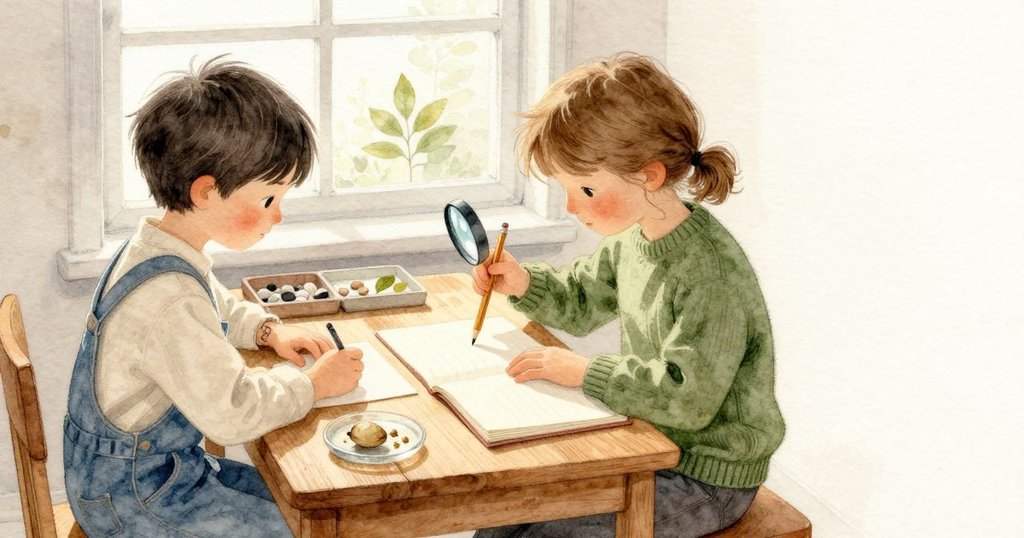
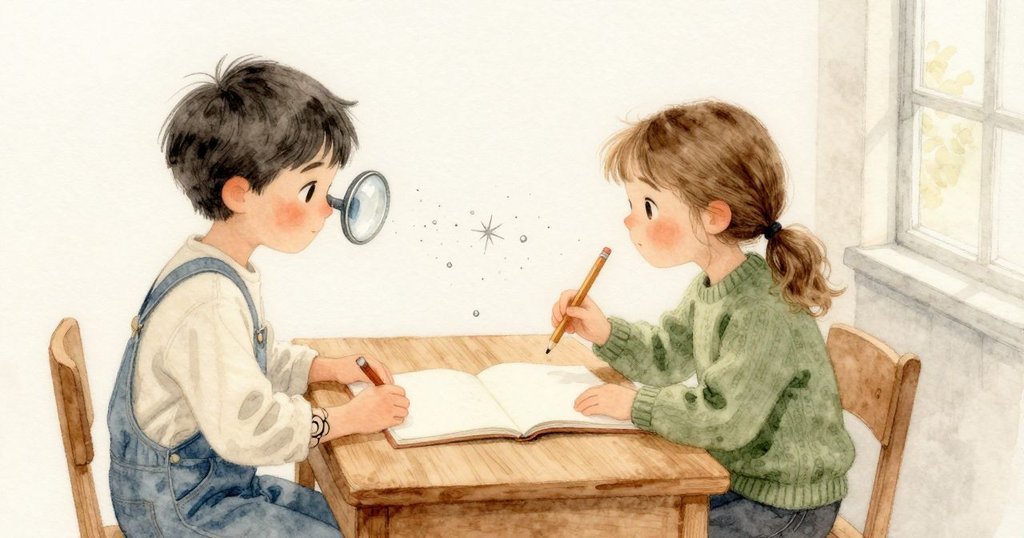
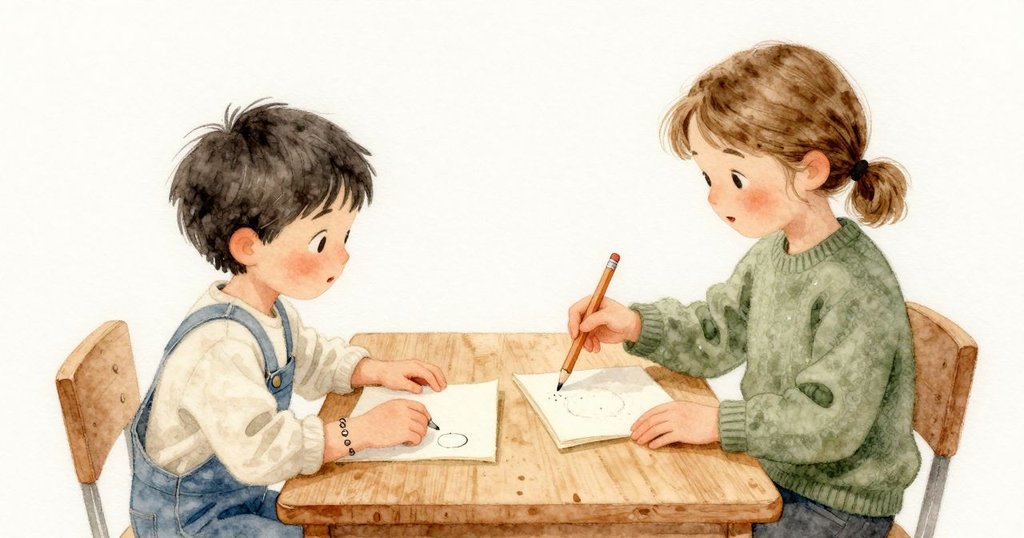
The notebook's paper felt soft and dry under Kit's slow-moving fingertips today. The smooth rim of the hand lens pressed a cool circle on the page. An old clerk's desk held the wooden work space by the bright window. Trays kept pebbles, shells, and pressed leaves sorted in neat, low squares. A glass dish of water held a pale seed pod and tiny organic crumbs. Helena sat nearby with a book and a pencil, writing small notes. She said, "I like that sun on the table."
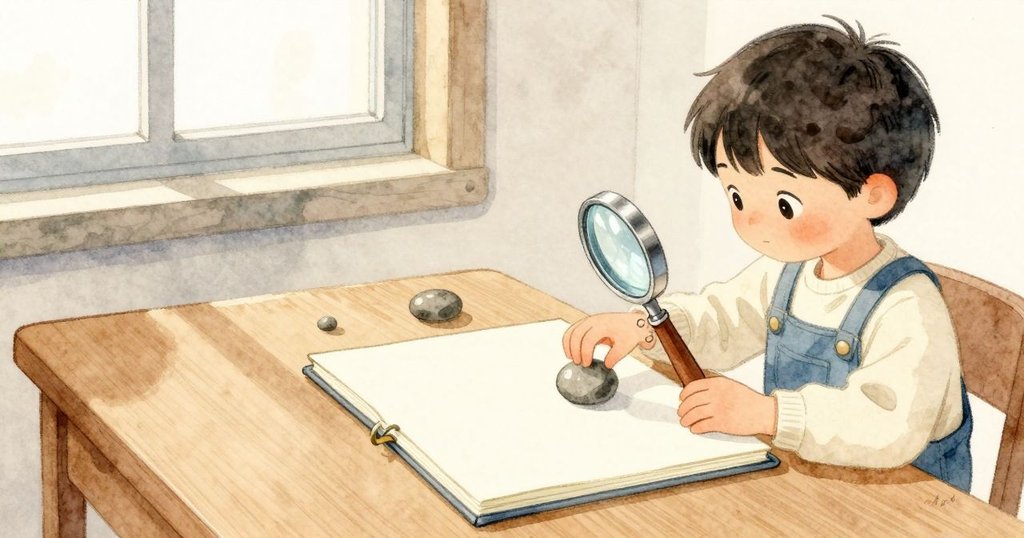
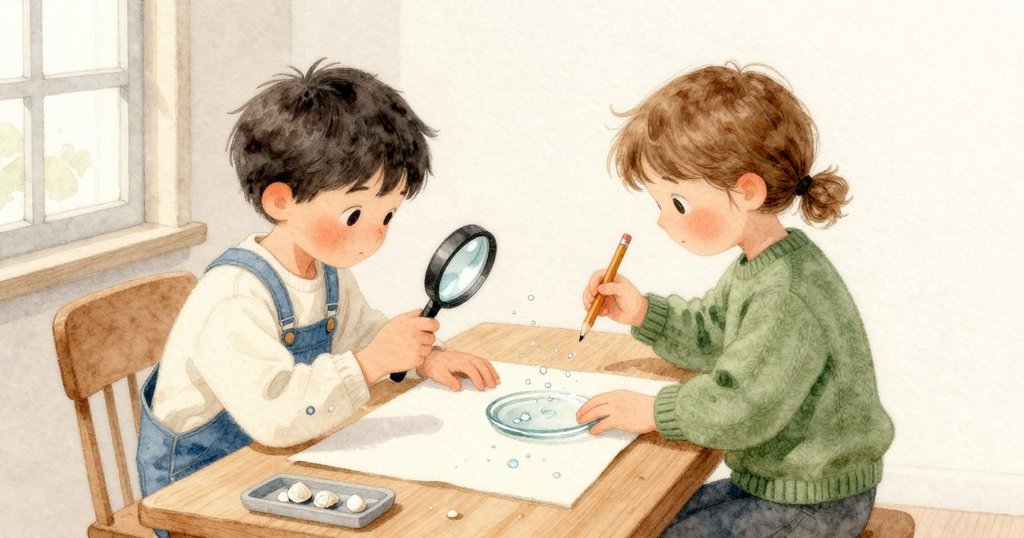
Kit nudged a round pebble toward the notebook's edge to trace its shape. The pebble met the tray's lip, then rolled off with a soft tick. It struck the metal ring of the hand lens and sent the ring spinning. The lens slid in a small circle, skimmed the paper, and kissed the dish. A quick spray jumped up and dotted the page and Kit's wrist with cool spots. Kit pulled the hand back, and a tiny twitch ran through the fingers. Cool air touched Kit's wrists, and a chalky shell smell rose and lingered. "Are you okay?" Helena asked, her pencil staying above the page like a pause.
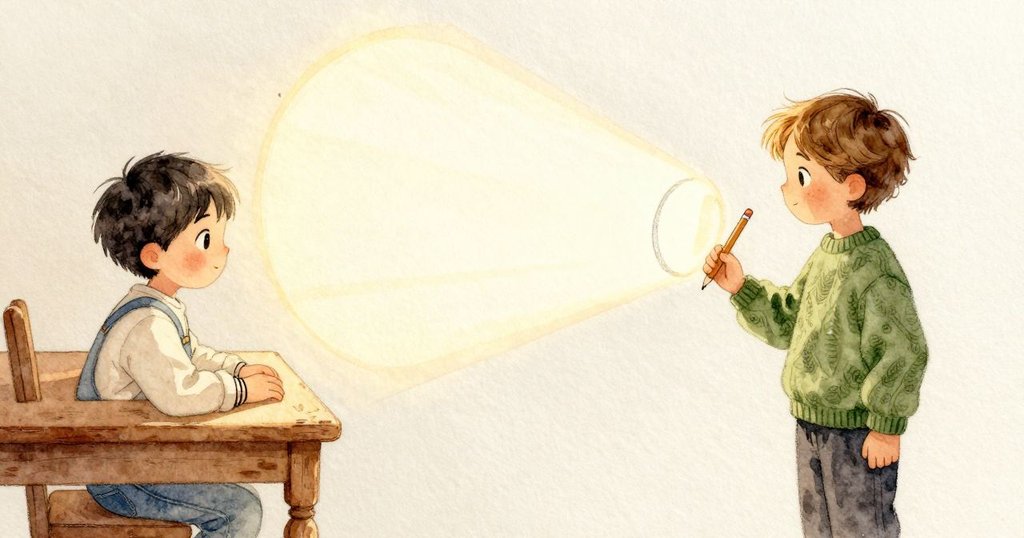
The spinning slowed, and the lens stopped over a tiny dust mote on paper. Through it, the mote looked like a tangled star with lines and clear beads. A sunbeam slid along the desk, and the bright circle moved across the page. Kit held a gentle breath, and the water drop pulled a fiber a little. The mote shifted that hair's width and then stayed near the round window. Helena said, "That dot looks huge," and turned one page without lowering her hand. A wet dot marked the margin, and small spots dried in uneven rings. Kit kept two fingers near the tilted ring, and the circle held its place.
繁體中文 翻譯
今天,筆記本的紙在 Kit 慢慢移動的指尖下感覺柔軟而乾爽。手持放大鏡的光滑邊緣在頁面上壓出一個涼涼的圓圈。亮窗旁的木質工作空間是一張舊的店員書桌。托盤把小石子、貝殼和壓製的葉子分在整齊而矮的格子裡。一個裝著清水的玻璃皿放著一枚淡色的種莢和微小的有機碎屑。Helena 坐在一旁,拿著書和鉛筆,寫著小小的筆記。她說:「我喜歡桌上的陽光。」
Kit 把一顆圓圓的小石子推向筆記本邊緣,想描出它的形狀。小石子碰到托盤的邊緣,接著發出輕輕一聲,滾了下來。它撞到放大鏡的金屬環,讓那個環轉了起來。放大鏡沿著小小的圓圈滑動,掠過紙面,輕輕碰到玻璃皿。一陣細小的水花竄起,把頁面和 Kit 的手腕點上涼涼的斑點。Kit 把手收回,手指微微抽動了一下。涼涼的空氣碰到 Kit 的手腕,一股粉粉的貝殼氣味升起並停留。「還好嗎?」Helena 問,鉛筆停在頁面上方,像是一個停頓。
轉動變慢了,放大鏡停在紙上一粒極小的塵埃上。透過它,那粒塵埃像顆打結的星星,帶著細線和透明的小珠。一束陽光沿著桌面滑過,亮圓圈在頁面上移動。Kit 輕輕屏住呼吸,一滴水把一根纖維拉動了一點點。那粒塵埃移動了頭髮絲那樣的距離,然後停在圓窗邊。Helena 說:「那個小點看起來好大喔。」她沒有放下手,就翻了一頁。頁邊留下了一個濕點,小小的斑點在不均勻的圈裡慢慢變乾。Kit 兩根手指靠著斜斜的環,圓圈維持在原位。
情境單字卡
- clerk
書記;辦事員;店員(做文書、整理與記錄工作的員工)
“A clerk once used this old desk by the bright window.”
曾有一位辦事員用過這張靠明亮窗邊的舊書桌。
- organic
有機的;源自生物的(非人工或無生命物質)
“Organic crumbs in the dish came from the pale seed pod.”
水皿裡的有機碎屑來自那個淡色的種莢。
- twitch
抽動;抽搐;肌肉或身體部位突然一下的小動作
“A small twitch ran through Kit's fingers after the splash.”
水花濺起後,Kit 的手指出現了一下小小的抽動。
- spray
水花;噴濺起的細小水滴
“A light spray dotted the page and cooled Kit’s wrist.”
一陣細小的水花點在頁面上,也讓 Kit 的手腕變涼。
- mote
微塵;極小的塵粒
“The lens hovered over a dust mote on the notebook page.”
放大鏡停在筆記本頁面上一粒微塵的上方。
幫我想想
AI 生成教學線索,協助老師延伸故事使用
Story Discussion - Notebook by the Window
描述故事中你能感受到的三個感官細節(可以是視覺、觸覺、嗅覺或聽覺),並說明每一個細節如何讓你更了解這個場景。
開放式參考答案
1) The paper felt soft and dry under Kit's fingertips — this touch detail makes the desk feel calm and pleasant. 2) A chalky shell smell rose and lingered — the smell suggests old sea objects and adds a delicate, natural atmosphere. 3) The pebble rolled with a soft tick and the lens made a small spray — these sounds make the moment feel quiet and focused, with small sudden actions breaking the silence.
放大鏡開始轉動是因為小石子撞到了它的金屬環,這個說法對嗎?請回答「是」或「否」。
是非題參考答案
Yes. The pebble struck the metal ring of the hand lens, which sent the ring spinning and made the lens slide.
寫出從 Kit 推石子開始到紙上出現濕點的因果連鎖(至少包含四個步驟),並在每一步後簡短說明它為何導致下一步發生。
開放式參考答案
1) Kit nudged the pebble toward the notebook's edge — the pebble moved because Kit pushed it. 2) The pebble hit the tray's lip and rolled off — hitting the lip changed the pebble's direction and speed. 3) It struck the metal ring of the hand lens, sending the ring spinning — the impact transferred motion to the lens. 4) The lens slid and skimmed the paper, then kissed the dish — the moving lens hit the glass dish. 5) A quick spray jumped up and dotted the page — the contact with the dish caused water to splash onto the paper, creating wet spots.
根據 Kit 的動作和反應(例如收手、手指抽動、靠著放大鏡的手指),你可以推斷 Kit 當時在想什麼或感受到什麼?引用故事細節說明你的推斷。
開放式參考答案
Kit seemed curious and focused but also startled. The act of nudging a pebble to trace its shape shows curiosity and attention to small details; pulling the hand back and a tiny twitch running through the fingers shows a brief surprise when the water sprayed; keeping two fingers near the tilted ring to hold the circle in place shows carefulness and a wish to steady the small scene.
請在下面英文句子的空格填入故事中出現的原詞: "A quick spray jumped up and dotted the page and Kit's _____ with cool spots."
填空題參考答案
wrist
Story Discussion - Lens and Mote
故事中有哪些微小的動作或聲音(例如石子滾動、放大鏡滑動、水花噴濺、鉛筆停住)是如何一起營造出安靜且專注的氛圍?請舉兩到三個例子並說明每個例子造成的效果。
開放式參考答案
The pebble's soft tick is quiet and delicate, which makes the scene feel gentle and still. The lens sliding and skimming the paper is a slow, precise movement that suggests careful attention. The quick spray that dotted the page is small and sudden, but because it's tiny it adds a brief, surprised moment without breaking the calm; the pencil staying above the page acts like a pause that keeps the focus on watching.
Helena 把鉛筆停在頁面上方像是一個停頓,然後翻了一頁但沒有放下手;這個動作表示她在觀察而不是立刻寫新的內容嗎?請回答「是」或「否」。
是非題參考答案
Yes. Her pencil stayed above the page and she turned a page without lowering her hand, which shows she paused to watch rather than immediately writing.
請在下面英文句子的空格填入故事中出現的原詞: "The pebble met the tray's lip, then rolled off with a soft ____ ."
填空題參考答案
tick
說明放大鏡從被石子撞到到最後停在那粒塵埃上的多步因果過程(至少四個步驟),並在每一步簡短說明是哪種物理作用使情況改變(例如碰撞、能量轉移、摩擦或噴濺)。
開放式參考答案
1) Kit nudged the pebble and it hit the tray's lip — the push and the lip changed the pebble's direction (collision and redirection). 2) The pebble struck the hand lens's metal ring — the impact transferred kinetic energy to the ring, making it spin (impact and energy transfer). 3) The spinning ring made the lens slide in a small circle and skim the paper toward the dish — that sliding motion carried the lens into contact with the dish (momentum and sliding). 4) The lens kissed the dish and a spray jumped up — the contact caused water to splash and the splash removed some energy from the moving lens (collision with liquid and energy loss). 5) Water, air drag, and contact with the paper slowed the lens until it stopped over the dust mote — friction, drag, and the reduction of momentum caused the lens to come to rest above the mote.
Role Play - The Hand Lens Spins
情境
場景:你們坐在亮窗旁的木質書桌,托盤裡擺著小石子、貝殼和壓製的葉子。Kit 正用手指慢慢推著一顆圓石想描它的形狀,石子碰到托盤邊緣,滾動時撞到放大鏡的金屬環。放大鏡滑過紙面,輕輕碰到玻璃皿,濺起細小的水花,頁面和 Kit 的手腕被點濕。放大鏡最後停在紙上一粒像打結星星的塵埃上,Helena 手握鉛筆還沒放下,就說了那句關於陽光和那個大點的話。請在這個瞬間重現 Kit 與 Helena 的對話、反應與動作。
角色
開場白建議
- •“The pebble rolled and hit the lens. Were you trying to trace its shape when it moved?”
- •“Through the lens that dust looked like a tiny star. Do you want to draw what you see?”
Role Play - The Wet Dot and the Turned Page
情境
場景:舊店員的木質書桌靠近亮窗,托盤裡整齊放著小石子、貝殼和壓製的葉子。放大鏡已經停在紙上一粒很小的塵埃上,陽光的圓圈慢慢沿著頁面移動。Kit 屏住呼吸,看著一滴水把紙纖維輕輕拉動,塵埃因此移動了一點。Helena 邊說「那個小點看起來好大喔。」邊沒有放下鉛筆就翻了一頁,頁邊因此留下了一個濕點,周圍出現不均勻的乾斑。Kit 的兩根手指還靠著斜斜的金屬環,感覺到手腕上的涼涼水點和一股粉粉的貝殼氣味。請學生分飾 Kit 與 Helena,用英文在這個瞬間進行對話:表達驚訝、歉意或好奇;描述濕點、光圈和塵埃的細節;並提出如何處理或保留有濕點的頁面的建議(例如用紙巾吸乾、等它自然風乾、或把它當做繪畫的一部分)。鼓勵使用中級句型來說明原因與提議。
角色
開場白建議
- •“I'm sorry about the wet spot on the margin. Would you like me to try to blot it carefully?”
- •“The light circle moved across the page while you turned it. Do you want to keep this page as it is, or should we try to fix the mark?”
Creative Writing - Side Moment: The Dust Mote
寫作提示
從故事中的一個側面時刻出發,寫一段約 80 字的英文續寫。選擇一個未被敘述者直接描述的小瞬間,例如:滾到托盤下面的小石子、被放大鏡放大的那粒塵埃的內心視角、或是玻璃皿裡那枚種莢感到的一個短暫感受。描述當下的感覺、動作和因果(為什麼會發生、這個小動作如何影響桌上的其他物品或人物),並將這側面事件和 Kit 或 Helena 的動作連結起來。文中至少使用下方單字中的三個。
詞彙庫
寫作輔助
- • From my tiny view I could see the sunbeam sliding across the notebook, and then...
- • The hand lens trembled, making the dust mote feel as if...
- • A single water drop reached out and touched the fiber, which caused...
- • When the pebble rolled, it bumped into the tray and suddenly...
Creative Writing - Parallel Branch: The Pebble in the Dish
寫作提示
想像一個平行分支:那顆圓圓的小石子沒有撞到放大鏡的金屬環,而是直接滾進了玻璃皿。寫一段約 80 字的英文短文,描述這個小變化如何改變桌上的因果關係和感覺:水花、紙上的濕點、放大鏡的運動、以及 Kit 和 Helena 的反應。保持場景在舊店員書桌和陽光的範圍內,使用細節(觸感、聲音、氣味)來連結事件。文中請至少使用下方單字中的三個。
詞彙庫
寫作輔助
- • If the pebble fell into the dish, the first sound I heard was...
- • The water jumped and dotted the notebook, leaving a mark that looked like...
- • Helena kept her pencil above the page because she noticed...
- • Kit felt a cool splash on their wrist and then saw the hand lens...
- • The sunbeam moved across the page, and through the lens I could see...
Vocabulary & Grammar Focus
重點單字
pebble
小而圓的石子;故事中被推向筆記本邊緣並滾落的物件。
Kit nudged the round pebble toward the notebook to trace its curve.
lens
手持放大鏡的鏡片或金屬邊緣;用來放大紙上小物的工具。
The hand lens's rim pressed a cool circle on the paper.
tray
托盤,用來把小石子、貝殼和壓製葉子分格擺放。
A tray held pebbles, shells, and pressed leaves in neat squares.
dish
淺盤或玻璃皿;故事中裝清水並放著種莢和碎屑。
A glass dish of water held a pale seed pod and crumbs.
mote
極小的塵埃顆粒;透過放大鏡看起來像小星星的那一點。
The lens stopped over a tiny dust mote on the page.
文法重點
文法重點:過去式(simple past)用來敘述已經完成的動作或事件,特別適合描述故事中一連串發生的事情。故事裡的動詞像 "nudged", "rolled", "stopped", "held" 都是過去式,用來表現動作已經發生並結束。規則動詞通常在原形後加 "-ed"(例如 "look" → "looked"),不規則動詞則有特殊變化(例如 "ring" → "rang")。在教學時可以強調:1) 過去式常用於敘事順序(first this, then that);2) 否定句用 did not + 原形(did not nudge);3) 疑問句用 Did + 主詞 + 原形(Did Kit nudge the pebble?)。在課堂練習中,讓學生從故事原句辨認過去式動詞並嘗試替換主詞或細節,是練習過去式的自然方式。
練習題
The lens stopped over a tiny dust ___ on the page.
參考答案
mote
配對以下單字與意思:
顯示答案
A-4B-2C-5D-1E-3
Kit nudged a round pebble toward the notebook's edge to trace its shape.
參考答案
Helena nudged a round pebble toward the notebook's edge to trace its shape.
Vocabulary & Grammar Focus
重點單字
notebook
有縫頁的筆記本;故事中放在桌上、被指尖和小石子互動的紙本。
Kit pushed the pebble to the notebook's edge to trace its curve.
fingertips
手指尖;故事中 Kit 的指尖慢慢摩過紙面,感覺柔軟而乾爽。
Kit's slow fingertips moved over the soft, dry paper.
rim
邊緣;放大鏡的光滑邊緣,在頁面上壓出一個涼涼的圓圈。
The lens's smooth rim pressed a cool circle on the paper.
seed pod
種莢;故事中玻璃皿裡那枚淡色的種莢,與水和碎屑一起放著。
A glass dish held a pale seed pod floating in water.
sunbeam
陽光束;穿過窗戶在桌面滑過,讓亮圓圈移動的光線。
A sunbeam slid along the desk and crossed the page.
文法重點
文法重點:形容詞與程度副詞(degree modification)。故事中大量使用形容詞來描述物件(例如 "tiny", "pale", "bright", "huge"),以及用像 "looks" 這類連繫動詞把形容詞放在述語位置(例如 "That dot looks huge.")。教學可著重兩部分:1) 名詞片語中的形容詞位置與功能(a pale seed pod, the soft, dry paper);2) 如何用程度副詞(very, so, too, quite 等)或換用不同強度的形容詞來改變語氣(That dot looks so big. / That dot looks very big.)。課堂活動建議:讓學生把故事句子中的形容詞換成更強或更弱的同義詞,或加入程度副詞,觀察語氣如何改變;也可練習用 "look(s) + adjective" 來描述視覺印象。
練習題
A bright ___ slid along the desk and crossed the page.
參考答案
sunbeam
配對以下單字與意思:
顯示答案
A-5B-3C-4D-1E-2
That dot looks huge.
參考答案
That dot looks so big.
Cultural Connection - 採集與保存小自然標本的習慣
主題
採集與保存小自然標本的習慣
討論要點
- •故事中有托盤把小石子、貝殼和壓製的葉子分成整齊的小格,還有玻璃皿裝著種莢和水。你曾經把在外面找到的小東西像這樣分類或放在特定容器裡嗎?請描述你放在哪裡、怎麼整理。
- •Kit 和 Helena 在窗邊用放大鏡、筆記本和水來仔細觀察每一件小物。你有沒有在家或學校用放大鏡、顯微鏡或特別的角落來觀察自然?這樣的觀察儀式讓你有什麼感覺?
文化比較
故事裡(英文)的場景是一張舊店員書桌,托盤把小石子、貝殼和壓葉分格擺放,旁邊有手持放大鏡、玻璃皿和靠窗的陽光,呈現一種個人化、靜謐的觀察與保存儀式。在繁體中文的生活裡,人們也常會收集石子、貝殼或壓葉,但常見的保存方式會出現在學校的自然角、班級的標本夾,或放在玻璃罐裡當作家庭收藏;同時也有把發現拍照存檔的做法。兩邊都重視分類與仔細觀察,但場域(像是舊書桌的個人工作台 vs. 班級展示或家庭收藏)、工具(手持放大鏡 vs. 教室的顯微鏡或手機拍照)與展示或分享的方式會帶來不同的體驗。
文化連結 - 窗邊的工作桌與陽光儀式
主題
窗邊的工作桌與陽光儀式
討論要點
- •故事中有一張舊店員書桌放在亮窗旁,Helena 說「I like that sun on the table」。你在家或學校有沒有一個像這樣常坐的窗邊位子?描述那個地方長什麼樣、陽光怎麼照進來,以及你在那裡通常會做什麼活動。
- •Kit 和 Helena 在桌上用放大鏡、筆記本和托盤做細緻的觀察,陽光的圓圈在頁面上移動,影響他們看到的細節。你有沒有在有明亮陽光的地方做手作、畫畫或觀察自然?光線如何改變你做事的感覺或結果?
文化比較
故事裡的英文場景把焦點放在一個個人化的、靠窗的工作角落:舊書桌、托盤、放大鏡和一盤清水構成一套慢節奏的觀察儀式,Helena 那句「I like that sun on the table」把陽光本身也當作工作的一部分。在繁體中文的生活裡,人們同樣會珍惜有陽光的位子(像是窗邊書桌、陽台或餐桌旁的採光角落),但常見的場域與工具會不同:有時是家人共用的餐桌或陽台、或學校的教室與自然角,工具可能包括手機拍照或教室的顯微鏡。兩邊都會因為陽光而調整動作或節奏,但故事中的那種老舊書桌加上一套小器具,帶出更私人的、放慢速度去看細節的體驗;在繁體中文場景裡,光線的用途有時也更偏向實用或社交(例如大家一起在光線好的地方做事或學習)。
Cultural Connection - 放大鏡與細緻觀察的習慣
主題
放大鏡與細緻觀察的習慣
討論要點
- •故事中 Kit 把手持放大鏡放在紙上,看一粒塵埃像「打結的星星」,並注意到水滴、陽光和紙纖維的微小變化。你有沒有用放大鏡、顯微鏡或手機的微距模式看過小東西?請描述一次具體的經驗:你看到了什麼細節?那個細節改變了你對那件物品的看法嗎?
- •在故事裡,放大鏡的轉動、水滴的噴濺、陽光在桌上的移動一起構成了一個安靜的觀察情境,好像是一種小小的儀式。你在家或學校做細緻觀察時,有沒有類似的儀式或固定做法(例如特定的坐位、光線、工具擺放或記錄方式)?這些外在條件如何影響你的觀察或感受?
文化比較
故事呈現的是一種個人化、慢節奏的觀察習慣:在舊店員書桌旁,Kit 和 Helena 用手持放大鏡、托盤和筆記本,一邊讓陽光滑過頁面一邊記錄微小變化。在這樣的場景中,放大鏡是親密、手感式的工具,觀察帶有私人的儀式感。在繁體中文的生活經驗裡,近距離觀察也很常見,但常見場域與工具會有差異:學校課堂裡可能使用桌上或教室顯微鏡以小組方式共同觀察,或用手機微距功能拍照分享;在家庭或興趣社群中,放大鏡也會作為手作、昆蟲觀察或標本分類的工具出現。兩邊都重視用近距離觀看發現細節的能力,但故事中的那種靠窗、用手持放大鏡慢慢看、伴隨陽光與紙張質感的私人儀式,與在課堂或社群中更以設備、拍照與分享為導向的做法,帶來不同的社交感受和學習節奏。
Cultural Connection - 自然觀察筆記與描繪習慣
主題
自然觀察筆記與描繪習慣
討論要點
- •故事裡 Helena 在旁邊用鉛筆寫著小小的筆記,Kit 用筆記本描摹石子的輪廓。你有沒有自己的觀察筆記本或寫生本?描述一次你用圖畫或文字記錄自然或小物的經驗:你記了什麼、用了哪些工具、把筆記放在哪裡?
- •在故事中,陽光、放大鏡和水滴都影響了筆記本上的痕跡(像是陽光在頁面上移動、濕點留在頁邊)。當你做觀察記錄時,光線、觸感或小意外(例如水滴)會怎麼改變你的作品或寫法?你通常會把筆記保留私密還是分享給別人?為什麼?
文化比較
故事呈現的是一種個人的、手作式的觀察記錄:在舊書桌邊,Helena 用鉛筆在小本子上寫下細節,Kit 邊用手持放大鏡邊描摹,工具是紙、鉛筆、放大鏡和一盤水,整個過程有強烈的觸感與儀式感。在繁體中文的生活經驗裡,類似的觀察與記錄也很常見,但常見場域與目的可能不同:學校裡的「觀察本」或寫生本常帶有教學或作業的性質,會被老師收集或在班上展示;另一方面,家庭或個人興趣者也會用筆記保存發現,但近年多人會用手機拍照或平板紀錄並在社群上分享。換句話說,兩邊都重視把觀察轉成記錄的習慣,但故事中那種靠窗慢慢描摹、留下水痕與鉛筆痕跡的私人儀式感,與在教室或數位環境裡更強的任務性、整理或分享導向,會帶來不同的情感體驗與學習節奏。
推薦閱讀
Berry Drop Swirls the Water Around a Pebble
The Seed Rolling From a Spinning Shell at Dusk
The Spinning Shell on the Glass Dish
The Spinning Water Dish
The Ink Drop That Stained the Notebook
Leaking Ink Bottle and the Swirl Around Shells
Ink Spill Meets Dripping Candle Wax
A Rolling Bobbin Spreads Salt on Marbled Paper
Elastic Band and Frost Stars on the Window
The Sunbeam That Bent the Lid
Fog Spreads Across the Lighthouse Lens at Dusk