Hidden Levers Beneath the Garden Timber - 適合進階的英文短篇故事,含中譯與發音
花園木板下的隱秘機關 | 英文/中文 雙語朗讀


故事內容
English 原文
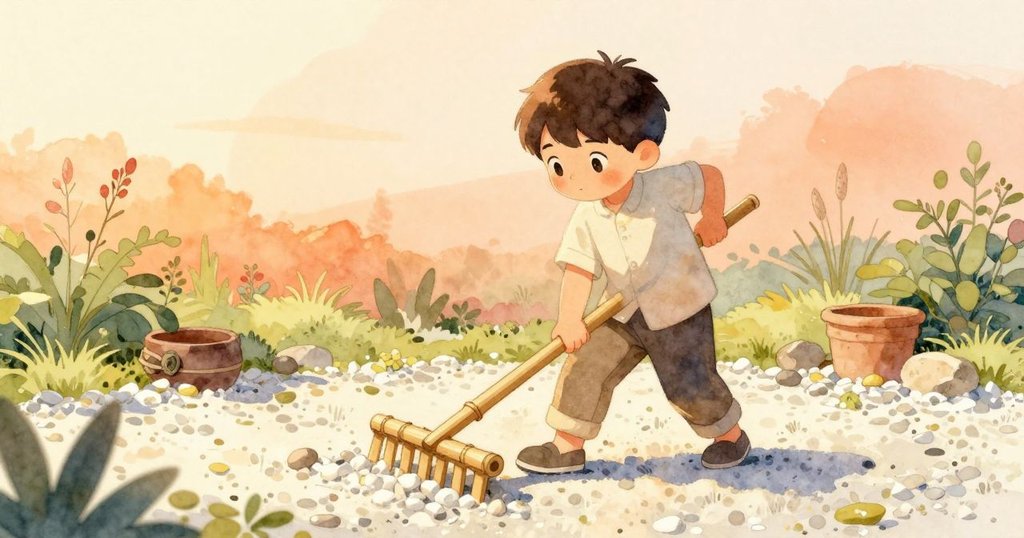
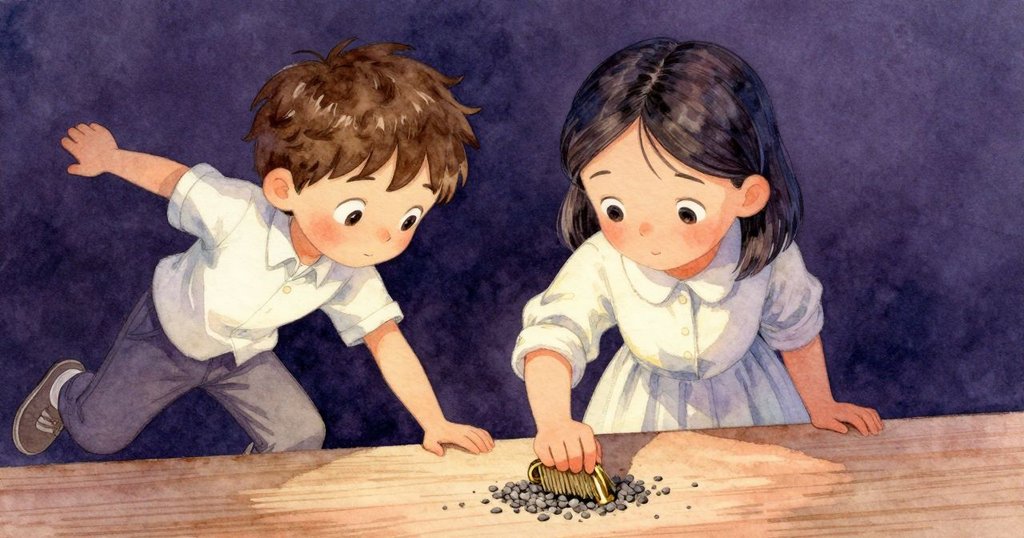
Every morning Emory drew the bamboo rake through the white gravel, letting the hiss of parallel ridges steady his breathing. Today the first stroke halted; a tine hooked a narrow brass loop hidden beneath the grains, and a quiet latch snapped somewhere below. A faint chill belonging to early autumn lingered against his ankles despite the sunlit gravel. He crouched, brushed gravel aside, and watched the loop rise while a sliver of cedar board sank on a hinge, spilling sand into a tiny pocket. Cause and effect unfolded like clockwork before his knees, a private mechanism the garden had kept quiet until the stumble. Morning light skimmed the fresh trench, turning each loosened grain silver, yet the loop already slipped back, erasing its own trail within seconds.
He slid fingers into the shallow pit and found a short strip of timber; resin still clung, the scent nearer sawdust than aged cedar. The board rested on the hinge so lightly that lifting it reopened the latch, but the gravel around the stone he had already raked collapsed into the pit. Saving the neat pattern meant closing the board again; understanding the device meant keeping it raised, and the two aims pulled against each other. He paused, one knee sinking, shoulders stooped, rake balanced across his lap like a question left unanswered. Somewhere behind, gravel hissed under soft steps, and Sian’s voice drifted over the wall, “Looks different today,” nothing more.
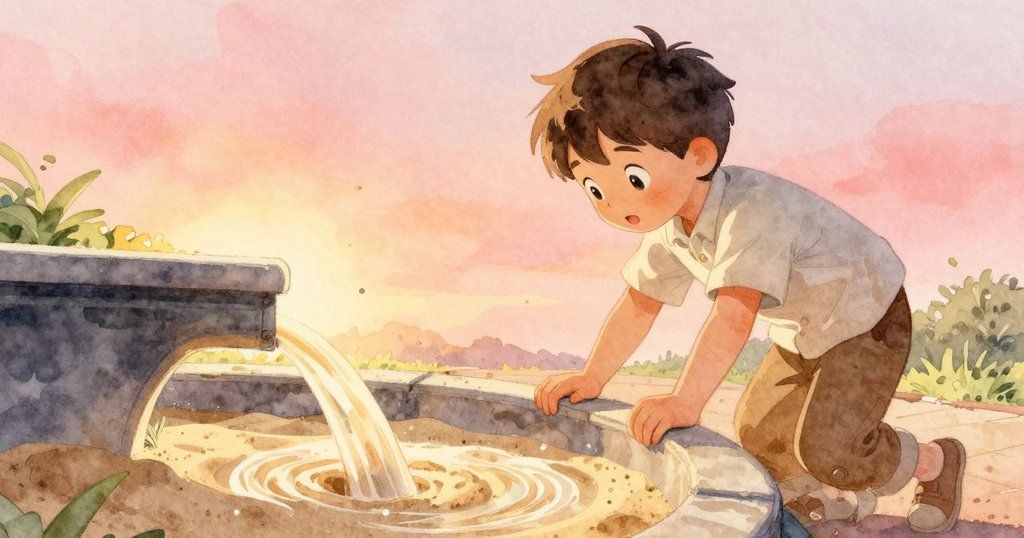
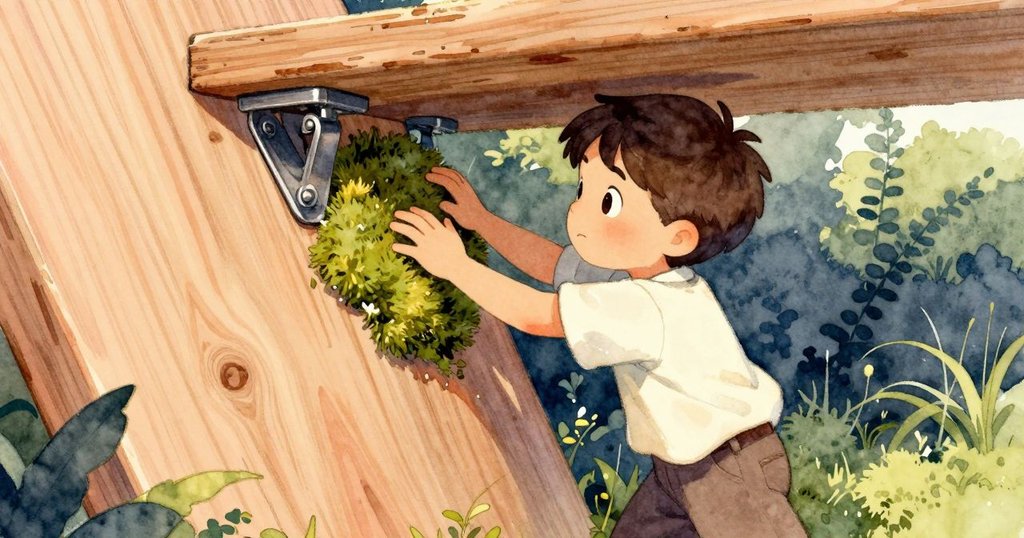
Emory tilted the timber just enough to watch the moving sand collect in a narrow vein. A slender channel carried the grains toward a shallow clay cup, and their weight pressed another lever he glimpsed through shifting light. He could not vouch for the purpose of such clockwork; his wrist inched forward, widening the gap and deepening the slump in the raked lines. To rescue the garden from disorder, the sand had to flow elsewhere; to observe, the flow had to continue, and every extra grain ruined another stripe. He grew resourceful, scooping moss from the stone border, rolling it into a soft plug, and sliding it beneath the hinge to hold the board half open. The makeshift stopper slowed the trickle to a thin ribbon; the pattern regained shape while the mechanism still moved, though more reluctant than before.
Late-morning light shifted from amber to white, washing the ridges flat, and Emory noticed the timber darkening as resin lost its gloss in the drying air. The moss plug held; grains slipped sparingly, tapping the cup below like cautious rain, a pace slow enough to study yet gentle enough that no pattern collapsed. Sian reappeared beside the wall, eyebrows raised, gravel dust on her palms, saying only, “Still at it?” He answered by straightening, lifting the rake, and drawing a fresh arc around the nearest stone; the furrow glimmered briefly, thinner than the first yet unmistakably new. Emory lowered the rake onto the darkened timber, and a lone maple leaf drifted past the gate to rest beside the still-moving sand.
繁體中文 翻譯
每個早晨,艾莫瑞都用竹耙在白色碎石上劃出平行的脊線,沙石摩擦的嘶嘶聲讓他的呼吸跟著穩定。今天第一下便停住——一根耙齒勾住埋在石粒下的細小黃銅環,隨即傳來輕微卡榫聲。初秋的微涼貼在他腳踝,雖然陽光滿園。他俯身撥開碎石,看著黃銅環升起,同時一片杉木薄板沿鉸鍊沉下,細沙傾瀉進小凹室。因與果像鐘錶般在膝前展開,花園一直隱藏的機械因這次失手才顯露。晨光掠過新開的溝槽,鬆動的石粒閃著銀光,然而黃銅環已經滑回,幾秒內抹平自己的痕跡。
他將手指探入淺坑,摸到一段木條;樹脂仍黏,味道更像鋸末而非老杉木。木板輕放在鉸鍊上,他一抬板子卡榫又開,但他方才耙好的砂紋連帶塌入坑內。想維持整齊紋路就得闔上木板;想看清裝置就得保持敞開,兩個目標彼此拉扯。他停住,一膝陷在砂裡,肩微垂,耙子橫放在腿上,像沒人回答的疑問。後方傳來碎石沙沙聲,西安的聲音越過矮牆:「今天看起來不一樣呢。」除此之外沒有別的話。
艾莫瑞輕輕傾斜木條,注視流沙匯入細窄沙脈。一道細槽把砂帶往淺陶杯,重量又壓到他在光影間瞥見的另一支桿件。他無法保證這套齒輪究竟有何用途;他的手腕卻仍向前探,縫隙擴大,耙紋愈發下陷。為了不讓花園凌亂,沙必須改道;為了觀察,沙又必須繼續流,每多一粒就毀一條線。他靈機一動,從石邊挖起苔蘚揉成軟塞,塞進鉸鍊下,讓木板半掀。臨時塞子把沙流減成細線;圖案恢復形狀,機構仍在運轉,只是顯得更遲鈍。
近午的光由琥珀轉為潔白,將脊線沖得平緩;樹脂乾涸,木條色澤變暗。苔蘚塞緊扣,沙粒稀疏下墜,敲在杯中像小心翼翼的雨,速度足夠觀察又不致破壞圖案。西安帶著手掌的砂塵回到牆邊,挑眉說:「還在忙?」他昂身舉耙,圍著最近的大石劃出新弧線;新溝短暫發亮,比最初更細,但明顯嶄新。艾莫瑞將耙子放在已變暗的木條上,一片楓葉飄過門口,靜靜落在持續流動的沙旁。
情境單字卡
- timber
木材;木料
“The carpenter selected the finest timber for the new house.”
木匠選擇了最好的木材來建造新房子。
- reluctant
不情願的;勉強的
“She was reluctant to leave her cozy home for the trip.”
她不情願離開自己舒適的家去旅行。
- resourceful
足智多謀的;有創造力的
“Being resourceful helps solve problems effectively during tough times.”
在困難時期,足智多謀能有效解決問題。
- autumn
秋天;秋季
“Autumn brings vibrant colors to the leaves and a crispness in the air.”
秋天為樹葉帶來鮮豔的色彩和清新的空氣。
- vouch for
擔保;保證
“I can vouch for her honesty; she always tells the truth.”
我可以擔保她的誠實;她總是說實話。
幫我想想
AI 生成教學線索,協助老師延伸故事使用
Story Discussion - The Raked Garden
描述文中白色碎石被耙過時的聲音與光線細節。這些感官描寫如何塑造場景的氛圍,並在情緒上為接下來發現機關的瞬間做了哪些鋪陳?
開放式參考答案
The gravel 'hissed' as the bamboo rake drew parallel ridges; morning light skimmed the fresh trench and turned loosened grains silver. These sensory details create a calm, meditative mood and a sense of care and order. Because the atmosphere is so quiet and attentive, the sudden click of the latch and the revealed mechanism feel more intimate and surprising—the calm heightens the reader’s awareness of the small disturbance.
Emory 把木板撐開主要是想要保護他剛耙好的紋路。這句判斷正確嗎?
是非題參考答案
No. He lifts the board to observe the hidden mechanism. Keeping it raised risks destroying the raked pattern, while closing it would preserve the design. His action reflects curiosity rather than a protective intent.
從耙齒鉤起黃銅環開始,請按順序說明導致砂流入陶杯的多步因果鏈,並指出在這個鏈條中哪一個環節最能代表「觀察與保護之間的抉擇」。
開放式參考答案
Sequence: a tine hooked a hidden brass loop → a quiet latch snapped → a cedar board sank on its hinge → sand spilled into a tiny pocket → sand ran along a narrow channel toward a shallow clay cup → the cup’s weight pressed another lever. The crucial decision point is when Emory must choose whether to close the board (to protect the raked pattern) or keep it open (to observe the mechanism).
文中描寫艾莫瑞『一膝陷在砂裡,肩微垂,耙子橫放在腿上,像沒人回答的疑問』。根據這些肢體動作與細節,可以推論出他的內心衝突與人格特質嗎?請具體說明。
開放式參考答案
He appears conflicted and contemplative—torn between preserving order and satisfying curiosity. The posture (knee sunk, shoulders stooped, rake balanced like an unanswered question) suggests hesitancy, patience, and careful attention. His later improvisation with moss shows resourcefulness and a preference for subtle solutions that balance competing values.
試從象徵層面解讀文中那個『黃銅環—杉木薄板—流沙』的小機關。請提出至少兩種不同的象徵性解讀並各自說明支持的文本線索。
開放式參考答案
Interpretation 1: The mechanism symbolizes hidden history or memory beneath a composed surface—the brass loop hidden under gravel and the cedar board covering shifting sand suggest things deliberately concealed that can be revealed by a small misstep. Interpretation 2: It represents the tension between aesthetic order and analytical curiosity—the carefully raked lines stand for art or care, while the mechanism invites investigation; Emory’s moss plug embodies an attempt to mediate between preserving beauty and understanding process.
作者以有限的第三人稱視角聚焦在艾莫瑞的感官與動作,而不直接解釋機關的用途或來源。這種敘事視角使讀者獲得的資訊既親密又有限。你認同這個說法嗎?請簡短說明理由。
是非題參考答案
Yes. The narrative restricts information to what Emory perceives and does, creating intimacy and aligning the reader with his attention and uncertainty, while withholding broader explanations about the mechanism and its purpose.
把這座花園中微小而持續變化的節奏與日本枯山水或禪宗庭園中的美學做比較:哪一個英文字最能抓住花園中『穩定但又暗含變化』的特質?請填入一個英文字。
填空題參考答案
impermanence
Role Play - The Moss Plug Decision
情境
場景:早晨的庭院,艾莫瑞跪在白色碎石上,竹耙暫放在腿上。杉木薄板半掀,黃銅環露出來,苔蘚塞卡在鉸鍊下,砂粒緩慢滴入淺陶杯,像輕柔的雨。西安站在矮牆邊,手上帶著碎石的粉末,注意到紋路的改變。任務:由艾莫瑞向西安說明他發現的機構、描述目前狀況(砂流、苔蘚塞的效果、紋路受損的風險),並與西安討論要把木板合上以恢復圖案,還是維持半掀以繼續觀察機械運作。教學指引:要求學生用英文描述感官細節與因果關係,練習提出理由、表達猶豫、協商與達成妥協。鼓勵學生在對話中使用完整句型、問句和提出替代方案。
角色
開場白建議
- •“My rake caught a brass loop under the gravel—I lifted a cedar board on a hinge. Did you see it?”
- •“If we close the board now, the raked pattern will stay neat. If we keep it open, we can watch how the sand moves. Which should we choose?”
- •“I made a moss plug to slow the flow; it keeps the pattern but the mechanism still moves. Do you think that's a good compromise?”
- •“The sand is falling into a clay cup like quiet rain. I want to study it a bit more—would you help me hold the board slightly open?”
- •“A maple leaf just landed near the sand. What if the wind blows more leaves in and ruins the pattern—should we close it before that happens?”
- •“You said it 'looks different today.' Are you talking about the surface pattern, or about the device hidden under the gravel?”
Creative Writing - Side Moment (Sian's View)
寫作提示
任務說明:請學生以西安(Sian)的視角,撰寫一段約150字的英文短文,描繪她在矮牆旁看到的那個側面瞬間──這個瞬間與艾莫瑞發現木板與流沙機制的時刻同時發生,但艾莫瑞並未注意到西安的觀察。作品應保留原故事的感官細節(白色碎石的嘶嘶聲、竹耙、黃銅環、杉木薄板、流沙、苔蘚塞、淺陶杯、楓葉、樹脂等),並在有限篇幅內呈現一個微小但有意義的情緒或推論。請鼓勵學生使用下列英語單字表(至少使用五個單字)。下面附上一段示範(約150字,供老師參考),示範以繁體中文呈現以便教學對照。 示範(老師用參考):早晨光線斜落在矮牆上,西安靠在牆邊,手掌還沾著碎石的細粉。她看見艾莫瑞的耙子臨時停在腿上,然後低頭撥開一片細沙。黃銅環在陽光下一閃而逝,杉木薄板順著鉸鍊微沉,細沙像小雨滴般注入淺陶杯。樹脂的氣味混著鋸末味在空氣中繚繞。她本想上前阻止或幫忙,但又好奇這機制的用途。當一片楓葉飄過門口,她猶豫了一瞬,最後只是挑眉轉身,讓這個鐘錶般的場景自行運作,像是在給艾莫瑞一個獨處的時刻。
詞彙庫
寫作輔助
- • From behind the wall, I watched as Emory...
- • The brass loop flashed when...
- • I hesitated because I wanted to...
- • The scent of resin made me remember...
- • A single maple leaf drifted by and I felt...
- • Instead of stepping forward, I decided to...
Vocabulary & Grammar Focus
重點單字
bamboo
用來製作耙柄或耙齒的竹子;文中指竹製的耙。
Emory steadied the bamboo rake across his lap as he crouched over the hidden mechanism.
rake
耙子,一種用來整理碎石或土壤的工具,在文中用以畫出平行脊線。
He lifted the rake to draw a fresh arc around the nearest stone, restoring a fragile line.
gravel
園中被耙出的白色碎石或砂礫,能形成平行脊線的細小顆粒。
Morning light skimmed the white gravel, turning each loosened grain silver in the thin trench.
brass
黃銅(金屬);文中指那個細小的黃銅環所用的材質。
A tine hooked a narrow brass loop hidden beneath the grains, and a quiet latch snapped.
loop
環形金屬圈;被耙齒勾起後啟動藏於石下的機構。
He brushed gravel aside and watched the loop rise while cedar sank on a hinge.
cedar
杉木;文中是輕薄的木板,靠鉸鍊活動並覆蓋小凹室。
A sliver of cedar board sank on a hinge, spilling sand into a tiny pocket beneath the stone.
hinge
鉸鍊,使木板能夠上下擺動的接合處,是機構運作的關鍵點。
Lifting the board reopened the latch, the hinge creaking as sand slipped toward the clay cup.
sand
細砂或砂粒;在文中通過細槽流動,驅動機械並影響圖案的完整性。
A slender channel carried the sand toward a shallow clay cup where each grain tapped like cautious rain.
moss
苔蘚,柔軟的植物材料;文中被揉成塞子以放慢沙流。
He rolled moss into a soft plug and slid it beneath the hinge to slow the trickle.
maple leaf
楓葉;文末飄落的葉子,象徵季節與片刻的靜謐。
A lone maple leaf drifted past the gate, coming to rest beside the still-moving sand.
文法重點
本段落展示了以不定詞片語放在句首來表達目的(purpose)的寫作手法,並透過並列或分號把互相牽扯、對立的目的並列呈現。例如原句 "To rescue the garden from disorder, the sand had to flow elsewhere; to observe, the flow had to continue" 使用兩個句首不定詞子句分別說明為了不同目的所需的行為,語氣凝練且帶有對比效果。教學重點:1) 句首的 To + 動詞 原型可作為目的副詞片語;2) 當兩個目的衝突時,可以用分號或連接詞把它們並列,強化對立感;3) 同一意義也可以改寫為目的從句,如使用 "in order to" 或 "so that",但改寫時須注意句子節奏與因果清晰。
練習題
He rolled ___ into a soft plug and slid it beneath the hinge to slow the sand.
參考答案
moss
配對以下單字與意思:
顯示答案
A-6B-10C-5D-2E-9F-8G-4H-7I-1J-3
To rescue the garden from disorder, the sand had to flow elsewhere; to observe, the flow had to continue, and every extra grain ruined another stripe.
參考答案
He had to divert the sand elsewhere in order to rescue the garden, but he also needed the flow to continue so that he could observe it, and every extra grain ruined another stripe.
Cultural Connection - 白色碎石與耙紋(枯山水)
主題
白色碎石與耙紋(枯山水)
討論要點
- •故事中艾莫瑞每天用竹耙在白色碎石上畫出平行脊線,聽著碎石嘶嘶作響,這個反覆且有節律的動作像是一種日常儀式。你在生活中有沒有靠重複動作來讓自己冷靜或整理心情的習慣?請描述一個具體場景(例如掃落葉、澆花、整理書桌等)。
- •故事裡碎石下藏著黃銅環與木板的機關,這個隱藏的設計既會干擾圖案,也讓人產生想要觀察的好奇。你家或社區的庭院、公共空間有沒有類似把功能藏起來、或把實用物件當作景觀一部分的做法?舉例並說明你覺得這樣安排的優點與缺點。
- •西安對花園的變化只是淡淡地說「今天看起來不一樣」,沒有進一步干預。當別人有自己的庭院或家務儀式時,你的文化中人們通常會有什麼樣的回應?是直接幫忙、好奇詢問、還是保持距離?試比較你個人的經驗與故事中這種沉靜旁觀的態度。
文化比較
在故事中,白色碎石與竹耙的操作呈現為一種個人化且有節律的每日儀式:視覺上的脊線被細心維護,同時還隱藏了黃銅環、木板與流沙這類小巧的機關,這使得維護行為既是美學工作,也是私密的探索。這套做法重視靜默、細節與個人觀察(例如艾莫瑞為了看清機構而在紋路與觀察之間權衡),旁人如西安則以簡短的評論保持距離。相較之下,繁體中文社會中的庭院維護常常更傾向於照料活體(如澆水、修剪盆栽、掃落葉)或注重實用性的維護(例如排水、整修石磚),功能性設計通常不會刻意隱藏成景觀焦點;此外,這類家務或庭院工作在日常中較常出現家人或鄰里共同參與的情形,互動也較為直接。兩者都重視細節與審美,但表現方式不同:故事裡是以靜默、個人的枯山水式儀式來呈現;在繁體中文文化裡,庭院的美感常與生命照料、集體參與與明顯的功能性維護交織。
推薦閱讀

Spiral Marks in the Gravel Reveal a Conch Shell
Rake Lines Around a Hidden Stone Mark in a Gravel Garden

New Scratches in the Gravel Garden

The Subtle Shift of the Basalt Stone
Rake Rhythm and the Peg That Jutted on the Salt Pan
Rhythms Between the Rake and the Bamboo Knock

Lines Broken Twice
Appearance of a Cicada Shell in Gravel
The Curved Sherd and the Skewed Grid
Removing a Pebble to Keep One Curve in the Gravel Garden

Footprints Across the Raked Gravel