Under the Lamp: Setting the Regulator to an Even Tick - 適合進階的英文短篇故事,含中譯與發音
燈下:把快慢針調到整齊的滴答 | 英文/中文 雙語朗讀
故事內容
English 原文
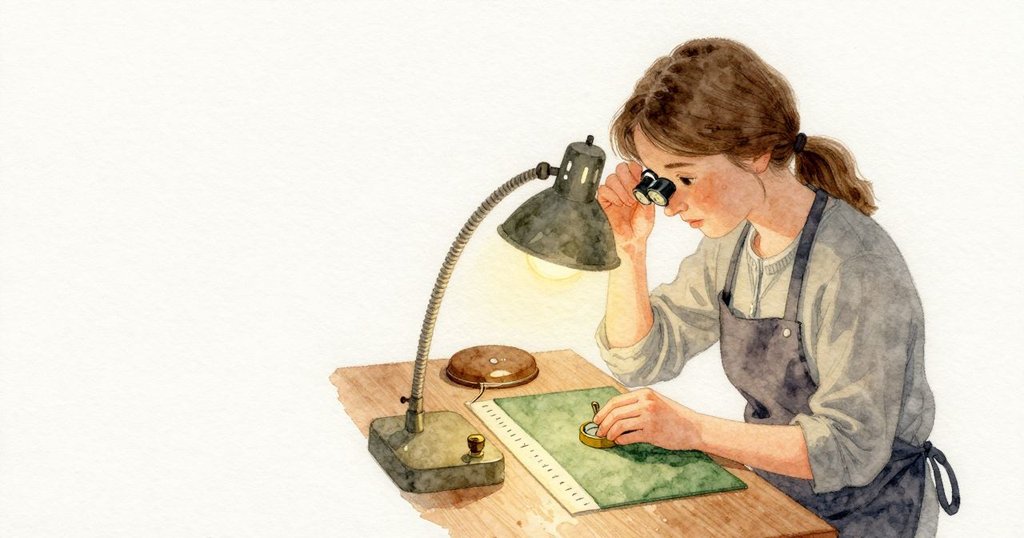
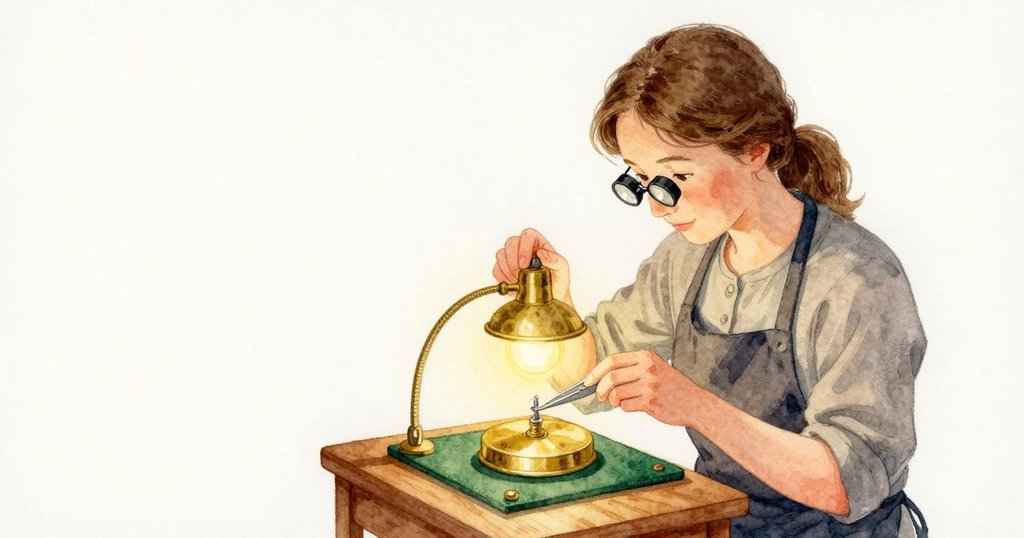
Every morning Hattie settled the loupe against her brow and brought the lamp to its directive cone over green felt.
Today, the timing machine’s thin tick broke its even run, a breath-width gap leaning late between two bright spikes on the paper.
The gap did not shout; it waited under the sound like a small stone under carpet, detectable only when her ear tilted.
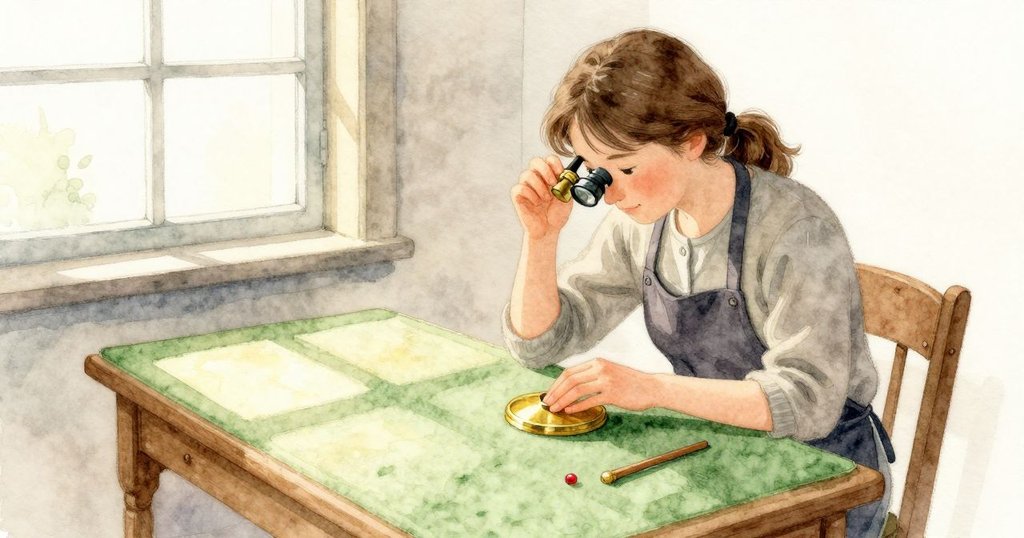
She set the brass dust cover aside and checked the balance wheel under the loupe, the red pinpoint on its jewel sitting a hair off center.
Beckett shifted a clock in the display case, and the layered shop pulse reached the desk in a faint overlapping hush.
Under magnification, the escape wheel’s teeth gleamed, yet one tooth caught a slant of shadow that returned each time the balance swung.
At the edge of her peripheral view, the world blurred into soft greens and brass, the felt refusing to reflect more than a matte hush.
Watch oil left tiny specks afloat in the cone of light, a slow glitter like plankton drifting in a clear, patient tide.
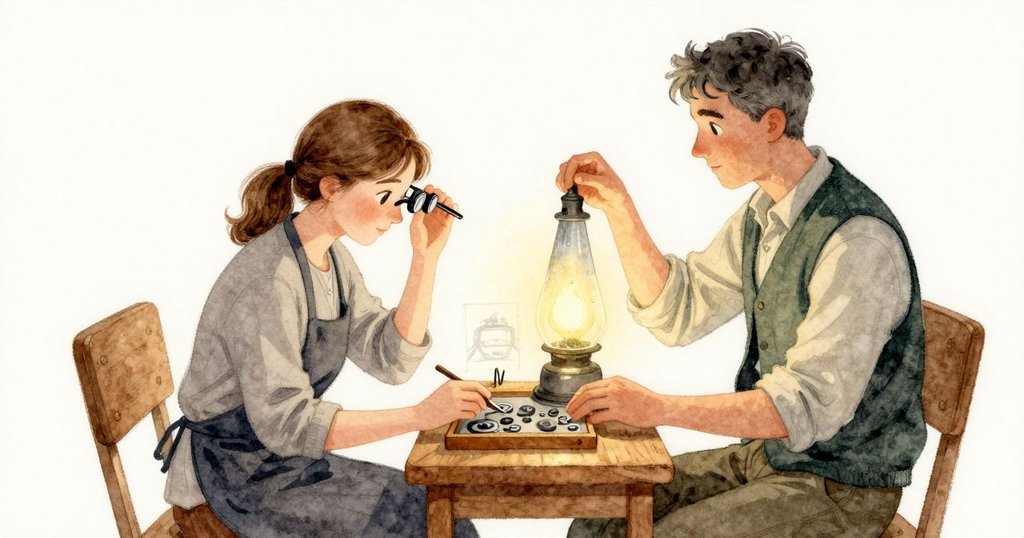
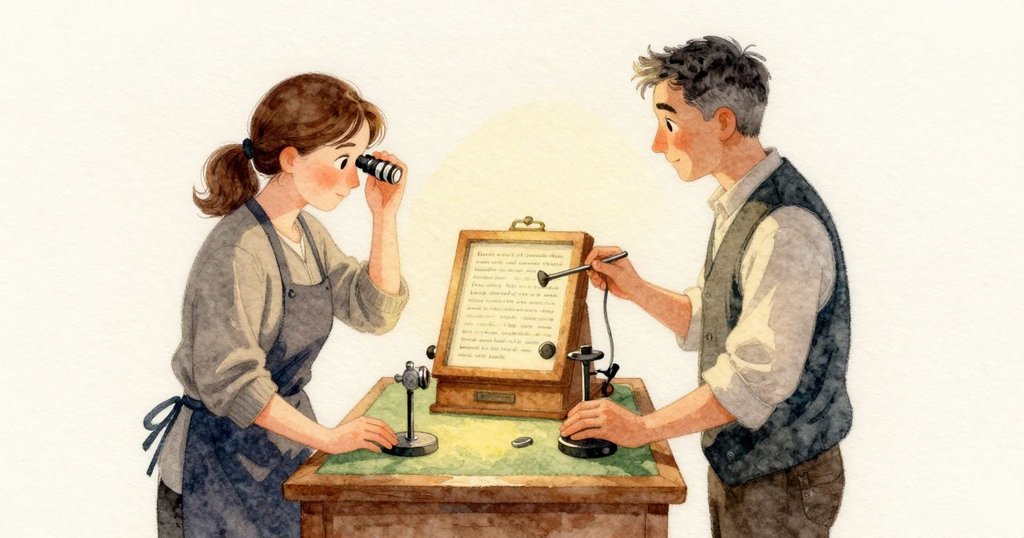
A small wooden easel held a pencil sketch of the train in profile, no words, only angles and circles to keep her eye honest.
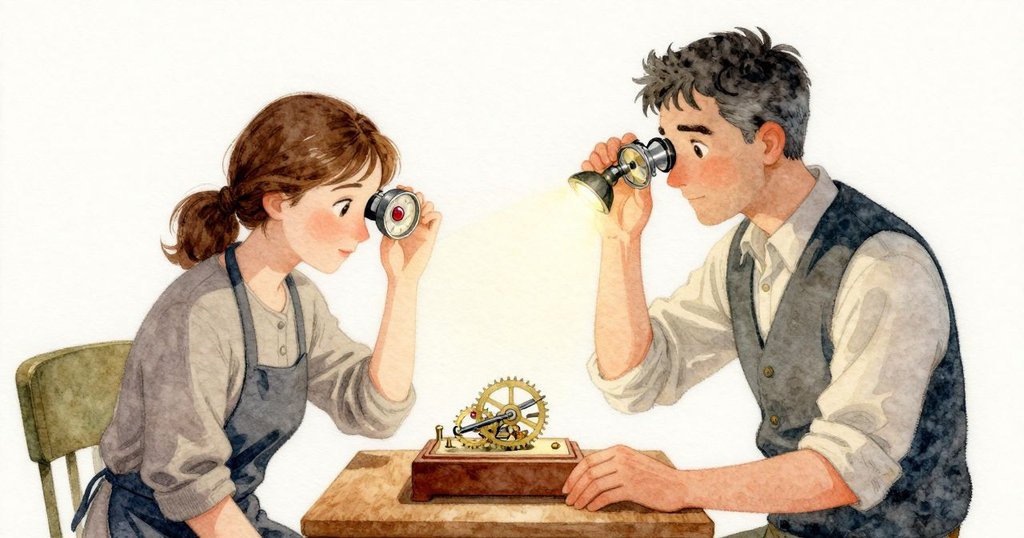
Beckett placed the parts tray within reach and rolled his sleeve back from the felt; a soft nod stood in for speech.
“Here,” he said, and the word lived no larger than a breath between the ticking glass and Hattie’s held inhale.
The smallest placements followed her old rhythm: inhale, hold, tweezers down, part seated, exhale.
She shaped her grip on the screwdriver the size of a toothpick, seated its tip into a slot no wider than a hair.
Mid-turn, metal whispered; a faint skate along the slot’s edges reached her thumb, and her wrist paused over the directive circle of light.
The habit in her hand came from somewhere else, from the easel and a washed-out watercolor she once saved with a brush’s lifting touch.
Instead of pressing the regulator index forward, she gave it a careful withdrawal, a breath’s worth backward draw that barely moved the arc.
The timing machine went silent for one blank second, a surprise that held her still, then restarted with ticks that landed like matched pins.
“It’s open,” Beckett said near the display case, as a pigeon’s shadow crossed the window and thinned the lamp’s glare across her hands.
She leaned back, then leaned in again, listening with her head slightly tilted, the new evenness traveling bone before it reached the air.
A cloud drifted off the sun and daylight slipped farther onto the bench, turning the felt a brighter green and setting the ruby point aflame.
Hattie repeated the earlier rhythm—inhale, hold, tweezers down, part seated, exhale—only this time the desk wore a wider light and the clocks seemed farther away.
She closed the brass dust cover with the same small press her thumb knew already, and a thin line of reflected gold slid along its hinge.
The shop held its many ticks, yet the circle under the loupe stayed steady, bright, and very small.
繁體中文 翻譯
每天早上,Hattie 把單眼放大鏡靠在眉上,將檯燈的光圈調成一束聚焦的圓錐,罩住那塊綠色呢毯。
今天,測時機那細薄的滴答聲被打斷,兩個明亮尖點之間拖出一線呼吸寬度的空隙,晚了半拍。
那道空隙沒有喊叫;它藏在聲音底下,像地毯底的一顆小石頭,只有她把耳朵微微傾過去才察覺。
她把黃銅防塵蓋放到一旁,在放大鏡下檢查擺輪;寶石上的紅色光點偏出中心一絲。
Beckett 在展示櫃裡挪了一只鐘,疊在一起的店裡脈動輕輕拍到桌面,化成一層重疊的靜音。
放大後,擒縱輪的齒閃著光,卻有一齒每逢擺輪擺回就接住同一斜影。
在她周邊視野的邊緣,世界化成柔和的綠與銅;呢毯只吞住光,不回射超過一層霧啞。
鐘油在光柱中漂起細小顆粒,緩慢發亮,像浮游生物在清澈而耐心的潮裡飄移。
一個小畫架托著用鉛筆畫的輪系側影,沒有文字,只有角度與圓,讓她的眼睛守住準繩。
Beckett 把零件盤放到手可及處,把袖子從呢毯邊捲開;一個輕輕的點頭代替了話語。
「在這裡。」他說,那個字只比一口氣大一點,停在玻璃的滴答和 Hattie 屏住的吸氣之間。
最小的安置都有舊節奏:吸氣、停住、鑷子落下、零件就位、吐氣。
她握好了那把像牙籤般細的螺絲起子,把尖端坐進比髮絲還窄的槽裡。
轉到一半,金屬細聲掠過;槽邊的輕微滑動抵達她的拇指,她的手腕停在那一圈聚焦的光上方。
她手上的習慣來自別處,來自畫架與那張被洗淡的水彩,她曾用刷子的提起手法把顏色救回。
她沒有把快慢針往前壓,而是給了一次小小的回撤,像一口氣的長度,往後輕提到幾乎看不見的幅度。
測時機靜了整整一秒,那份意外讓她保持不動,接著重新開始,以像配對的細針那樣整齊落點。
「門是開著的。」Beckett 在展示櫃旁說,窗外一隻鴿子的影子掠過,讓燈光在她手上的眩光變薄。
她先往後靠,又再度探近,頭微微偏著聽,新穩定像先走過骨頭,才抵達空氣。
一片雲離開了太陽,日光更深地滑上工作檯,把呢毯染成更亮的綠,讓那一點紅寶石燒起來。
Hattie 重複剛才的節奏——吸氣、停住、鑷子落下、零件就位、吐氣——只是這一次,桌面披上一圈更寬的光,鐘聲聽起來更遠。
她用拇指早已熟悉的小力量闔上黃銅防塵蓋,一道纖細的金色反光沿著鉸鏈滑過。
店裡仍舊保有它們各自的滴答,而放大鏡下的那個圓圈維持穩定、明亮,而且很小。
情境單字卡
- peripheral
周邊的;視野邊緣的;非中心但在邊界可見的。
“At the peripheral edge of her vision, greens and brass softened, leaving the loupe’s circle undisturbed.”
在她視野的周邊邊緣,綠與黃銅都柔化了,讓放大鏡下的圓心不受干擾。
- plankton
浮游生物;漂浮在水中的極小生物群。
“In the beam, oil specks drifted like plankton, slow sparks riding the patient tide of light.”
在光束裡,油點如浮游生物般飄移,像慢速星火乘著耐心的光潮。
- directive
具有引導或指向作用的;使注意力集中在焦點上的。
“Her wrist hovered inside the directive cone, where even dust seemed to obey the lamp’s focus.”
她的手腕懸在那道具引的光錐裡,連塵埃彷彿都服從了燈的焦點。
- withdrawal
拉回;抽回;在精細操作中指極小幅度的後退或回調。
“Instead of urging it forward, she chose a whisper-small withdrawal that reset the ticks to even.”
她沒有推前它,而是選擇耳語般小的回抽,讓滴答回到齊整。
- easel
畫架;用來支撐畫紙或畫布的小型支架。
“On the small easel, the train’s pencil profile waited, reminding her which lines to trust.”
在那座小畫架上,火車的鉛筆側影靜候著,提醒她該信任哪些線條。
幫我想想
AI 生成教學線索,協助老師延伸故事使用
Story Discussion - Hattie's Bench
從本文的聲音描寫(例如「細薄的滴答聲」、「一線呼吸寬度的空隙」、「測時機靜了整整一秒」等),指出兩處具體的聽覺細節並說明作者如何用這些細節建立緊張感與專注氛圍。
開放式參考答案
作者透過(1)「一線呼吸寬度的空隙」把原本均勻的滴答撕出一個微小但突出的破綻,讀者因此被迫放大注意力以捕捉那一瞬的不對勁;(2)「測時機靜了整整一秒」把時間暫停化為可感知的事件,這一秒的沉默既是緊張的頂點,也反映出 Hattie 的高度專注與等待,使整個場景彷彿靠著聽覺而非視覺維持張力。
Hattie 往後小提快慢針(regulator)是否直接導致測時機恢復均勻滴答?請以簡短的 Yes/No 回答並說明理由。
是非題參考答案
Yes。她對快慢針作了微幅的後撤,那個小動作改變了擺輪與擒縱輪之間的互動,測時機短暫靜止後重新啟動並以更匹配的節奏滴答,顯示這個調整是促成穩定的關鍵動作。
列出從 Hattie 最初察覺節奏異常到放大鏡下圓圈穩定之間的多步因果鏈(至少五步),並簡述每一步如何促成下一步。
開放式參考答案
(1)她聽到滴答中出現一條『空隙』——這個聲響異常使她主動搜尋問題來源;(2)她放下黃銅防塵蓋並在放大鏡下檢查擺輪——視覺檢查把聽覺的疑問變成可看的物理線索;(3)注意到寶石紅點偏離中心與擒縱輪有齒每次接住同一斜影——這些具體瑕疵提示機械配合出現不穩;(4)她在手感與記憶之間停頓,回想畫家的精細動作並調整手指節奏——內在經驗指導她做出非慣常的微調;(5)她輕微後撤快慢針——這個精微調整改變了擺動弧度與齒的接觸節點;(6)測時機短暫靜止一秒後重新啟動並回到均勻滴答——調整消除了不協調,使系統回復穩定;(7)她聽確認後合上防塵蓋並觀察光線變化,完成修復循環。
作者寫到「她手上的習慣來自別處,來自畫架與那張被洗淡的水彩」。你如何解讀這句內在線索?它暗示了 Hattie 的哪些個性特質或生活經驗?
開放式參考答案
這句話暗示 Hattie 具有跨領域的細緻手感與審美經驗:她可能曾為畫家或長期與繪畫打交道,習得溫柔而有控制力的手部動作;同時也透露她有修復與救回事物的傾向(如「把水彩救回」),顯示耐心、敏感與對微小差異的尊重,這些特質反映在她的鐘錶修理技藝上。
本文反覆出現「吸氣、停住、鑷子落下、零件就位、吐氣」的節奏意象。討論作者如何透過這種有節律的描寫來探索「時間」與「專注」兩個主題。
開放式參考答案
作者把人體的呼吸節奏與機械的滴答節拍互為對照:呼吸的循環既是生理時間的標記,也是專注動作的操作節律;透過細碎、有序的步驟描寫,時間被分割成可控的、可感知的小單位,專注則成為把眾多微小瞬間編織成穩定整體的力量。這樣的描寫突顯出掌控時間既是內在的注意力練習,也是外在的技藝操作。
文中那個「小畫架上的鉛筆火車側影」在象徵層面可能代表什麼?請用一句話填空:"它象徵____。"
填空題參考答案
它象徵著精準與藝術記憶,提醒她以畫家的細膩與守護精神來面對鐘錶的微小問題。
從文體與句法層面(例如短句與長句的交替、具象動作與內在感受的並置、比喻如「地毯底的一顆小石頭」)分析作者如何藉此強化臨場感與工藝的細膩性。
開放式參考答案
作者藉由短句來捕捉瞬間動作與感覺(如『它藏在聲音底下』),用較長的複句進行細緻描寫與因果鋪陳,兩者交替產生節奏感,模仿鐘錶與呼吸的韻律。具象動作(手、鑷子、螺絲起子)與內在感受(聽覺的傾斜、記憶的湧現)並列,使讀者既能看到手上細節也能感受修理過程中的心理微動;比喻則把抽象的聽覺異常具象化(小石頭在地毯下),讓臨場感更具觸感與隱蔽性,整體上強化了工藝工作的精細與專注氛圍。
Story Discussion - Hattie's Bench
故事中有多處觸覺性描寫(例如「金屬細聲掠過;槽邊的輕微滑動抵達她的拇指」、「她握好了那把像牙籤般細的螺絲起子」)。請說明這些觸覺資訊如何在敘事中替代或補強視覺與聽覺,並具體說明它們如何影響 Hattie 當下的決策與動作。
開放式參考答案
觸覺描寫把感知從外在的圖像與聲響轉移到身體本身,使讀者能夠透過 Hattie 的手與指尖直接感受機械的微小差異。當金屬「細聲掠過」並傳到她的拇指時,那是一種近乎瞬間的反饋,使她的手腕立即停頓、把注意力集中在光圈內;這種手部感知比視覺更快,也比聽覺更具局部性,因此成為她選擇「微幅回撤快慢針」而非更大動作的關鍵依據。觸覺同時補強聽覺(把一條聲音裡的異常變成可摸到的抵達),也補強視覺(當觸覺提示存在偏差時,她才把放大鏡與紅點重新對準),整體上讓決策變得更精細且更以微調為主。
Beckett 那句「Here」以及以點頭代替對話的非語言行為,是否更主要在於維持整個工作場景的時間節奏而非提供具體技術指示?請以 Yes 或 No 開頭並簡短說明理由。
是非題參考答案
Yes。Beckett 的動作與簡短語詞不進入細節或指導技法,而是在節奏上與 Hattie 配合:他的點頭與把零件盤遞到手邊、低聲說「在這裡」都像是為她的節拍提供外在參照,讓兩人在同一個時間脈絡下協作,而不是以言語控制或替她決定修法。
敘事裡的光線變化(雲影移動、日光滑上工作檯、寶石紅點『燒起來』)在因果進程中扮演了什麼角色?請列出至少三個步驟,說明光如何幫助 Hattie 驗證或完成修復。
開放式參考答案
(1)雲片移開讓日光變強——光線變化把原本柔霧的視野提亮,使細節更清晰;(2)更強的光把紅色寶石點『燒起來』——寶石變得更顯眼,有助於她確認擺輪中心與寶石位置的相對關係;(3)桌面被更寬的光圈覆蓋——更大的光域讓她重複先前的動作時能以更穩定、更清晰的視覺環境驗證每一步是否到位;(4)當視覺確認與先前透過聽覺與觸覺獲得的微調一致時,她合上防塵蓋並完成修復。光線因此從環境背景變成一個可用來驗證機械狀態與她修作成功與否的工具。
作者使用身體化的隱喻(例如「新穩定像先走過骨頭,才抵達空氣」、「藏在聲音底下像地毯底的一顆小石頭」)把感知描述往內在身體經驗傾斜。分析這類隱喻如何改變讀者對「時間」與「專注」的理解。
開放式參考答案
這些身體化隱喻把抽象的時間與注意力具體化為可感的體感經驗:時間不再只是鐘聲的等距流動,而成為通過骨頭、肌肉、呼吸等體感先至後及的節律;專注也從心理狀態降落為手指、拇指與呼吸的協調。讀者因此會把時間理解為一層可被感觸與操控的「厚度」,專注則被視為通過身體機制對這個厚度施加微調的能力,強調技藝中身心一體的精準感。
文中寫到「疊在一起的店裡脈動輕輕拍到桌面,化成一層重疊的靜音」。請用一句話補完(中文填空):"店裡的脈動暗示著____。"
填空題參考答案
店裡的脈動暗示著日常工作中多重節奏的共存──個別鐘聲、人的動作與店內氛圍互相重疊,形成一種不刺耳、但對技藝者而言可用來協調專注與時間感的背景節律。
把這段場景與你熟悉的任何一則描述手工修復或細緻工藝的故事或片段相比,指出三個相似要素(例如對緩慢動作的細寫、工具與身體的關係、環境如何成為協作者等)和一個明顯不同處。
開放式參考答案
相似要素: 1) 對緩慢、分段動作的精細描寫,把每一步拆成可感知的小節; 2) 工具與身體緊密連結,工具成為身體延伸,感知透過手指與拇指傳回; 3) 環境要素(光、聲、桌面材質)被寫成協作者,幫助或檢驗工藝進展。 不同處:這個場景特別強調聽覺與身體嗅覺(骨傳感)在時間確認上的主導地位,而不是把視覺或故事性回憶放在修復敘事的中心,於是專注的呈現更偏向微感知的內在體驗而非外在敘事進展。
Role Play - The One-Second Silence
情境
場景:在小鐘錶舖的工作檯上,Hattie 把單眼放大鏡靠在眉上,檯燈的圓錐光聚在綠色呢毯上,黃銅防塵蓋已放在一旁。此刻測時機的滴答聲出現了一個幾乎像呼吸般的空隙:一秒的靜默把整個節奏暫時凍住。Hattie 在放大鏡下察看擺輪與擒縱輪,注意到寶石上的紅點稍微偏離中心,她用像牙籤般細的螺絲起子調整,並小心地往回拉了快慢針一小段幅度。測時機的聲音停了那一秒,然後重新開始;Beckett 在展示櫃邊把鐘挪動,窗外一隻鴿子的影子劃過,光線在她手上薄了一下。學生分成 Hattie 與 Beckett 兩角:Hattie 要用細微的動作、呼吸與短句表達專注與試驗的過程;Beckett 要用觀察與支援性的提示回應,並注意用非口語信號(點頭、把零件盤遞近等)來互相協助。這個角色扮演重點是練習精細描述、靜默中的溝通,以及對聲音與光線細微變化的口語化呈現。
角色
開場白建議
- •“Do you hear that tiny pause between the ticks?”
- •“The red pinpoint on the jewel is off center — I can feel it under the loupe.”
- •“Hold your breath with me and count the ticks after I adjust the regulator.”
- •“Hand me the parts tray and tilt the lamp a little; I need a cleaner cone of light.”
- •“A pigeon just crossed the window — did the light change how the ruby looks?”
- •“It's open — the timing machine ran steady again after that small withdrawal.”
Role Play - Morning Ritual at the Workbench
情境
場景:在鐘錶舖的工作檯上,Hattie 正在把單眼放大鏡靠在眉上,檯燈的光束已經收成一個窄窄的圓錐,罩在那塊啞光的綠色呢毯上。此刻還沒有開始測時或調整,她先用眼睛與呼吸把空間整理好:觀察光柱裡飄浮的鐘油細粒,瞧見那個小畫架上的鉛筆輪系側影,讓習慣性的畫家記憶把手的節奏喚回。Beckett 在一旁把袖子捲起、把零件盤放到視線邊,並以輕點頭或遞近手勢做非口語支援;商店裡摻疊的鐘聲像一層遠遠的脈動,成為背景而非焦點。學生分作 Hattie 與 Beckett 兩角:Hattie 練習以精確而詩意的英文描寫光、油珠、呢毯的質地與視覺比喻,並口述她準備動手前的呼吸節奏;Beckett 練習用短句與非語言提示協助,並回應對細微視覺線索的觀察。此版本角色扮演重點在於建立工作前的儀式感、把靜默中的感覺變為可說的描述,以及用身體語言協作而非直接指示。
角色
開場白建議
- •“I like how the lamp makes the felt look matte — it helps my eyes settle.”
- •“Do you see the tiny oil specks drifting in the beam? They glint like plankton.”
- •“Your pencil sketch of the train gives me the gear angles at a glance — what were you focusing on?”
- •“I'll set the loupe and orient the balance wheel; my hands follow that first breath.”
- •“Roll your sleeve up a little more — I prefer the felt edge to be clear when you reach.”
- •“Watch the escape wheel's teeth when the balance swings; they catch the light like a tiny skyline.”
創意寫作 - Beckett 的回想(內省視角)
寫作提示
以 Beckett 的第一人稱回憶視角寫一則約 150 字的短文,場景限定在鐘錶店的工作檯附近,時間緊接原故事發生的那一個早晨。必須保留故事的主要物件(loupe、lamp、green felt、timing machine、brass dust cover、easel、pencil sketch 等),並把注意力放在 Beckett 觀察 Hattie 時未被敘述到的內在記憶或情感瞬間:例如他想到的一幅舊畫、一段他與 Hattie 共同工作的習慣、一個關於店裡聲音的細小聯想,或是一個讓他停頓的舊傷痕。文體應維持原故事的感覺——細膩的感官描寫、節制的句式、以及動作與聽覺節奏的交錯。請在文中自然運用下方 word bank 的至少三個單字(英文)。
詞彙庫
寫作輔助
- • From behind the display case, I noticed how the light bent over Hattie's hands...
- • I remember the first time I saw that pencil sketch; it made me think of...
- • The timing machine's tick always brings back a memory of...
- • There was a small sound—like a pigeon wing or a loose tooth—that made me...
- • Sometimes I roll my sleeve back and imagine the bench as if it were...
- • The brass dust cover closed with a familiar click, and I felt...
創意寫作 - 如果她向前推了快慢針(反事實分支)
寫作提示
以反事實的方式延續原故事:想像在 Hattie 的那一個細微動作中,她沒有往後輕提快慢針,而是輕輕將快慢針往前一推。從這個小小的變動出發,寫一則約 150 字的英文短文。短文必須合理接續原有場景與人物設定,保留並聚焦於原故事中的具名物件(例如 Hattie、Beckett、loupe、lamp、green felt、timing machine、brass dust cover、easel、pencil sketch、escape wheel、tweezers、pigeon 等)。你可以描寫接踵而來的下一個瞬間、時間流動向前的後果,或是在同一刻被改變後的另一種可能性,但不得改變人物或場景的基本要素。寫作時請維持原故事的細膩感官描寫與節制節奏,並在文中自然運用 word bank 中至少三個英文單字。內容需保持溫暖、安全且適合兒童閱讀。
詞彙庫
寫作輔助
- • When Hattie pushed the regulator forward, the timing machine's tick shifted and I noticed...
- • The lamp cast a narrower cone as the balance wheel changed; I could see with the loupe that...
- • Beckett, by the display case, barely moved but his nod felt different because...
- • A pigeon passed the window and for a second the brass dust cover reflected a new shape; that made me think...
- • The escape wheel's tooth caught a slant of shadow and this time the shadow...
- • I reached for the tweezers, holding my breath, and the green felt under my wrist seemed to...
Vocabulary & Grammar Focus
重點單字
loupe
單眼放大鏡:夾在眉上用來放大細小物件的精細工具,故事中是 Hattie 工作時靠在眉上的放大鏡。
Every morning Hattie lifted the loupe to her brow and narrowed the cone of lamp light.
directive
指向的、導向的(此處指光束的性質):用來引導或集中光線,使燈光成一束指向特定區域。
She centered the lamp's directive cone over the green felt before starting.
timing machine
測時機:檢測和記錄鐘錶走時精準度的儀器,能聽出滴答間微小偏差。
The timing machine stuttered, its thin tick breaking the clockshop's steady rhythm.
gap
空隙、停頓:兩個聲響或事件之間的短暫間隔,故事中特指滴答聲之間那道晚了半拍的空隙。
A small gap leaned late between two bright spikes on the paper.
jewel
寶石:鐘錶機構裡常用的軸承寶石(如紅寶石),文中指擺輪上那一點紅色光點。
Under the loupe the red pinpoint on the jewel sat a hair off center.
escape wheel
擒縱輪:鐘錶內控制能量釋放與節奏的齒輪,與擺輪互動以維持走時。
Under magnification, the escape wheel's teeth gleamed but one caught a shadow.
tooth
齒:齒輪上的單一齒,故事中有一個齒每次擺輪擺回時都接住同一斜影。
One tooth of the escape wheel caught the same slant of shadow each swing.
felt
呢毯:工作檯上的綠色布面,吸光且呈霧啞質感,成為放大鏡光圈下的背景。
The felt refused to reflect more than a matte hush under the loupe's light.
easel
畫架:小木畫架放著鉛筆的輪系側影草圖,作為視覺參照與習慣來源。
A small wooden easel held a pencil sketch of the train in profile on her bench.
regulator
快慢針或調節器:用來微調鐘表走時速度的指針或機構,故事中 Hattie 輕微地回撤它以改變節拍。
Instead of pressing the regulator index forward, she gave it a careful withdrawal.
文法重點
本段落常用 -ing 分詞(現在分詞)或縮減分句來濃縮描寫、表現同時發生或持續的動作,例如故事裡的 “leaning late” 或 “drifting in a clear, patient tide”。這類分詞片語能把一整個從屬敘述壓縮成短小的修飾結構,讓文本節奏更緊湊。用法重點包括:1) 形式:動詞 + -ing,用來修飾名詞或整句(as participial phrase);2) 功能:表示伴隨、原因、時間或結果,常放在句首、句中或句尾以調整資訊重心;3) 注意事項:分詞片語應清楚地修飾正確的名詞或主語,避免造成懸垂分詞(dangling participle)。教學時可比較原句的分詞濃縮效果與改寫為完整子句(例如 which/that + 動詞)的差異,觀察節奏與資訊包裝的不同。
練習題
Every morning Hattie lifted the ___ to her brow and narrowed the cone of lamp light.
參考答案
loupe
配對以下單字與意思:
顯示答案
A-6B-7C-5D-10E-2F-9G-8H-4I-3J-1
Watch oil left tiny specks afloat in the cone of light, a slow glitter like plankton drifting in a clear, patient tide.
參考答案
Watch oil left tiny specks afloat in the cone of light, a slow glitter like plankton which drifted in a clear, patient tide.
Vocabulary & Grammar Focus
重點單字
lamp
檯燈:提供聚焦光圈的光源,此處指她把燈調成一束圓錐光,照在綠色呢毯上作為工作區。
She tilted the lamp so its cone of light fell exactly on the green felt.
balance wheel
擺輪:鐘錶中控制節奏的關鍵組件,故事中她在放大鏡下檢查它是否有偏心或晃動。
Under the loupe she inspected the balance wheel for any wobble.
Beckett
人物名:店裡的同事或夥伴,故事中他在展示櫃處挪動鐘錶並以點頭代替言語。
Beckett shifted a clock in the display case without looking up.
magnification
放大狀態:借助放大鏡或設備看到細小細節的效果,故事把細齒與紅點在放大下呈現。
Under magnification, the tiny teeth of the escape wheel caught a returning shadow.
watch oil
鐘油:用於潤滑機芯的油污,故事中在光錐裡浮起細小顆粒,被比作漂浮的浮游生物。
Watch oil lifted fine specks into the cone of light, trembling like plankton.
tweezers
鑷子:用以精確拿取或放置微小零件的工具,故事中是她節奏動作序列的一環。
For each tiny placement she kept her old rhythm: inhale, hold, tweezers down, part seated, exhale.
screwdriver
螺絲起子(小):像牙籤那麼細小的工具,故事中她以熟練的握法操作極細的槽位。
She shaped her grip on the screwdriver, its shaft no bigger than a toothpick.
withdrawal
回撤、輕提:一種微小向後的動作或調整,故事中她選擇向後輕提快慢針而不是向前壓。
She opted for a careful withdrawal, a breath's length back that barely moved the arc.
ticks
滴答聲(複數):鐘錶或測時機發出的節奏聲,故事以它們的落點比喻精確的配對針落點。
When it restarted, the ticks landed like matched pins across the paper.
slot
槽:細小而精準的開口,用來容納工具尖端或零件,故事中螺絲起子尖端坐入髮絲般窄的槽裡。
She seated the screwdriver's tip into a slot scarcely wider than a hair.
文法重點
本段落明顯使用無連詞(asyndetic)或省略主語動詞的動作列舉來呈現慣性與節奏,例如句子中的 “inhale, hold, tweezers down, part seated, exhale”。這類結構以短語或詞列取代完整子句,功能上能:1) 快速呈現重複或慣常動作;2) 強化節奏感與現場感;3) 透過省略減少資訊負荷,使讀者專注於動作序列的流動。教學重點包括辨認這種列舉(通常用逗號或冒號分隔)、理解省略處的隱含主語/動詞,以及練習把這類列舉還原為完整句子(加入主詞與動詞)以比較節奏與明確性的差異。
練習題
The smallest placements followed her old rhythm: inhale, hold, ___ down, part seated, exhale.
參考答案
tweezers
配對以下單字與意思:
顯示答案
A-7B-1C-4D-9E-6F-2G-8H-10I-3J-5
The smallest placements followed her old rhythm: inhale, hold, tweezers down, part seated, exhale.
參考答案
The smallest placements followed her old rhythm: she inhaled, held, lowered the tweezers, seated the part, and exhaled.
文化連結 - 小畫架與鉛筆草圖
主題
小畫架上的鉛筆草圖
討論要點
- •在故事裡,那個「小畫架托著用鉛筆畫的輪系側影,沒有文字,只有角度與圓,讓她的眼睛守住準繩。」你覺得這個畫架如何在實際操作中幫助 Hattie 保持專注?請描述它在工作檯上的位置、尺寸感,以及它如何影響她的視線與動作節奏。
- •回想你自己的學習或手作空間,你是否擺放過能提醒你專心或維持美感與標準的物件?請選一件(可以是照片、畫作、書法、或小物),說明它的外觀、它帶給你的感受,還有它如何改變你做事的方式。
- •如果要把故事中的小畫架換成一件更貼近繁體中文文化的物品,你會選哪一件(例如小幅書法、家人照片或一杯茶)?說明它可以如何像畫架一樣成為「視覺準繩」,以及它在情感或社會意義上可能與故事裡的畫架有何不同。
文化比較
故事中的小畫架是一個非常簡潔、功能化的視覺提醒:只有鉛筆輪系的側影、沒有文字,目的在於幫 Hattie 校正眼力與保持工作節奏,把美學和技藝合而為一。在那個英文語境的作坊裡,這類物件顯得私密且實用,像是一種個人化的訓練工具。相較之下,在繁體中文的生活或工作環境中,工作桌上的提示物件常同時承載情感或傳統意義,例如小幅書法可能提醒匠人的修養與字裡行間的美感,家人照片則帶來情感支持,或一個茶杯成為暫停與沉澱的提示。也就是說,兩邊都會用視覺物件來幫助專注,但故事裡偏向審美與功能合一的單純提示,而繁體中文文化中的物件往往還夾帶人際、情感或傳統價值。教師可以利用這個對比,引導學生觀察物件如何在不同文化裡同時扮演技藝輔助與社會情感的角色。
文化連結 - 綠色呢毯與工作桌的沉靜
主題
綠色呢毯(工作台上的呢氈)
討論要點
- •故事中提到「檯燈的光圈罩住那塊綠色呢毯」「放大鏡下的那個圓圈維持穩定」,請描述這塊呢毯在視覺與觸覺上給 Hattie 帶來什麼感受。它如何改變光線、減少反光,或幫助她看清細小零件?
- •故事裡有「鐘油在光柱中漂起細小顆粒」「Beckett 把零件盤放到手可及處,把袖子從呢毯邊捲開」,想一想你自己的學習或工作空間:你會用什麼材質墊在桌面上(例如布、木板、紙張或其他),這些選擇如何影響你放置小物、清理油汙或維持專注節奏?
- •如果把故事裡的綠色呢毯換成另一種更常見於你生活圈的材料(例如木質工作板、亞麻布、或帶圖案的桌布),會如何改變那個「吸氣、停住、鑷子落下」的節奏與工作氛圍?請具體想像並說明聲音、光線與手感上的不同。
文化比較
在故事描寫的英文語境裡,那塊綠色呢毯既是功能性工具也是美學背景:它吸光不反射,讓紅色寶石與金屬零件在燈光下顯得清晰,能承接微小零件與鐘油,同時帶來一種靜謐、專注的工作氛圍。對於像 Hattie 這樣的鐘錶匠,顏色與材質是專業選擇的一部分,幫助視覺對比與手感控制。相較之下,繁體中文社會中的工作桌覆蓋物種類更多樣,會根據手藝、地域與家庭習慣採用木板、棉布、亞麻、或傳統工藝使用的專用墊;這些材料除了實用功能外,常被日常儀式(例如把茶杯放在桌邊、用布擦拭工具)與親屬關係所環繞,使工作空間同時承載人情與實作需求。兩邊都重視工作表面的選擇來保護物件與協助視覺,但英文語境裡的綠色呢毯更強調視覺控制與單純的工藝靜默,而繁體中文環境則可能把桌面視為實用與人際互動共存的場域,材料選擇也更受在地資源與日常習慣影響。
Comprehension Quiz
1. Every morning, what did Hattie settle against her brow before bringing the lamp over the felt?
2. What irregularity did the timing machine show that morning?
3. Under the loupe, what did Hattie notice about the balance wheel's jewel?
4. Why was the subtle gap in the ticking hard to detect?
5. Instead of pressing the regulator index forward, what did Hattie do?
6. What happened to the timing machine immediately after Hattie's small adjustment?
7. What specific issue did Hattie observe on the escape wheel?
8. What was displayed on the small wooden easel at Hattie's bench?
Comprehension Quiz
1. What shape did the lamp's light make over the green felt?
2. How did the watch oil appear in the cone of light?
3. What did Beckett do with the parts tray?
4. When Hattie turned the screwdriver halfway, what happened?
5. What small sensation reached Hattie's thumb and made her wrist pause?
6. Where did the habit in Hattie's hand come from?
7. What did Beckett say near the display case after the timing machine restarted?
8. What effect did the cloud moving off the sun have on the bench?
推薦閱讀
Scratch on the Watch Barrel
Maeve Traces Oil in the Clock Tower Works Chamber

Pause of the Balance Wheel
The Misplaced Pin in the Music Box
Threshold of Sound in a Music Box Cylinder
An Extra Click Inside the Clock Tower
The Pendulum's Brief Pause

New Scratches on the Brass Tooth
The Stopped Clock, the Brass Scale, and a Citrus Blend
When the Pendulum Met the Bell Gear
The Quiet Tick of the Mantel Clock