Lock Gate, Engine Beat, and a Hand on the Windlass - 適合進階的英文短篇故事,含中譯與發音
閘門、引擎節拍與握在搖柄上的手 | 英文/中文 雙語朗讀
故事內容
English 原文
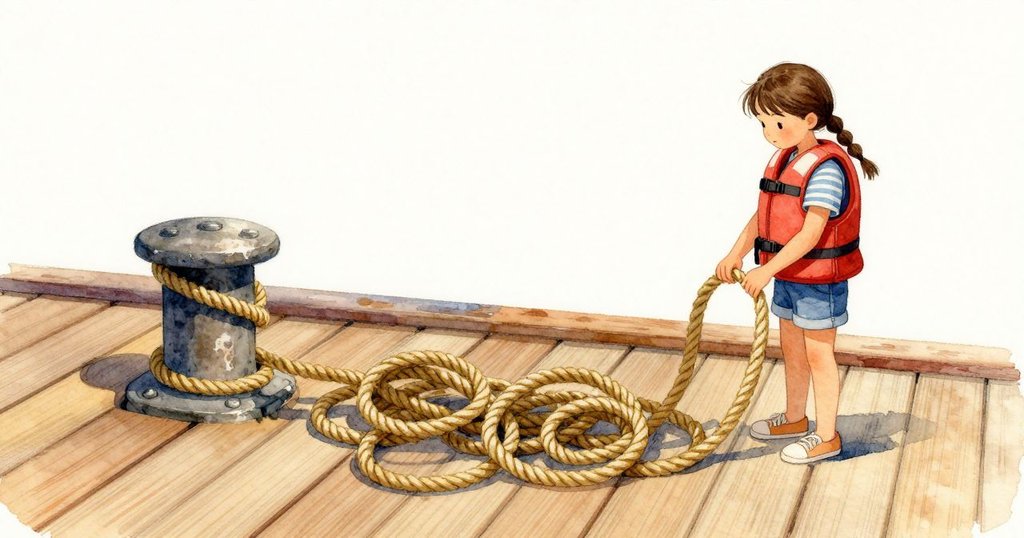
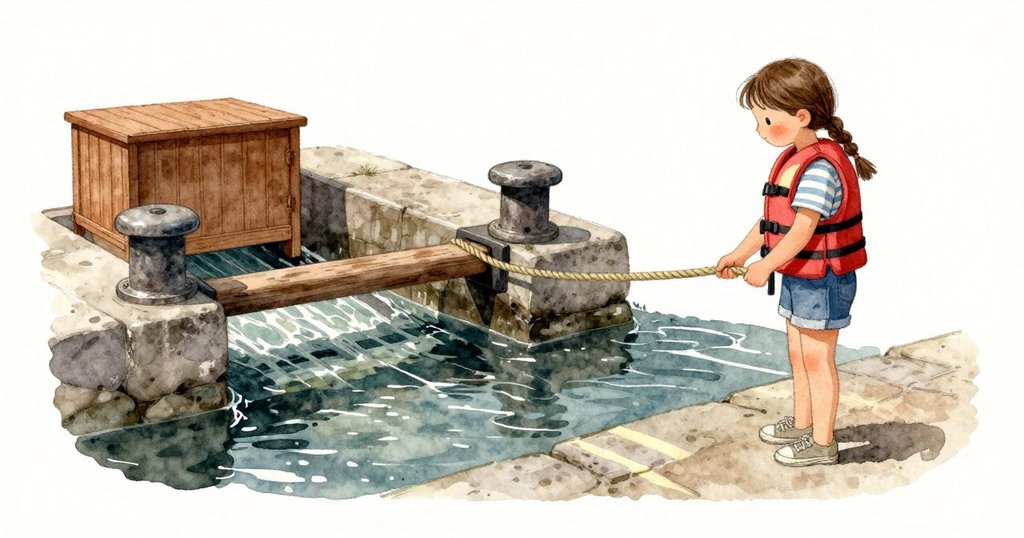
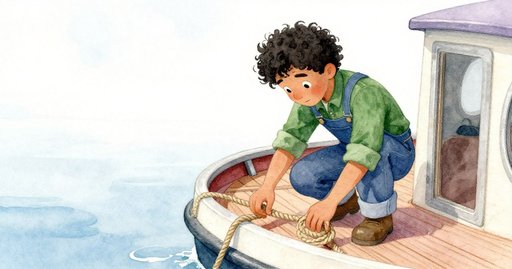
Rosa slung the rope around the bollard and drew the slack into dense, even loops.
Each coil settled with a quiet thud on the warm plank, its weight dragging slightly at her wrist.
Beneath the deck, the engine kept a low, steady putter that nudged the painted tin on the cabin roof.
Her knee touched the gunwale as the boat eased into the lock chamber, boards warm in sun and cool in shade.
Rosa squared her feet for balance, felt the deck’s faint vibration, and let the rope rest against her thigh.
The paddle gear turned somewhere ahead, and water churned through the sluice, a pale rush that lifted the surface by inches.
Green moss etched two waterlines into the stone, one bright and wet, one older and dark, both shining against the wall.
Eddies rounded near the stern, a neat little phenomenon of the inflow that pinned leaves in small, turning circles.
The rope tightened toward the bollard, its fibres taking the load, and the loops on deck inched closer together.
Two bright rails on the opposite wall ran parallel to those moss lines, sun laying twin stripes across the stiller water.
The putter kept time under Rosa’s soles, an even beat that rose through plank seams and settled in her ankles.
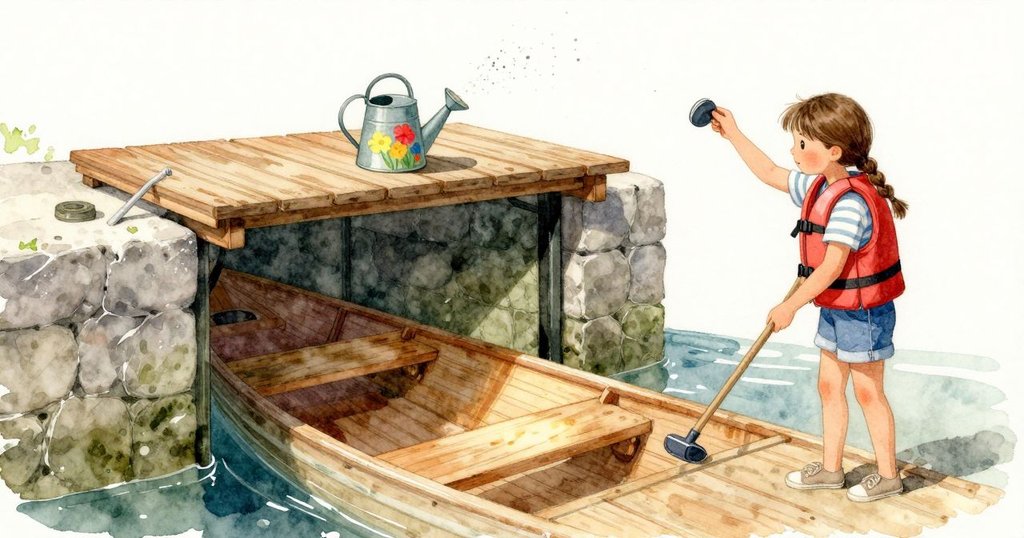
The painted watering can on the roof rattled its lid with every pulse, a soft metallic clack that never hurried.
Rafael leaned by the tiller and nodded at the chimney, "That lid clicks a song with every thump today."
Rosa answered with a quick grin and palmed the rope flat, the coarse twist leaving faint ridges across her fingers.
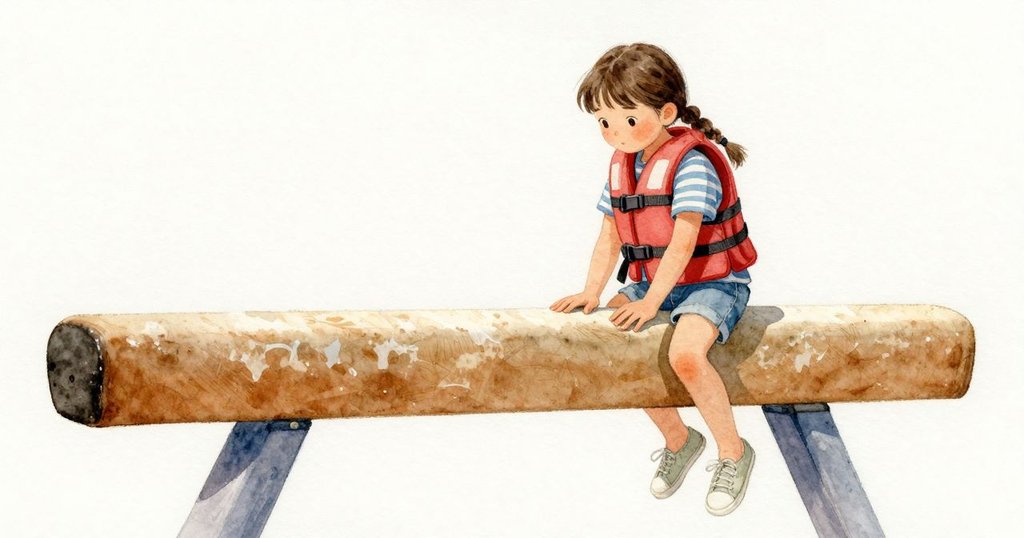
Her free hand traced the balance beam’s worn edge nearby, where pale scratches had been etched by many round pushes.
She set her palm against the oak and leaned, and the gate held her weight with a slow, immovable patience.
Water still pressed behind the timber, a thick, unseen counterweight that kept the beam stalled a moment more.
Her shoulders dipped, and then she eased off, breath slipping out, the oak no lighter yet under her small push.
The rope between bollard and cleat murmured under strain, its endurance visible in tight fibres that held straight without fray.
Along the far wall, the shining moss line edged downward while the chamber’s floor slid upward to meet the brown hull.
A deeper note arrived from the engine as the sluice burble thinned, and the rope loosened a finger’s width.
Her grip stilled on the beam at that shared beat, shoulders leveling as if the boat took one joined breath.
The dry stripe where water had stood all spring gleamed beside its newer twin, and her timing moved in their quiet spacing.
She glanced at the etched ticks along the beam, pale as chalk dust, each a small notch that caught the pad of her thumb.
The watering can’s lid tapped once, and the surface in the chamber leveled to the same black glass beneath the bow.
Rafael watched without speaking, one boot steady on the deck, while Rosa shifted her weight and set her stance square.
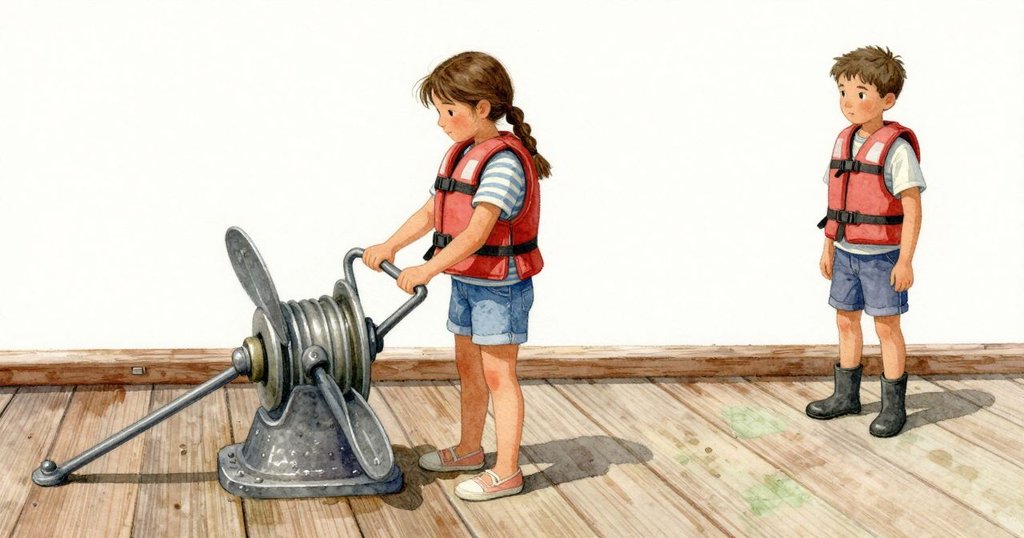
Her fingers wrapped the windlass handle, knuckles bright against the iron, and her wrist hovered before the first slow turn.
繁體中文 翻譯
Rosa 把繩子繞過繫船柱,把鬆垂的部分收進一圈一圈扎實的圓圈。
每一圈都在溫熱的甲板上輕輕一沉,重量在她手腕上拖出一點點阻力。
甲板下方,引擎維持低穩的突突聲,把艙頂那個上了漆的錫壺蓋輕推得微微作響。
船身滑進船閘的石室時,她的膝蓋碰到舷緣,木板在日光處溫熱、在陰影處清涼。
Rosa 站穩雙腳讓身體平衡,感到甲板細微的震動,讓繩子靠在大腿旁邊休著。
前方的提閘齒輪開始轉動,水從洩水口翻湧進來,一道淡色的水流把水面抬高了好幾公分。
綠色苔痕把兩條水線刻在石壁上,一條明亮濕潤,一條較舊偏暗,兩者都在牆面上發光。
艉邊冒出幾個圓渦,這股流入造成的小小現象,把樹葉固定在細小、旋轉的圓圈裡。
通向繫船柱的那段繩子繃緊,纖維承受著負荷,甲板上的圈圈彼此靠得更近。
對岸牆上兩道明亮的反光與那些苔痕平行,陽光在較靜的水面上鋪出雙條光帶。
引擎的節拍在 Rosa 腳底下守著時間,均勻的鼓點穿過板縫往上,最後停在她的腳踝。
艙頂的澆水壺蓋隨著每一次跳動叮噹一聲,柔軟的金屬輕響從不急躁。
Rafael 靠在舵旁、朝煙囪點了點頭,說:「那個蓋子今天每一下都在唱歌。」
Rosa 咧嘴一笑,用手掌把繩子按平,粗糙的股紋在指頭上留下一道道細痕。
她一隻空著的手描過旁邊平衡樑的磨損邊緣,許多回合推送留下的淺刻痕像粉筆般發白。
她把手掌貼上橡木身體一傾,閘門以沉而不動的耐性承受她的重量。
木頭後面的水還在頂著,像個看不見的重錘,把橫樑暫時扣在原位多停了一會兒。
她的肩微微一沉,接著鬆了力道,氣息滑出來,橡木在她小小的推力下尚未變輕。
繫船柱與繩纜栓之間的那段繩子在拉力下低聲輕鳴,緊實的纖維把它的耐久清楚顯出,筆直而不散。
遠處牆邊那條發亮的苔痕往下移,石室的地面往上升,正要迎上棕色船殼。
引擎送出更深的一聲,洩水口的咕嚕聲變薄了,繩子便鬆了一個指寬。
她握在樑上的手在那個共同的節拍裡停住,雙肩找平,就像整條船同時吐出一口氣。
春天裡水面待過的那道乾線在新鮮的一道旁發亮,她的動作便在它們安靜的間隔裡排列。
她看向樑上那些刻痕,粉筆般的蒼白,每一小刻都剛好卡住她拇指的肉墊。
澆水壺的蓋子清脆地輕碰一下,石室裡的水面與船首下方那面黑亮的鏡面齊平。
Rafael 沒開口說話,只把一隻靴子穩穩放在甲板上;Rosa 調了重心,重新把站姿擺正。
她的手指扣住搖柄,指節在鐵件上映出亮白,她的手腕懸在那第一圈慢轉之前。
情境單字卡
- phenomenon
名詞:現象;可觀察到的自然或社會事件。
“Near the stern, tidy eddies formed a small phenomenon of inflow, holding leaves in patient circles.”
在船尾附近,整齊的小渦流成了一種入水的微小現象,把葉子耐心地圈住。
- gunwale
名詞:(船的)舷緣,船幫最上緣的護木或邊緣。
“As the boat slid into the lock, her knee brushed the warm gunwale for balance.”
當船滑入船閘時,她的膝蓋擦過溫熱的舷緣以保持平衡。
- parallel
形容詞:平行的;方向一致而不相交的。
“Sunlight cast twin rails along the wall, running parallel to the bright and older moss lines.”
陽光在牆上投下兩道軌跡,與新舊的苔痕平行前行。
- endurance
名詞:耐力;在長時間壓力或負荷下持續承受而不損壞的能力。
“Under steady strain, the rope’s endurance showed in taut, unfrayed fibers between bollard and cleat.”
在持續張力下,纜繩的耐力體現在樁與繫纜栓之間緊而不毛邊的纖維上。
- etched
形容詞(動詞過去分詞):蝕刻的;被刻劃出的,表面被壓刮出清晰痕跡的。
“Her thumb paused where years of round pushes had etched pale ticks into the beam.”
她的拇指在那裡停住,多年圓推留下的淡刻痕一道道進入木樑。
幫我想想
AI 生成教學線索,協助老師延伸故事使用
Story Discussion - Rosa in the Lock
指出文中有關甲板與繩索接觸的感官描寫,說明這些觸覺、聽覺與視覺細節如何讓場景顯得真實且具體。
開放式參考答案
The text gives tactile details like "each coil settled with a quiet thud on the warm plank" and "weight dragging slightly at her wrist," which make the rope physically present. Auditory details—"the engine kept a low, steady putter," "the painted watering can... rattled its lid," and "the rope... murmured under strain"—create a layered soundscape. Visual details like "green moss etched two waterlines" and "two bright rails... ran parallel" provide static reference points. Combined, these sensory cues (touch, sound, sight) produce immediacy: the reader can feel the rope, hear the rhythm, and see the markers that orient movement and time.
文中描述澆水壺蓋的敲擊聲顯得急促嗎?
是非題參考答案
No. The lid's sound is described as a "soft metallic clack that never hurried," suggesting a steady, unhurried rhythm rather than urgency.
在下面引文中填入缺漏的英文單字: "The rope settled with a quiet ___ on the warm plank, its weight dragging slightly at her wrist."
填空題參考答案
thud
從提閘齒輪開始轉動到繩子鬆一個指寬,描述這段因果鏈的多個關鍵步驟,至少列出三個中間事件並說明它們如何連接。
開放式參考答案
1) The paddle gear turns and water "churned through the sluice," which begins to raise the water level. 2) The rising water lifts the boat and changes its relation to the chamber and bollard ("the chamber’s floor slid upward to meet the brown hull"). 3) As the boat’s position changes, the rope takes on load and tightens ("the rope tightened toward the bollard"). 4) When the sluice burble thins and the water movement stabilizes, the boat settles and the rope loosens a finger’s width. Each step follows from the previous: mechanical motion causes water movement, water movement alters vessel position, vessel position changes rope tension, and the change in flow allows the rope to relax.
根據她的動作(例如把繩子按平、在平衡樑上找刻痕、手腕在搖柄前懸著),你會如何推論 Rosa 當下的心理狀態與她的經驗程度?請提出兩到三個支持性的文本細節。
開放式參考答案
Rosa appears calm, focused, and experienced. Supporting details: she "squared her feet for balance" and "set her stance square," showing practiced stability; she "palmed the rope flat, the coarse twist leaving faint ridges across her fingers," indicating familiar, efficient handling; and her "wrist hovered before the first slow turn" of the windlass, which suggests measured control and anticipation rather than hesitation or panic.
選擇一個物件(苔痕、刻痕或澆水壺蓋),說明它在段落中如何象徵時間、記憶或節奏,並引用一至兩處原文細節作為佐證。
開放式參考答案
The moss lines function as a symbol of time and memory: the text notes "Green moss etched two waterlines... one bright and wet, one older and dark," which records previous water levels like a natural ledger of past states. Similarly, the "etched ticks along the beam, pale as chalk dust," act as human memory marks—small, cumulative records of repeated actions. Both images mark past presence and rhythm: moss marks environmental time, the ticks mark human, task-oriented time.
分析作者如何透過重複的節奏與小而持續的聲響(如引擎的突突、澆水壺的叮噹、繩子的低鳴)來建立敘事張力,並說明這種聲響如何與最後的放鬆(繩子鬆開)相呼應。
開放式參考答案
The author layers steady, repeating sounds to create a temporal scaffold: the engine’s "low, steady putter" provides a continuous undercurrent; the watering can’s rhythmic "soft metallic clack" accents each beat; the rope’s "murmur under strain" signals increasing tension. These repetitions synchronize physical actions (Rosa’s feet, shoulder dips, windlass anticipation) into a collective tempo. The cumulative effect is mounting attention rather than chaos. When the sluice burble thins and the engine gives "a deeper note," that shift in the auditory pattern coincides with the rope loosening "a finger’s width," producing relief. Thus the soundscape both constructs the tension and signals its resolution when the rhythm changes.
Story Discussion - Rosa's Rhythm
作者如何透過句子長短、標點與並列結構來模擬 Rosa 操作時的節奏與呼吸?請引用一至兩處原句並說明其如何與動作同步。
開放式參考答案
The author uses short, measured clauses and gentle punctuation to mirror small, controlled motions. For example, “Her shoulders dipped, and then she eased off, breath slipping out,” strings three tiny actions with commas so the reader experiences the same slow release. Similarly, “The putter kept time under Rosa’s soles, an even beat that rose through plank seams and settled in her ankles” sets a steady temporal pulse; the sentence’s steady cadence reinforces the ongoing, metrical work Rosa performs.
文本把船和人在敘述中擬人化為一個共同的呼吸(例如「就像整條船同時吐出一口氣」)。這種擬人化如何改變我們對場景的情感理解或隱喻閱讀?
開放式參考答案
The anthropomorphism creates a sense of unity and shared agency between Rosa and the boat: it turns a mechanical adjustment into a living, collective exhale. By describing the moment as a single, joined breath, the scene becomes emotionally intimate and cooperative rather than merely mechanical; the boat is not object only, but a partner whose timing and patience participate in the resolution.
Rafael 的一句話和多數時間的沉默在場景中分別扮演什麼功能?從他的語言、姿態與沉默推論他與 Rosa 之間的互動動力。
開放式參考答案
Rafael’s brief comment — “That lid clicks a song with every thump today.” — lightens the moment and acknowledges the shared soundscape, marking companionship. His subsequent silence and steady boot on deck signal restraint and trust: he watches and allows Rosa to lead the physical task. Together, speech and silence show a cooperative rhythm where Rafael is observant and supportive rather than directive.
場景中反覆出現的細小聲響(引擎節拍、澆水壺的叮噹、繩索的低鳴)最像一種什麼功能性的比喻?請以單字填空: 'The repeated sounds act like a ______.'
填空題參考答案
metronome
敘述視角是否主要限制在 Rosa 的感知,使得讀者無法直接得知 Rafael 的內在想法?
是非題參考答案
Yes.
分析作者如何在「靜止的耐性」(如閘門的沉重不動)與「流動的推力」(如水面被抬高、渦流)之間建立張力,並說明這種對比如何強化敘事的期待感或延宕感。
開放式參考答案
The author juxtaposes immovable, patient objects (the gate that “held her weight with a slow, immovable patience”) against subtle, persistent motions (water that “churned through the sluice” and eddies that pin leaves). This contrast sets up resistance that must be overcome slowly, so the narrative tension comes from waiting for the fluid force to meet the rigid barrier. The delayed reaction—water rising inch by inch, the chamber floor sliding upward—stretches time and intensifies expectation until the release (the rope loosening) finally resolves the strain.
在下面引文中填入缺漏的英文單字: 'The rope between bollard and cleat ___ under strain, its endurance visible in tight fibres that held straight without fray.'
填空題參考答案
murmured
Role Play - Before the First Turn
情境
場景設定:船正靜靜待在船閘石室內,甲板在日光與陰影間交替溫涼。繩子已繞過繫船柱並在甲板上收成整齊的圈圈;引擎在甲板縫隙下發出均勻的突突聲,艙頂的澆水壺蓋隨節拍輕輕叮響。水位正在慢慢上升,繩子感到一指寬的鬆緊變化。Rosa 站在平衡樑前,手指扣住搖柄,手腕懸在要開始慢轉的那一刻;Rafael 靠在舵邊,靜靜觀察並準備協助。 教學目標:學生分組練習以英語在這個關鍵起始動作前進行協調與溝通。請學生用故事裡的感官細節(例如:澆水壺蓋的叮噹聲、繩子的拉力、引擎的節拍、石壁上的苔痕水線)來確認時機、表達感受、並下達或回應簡短指令。練習重點包括:時機確認(when to start)、安全提醒(how to keep balance and hold the rope)、以及短促的狀態回報(what you feel/tell the partner)。鼓勵學生用平和、協作的語氣,模仿故事中那種沉穩的節奏感。
角色
開場白建議
- •“That lid clicks with every thump—are you ready for me to take the rope when you turn the windlass?”
- •“I can feel the rope tighten and the water rising; I'll start the first slow turn on my count. Keep your boot steady on the deck.”
Role Play - At the Shared Beat
情境
場景設定:船已進入船閘石室,水面逐漸抬高,牆上的苔痕水線正慢慢靠近船殼。那一刻,繩子在繫船柱與栓間微微放鬆一個指寬,Rosa 的手在平衡樑上停住,雙肩找平,像整條船同時吐出一口氣。引擎送來更深的一聲,艉邊的小渦流也變得平穩,石室裡的動靜呈現出一個短暫的齊拍。 教學目標:讓學生在英語中模擬「轉動中段」的溝通:如何用精確的感官描寫(moss line、etched ticks、deck’s deeper thrum、eddies)來回報觀察,如何在節拍中給出或回應微調指令(hold here、another quarter turn、stop/slow),以及如何用推理語言確認安全(I feel the deck settle/my thumb’s on a notch)。練習重點包含:短而清楚的指令語句、狀態回報、與同伴同步節奏的確認語句,以及以安全為先的語氣。教師提示學生觀察刻痕、苔痕、甲板震動與水面變化,並鼓勵以故事中的具體細節作為語言素材進行角色對話。
角色
開場白建議
- •“The moss line just dipped against the hull—I'll ease the windlass one quarter turn and stop when my thumb hits a notch. Ready to hold?”
- •“I can feel a deeper thrum under my feet and the eddies by the stern are calming. Do you want me to keep the windlass steady here or take another slow turn?”
Creative Writing - Side Moment: Rafael's Quiet Memory
寫作提示
任務說明:請以 Rafael 的視角,用英文寫一段約 150 字的短文,描寫一個敘述者未曾直接看到的側面瞬間。你應該把焦點放在故事中的具體元素──Rosa、rope、bollard、deck、engine、sluice、moss、watering can、windlass、beam 等,並保留原作的感官細節(甲板的溫度、繩纖維的粗糙、澆水壺蓋的敲擊聲、牆上苔痕的光澤等)。短文要呈現一個內心或記憶的片刻:一個 Rafael 靜默觀察或回憶的小支線,而非推進主要事件的動作。 以下為教師示例(供靈感參考,教師可以用此示例向學生說明語氣與細節層次): Rafael 靠在舵旁,那個澆水壺蓋清脆的一拍把他拉回到十年前的一個午後。當時他還是個學會綁第一圈繩索的孩子,祖父在旁邊低聲數著節拍。記憶中,發動機的突突聲像一種看不見的指揮,木板在腳下回應,苔痕像鐘面上的刻痕,標記著時間的來去。他沒有說話;只是把注意力放在那個蓋子的節奏上,把手放在舵柄上感受每一次震動,像是把那段被省略的故事悄悄收進胸口。當水面最後平了,他朝 Rosa 點了點頭,讓那個熟悉的節拍成為兩人之間無言的同盟。
詞彙庫
寫作輔助
- • Rafael remembered the first time he learned to tie a coil around a bollard when...
- • He listened to the watering can lid and thought about how the engine's putter...
- • As the sluice lifted the water, he noticed the moss line that reminded him of...
- • His hand stayed on the tiller, feeling the deck's vibration while he silently...
- • The rope's fibres left ridges on his palm and suddenly he recalled a day when...
- • He didn't speak to Rosa; instead he showed his memory through a small gesture: ...
Creative Writing - Continuation: Rosa's First Turn
寫作提示
任務說明(延續支線,向前推進):請以 Rosa 為主要敘述者,用英文寫一段約 150 字的短文,描寫她在最後一行「her wrist hovered before the first slow turn」之後所做的第一個動作與其直接後果。短文必須留在原作的場景裡(船閘、甲板、繫船柱、洩水口等),保留原作的感官細節:繩子的觸感與聲響、甲板的溫度、引擎的節拍、澆水壺蓋的輕敲、苔痕的光澤、渦流的繞動等。寫作時側重於因果連續(第一個轉動如何改變水面、繩索和她的感覺),並保持語氣與節奏的細膩。請在文中至少包含八個字彙(見下方 word_bank);不要採用已存在的「側面瞬間」角度,這次必須是向前的延續(事件發展)。保持內容安全、正面、適合兒童閱讀。
詞彙庫
寫作輔助
- • Rosa turned the windlass handle slowly, and the first click felt like...
- • The rope tightened against the bollard as the sluice lifted, so that...
- • Sunlight slid along the moss line while the deck beneath her warmed, and she...
- • The engine's deeper putter matched her breath when she gave the handle a second push, causing...
- • The watering can lid chimed on the roof and Rafael shifted his weight, which made...
- • Her fingers left faint ridges on the rope as it took the load, and then...
- • Eddies skimmed past the hull, carrying a leaf that brushed the surface as...
- • She steadied her foot on the beam and watched the water level rise until...
Vocabulary & Grammar Focus
重點單字
rope
用來繫住、拉扯或固定物件的粗纖維線束,常見於船上用以繫泊和傳力。
Rosa gathered the rope into dense, even coils beside the bollard.
bollard
碼頭或船上用來固定繩索的粗柱或樁,能承受繩索的拉力。
She looped the line around the bollard before pulling the slack into place.
loop
繩子或線材形成的環狀部分,在繫泊時常以圈形收整以分散力量。
Each loop settled with a quiet thud on the warm plank beneath her.
deck
船的甲板,承載人和物、能感受陽光、震動與足下力量的平面。
The deck hummed faintly as the coils landed on its sun‑warmed planks.
putter
引擎發出的輕微、均勻的突突聲,常表示低速運轉的機械節拍。
Beneath the deck, the engine kept a low, steady putter that nudged the tin.
sluice
控制水流的通道或閘口,水經由此處湧入或流出以改變水位。
Water churned through the sluice, a pale rush that lifted the surface inches.
moss
附著在石壁或潮濕表面的綠色苔蘚,常形成可見的水線與反光痕跡。
Green moss etched two waterlines into the lock's stone, bright and wet.
eddies
水流中形成的小旋渦,能把漂浮物如樹葉圈住或暫時固定。
Eddies rounded near the stern, pinning leaves in small, turning circles.
fibres
繩索由許多細小纖維相織成的部分,承受拉力並決定繩索的耐久與彈性。
The rope's fibres took the load, holding straight without any fray in sight.
windlass
用來捲動繩索或鐵索的手搖或機械裝置,常見於船上或繫泊設備。
She gripped the windlass as her knuckles gleamed white against the iron.
文法重點
本故事大量使用分詞片語與絕對構句(例如 'its fibres taking the load'、'knuckles bright against the iron')來壓縮資訊、同時呈現兩個動作或描述一個伴隨狀態。這類結構通常用現在分詞(-ing)或名詞後接形容詞/分詞,省略連接詞和助動詞,以達到緊湊且具節奏感的敘述。教學重點:辨認分詞片語與絕對構句,理解它們如何表達同時性、原因或結果;練習將完整子句改寫為分詞片語(縮減)或把分詞片語擴展為完整子句(展開),以掌握語氣與時態的清晰度。
練習題
The rope's ___ took the load, holding straight without fray.
參考答案
fibres
配對以下單字與意思:
顯示答案
A-5B-3C-8D-1E-2F-9G-7H-6I-10J-4
The rope tightened toward the bollard, its fibres taking the load, and the loops on deck inched closer together.
參考答案
The rope tightened toward the bollard, and its fibres were taking the load, while the loops on deck inched closer together.
Vocabulary & Grammar Focus
重點單字
slung
用力或隨性地甩掛、繞過某物,使之懸掛或固定的動作。
Rosa slung the rope around the bollard and began to draw the slack into coils.
slack
繩索或物體上未受拉緊的鬆弛部分,會在收緊時被拉直或捲起。
She gathered the slack of the line into dense, even loops beside the bollard.
coil
繩、線或管等繞成的環或圈,常用來收納或分散力量。
Each coil settled with a quiet thud on the warm plank, tugging at her wrist.
thud
沉重且悶的碰撞聲,常用來描寫物體著地或撞擊的聲音。
A soft thud marked each coil as it landed on the sun‑warmed plank.
plank
船或地面上由木板組成的一塊板材,能感受溫度、震動與重量。
The warm plank beneath her soles hummed faintly with the engine's steady beat.
wrist
連接手掌與前臂的小關節部位,受力時常能覺察到拉扯或震動。
Her wrist felt the rope's weight as each loop dragged slightly against it.
cabin
船上小房間或艙室的屋頂或構造,常有工具或個人物品放置。
The painted tin on the cabin roof rattled with every steady thump from below.
gunwale
船舷上方的緣邊或護欄,常用來支撐身體或抵住膝蓋。
Her knee touched the gunwale just as the boat eased into the lock chamber.
balance
身體穩定的狀態或技巧,在移動平台上尤為重要以抵抗搖晃。
Rosa squared her feet for balance, feeling the deck's faint vibration beneath her.
cleat
用來固定繩索的小型金屬或木製凸起物,繩索可在其上繞扣。
The line between bollard and cleat murmured under strain, fibres taut and silent.
文法重點
本故事多次以時間從屬子句表達「同時發生」的動作,常用連接詞 as 或 while(例如句子 'Her knee touched the gunwale as the boat eased into the lock chamber')。教學重點:辨認 as/while 引導的時間從屬子句,理解兩者在語感上的微妙差別(as 常用於描寫背景或同時發生的短促動作,while 可強調兩個動作的並行或對比),並練習把主句與從屬子句互換或改寫以控制焦點與節奏。
練習題
Each coil settled with a quiet ___ on the warm plank.
參考答案
thud
配對以下單字與意思:
顯示答案
A-3B-6C-4D-8E-7F-5G-1H-10I-2J-9
Her knee touched the gunwale as the boat eased into the lock chamber, boards warm in sun and cool in shade.
參考答案
Her knee touched the gunwale while the boat eased into the lock chamber, the boards warm in sun and cool in shade.
文化連結 - 繩索盤繞與繫船儀式
主題
繩索盤繞與繫船儀式
討論要點
- •故事中 Rosa 把繩子繞過繫船柱,並把鬆垂的部分收成「dense, even loops」,每一圈都在溫熱的甲板上輕輕一沉。你有沒有看過或做過類似把繩子整齊盤繞的動作?描述那個時刻的聲音、觸感或節奏,這些細節如何傳達出專業或關心?
- •故事提到樑上刻了許多淺刻痕(the etched ticks),這些刻痕幫助 Rosa 找到節拍與時機。在你自己的社區裡,人們會用哪些具體標記或小儀式來記錄經驗、指示位置或協調工作?舉一個你熟悉的例子並比較它與故事中刻痕的用途。
- •Rosa 的動作跟引擎的 putter 和澆水壺蓋的叮噹聲一起成為一種節奏,讓她在船閘裡同步行動。想一想你熟悉的工作或日常場景(如市場、漁港、工匠作業),其中有哪些聲音或節奏成為協作的提示?這樣的聲音節奏如何影響動作的準確性與安全性?
文化比較
在故事描寫的英國運河/船閘場景裡(narrow lock chamber 的緩慢、可控環境),繫船是一種細緻且有節奏的日常:把繩子繞過繫船柱、盤成均勻的圈、用 windlass 調整張力,並以樑上的刻痕和引擎的節拍來安排時機。這些動作同時具備實用功能(安全、可控)和美學感受(整齊的圈、輕微的敲擊聲),顯現出個人對船隻的責任感與長期累積的操作習慣。相比之下,在繁體中文語境下的靠岸與繫船實務,常會因為環境(如面向海域的潮汐與浪況、碼頭的混合材質)與船種差異而呈現不同的優先順序:有時更強調快速放/收、使用不同材質的纜繩或配備(固定在混凝土碼頭的cleat或大型繫樁)、以及團隊協作的口令與分工。標記方式也可能不同:某些社群用油漆記號或浮標標示水位與停靠位,而不是像故事中那樣在木樑上以刻痕記錄水位與節拍。總的來說,兩邊都重視技巧與注意力,但因為環境、工具與使用歷史的不同,產生了在動作節奏、標記習慣與審美感受上的具體差異。
Cultural Connection - 苔痕與水位的痕跡
主題
苔痕與水位的痕跡
討論要點
- •故事裡寫到綠色的苔痕在石壁上留下兩條水線:一條明亮濕潤、一條較舊偏暗。請描述你如果站在那面牆前會看到或感受到什麼?苔痕的顏色、光澤和位置給你什麼時間或環境的訊息?
- •敘述中出現「the dry stripe where water had stood all spring gleamed beside its newer twin」這樣的景象:自然痕跡記錄了過去的水位變化。回想你熟悉的環境中,有沒有類似以自然痕跡(如苔、貝殼線、泥土色變)來判斷水位或時間的例子?描述那個場景,以及人們如何依賴它來決定行動。
- •在故事中,這些苔痕和乾線成為 Rosa 安排動作與時機的一部分。比較一下:在你的文化或社區裡,人們是更常依賴這類自然痕跡、還是使用人工刻度(潮尺、標記牌)、或是依靠現代工具(潮汐表、電子資訊)來判斷水位?討論各種做法的優缺點,以及為何環境或基礎設施會影響選擇。
文化比較
在故事所處的運河與船閘環境中,苔痕與水線像一份緩慢累積的「自然記錄」:綠色苔痕標示曾經的水位,乾線顯示季節或長期停水的痕跡,這些視覺線索與船上的節奏(如引擎的脈動、木樑上的刻痕)一起,被經驗豐富的人讀成可操作的時機。這種做法重視目視與身體感知,標記是自然生成且嵌在場域中的。相比之下,在繁體中文語境的沿海或河岸作業中,判讀水位的方式會根據場所不同而不同:有些漁村仍以附著生物、海藻線或泥沙痕作為傳統指標;有些碼頭或港口則設有潮尺、標記牌或依賴潮汐表與電子公告。兩者共同點是都從環境中讀取資訊以協調行動,但因為潮差大小、基礎設施與社群傳承方式不同,形成了自然痕跡被更頻繁使用或被人工/數位工具取代的具體差異。
Comprehension Quiz
1. What did Rosa do with the rope when she first handled it?
2. Who nodded at the chimney and remarked about the lid clicking with every thump?
3. What caused the water surface in the lock chamber to lift by inches?
4. Where were the two bright rails that ran parallel to the moss lines?
5. Which change signaled that the rope loosened by about a finger's width?
6. How did the painted watering can on the roof respond to the engine's pulse?
7. What did Rosa's free hand do while she palmed the rope flat?
Comprehension Quiz
1. What sound did each coil make as it settled on the warm plank?
2. How did the engine make itself felt under Rosa's feet?
3. What small phenomenon formed near the stern because of the inflow?
4. When Rosa set her palm against the oak and leaned, how did the gate respond?
5. As the chamber floor rose to meet the hull, what happened along the far wall?
6. What did Rosa do with the windlass handle at the story's end?
推薦閱讀

The Swallow That Loosened the Rope

Windlass at the Lock Gate
The Yardstick That Drifted

Linden Watches a Damp Mark Change Inside the Lock
Heron and the Lock Gate at Daybreak

Clock Inside the Rising Lock

Crack of Light and Seeds at Lock Twenty-Two
The Guide Rope and the Glowworm Skyline in the River
What the Gates Revealed

Handrail and Viewport at the Tunnel's Double Beat

Brass Disc Unearthed Beside the Lock Gate