From Drip to Oil: The Mark Beneath the Hopper at the Mill - 適合進階的英文短篇故事,含中譯與發音
從水滴到油漬:穀斗下的地板印記 | 英文/中文 雙語朗讀
故事內容
English 原文
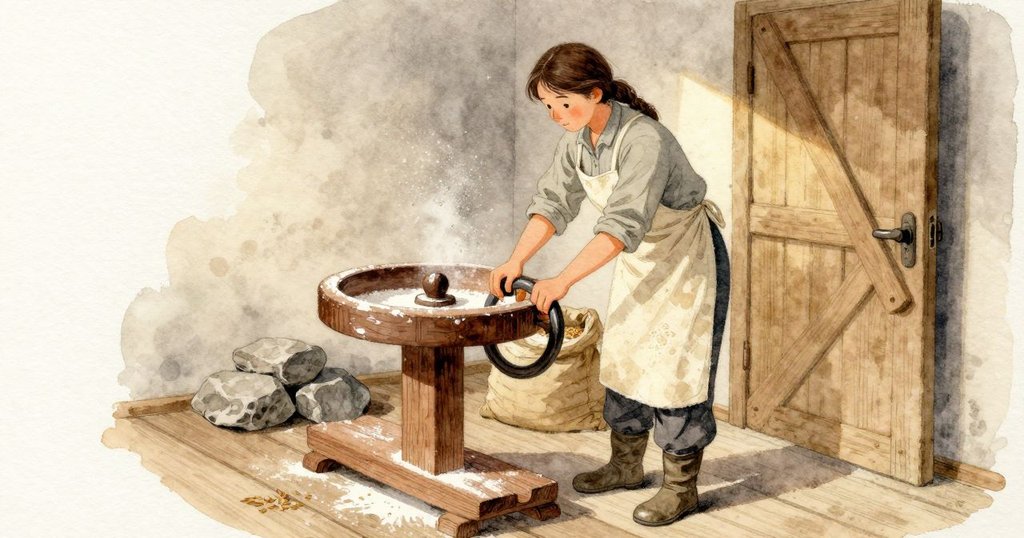
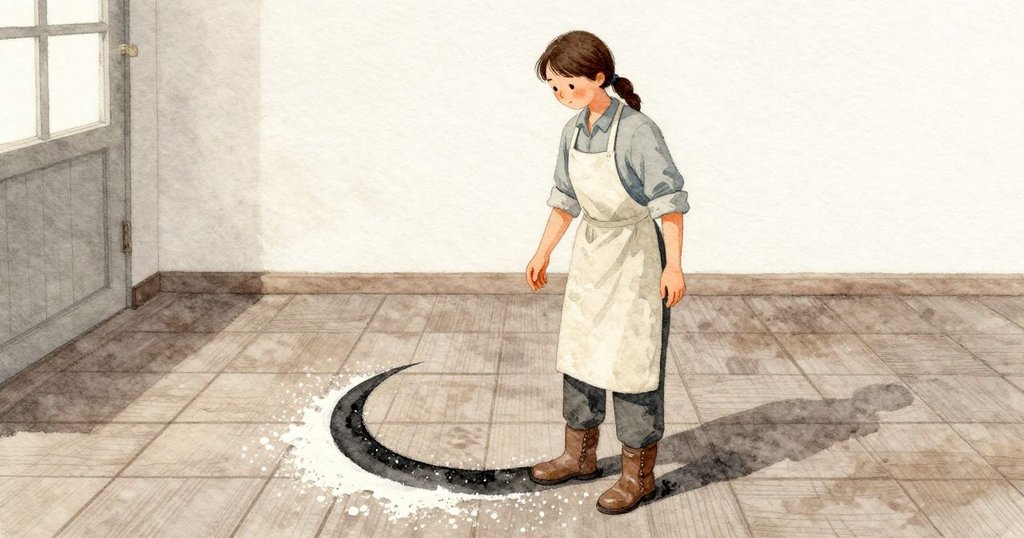
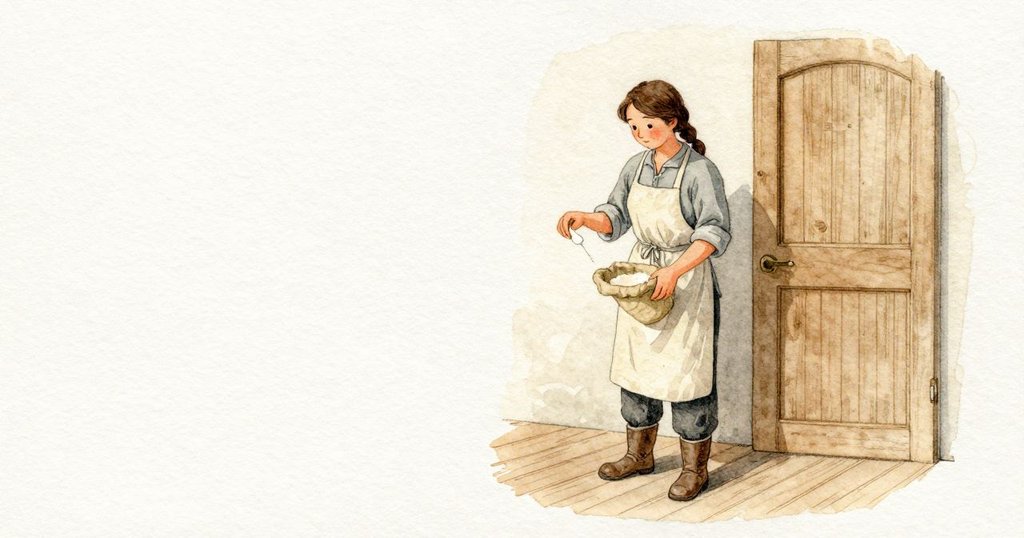
Tara set two fingers into the lever’s worn notch and gave it the quarter-turn her hand remembered before her eyes found the light. By her boot, a dark crescent dampened the plank, a trace shaped like a thumbprint pressed into wet bread, quiet and sure as any footprint. Warm flour still breathed from the sack near the door, and the grain smell lay pervasive on her sleeve and hair. She pinched a trail of meal from the chute, rubbed it grain by grain, and waited for the grit to quiet on the pad of her thumb.
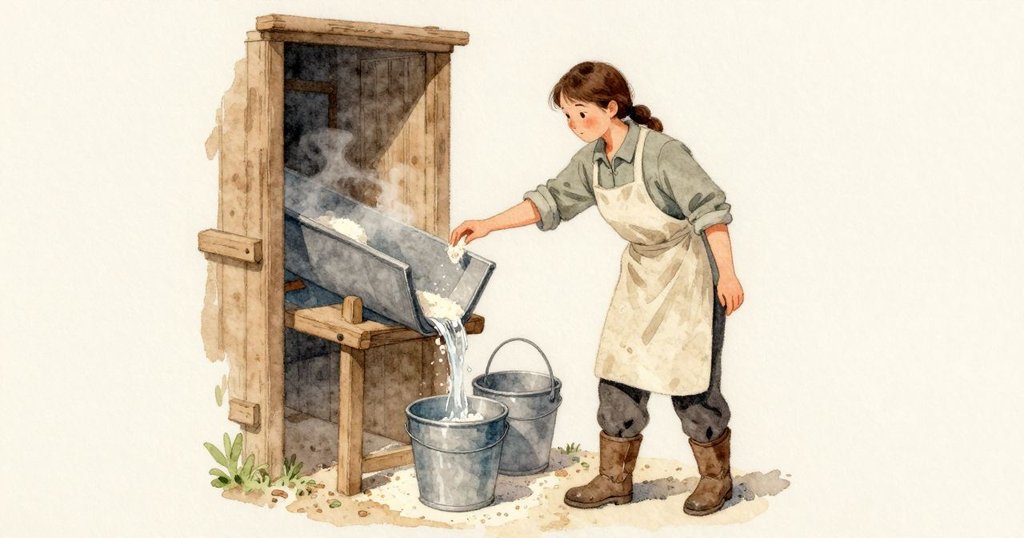
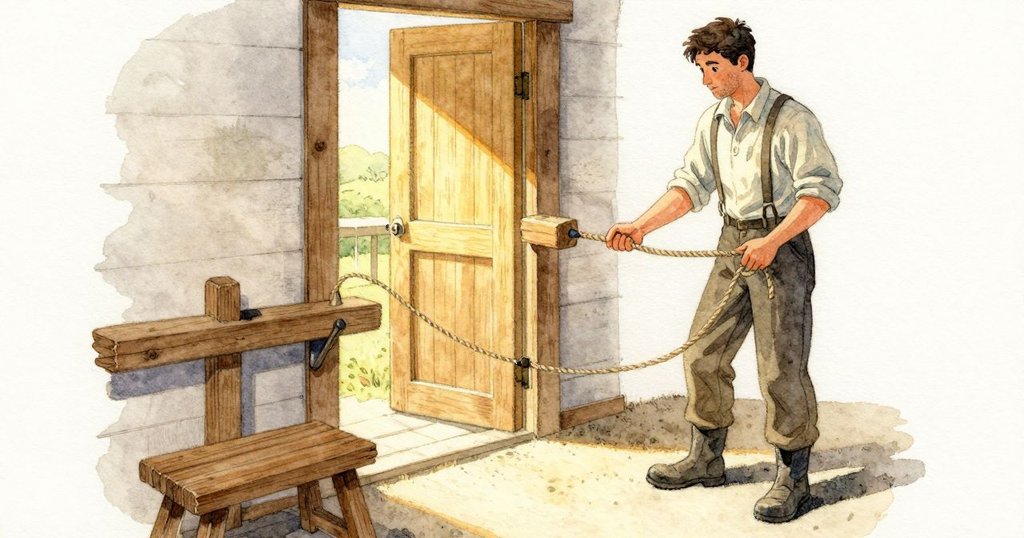
Outside the open loading door, buckets took their turns: spill, hang light, begin their ascent, while a full one dragged the rim downward through falling water. A bead gathered under a paddle, a small sphere that held its roundness for a breath and slipped cleanly into the millrace below. Jonas eased the hoist rope through his palm and tilted the wooden block to test the creak in its iron throat. “It’s steady,” he said, voice low so the stone-song stayed on top of every other sound.
Tara brought her ear toward the hopper; the runner’s pitch lifted a fraction, a thin note that usually meant the gap had tightened against the grain. No certainty lived in the first pinch, because a few coarse flecks still scratched the skin where her thumb met her forefinger. Her gaze returned to the crescent, and her thumb crossed it once; it smeared, not like river water, but with a faint slickness that clung to her line. She held the thumb to her nose, then raised it toward the bar of light; a gloss stayed put, thin as breath on glass, and she let her hand fall to her apron.
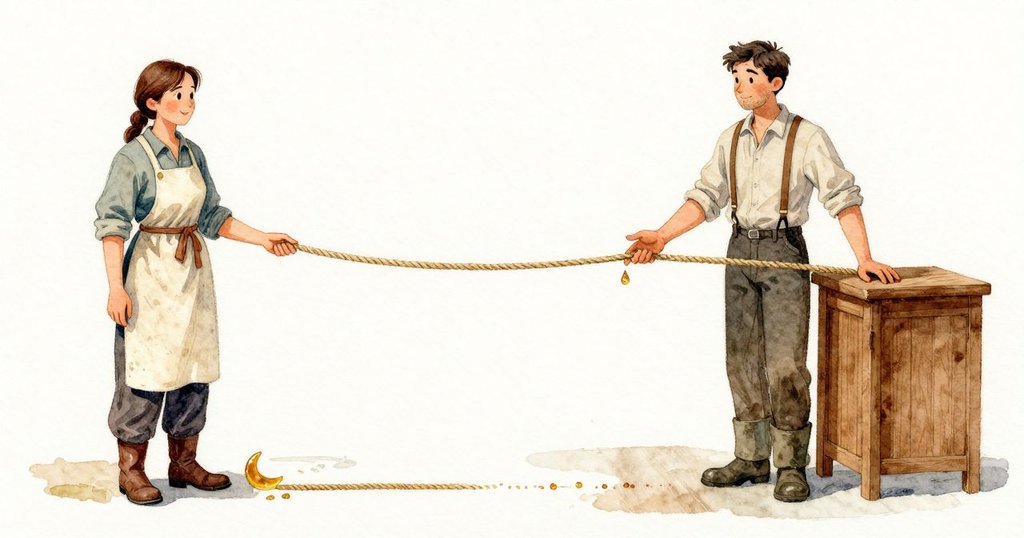
Jonas rolled a fresh loop onto the peg and brushed a ridge of warm flour from the rope so it would not crumble into the pulleys and bind their turning. He looked down where Tara stood, then tipped the block toward the door; sunshine grazed its wooden cheek and brightened a thin line along the grain that ran close to the iron. From the shaft’s collar, one small drop let go and traveled the rope’s twist, laying a narrow track that matched the floor’s crescent beside her boot. “Not rain,” he said, and kept his boots planted wide beside the peg, his palm resting open on the settled rope.
The smell from her thumb came back faintly nutty, nearer to seasoned wood than to the river, while the wheel kept its even swing and the emptied buckets rose. She sifted another pinch and spread it slowly; the meal ran silkier now, and the warmth through the cloth at the sack’s mouth had already begun to fade. “Hear that rise?” Tara said, and her hand stayed still long enough for the thin note to flatten against the steady rush. She set two fingers into the notch as before, and Tara eased the lever a hair toward the old notch.
繁體中文 翻譯
Tara 先把兩根手指扣進拉桿上磨出的缺口,手還沒看清光線就照著記憶轉了四分之一圈。她的靴子旁邊,地板上浮出一抹深色新濕的弧形,就像把拇指壓在濕麵包上留下的印記,一樣安靜而明白。靠門的麵粉袋還在吐溫,穀物的味道滲滿她的袖子和頭髮,無所不在。她從落料口掐起一線麵粉,在拇指和食指間一粒一粒搓,等粗澀在皮膚上慢下來。
開著的裝卸門外,水斗輪流著動作:傾瀉、變輕、開始上升,同時裝滿水的那個把輪緣往下拉過落水。槳葉下方聚起一顆小水珠,圓潤如球,撐了一口氣就乾脆滑回引水道。Jonas 把起重繩從手心慢慢送過,微微傾起木滑車,聽那鐵喉口裡的吱呀。『很穩。』他壓低聲音,讓石磨的聲音蓋過其他一切。
Tara 把耳朵靠近穀斗;上石的音高輕輕抬起,細得像針,照理是石隙又收緊貼近穀粒。第一撮麵粉給不出把握,因為還有幾點粗粒在她拇指和食指交會的皮膚上刮擦。她的目光又落回那道弧痕,拇指在上面抹過一次;它不是像河水那樣攤開,而是留下一點輕微的滑膩,黏在她的指紋線上。她把拇指湊到鼻尖,又抬向那道陽光;一層微光粘著不走,薄得像玻璃上的一口氣,於是她把手收回到圍裙上。
Jonas 把一圈新繩掛上木樁,又把繩上的一道暖粉刷落,免得它碎落進滑輪裡讓轉動卡住。他朝 Tara 所在處望了一眼,接著把木滑車往門邊一偏;陽光掠過木面的側臉,把靠近鐵件的木紋亮出一條細線。從牆上軸套處,有一滴小油珠鬆手,順著繩股的扭紋滑下,在地板上畫出一道與她靴旁弧痕相接的細痕。『不是雨。』他說著,兩腳在木樁旁站得開開的,手掌平放在已停住的繩上。
她指尖殘留的味道帶著淡淡的堅果氣,像經年木頭而不像河水,水輪照樣勻速擺動,清空的水斗持續上行。她又撮了一撮麵粉慢慢攤開;粉流得更細了,而袋口透出的溫度在布裡已經開始退去。『聽那一點上揚?』Tara 開了口,她的手先停著,等那細線一樣的音高貼回穩定的水聲。她又把兩根手指扣進同一個缺口,然後 Tara 把拉桿往舊缺口的方向輕輕挪了一絲。
情境單字卡
- pervasive
瀰漫的、普遍存在的;氣味、感覺等到處擴散、無所不在。
“By the door, the flour’s warm scent was pervasive, settling into her sleeve, her hair, even the rope’s twist.”
在門邊,溫暖的麵粉氣味無所不在,滲進她的袖子、頭髮,甚至繩子的紋理。
- crumble
(使)碎裂、碎成粉屑;像餅乾或乾料一樣脆裂成小塊或粉末。
“He brushed the warm flour from the rope so it wouldn’t crumble into the pulleys and slow them.”
他把繩子上的溫熱麵粉刷掉,好讓粉末不致碎落進滑輪裡拖慢轉動。
- ascent
上升、攀升;由低處往高處的移動或過程。
“Each bucket, emptied and light, began its ascent as the wheel steadied, while the full one dragged downward.”
每只倒空變輕的桶在水輪穩住後開始上升,而裝滿的那只往下拖去。
- certainty
確定、把握;對某事無疑的狀態或感覺。
“No certainty lived in her first pinch; coarse flecks still whispered against the skin of her thumb.”
她第一次捻起的那撮沒有確定感;粗糙碎粒仍在拇指皮膚上輕輕摩擦。
- sphere
球體;完全圓的形狀,如水珠在張力下形成的圓球。
“Under the paddle, a bead held as a perfect sphere for a breath before sliding cleanly into the race.”
槳片下方,一顆水珠短暫維持完美球形,隨即滑入水道。
幫我想想
AI 生成教學線索,協助老師延伸故事使用
Story Discussion - Tara's Mill
作者如何透過感官細節(觸覺、嗅覺、聽覺、視覺)來建立磨坊的氛圍?請指出至少三種具體描寫並說明每一種描寫帶出的情緒或印象。
開放式參考答案
Touch: the thumb smear, coarse flecks, and pinching of meal convey tactile familiarity and careful attention. Smell: warm flour and a nutty, seasoned-wood scent create homely warmth and material history. Sound: the stone-song and thin rising note suggest the mill's steady mechanics and subtle alarms. Sight: the dark crescent on the plank and the strip of light on the wood give quiet, precise visual evidence that grounds their actions.
文中有幾處小動作(例如把拇指湊到鼻前、把手指扣進缺口、Jonas 傾斜木滑車)是如何共同運作以傳遞角色的專業性和習慣性?請說明至少兩個動作之間的因果或功能關係。
開放式參考答案
Tara placing two fingers in the notch and remembering the quarter-turn shows practiced habit and muscle memory; her smelling the thumb links sensory checking to diagnosis. Jonas tilting the block to test the creak demonstrates routine mechanical checks. Together, these actions show skilled, embodied knowledge: small tactile checks lead to smell-based inference, which combine with mechanical tests to assess the mill's condition.
把從拇指接觸麵粉到石磨音高改變的多步因果鏈寫出來。列出每一步並簡短說明它如何引發下一步。
開放式參考答案
1) Tara pinches meal and rubs it —> she feels coarse flecks, so she waits. 2) She smears her thumb on the crescent —> the smear shows a thin slickness. 3) She smells her thumb —> notes nutty/wood scent, not river. 4) She listens to the hopper —> runner's pitch lifts slightly, indicating the gap tightened against grain. 5) She adjusts the lever a hair toward the old notch —> the thin note flattens against the steady rush. Each sensory observation prompts a corrective or confirmatory action affecting the mill's operation.
從細節推斷:Tara 在整個片段中的心理狀態為何?請引用文本證據支持你的推論。
開放式參考答案
Tara is focused, attentive, and calm. Evidence: she uses remembered muscle action (quarter-turn), methodically pinches and rubs meal, waits for grit to quiet, smells her thumb, watches light and crescent, and makes a careful, slight adjustment to the lever—all indicate steady concentration and experienced caution.
文章中那道靠近靴子的弧痕(crescent)和粘著在指尖、薄如玻璃一口氣的光澤,除了字面描述之外,可能還象徵什麼?提出兩種不同的象徵解讀並說明理由。
開放式參考答案
1) The crescent could symbolize a human trace or mark of labor—an imprint showing the worker's presence and touch. 2) The thin gloss could symbolize fragile evidence or ephemeral knowledge—small, easily missed signs that experienced workers read to judge machines. Both readings tie material detail to human skill and memory.
作者在句子節奏與重複動作上(例如多次把手指扣進缺口、反覆描述微小聲響)如何營造出既緊張又平穩的氛圍?請分析語句長短、重複與節奏對讀者感受的影響。
開放式參考答案
Long, flowing descriptive sentences mimic the mill's steady mechanical motion and create a calm, immersive rhythm; short, clipped lines and repeated actions (‘two fingers…`, repeated adjustment) act like punctuations that heighten attention and subtle tension. Repetition of habitual gestures reassures the reader of practiced routine, while brief clauses (e.g., 'It’s steady.') ground the scene and momentarily relieve anxiety, producing a balance of tension and control.
把這段描寫與傳統描寫手工或勞動的文學做比較:在描寫勞動細節與對物件的關注上,這段文字與你熟悉的任何一段描寫有何相似與差異?
開放式參考答案
Similarities: like many craft-focused texts, it emphasizes sensory detail, embodied knowledge, and close observation of tools and materials. Differences: instead of romanticizing labor, the passage is clinical and diagnostic—focusing on subtle signs and machine behavior rather than heroism; its language is intimate and quiet, privileging small, technical gestures over broad pastoral imagery.
文中Tara把拇指湊到鼻前是為了確認那層滑膩是水還是油嗎?
是非題參考答案
Yes — she smells her thumb and notes a nutty, seasoned-wood scent rather than a river smell, indicating the slickness is not rainwater but something like oil.
作者寫到一顆水珠 'held its roundness for a breath and slipped cleanly into the millrace below.' 這句中,請用一個英文字填空,表示這顆水珠短暫保持完整: the droplet was ______.
填空題參考答案
intact
Story Discussion - Tara's Mill (Sound, Agency, Evidence)
作者如何利用不同的聲音(例如 stone-song、thin note、creak)既作為診斷工具又作為情緒或張力的提示?請舉出至少三種聲音並說明其功能。
開放式參考答案
stone-song provides a steady baseline — it represents the mill's normal, reliable operation and masks smaller noises; thin note signifies a subtle change in the runner-gap (a mechanical tightening against grain), signaling a potential adjustment is needed; creak (from tilting the wooden block) functions as an intentional test sound, a probe that reveals the state of iron and wood and invites inspection. Together these sounds create a diagnostic soundscape where attention to small acoustic shifts guides action.
從 Jonas 傾斜木滑車到他說「不是雨」之間,發生了哪些具體觀察與推理步驟?請把過程寫成三到五個簡短步驟。
開放式參考答案
1) Jonas tilts the block and listens for the creak to test the mechanism. 2) Sunshine reveals a thin bright line along the wood near the iron, making surface details visible. 3) A small drop releases and travels down the rope, leaving a narrow track on the floor that aligns with the crescent by Tara's boot. 4) Noting the track's match to the crescent and the rope's oily bead, Jonas infers the source is machine oil or similar, not rain, and says, 'Not rain.'
文中Tara與Jonas之間的互動如何呈現專業分工與決策權?誰在調整石磨時更具主導性?請以文本細節支持你的判斷。
開放式參考答案
Both characters display expertise but in different registers: Tara leads the close, tactile diagnosis (pinching meal, smelling her thumb, listening at the hopper) and ultimately eases the lever — indicating she takes the final tuning action. Jonas manages the hoist and broader mechanical checks (tilting the block, watching buckets), offers a confirming observation ('It's steady' / 'Not rain'), and supports Tara's adjustments. Thus Tara is more directly authoritative over the mill's fine tuning while Jonas oversees complementary mechanical operations.
敘述視角主要是跟隨Tara的感官與動作,還是以更游移的第三者視角自由進入場景中的各種觀察?(請以是/否回答)
是非題參考答案
Yes — the narrative focalization stays primarily with Tara, emphasizing her tactile, olfactory, and auditory inspections, even while briefly reporting Jonas's actions.
文中角色刻意讓其他聲音服從的主要持續聲響被稱作 stone-_____,請填一字。
填空題參考答案
song
作者反覆使用「thin」的意象(如 thin note、thin line、thin gloss),這種『薄弱/纖細』的表述在象徵上可能意味著什麼?它如何強化角色閱讀現場的專業性?
開放式參考答案
The recurring thinness suggests delicacy, marginal signals, and the tenuousness of evidence — tiny, easily missed cues that nonetheless matter. It symbolizes how the mill's state depends on fine adjustments and on practitioners' refined perception. By emphasizing slender notes and lines, the text foregrounds the necessity of careful attunement and the skill required to interpret subtle signs, reinforcing the characters' expertise.
把這段關於讀取痕跡(smear, track, bead, pitch)的方法,與偵探小說或科學觀察中的『證據閱讀』做比較:在方法和敘事策略上,作者如何把日常勞作場景轉化為一種解讀證據的過程?
開放式參考答案
The scene operates like a miniature forensic investigation: small traces (a smear on a thumb, a crescent dampness, a rope track, a pitch change) are collected, compared, and matched to hypotheses. The characters run deliberate tests (tilting the block, smelling the thumb) and look for pattern matches (the rope track aligning with the floor crescent). Narratively, the author slows time, zooms in on detail, and arranges clues sequentially so the reader experiences inference. This mirrors detective and scientific practices where observation, hypothesis, and controlled tests produce knowledge from subtle evidence.
Role Play - Jonas says 'Not rain'
情境
場景設定在磨坊的裝卸門旁,陽光從門外斜灑進來,水輪規律地擺動,石磨發出細碎的聲響。Tara 站在木板上,靴子旁有一道新濕的弧形像拇指印,她的拇指帶著一點淡淡的堅果氣味;她一邊從穀斗掐起麵粉感受粗細,一邊注意到麵粉和溫度的細微變化。Jonas 在一旁檢查起重繩和木滑車,發現從軸套處下來的一滴小油珠沿著繩股滑下,在地板上留下與她靴旁弧痕連成一線的細痕。他低聲說「不是雨」,然後雙腳穩穩站在木樁旁,手放在繩上。兩人此刻要在保持石磨平穩與檢查可能來源之間做短暫的溝通與決定:是輕移拉桿、等待聲音變化,還是先檢查那條油痕與拇指上的滑膩?
角色
開場白建議
- •“I felt a thin gloss on my thumb that smelled more like seasoned wood than river water. Could something from the shaft be rubbing off?”
- •“There’s a crescent by my boot, like a thumbprint in wet bread. Did you notice a similar mark where the rope passed?”
- •“A small drop slid from the shaft collar along the rope and left a narrow track to the floor. Do you think it’s oil from the block?”
- •“Listen — the runner’s pitch lifted a fraction. Should we ease the lever a hair to avoid the stones grinding too close?”
- •“You said, 'Not rain.' What made you sure? Was it the drop on the rope or the way the block tilted?”
- •“I’m worried about rough flecks still on my thumb. If we move the lever more, could the coarse meal scratch the stones?”
Role Play - Tara eases the lever after hearing the runner's rise
情境
場景設定在裝卸門邊的磨坊內,陽光從門外斜灑進來,水輪保持勻速擺動,空氣裡有麵粉的溫熱氣息。此刻的關鍵瞬間是 Tara 把耳朵靠近落料口,聽到上石發出一絲細微的上揚音;她從穀斗掐起一撮麵粉,指尖還有幾粒粗澀在刮擦。Jonas 在一旁把新的繩圈掛上木樁,微微傾起木滑車聽那鐵喉的吱呀,並注意到槳葉下有一顆小水珠滑回引水道。Tara 回想起手掌對那個舊缺口的記憶:她能感覺到四分之一圈的落差,但現在要決定是再輕挪一絲拉桿、暫停檢查落料口,還是請 Jonas 先測試木滑車的張力。請學生分配角色,練習用英文描述這些細微的聲音與觸感,並用語言協調一個安全、審慎的操作決定。
角色
開場白建議
- •“I felt the quarter-turn in my hand before the light landed on it. Should we trust that or wait for a clearer sound?”
- •“A bead just slipped from under the paddle into the millrace. The wheel didn't miss a beat—does that change what we do?”
- •“The sack is still warm at the mouth and the flour smells strong. Could the temperature of the grain be affecting the grind?”
- •“When you tilted the block the iron throat creaked a shade differently. Did the pulleys feel tighter or the same to you?”
- •“I pinched another trail and the meal ran silkier across my thumb. Is that the gap opening or the grain itself changing?”
- •“My fingers remember that worn notch. If I ease the lever a hair more, can the old notch hold the stones steady?”
創意寫作 - 磨坊側寫:未被注意的瞬間
寫作提示
以故事裡同一時間發生但敘述者(Tara)未注意到的側寫角度寫一段約150字的短文。場景仍留在磨坊靠門的那一刻,必須使用故事中的具名元素(例如 Tara、Jonas、lever、crescent、flour、hopper、hoist、bead、millrace、thumb 等)並維持原有的因果連續性(不要改變物件已知的狀態或結果)。重點放在微小的感官細節與瞬間心理:一個短暫的回憶、一個被忽略的小動作,或是某個物件自己的『觀察』。請至少在作品中使用六個 word_bank 裡的英文單字。語氣保持溫暖、安全,結尾應回到磨坊日常的穩定感。
詞彙庫
寫作輔助
- • Jonas had been thinking about the old wooden block when the bead...
- • From the bead's tiny journey, I noticed how the millrace...
- • At that exact moment, Tara did not see that a crescent of dampness...
- • The lever moved a fraction and I remembered a morning when the sack...
- • Sunshine sliced across the wood and revealed a thin line that...
- • My thumb still smelled faintly of flour, and I reached toward the hopper because...
Creative Writing - Jonas's Retrospection
寫作提示
請用英文寫一段約150字的短文,採用 Jonas 的回顧視角(a retrospective voice),描述他回想在磨坊那一刻所注意到的細節與感受。場景仍限定於故事中的磨坊:靠近開著的裝卸門、拉桿(lever)、穀斗(hopper)、木滑車與繩索一帶;必須使用故事中的具名元素(例如 Tara、Jonas、lever、crescent、flour、hopper、hoist、bead、millrace、thumb 等),並維持原有的因果連續性(不要改變物件已知的狀態或結果、不要把事件移到不同地點)。重點放在 Jonas 的內心記憶:他如何把那滴小油、那道弧痕、石磨的音色和麵粉的氣味編織成一段認知?語氣請保持溫暖且安全。作品中至少使用六個 word_bank 的英文單字,結尾要回到磨坊日常的穩定感(the steady routine of the mill)。
詞彙庫
寫作輔助
- • Jonas remembered the small oil bead sliding down the rope and how it matched the crescent by her boot.
- • I had learned to read the mill by the way the lever hummed under my fingers and the wheel kept its even swing.
- • The smell of flour brought back an old lesson about patience when the hopper tightened against the grain.
- • As I tilted the wooden block, the stone-song rose and I found myself thinking of Tara's thumb on that dark crescent.
- • My hand on the hoist felt the warmth of the rope, and a single bead of memory rolled free with the same steady motion as the millrace.
- • I told her, 'Not rain,' but inside I was tracing the thin line of sunshine across the wood and the way the sack breathed heat.
Vocabulary & Grammar Focus
重點單字
lever
桿狀操控構件;在故事中指那個帶有磨損缺口、可以扭動以調節機械動作的把手。
Tara fit two fingers into the lever's worn notch and remembered the quarter-turn her hand must take.
notch
凹槽、缺口;木材或金屬上磨出的凹處,供手指或檔位卡住使用。
Tara fit two fingers into the lever's worn notch and remembered the quarter-turn her hand must take.
crescent
弧形痕跡;指在地板上像拇指印般濕潤呈現的弧形印痕。
A dark crescent dampened the plank beside her boot like a fresh thumbprint on bread.
chute
下料槽;讓麵粉或穀物從上方流下的斜道或通道。
She pinched a trail of meal from the chute and rubbed it grain by grain between her fingers.
millrace
引水道;把水從水輪引走或導向水輪的通道,故事中水珠最終滑入的地方。
The bead held its roundness for a breath before slipping cleanly into the millrace below.
hoist
起吊裝置或動作;在故事裡指升降水斗所用的繩索與其操作(例:hoist rope)。
Jonas eased the hoist rope through his palm, testing the wooden block's tilt with his other hand.
hopper
穀斗;裝穀物以供磨製的漏斗狀容器,通常置於石磨上方。
Tara pressed her ear against the hopper to catch the runner's thin, rising pitch.
grit
細小而粗糙的顆粒;在手指間會刮擦皮膚的穀渣或粉末碎屑。
She rubbed the meal until the grit quieted on the pad of her thumb.
文法重點
本節聚焦同位語與非限制性關係子句(apposition / non-defining relative clause)的用法與效果。故事多次用到一個名詞片語後面跟一個補充說明的短語,例如「A bead gathered under a paddle, a small sphere that held its roundness for a breath...」。這類結構通常用逗號隔開,第二個片語不改變主句核心資訊,而是額外提供描寫或注釋(語氣較為敘述性或詩意)。教師可以說明:1) 何時用同位語(直接給出另一個名詞片語作解釋);2) 何時用非限制性關係子句(以 that/which/who 引導的補充句);以及3) 如何用現在分詞/過去分詞短語把相同資訊壓縮進主句,使文本節奏更緊湊或呈現動作的同時性。練習時可比較三種寫法帶來的語感差異(展開描述 vs. 壓縮動作)。
練習題
A bead gathered under a paddle, a small sphere that held its roundness for a breath and slipped cleanly into the ___ below.
參考答案
millrace
配對以下單字與意思:
顯示答案
A-8B-4C-3D-6E-5F-7G-2H-1
A bead gathered under a paddle, a small sphere that held its roundness for a breath and slipped cleanly into the millrace below.
參考答案
A bead gathered under a paddle, holding its roundness for a breath before slipping cleanly into the millrace below.
Vocabulary & Grammar Focus
重點單字
bead
小水珠或小球狀液滴;在故事中指聚在槳葉下、短暫保持圓潤的那顆水滴。
A bead gathered under a paddle, holding its roundness for a breath before slipping into the millrace.
paddle
槳葉;水輪或水斗旁邊轉動的扁片,水珠會在其下聚集或被劃過。
The paddle turned above the stone, and a bead collected beneath its tip before dropping.
flour
麵粉;故事中從袋子裡散出溫氣與細粉,充滿工作空間的氣味與觸感。
Warm flour breathed from the sack by the door, scenting her sleeve and hair.
sack
麻布袋或儲存袋;裝穀物或麵粉的容器,靠門放置並會透出溫度和香氣。
She pressed her ear to the hopper while the sack by the door let warmth slip through the cloth.
grain
穀粒或細小顆粒;在手指間可感覺到的粗小碎屑,構成麵粉或研磨物的微粒。
She rubbed the meal grain by grain between thumb and forefinger until the roughness eased.
meal
研磨後的粉狀物;可捏取、撒開的粉末(故事中用於搓揉與試味的那撮麵粉)。
She pinched a trail of meal from the chute and watched it silk along her palm.
rope
繩子;連接木滑車與水斗的粗繩,用以起落水斗並承受滑車的扭紋與張力。
Jonas eased the rope through his palm and let the wooden block tilt on its peg.
peg
木樁或插銷;用來掛繩或固定繩圈的支點,使繩索能穩定地繞住或承力。
He rolled a fresh loop onto the peg to keep the rope from slipping.
文法重點
本節探討過去完成式(past perfect)的功能與細緻語感。故事中像「the warmth through the cloth at the sack’s mouth had already begun to fade」的句子,用 had + 過去分詞來表示某一過去事件發生在另一個過去時間點之前(先於主敘述的動作)。教師可說明:1) 過去完成式用來建立事件先後關係,常與另一個過去時態句子並列;2) 加上 already / by the time / before 等時間詞,可以強調先行事件的完成或開始;3) 與過去簡單或過去進行式相比,過去完成式更明確標示「在過去的某一時刻之前已經發生或開始」。練習時可讓學生把同一段描寫用過去完成式、過去進行式與過去簡單改寫,比較語感與語篇節奏的差異,並討論作者為何選擇過去完成式來營造回溯或先行的層次感。
練習題
A ___ gathered under a paddle, holding its roundness for a breath before slipping into the millrace.
參考答案
bead
配對以下單字與意思:
顯示答案
A-4B-3C-5D-7E-6F-1G-8H-2
the warmth through the cloth at the sack’s mouth had already begun to fade.
參考答案
By the time she spread the meal, the warmth through the cloth at the sack's mouth had already begun to fade.
文化連結 - 磨坊的水輪與水斗
主題
磨坊的水輪與水斗
討論要點
- •故事中描寫水斗輪流動作、槳葉下聚起的水珠和水斗把輪緣往下拉過落水的細節(例如 “a bead gathered under a paddle”)。你在日常生活中有沒有見過類似利用流水或簡單機械搬運水的場景?那時你注意到哪些聲音、動作或氣味?
- •Tara 和 Jonas 在操作與維護磨坊時有很多小動作:Tara 檢查麵粉的質地和拇指上的光澤,Jonas 則刷掉繩上的暖粉並檢查木滑車。想想你熟悉的食物製作或工作場所裡,有哪些類似的『無聲習慣』或照料工具的儀式?這些細節對工作順利進行有何作用?
- •地板上靴邊的弧形濕痕像指紋一樣留下使用痕跡(story: “a trace shaped like a thumbprint”),還有拉桿上磨出的缺口顯示長期反覆使用。討論一下:社區中公共工具或設備表現出的『歲月痕跡』,在人們心中會引起什麼感受(例如熟悉感、安全感或人情味)?在你自己的文化中,人們如何看待並標記這類痕跡?
文化比較
故事描繪的是一個以水力為動力、靠近感官經驗(麵粉的氣味、木頭與繩索的觸感、滴落的水聲)來運作的磨坊;工作由熟練的人物(Tara、Jonas)用手感和習慣來維繫,許多細節透過身體與嗅覺被辨識與照料。在使用繁體中文的社會裡,傳統上也有許多以人力或動力磨穀、製麵的場域,但型態會因為地區與時代而異:有些地方的磨坊同樣保留了嗅覺與觸覺的日常記憶(例如穀糠的味道、機械發出的節奏),有些則已被電力與工廠化流程取代,讓製作變得更潔淨但也更遠離手感的細節。此外,對工具的照料與標記(像故事中刷掉繩上的粉、檢查拉桿缺口)在兩種語境裡都可能成為技藝傳承的一部分;差別常在於社群規模與公共性——小社區的磨坊可能更有人情味与面對面的溝通,而現代化廠房則將這些感官線索與個人記憶分離。教師可以引導學生比較具體經驗:誰是那個場所的「看守者」?他們如何用動作、氣味或聲音判斷機器狀態?這些比較能幫助學生把故事的細節連回自己的生活與文化習慣。
Cultural Connection - 光線作為工作與檢驗的工具
主題
光線作為工作與檢驗的工具
討論要點
- •故事中好幾個片刻把光當作一種檢查工具:Tara 在動手之前,手還沒看清光就照著記憶轉(“before her eyes found the light”),她也把拇指舉到那道陽光細線上看那層微光。請學生回想並描述:你是否曾用自然光來判斷材料的顏色、光澤或紋理?分享一個具體經驗(在哪裡、在做什麼、光帶來了什麼資訊)。
- •Jonas 把木滑車往門邊一偏,讓陽光掠過木面的側臉,顯出一條細線。討論:在你熟悉的工作、廚房或手作場域裡,光線的角度或強弱會如何改變檢視結果或工作節奏?人們會因為光線變化而暫停、加快或改變判斷嗎?請舉例說明。
- •故事把光和其他感官線索(聲音、氣味、觸感)放在一起,成為判斷穀粉與設備狀態的一套系統。引導學生比較:在你所在的社區或家庭,有沒有把光當作儀式性或社群性信號的時刻(例如透過窗邊的晨光起工、傍晚關燈作為結束、或用燈光呈現某種狀態)?那些光的使用帶來什麼情感或實際效果?
文化比較
故事描述的磨坊明顯仰賴自然光的細微變化來做即時判斷:光前後的等待(“before her eyes found the light”)、把拇指舉向一條光線檢視薄薄的光澤,或讓陽光掠過木紋以觀察磨損。這種以日光為檢驗工具的做法在多數以手工與日間節律運作的鄉村工場裡很常見。在使用繁體中文的文化裡,傳統的作坊或家庭作業同樣會利用窗邊或門口的光來看細節,例如在製茶、曬穀或手工染布時判斷色澤與乾燥度;但具體習俗會因地理(建築朝向、日照長短)與歷史技術(例如是否配備油燈、煤油燈或後來的電燈)而不同。現代化與電氣化讓檢視不再完全依賴自然光──均勻的人造光可以延長工作時間並降低對日光角度的依賴,但也可能使那些靠光線變化辨識細節的傳統技藝失去原有的節律感與儀式性。教師可以引導學生觀察並討論:光是如何在不同技術與建築條件下改變人們看、判斷與安排工作的方式?
Comprehension Quiz
1. What does Tara do with the lever at the very start of the scene?
2. What mark appears on the plank beside Tara's boot?
3. How does Jonas test the creak in the mill's mechanism?
4. What does the smell on Tara's thumb resemble?
5. What happens to the small bead of water under a paddle?
6. Why does Jonas brush warm flour from the rope?
7. When the runner's pitch lifts a fraction, what does that usually indicate?
8. What trace does the small drop from the shaft's collar leave as it travels down the rope?
Comprehension Quiz
1. After rubbing the meal grain by grain on her thumb, what does Tara do next?
2. How do the buckets outside the open loading door behave as the scene describes?
3. What does Tara do with her thumb after she notices the thin gloss on it?
4. Which sound is said to stay 'on top of every other sound' in the mill?
5. Where does the small drop that later leaves a narrow track on the rope come from?
6. What does Jonas do with the rope just before he brushes the warm flour off it?
7. How is the thin gloss on Tara's thumb described when she holds it to the light?
8. At the end of the scene, how does Tara move the lever?
推薦閱讀
The Empty Pedestal and the Flour Whirlwind
What the Flour Revealed
Bootprints Above the Wheel
Everett Uncovers the Grain Gate
The Pattern Under the Grain
First Thread of Flour in the Water Mill Sunbeam

The Ribbon Beside the Turning Wheel
Gemma Loosens the Mill Lever

The Rye Canister and the Slowing Wheel
A Bark Shard in the Turning Wheel
A Swallow’s Nest Behind the Quilted Fabric