The Crack Beneath the Honey Grain - 適合中高級的英文短篇故事,含中譯與發音
蜂蜜木紋下的裂縫 | 英文/中文 雙語朗讀

스토리 내용
English 원문
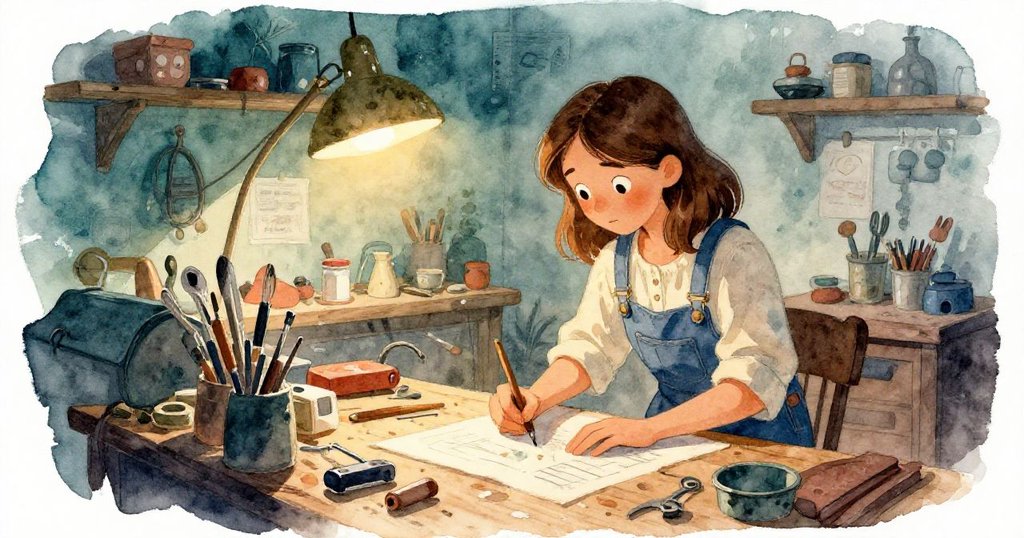
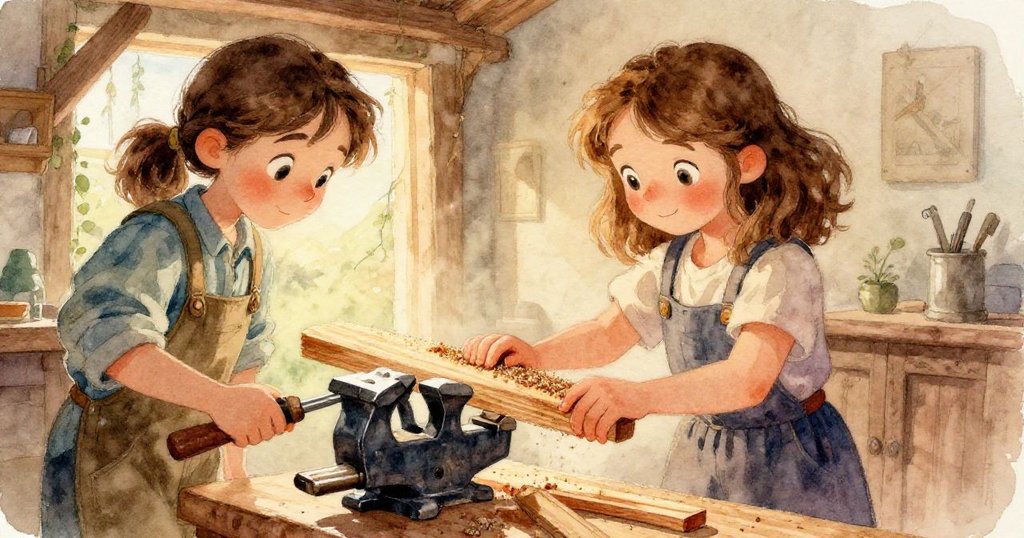
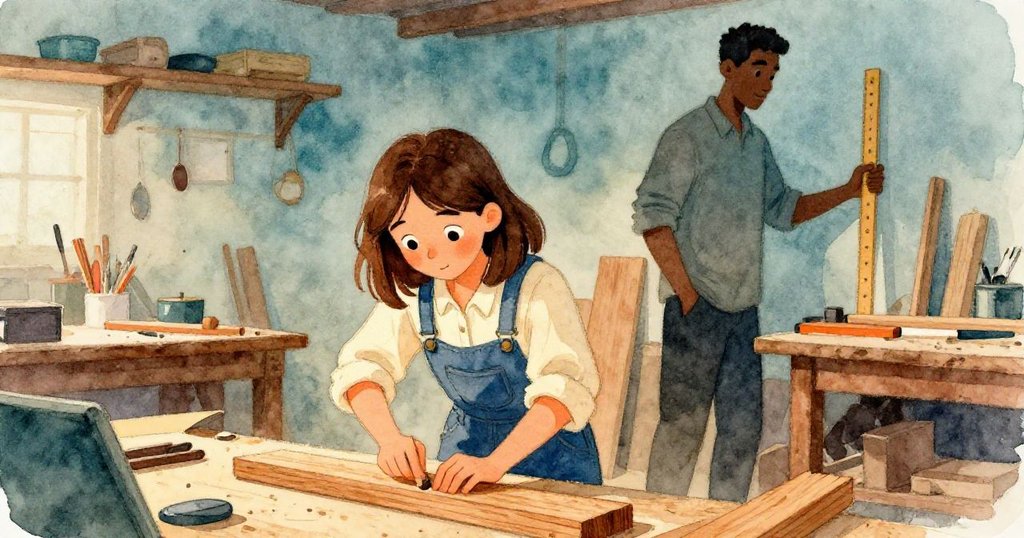
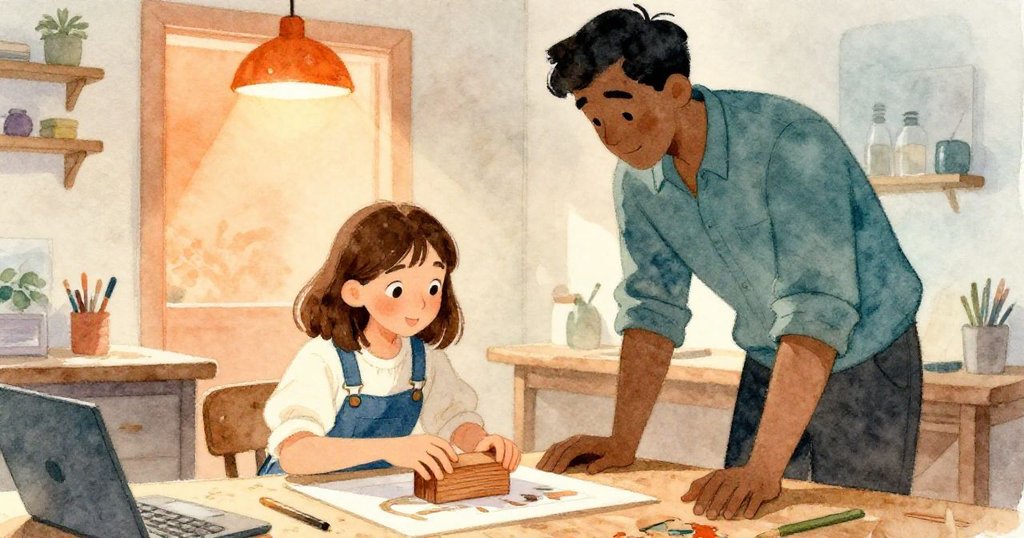
Maeve slid the coarse sandpaper forward, grit rasping over the pine held in the small vice. Each push warmed the wood, and the lingering resin scent grew sharper. The vice had been tightened by an earlier visitor, a tall man named Dale who now stood at the far shelf, measuring a fresh block with a steel rule. Maeve aimed to reach the touch-test zone before the sun slipped lower. She kept a steady rhythm: ten strokes along the grain, lift, shift, repeat. Halfway through a longer stretch, the clamp jaw skewed a hair’s breadth and the block pivoted. The faces blurred together, and she could no longer tell which side held the last grooves. During a brief interlude she tapped a pencil against her palm, marked a tiny cross on an edge, and resumed, yet dust soon erased the guide, leaving the sequence muddled again.
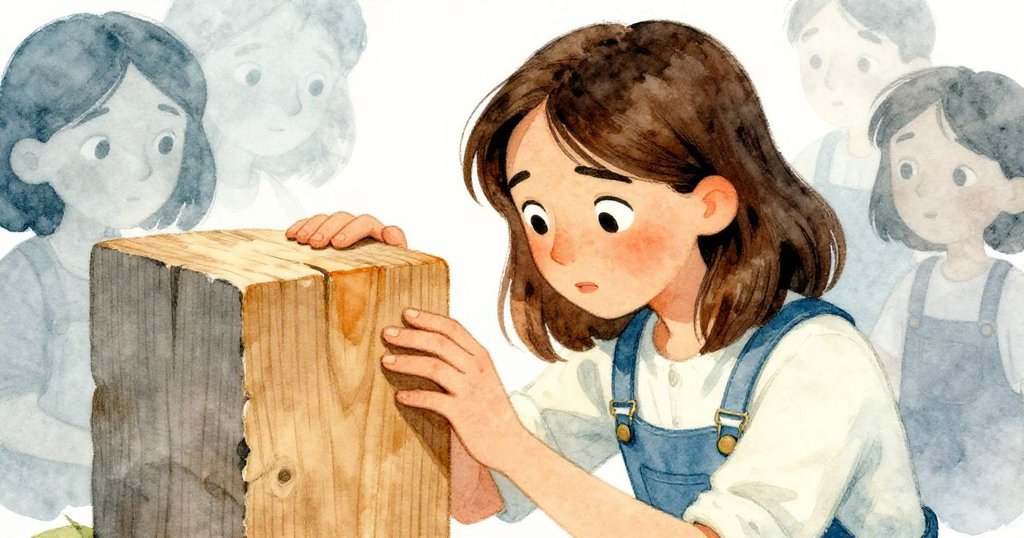
She lifted the block, feeling the surface with the back of her thumb; the wood sat on the cusp between dull gray and warm honey, but doubt lingered. Carrying it toward the reference shelf required gripping only the unsanded corners, and a knot near one corner bit into her fingertip like dry bark, so she paused. As she waited, Dale finished his measurement and set the rule aside; the space beside the pegboard cleared, giving her room to work. She chose a finer strip, yet after three gentle passes the foam backing twisted at a worn corner and the paper tore. If the strip tears again, the nearly polished face will scratch. Maeve folded the torn remnant, aligning the clean edge with her thumb, and worked in shorter, quieter strokes, timing each pass with her breathing. Grain lines brightened, evergreen patterns flashing under the lamp. When the surface matched the smooth reference block, a hidden hair-line crack appeared, swallowing a drop of oil that splashed from Dale’s jar. She left the piece in the drying rack, planning to decide on deeper sanding another day.
By evening, thin dust veiled the vice station, and the patched sandpaper hung stiff and curled. The block stood on the rack, its warm sides catching the last stripe of orange light while the unsanded edge kept a cool shadow.
繁體中文 번역
梅芙將粗砂紙往前推,尖銳的顆粒在小虎鉗夾住的松木上發出沙沙聲。每一下都讓木頭升溫,殘留的樹脂氣味更加濃烈。虎鉗早先被另一位來訪者戴爾鎖緊,他此刻站在遠處的架子旁,用鋼尺量新的木塊。梅芙想在太陽再往下沈前把木塊帶去觸感比對區。她保持節奏:沿紋十下,抬起、移位、重複。長行程做到一半,虎鉗夾口微微歪斜,木塊旋轉了些許。四個面混在一起,她分不清最後一次打磨的是哪一面。短暫的空檔裡,她用鉛筆在邊緣畫了小十字後繼續,但灰塵很快抹去記號,順序又亂了。
她抬起木塊,用拇指背摸表面;木頭介於暗灰與暖蜜色之間,疑慮仍在。要搬去比對架,只能捏未打磨的角,一個結疤像乾樹皮刺進指尖,她停了一下。等候間,戴爾量完尺寸放下鋼尺;掛板旁出現空位,給了她操作空間。她選了較細的砂紙,可只磨三下,海綿背的一角扭曲,紙片撕裂。若砂紙再裂,近乎拋光的面就會被刮傷。梅芙把殘片折起,讓乾淨邊對齊拇指,改用更短、更輕的行程,配合呼吸節拍。紋理亮起,常綠樹般的花紋在燈下閃動。當表面與光滑樣板一致時,一條細縫顯現,吸入從戴爾油罐濺出的油滴。她把木塊放進晾乾架,打算改日再決定是否深磨。
傍晚時分,薄薄木粉覆住虎鉗工作區,補過的砂紙硬而卷曲地掛著。木塊靜立在架上,溫暖的側面捕住最後一道橙光,而未打磨的邊緣留下一抹冷色陰影。
문맥 속 어휘
- stretch
延伸,伸展
“She decided to stretch the canvas before painting.”
她決定在畫畫之前先把畫布拉緊。
- interlude
插曲,幕間休息
“The musical interlude provided a nice break between the acts.”
音樂插曲為各幕之間提供了一個很好的休息。
- lingering
持續的,徘徊的
“There was a lingering scent of pine in the workshop.”
工坊裡仍然有一股持久的松木香味。
- evergreen
常青的,持久的
“The evergreen trees provided a beautiful backdrop in winter.”
常青樹在冬天提供了美麗的背景。
- cusp
尖端,邊緣
“He stood on the cusp of a new adventure.”
他站在新冒險的邊緣。
선생님 스파크
AI가 수업 힌트를 생성해 교사가 이야기를 확장해 활용하도록 돕습니다
故事討論 - 木工車間傍晚
請描述文中梅芙在工作時能感受到的三種不同感官細節(例如聽覺、嗅覺、觸覺),並說明每一種細節如何幫助讀者想像這個場景。
開放式參考答案
She hears the rough rasp of the sandpaper against pine, smells the sharp resin scent of warmed wood, and feels the texture change under her thumb from dull gray to warm honey. The rasping sound and sanding rhythm suggest steady, careful work; the resin smell evokes fresh-cut wood and heat from friction; the tactile contrast helps the reader picture the subtle progress of smoothing and the uncertainty about whether the surface is finished.
梅芙在木塊邊畫的鉛筆小十字被抹去是因為灰塵的關係嗎?(是/否)
是非題參考答案
Yes — the dust soon erased the pencil mark.
請說明一個多步驟的因果鏈:從虎鉗夾口微歪開始,經過哪些事件,最後導致梅芙無法清楚辨認哪一面曾被最後打磨?
開放式參考答案
The clamp jaw skewed a hair’s breadth, causing the block to pivot so that its faces blurred together. Because the block rotated, Maeve lost her sense of which face had the last grooves. She briefly marked an edge with a pencil cross, but sanding dust quickly erased that guide. Later, other interruptions—such as changing sanding strips and dealing with torn paper—added to the confusion, so by the time she checked, the sequence of faces was muddled and indistinguishable.
當梅芙用拇指背感受木塊表面時,她仍有疑慮。根據文字,列出至少兩個造成她不確定的內在或外在因素。
開放式參考答案
Internally she doubts whether the surface is truly finished because it sits between "dull gray and warm honey," so the visual/tactile cues are ambiguous. Externally, the erased pencil mark and the clamp having shifted make it hard to track which face was last sanded. Additionally, a knot that bit her fingertip distracted her and made gripping only the unsanded corners necessary, increasing her caution and uncertainty.
在英文原文中,梅芙保持的節奏是 “ten strokes along the grain, ___, ___, repeat.” 請填入兩個缺詞。
填空題參考答案
lift, shift
Role Play - The Torn Sandpaper Moment
情境
場景:在虎鉗工作區,梅芙正用拇指背輕觸木塊表面,判斷色澤與光滑度。她剛換到較細的砂紙,磨了三下時海綿背的一角扭曲,砂紙撕裂。梅芙把殘片折起,讓乾淨的邊緣靠在拇指上,改用更短、更輕的行程,並以呼吸節拍來控制速度。虎鉗旁的掛板空出來了,因為戴爾剛把鋼尺放下並移到架子那邊。梅芙擔心如果砂紙再裂,近乎拋光的面會被刮傷,同時也猶豫要不要暫停換紙或繼續小力修整。本次角色扮演聚焦於工具選擇、工作協調與溝通,讓學生在工作台的實際情境中練習以英語討論決策與安全操作。
角色
開場白建議
- •“The sandpaper just tore—should I keep using this piece or find a new strip?”
- •“I marked a tiny cross earlier, but the dust rubbed it away. Do you have another way to help me keep track?”
- •“The clamp shifted and the block turned; I can’t tell which face I sanded last. Can you check the reference block with me?”
- •“You finished measuring and cleared the space—could you hold the block steady while I try a few short passes?”
Creative Writing - Side Moment: Dale's Quiet Reaction
寫作提示
請以一個旁支時刻(敘述者未直接描述的瞬間)為出發點,寫一段約120個英文單詞的短文。場景仍然發生在工作檯附近,必須保留原作中的角色與物件,例如 Maeve、Dale、vice、sandpaper、pine、oil、rack 等。這次把視角轉向戴爾或工作檯邊的一個小動作:他注意到那滴油、彎腰撿起碎片、把鋼尺放回原位時的手勢,或是他在燈下觀察紋理的一個短暫想法。重點放在感官細節(聲音、味道、觸感)和內心微小反應,避免改變主要事件的因果鏈。請在文中至少使用下面單字表中的四個單字。語氣保持溫和、安全,適合兒童閱讀。
詞彙庫
寫作輔助
- • Dale noticed the tiny drop of oil when...
- • He set the steel rule down and then...
- • For a moment, he watched the grain under the lamp and thought...
- • His fingers brushed the pine where the knot made a rough spot, so he...
- • Quietly, he moved the block to the rack because...
Vocabulary & Grammar Focus
重點單字
sandpaper
用來磨光或去除木頭表面材料的研磨紙,依顆粒粗細分級。
Maeve pushed the coarse sandpaper across the pine, grit rasping under her palm.
vice
用來夾緊工件的工具(虎鉗),固定木塊以便操作或打磨。
The small vice gripped the pine while Maeve sanded along the grain.
grain
木頭表面的紋理方向;打磨時常沿著紋路行進以避免刮傷。
She kept a steady rhythm, making ten strokes along the wood grain.
knot
木頭中的結疤,常較硬且顏色不同,觸感可能較粗糙或突出。
A knot near the corner bit Maeve's fingertip like dry bark.
tear
紙張或布料被撕裂的動作或結果(在故事中指砂紙破裂)。
The foam-backed strip twisted at a worn corner and the paper tore.
crack
表面上的細縫或裂紋,可能很細小但會吸收液體或擴大。
A hairline crack appeared and swallowed a tiny drop of oil.
resin
木材中天然的樹脂,摩擦會讓其氣味變得更濃且帶黏性。
Each push warmed the wood and the resin scent grew sharper.
steel rule
用來精確量度長度的鋼尺,常見於工作台或木工測量。
Dale measured a fresh block by the shelf using a steel rule.
文法重點
本段落展示了過去完成式被動語態(past perfect passive)的用法與功能。形式通常是 had + been + 過去分詞,例如原文句子 "The vice had been tightened by an earlier visitor"。這種結構用來描述在過去某一時間或事件之前已經完成的動作;使用被動時可以把動作的承受者放到句首,或弱化施事(有時以 by + agent 出現,有時省略 agent),讓讀者更注意結果或狀態而非誰做的。
練習題
Maeve pushed the coarse ___ forward, grit rasping over the pine.
參考答案
sandpaper
配對以下單字與意思:
顯示答案
A-8B-7C-6D-3E-4F-2G-5H-1
The vice had been tightened by an earlier visitor, a tall man named Dale who now stood at the far shelf, measuring a fresh block with a steel rule.
參考答案
An earlier visitor, a tall man named Dale, had tightened the vice.
Cultural Connection - 工作坊的進度標記與共享禮儀
主題
工作坊的進度標記與共享禮儀
討論要點
- •Maeve drew a tiny cross on the wood but dust soon erased it. Have you ever used temporary marks to track progress on a project? How did those marks help or cause problems?
- •In the story, Dale finishes measuring and sets the steel rule aside, creating space for Maeve to work. When you share tools or a workspace with others, what unspoken rules or polite actions help everyone work smoothly?
- •Maeve times her sanding with a steady rhythm and uses touch to judge the surface. Do you have routines that use rhythm, touch, or smell to check your work? How do these sensory checks affect how you feel about the finished piece?
文化比較
故事中的工作坊以現場的感知與個人習慣來協調工作:像梅芙用鉛筆畫小十字做短暫標記、以「沿紋十下」的固定節奏打磨、靠拇指背的觸感與參考樣板來判斷完成度;人與人之間多以默契或禮貌動作(戴爾放下鋼尺讓出空位)維持流暢。相比之下,在我們的生活圈(例如學校木工教室或社區手作空間)會更常見制度化的安排:工具登記、明確的標籤或姓名記號、負責人的巡查,以及明確的清潔與安全流程(例如使用護具、制定除塵步驟)。兩者各有優勢——故事裡的即時感知有利於細緻的手工判斷與靈活調整;制度化的做法則有助於安全、責任分明與作品追溯。教師可以引導學生把現場感知(如短暫標記與觸感檢查)和簡單的共享規範(如標籤、工具歸還與清潔步驟)結合,既保留工藝敏感度,也增進共同工作空間的安全與秩序。
Comprehension Quiz
1. Who had tightened the vice before Maeve began sanding?
2. What target did Maeve aim to reach before the sun slipped lower?
3. What went wrong halfway through a longer sanding stretch?
4. How did Maeve try to mark which side she had last sanded?
5. Why did Maeve pause before carrying the block to the reference shelf?
6. What unexpected flaw showed up when the surface matched the smooth reference block?
추천 읽기
Cat’s Nudge Reveals a Worn Sanding Block Corner
The Mark Left by a Moth
Amber on One Side
Dust After the Knot
Before the Oil Could Spill
Dust-Lifted Curve
Dust Over the Line
Fine Sandpaper, Warm Wood, and the Cooling Agate
Before the Cedar Whisper Faded

Pencil Line Reappearing
Sawdust After the Gust