From Blur to Print at the Enlarger - 適合進階的英文短篇故事,含中譯與發音
從模糊到相片:放大機下的印相 | 英文/中文 雙語朗讀
Nội dung truyện
English Bản gốc
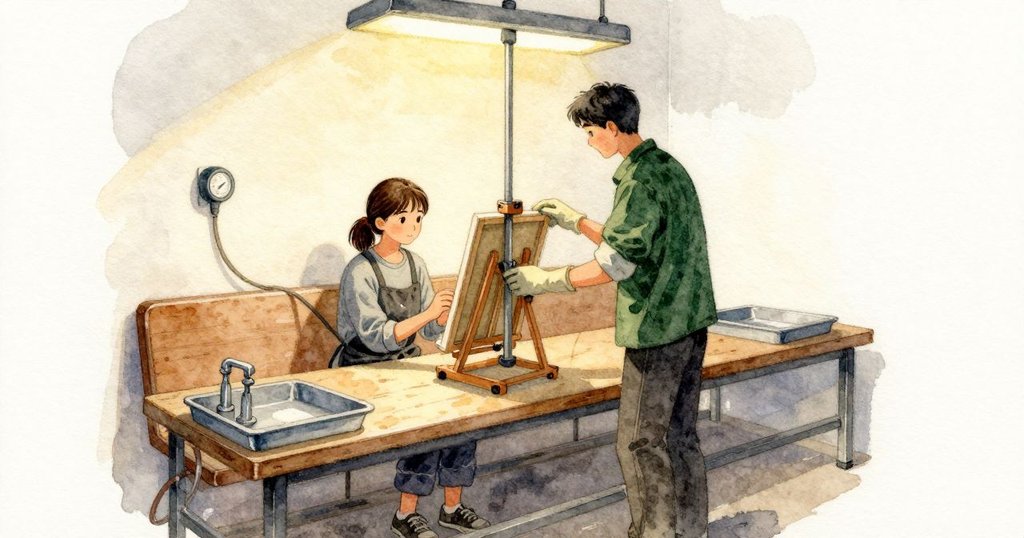
The enlarger’s column stood close to the low ceiling, and Kaya centered the easel within the rectangle of bench space.
A conventional wall timer waited near her left shoulder, its dial set, its cord folding straight down to the outlet.
Barrett kept to the rinse end of the bench, making slow circuits between the hose and the low tray.
She slid the metal guides to graze the paper’s corners, leaving a slim alley of border around the projected frame.
A small mound of curled test strips rested by the bin, white edges pinched where tongs had lifted them earlier.
Kaya raised the enlarger head until the projected border met the paper’s edges with a finger’s width of air all around.
Her fingers turned the focus ring through a steady quarter-turn, walking blur toward lines until the grain held still.
The rectangle on the easel pressed long across the bench, its far edge nearly touching the column’s shadow.
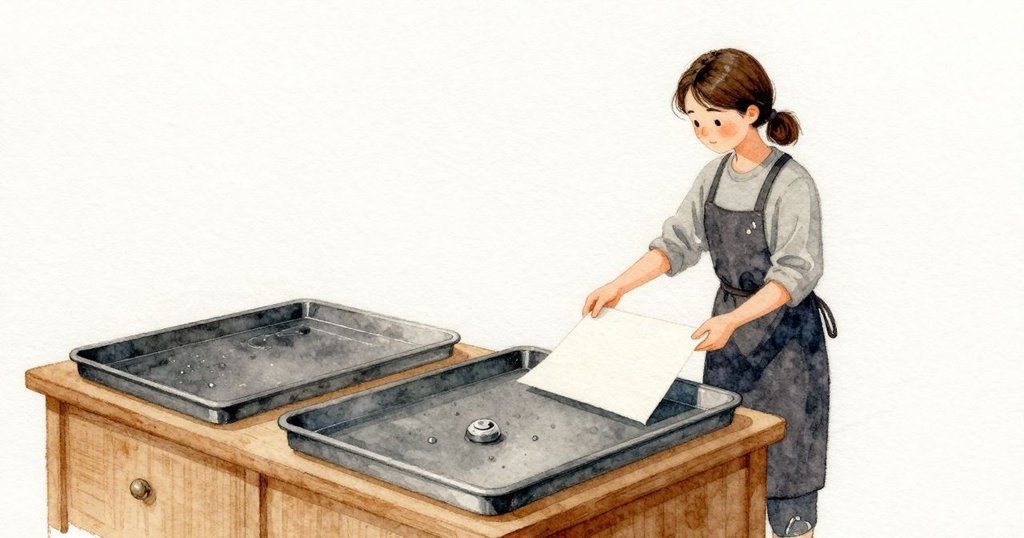
Exposure ticked out, and the first sheet slid from tongs to the first tray, where the pale rectangle arrived slowly.
The spacing in the room was plain—the higher head had spread light wide, thinning it across too much span.
She doubled the time on the dial and ran another, her neat hypothesis about perfect seconds smudging alongside the widening image.
The next attempt came at a lower height and tighter frame, but the plane still resisted a smooth rise toward density.
In the tray, corners deepened faster while the roof stayed ghostly, and the plane of tones did not even out.
She swapped to a smaller magnification that pulled the picture inward without solving the lag between roofs and walls.
Kaya checked the lens and felt, under her thumb, a click-stop out of place, the aperture ring not where she had left it.
She lowered the head a notch to tighten the rectangle, then lifted a scrap of matte board from beneath the easel.
Without thinking, her wrist drew the same slow arc used to shade tiny seedlings at noon, and the board hovered over the roofline.
Her palm had learned that curve in the garden; here the air above the easel offered the same measured path to follow.
Light recorded what the garden never does; a kept shadow formed there, softer than the rest, while the main tones continued to build.
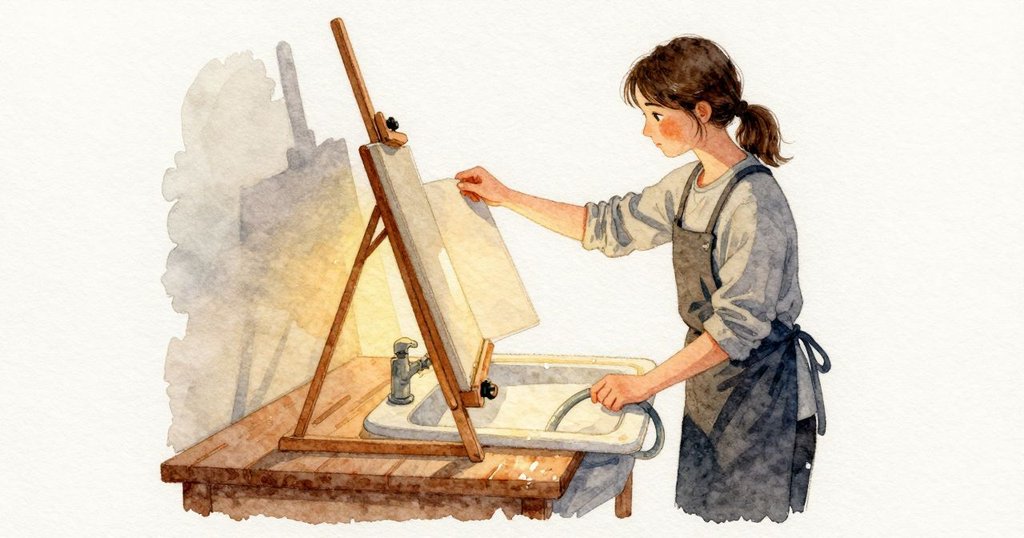
At the sink, the rinse hose shifted on its hook and fanned its stream wider across finished prints, then settled again.
She trimmed the next exposure by one tick and held the tongs longer at the lift, watching the edges wick a thin rim of clear water.
Kaya stacked the earlier trials in a shallow line along the far wall, each one narrowing the room’s open center.
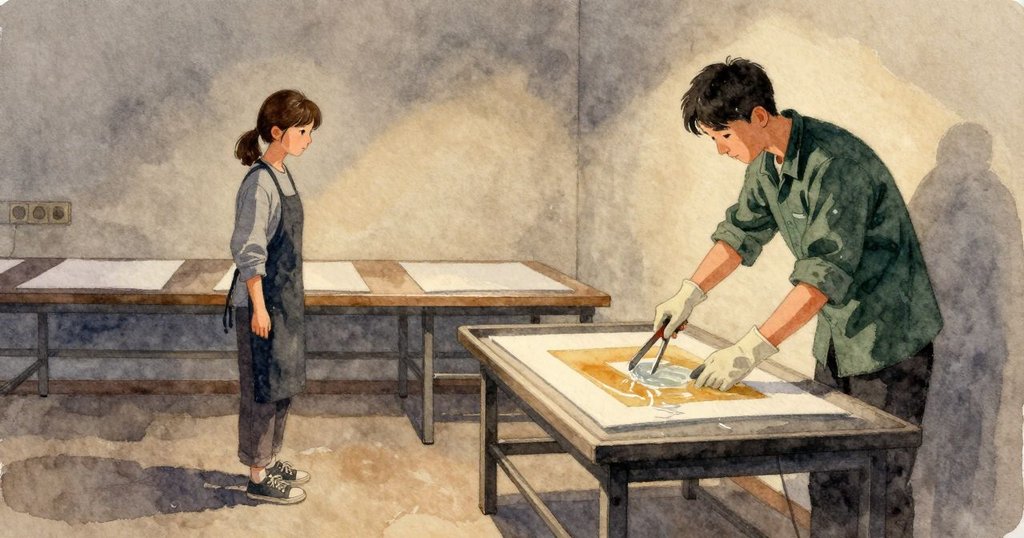
Barrett trudged the narrow span from rinse to bench and back, laying each finished sheet into the wash with regular spacing.
The new print floated between darker walls and a gentler roof, not perfect, not known, and the safelight rested above its quiet plane.
繁體中文 Bản dịch
放大機的立柱貼近低矮的天花板,Kaya 把相紙台對準工作檯中央的矩形空間。
一個傳統的壁掛計時器待在她左肩附近,刻度已經設定,電線筆直垂到插座。
Barrett 待在沖洗端,於軟管與淺盤之間慢慢來回。
她推動金屬定位片,讓它們剛好擦過相紙四角,投影框周圍留出一條狹窄的邊。
垃圾桶旁躺著一小堆捲曲的測試片,白邊夾痕還在,是先前用夾子抬起時留下的。
Kaya 把放大機頭升到投影邊框碰到相紙邊緣的位置,四周留下約一指寬的空氣。
她的手指轉過對焦環一個穩定的四分之一圈,讓鬆散的線條走向線緣,直到顆粒停住。
相紙台上的矩形沿著工作檯拉長,它的遠邊幾乎碰到立柱的陰影。
曝光結束,第一張相紙從夾子滑進第一個托盤,淡淡的矩形慢慢冒出來。
室內的間距一目了然——較高的機頭把光攤得更寬,亮度被分散在過長的跨度上。
她把刻度時間加倍再來一張,她對完美秒數的整齊假設和隨之擴大的影像一起被抹糊。
接著她把高度降低、影像收緊,可是整個平面仍然沒有順勢均勻地爬升。
在托盤裡,四個角加深得更快,而屋頂還是很淡,明暗的平面始終拉不平。
她改用較小的放大倍率,畫面被拉回來一點,但屋頂與牆面的落差依舊存在。
Kaya 檢查鏡頭,在拇指下摸到一個不在定位點上的卡點,光圈環不在先前停住的位置。
她把機頭降下一格以收緊投影,然後從相紙台下方取出一片霧面卡紙。
沒經過思考,她的手腕畫出遮蔭幼苗時那種緩慢弧線,卡紙懸在屋頂線的上方。
她的手掌在花園裡學會了那條弧;在這裡,相紙台上方的空氣提供了同樣可遵循的路徑。
這裡的光做了花園不會留下的記錄;那一處成了一塊較柔和的陰影,而主要的層次繼續建立。
洗槽邊,沖洗軟管在掛勾上移了一下,把水束扇得更寬,接著又回到原來的角度。
她把下一次曝光少轉一格,抬起相紙時夾子多停了一會兒,看著邊緣吸起一圈薄薄的清水。
Kaya 把先前的嘗試沿著遠端牆面排成一條淺淺的直線,每一張都讓房間中央的空白更緊湊。
Barrett 踏著穩重的步伐在沖洗端與工作檯之間往返,把完成的照片按固定間距放進洗水槽。
新的那張漂在較深的牆面與較柔的屋頂之間,沒有完美也沒有定論,而安全燈停在它安靜的平面上。
Thẻ từ vựng theo ngữ cảnh
- conventional
傳統的;依慣例的;一般常見而不特別的。
“A conventional wall timer waited by her shoulder, its cord dropping straight to the outlet.”
她肩旁放著一個傳統的壁掛式計時器,電線筆直垂到插座。
- mound
小土堆;一小堆東西(堆成隆起狀)。
“A low mound of curled test strips leaned beside the bin under the safelight.”
在安全燈下,一小堆捲曲的試片靠著垃圾桶歪著。
- hypothesis
假設;用來解釋現象、可被檢驗的想法。
“Her tidy hypothesis about perfect seconds smeared as the wider spread thinned the light.”
她關於「完美秒數」的整齊假設被抹糊了,因為更廣的散射稀釋了光。
- wick
(靠毛細作用)吸走、引走(液體)。
“At the lift, the paper’s edges wicked a thin rim of clear water.”
抬起時,紙張的邊緣把一圈細薄的清水吸走。
- trudge
(因疲累或重複)吃力而沉重地走。
“Barrett trudged the narrow gap from rinse to bench, laying each print into the wash.”
巴瑞特吃力地穿過沖洗與工作檯間的窄道,把每張成品放進清洗槽。
Đọc thêm gợi ý

The Hidden Click of the Enlarger
The Cedar Wedge and the Unexpected Shoreline
A Dusty Smudge on the Glass Negative

Reprinting a Landscape After Dust Specks
The Bird Inside the Horizon
Streak Across the Dahlia Print in the Darkroom
Shifted Light on the Enlarger Head
The Third Bamboo Tong Needed but Gone
After the Safelight Shift

The Night a Badger Emerged on Waverly's Darkroom Print
Aligning Timer and Drip over a Coyote Print